
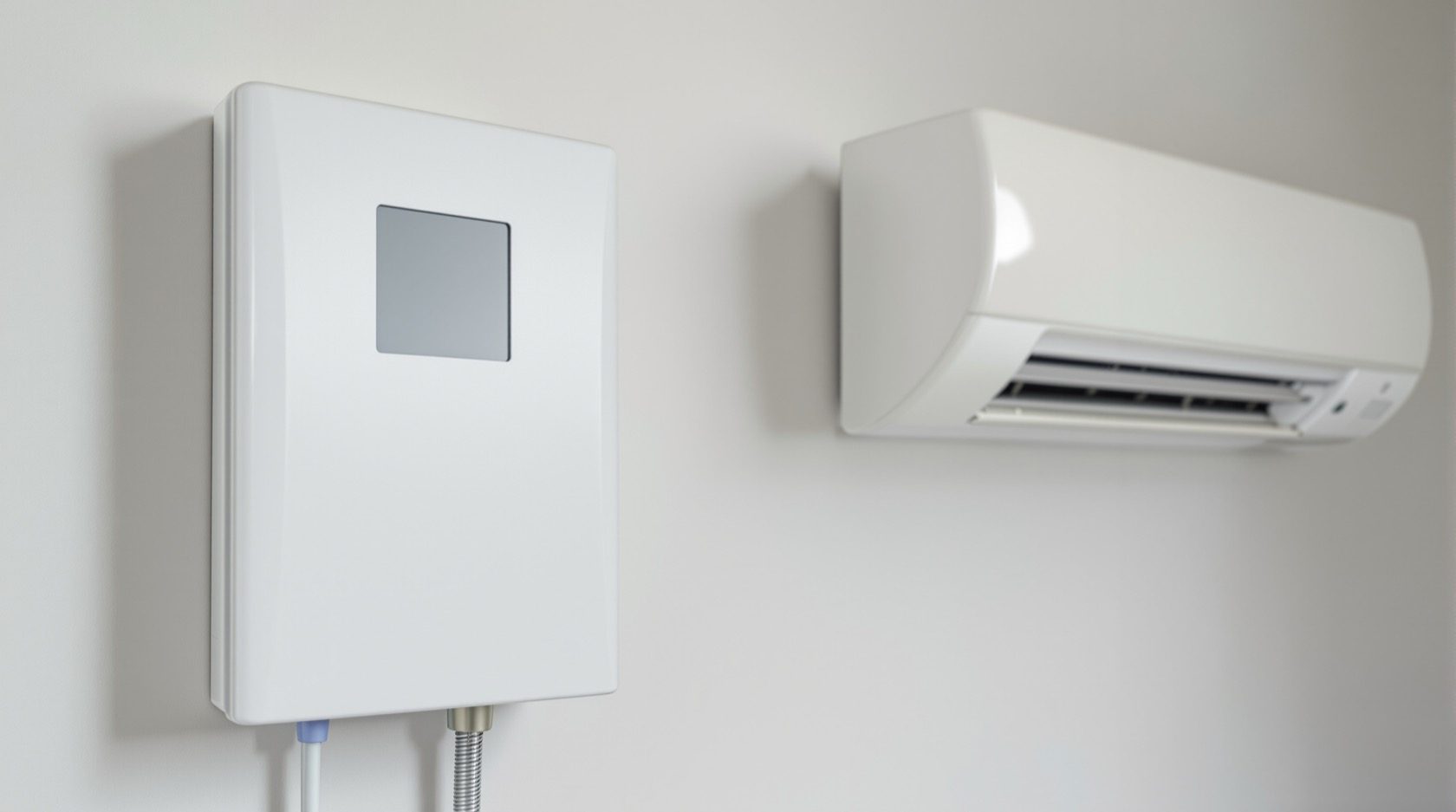
Voltage Stabilisers: Protecting Appliances from Unstable Power in India
Why Indian homes still need stabilisers — how a voltage stabiliser corrects the high and low voltage that damages ACs, fridges and TVs, where you need one (and where you don't), how to size it, and how it differs from a surge protector and an inverter.
India's mains is supposed to be a steady ~230 V, but in many areas it sags low or spikes high — and sustained wrong voltage quietly shortens the life of, or outright damages, expensive appliances like ACs, refrigerators and TVs. A voltage stabiliser sits between the mains and the appliance and corrects the voltage to a safe range. Where the supply is poor, it's cheap insurance on costly equipment. This guide explains what a stabiliser does, where you need one, how to size it, and how it differs from a surge protector and an inverter.
It is a protection deep-dive in the Electrical Knowledge Hub, complementing the surge protection and energy management guides.
The safety line. A plug-in stabiliser for a single appliance you can use yourself; a hardwired whole-home stabiliser is a licensed electrician's installation. Choose an ISI-marked, correctly-sized unit conforming to the relevant standard (IS 9815).
What a stabiliser does — and the problem it solves
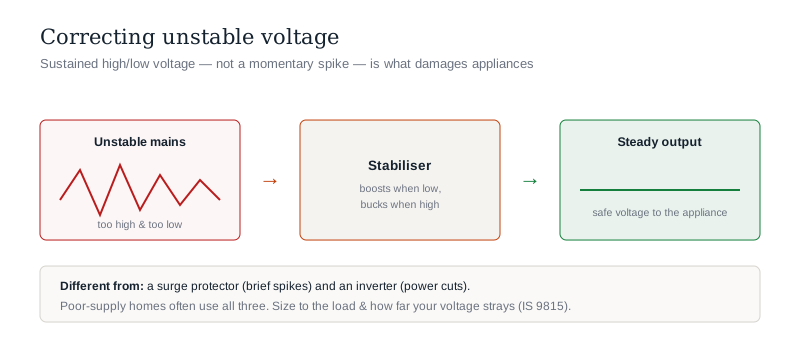
The problem is sustained wrong voltage (different from a momentary surge):
- Low voltage (brownout) — makes motors (AC compressors, fridge, pump) draw more current, overheat and fail early; appliances underperform.
- High voltage — stresses and can damage electronics and motors.
- A stabiliser continuously corrects the incoming voltage — boosting when it's low, bucking when it's high — delivering a steady output in the safe range for the appliance.
Modern servo and electronic stabilisers do this automatically and smoothly. Many premium appliances have some built-in tolerance, but where the supply swings widely, an external stabiliser adds real protection.
Where you need one — and where you don't
- You likely need one if your area has noticeably unstable voltage — frequent dimming/brightening lights, appliances tripping or underperforming, or a known poor supply — especially for ACs, refrigerators and large TVs.
- AC stabilisers are the classic case — a mismatched or unstabilised AC in a low-voltage area is a common early failure.
- You may not need one if your supply is stable and your appliances have adequate built-in voltage protection (many modern inverter ACs and fridges have a wide operating range) — check the appliance's rated range.
- The honest test: stable supply + wide-range appliance = often no stabiliser needed; unstable supply or sensitive/costly appliance = a stabiliser is worthwhile.
Sizing a stabiliser
Two things matter:
- The appliance's power (load) — the stabiliser must be rated for the appliance's wattage/VA (with headroom for motor start-up surge on ACs/fridges). An oversized-enough unit, not an undersized one.
- The input voltage range — choose a stabiliser whose correction range covers how low/high your supply actually goes; a wider range for a worse supply.
- Per-appliance vs whole-home — a plug-in stabiliser per big appliance (AC, fridge) is common; a whole-home stabiliser (hardwired by an electrician) protects everything at once where the whole supply is poor.
- Match the type (AC/fridge-specific units exist) and buy ISI-marked (see buying materials).
Stabiliser vs surge protector vs inverter
These three are often confused — they solve different problems:
| Device | Solves | Duration |
|---|---|---|
| Stabiliser | Sustained high/low voltage | Continuous correction |
| Surge protector / SPD | Brief spikes (lightning, switching) | Instantaneous |
| Inverter | Power cuts (no supply) | Backup during outage |
- A stabiliser fixes wrong voltage; a surge protector clamps sudden spikes; an inverter provides power when there's none.
- Many homes with poor supply use all three — stabiliser for steadiness, SPD for spikes, inverter for cuts.
- Some inverters and premium appliances include voltage regulation, reducing (not always eliminating) the need for a separate stabiliser.
The one-line answer
A voltage stabiliser corrects the sustained high or low voltage common on Indian supplies — continuously boosting low voltage and bucking high voltage to deliver a steady, safe output — protecting motor-driven and electronic appliances (ACs, fridges, TVs) that unstable voltage damages or ages prematurely. You need one where the supply visibly swings (dimming lights, underperforming appliances) or for a costly/sensitive appliance without a wide built-in range; you may not where the supply is stable and the appliance tolerates it. Size it to the appliance's load with surge headroom and to how far your voltage actually strays, choose ISI-marked (to IS 9815), and remember it's distinct from a surge protector (brief spikes) and an inverter (power cuts) — poor-supply homes often need all three, with the hardwired whole-home type installed by a licensed electrician.
Where to go next
- The spike protector it isn't: Surge Protection & SPD Guide.
- Backup for cuts: Home Backup Power Guide.
- Managing power quality: Home Energy Management Guide.
- Buy quality: Buying Electrical Materials Guide.
References
- IS 9815 : Part 1 : 2025, Servo-motor Operated Automatic Line Voltage Correctors — Single-Phase — Specification, Bureau of Indian Standards.
- IS 732 : 2019, Code of Practice for Electrical Wiring Installations, BIS.
- IS 302 : Part 1 : 2024, Household and Similar Electrical Appliances — Safety, BIS: https://www.bis.gov.in/
Whether you need a stabiliser depends on your local supply and appliances; sizing must suit the load and voltage range. Hardwired stabilisers must be installed by a licensed electrician. Verify any standard's status via the BIS catalogue before relying on it.
Export this guide
Related Guides — Deep-dive reading
Surge Protection & SPDs: Guarding Your Home's Electronics
The device your MCB and RCCB cannot replace — a surge protective device clamps the sudden voltage spikes from grid switching and lightning that quietly kill TVs, computers, inverters and LED drivers. What SPDs are, the Type 1/2/3 system, where they go, and whether your home needs one.
Electrical & WiringElectrical Safety for Security Systems in India (2026): Powering It Without Peril
A homeowner's guide to the power side of home and RWA security systems, CCTV, alarms, gates, access control and NVRs, done so it protects you instead of quietly becoming a shock or fire hazard. What makes a supply safe, what to insist on, and why the mains work belongs to a licensed electrician.
SecuritySmart Home Power Backup in India: Keeping It Running During Power Cuts
Load-shedding is a fact of Indian life. Here is how to make sure your router, hub, cameras and locks survive an outage — for surprisingly little money.
Smart HomeRelated Tools — Try Free
Electrical Safety & Load Audit
Home electrical audit — 10 categories, 65+ checkpoints across earthing, RCCB, MCB, wiring, switchboards, appliance circuits, DG/inverter backup.
Safety AuditInverter & Battery Calculator
Size a home inverter (VA) and battery (Ah) for the load you want to back up and the hours of backup you need.
Backup PowerSecurity Backup Power Calculator
Size a UPS/inverter and battery to keep CCTV, NVR, router and alarm running through a power cut — load, Ah, VA and cost.
Backup Power