
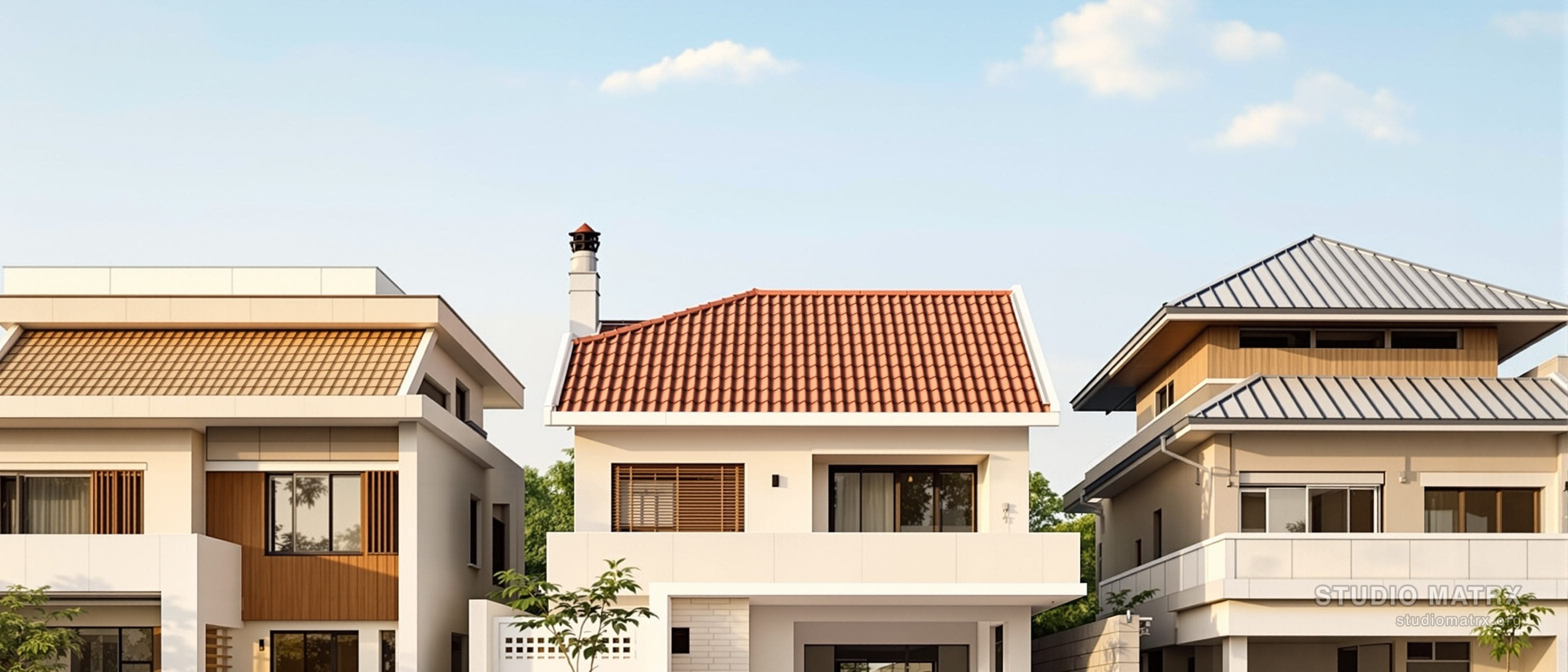
Types of Roof in India — Flat, Pitched, Hip & More, Matched to Your Climate
From the flat RCC slab of the city to the steep tiled pitch of the coast and hills — the roof shapes, coverings and which one suits your weather.
The roof is the hardest-working surface on a house — it takes the full force of the sun, the monsoon and the wind, all day, every day. Choosing the right one is mostly about climate, then budget and style. India builds across the whole range, from the flat RCC slab of the city to the steep tiled pitch of the coast and the hills. Here is the field guide.
The two big families
Almost every Indian roof is either flat or pitched (sloped), with a handful of special forms beyond.
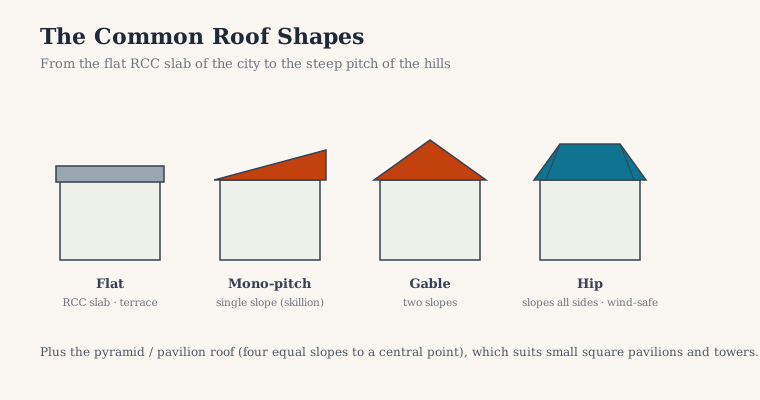
Flat roofs (RCC slab)
The reinforced cement concrete (RCC) slab is the default urban roof in India. It is structurally simple, gives you a usable terrace, and lets you mount a water tank, solar panels and AC units — and, crucially, add another floor later. Its weaknesses are the flip side: a flat roof depends entirely on waterproofing and correct slope-to-drain, or it ponds and leaks; and a bare slab gains a lot of heat unless you insulate it or apply a cool-roof coating. The slab itself is documented in roof-slab drawings explained, and the make-or-break detailing is in the waterproofing guide.
Pitched (sloped) roofs
A sloped roof sheds water fast and, with an attic air gap, runs cooler — which is why it dominates high-rain, coastal and hill regions. The shapes:
- Mono-pitch (skillion / lean-to) — a single slope. Simple, modern, good for sheds and contemporary homes.
- Gable — two slopes meeting at a ridge, with triangular ends. The classic pitched roof.
- Hip — slopes on all four sides. More material and labour, but far more wind- and cyclone-resistant because it has no flat gable wall for the wind to push on.
- Pyramid / pavilion — four equal slopes to a central point; suits small square pavilions and towers.
Flat vs pitched — the choice in one picture
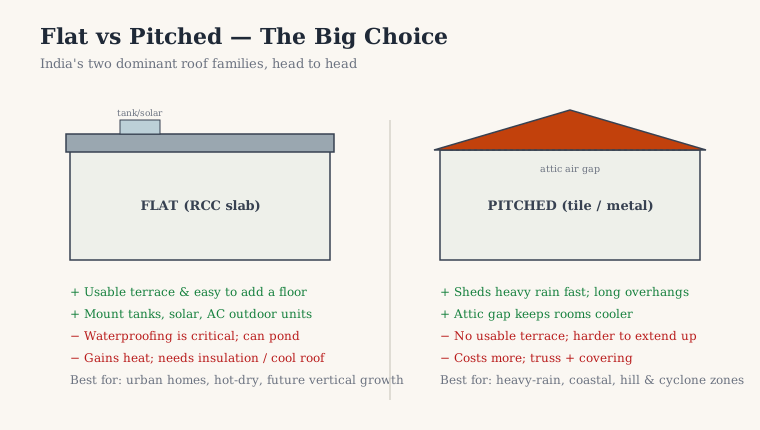
| Flat (RCC) | Pitched (tile / metal) | |
|---|---|---|
| Usable terrace | Yes | No |
| Add a floor later | Easy | Hard |
| Rain shedding | Needs slope + waterproofing | Excellent |
| Heat | Gains heat; insulate | Cooler (attic gap) |
| Cost | Lower | Higher (truss + covering) |
| Best climate | Hot-dry, urban | Heavy-rain, coastal, hill |
What goes on top of a pitched roof
The slope is the structure; the covering is a separate choice:
- Mangalore / clay tiles — the traditional terracotta tile of coastal and south India; breathable, beautiful, repairable.
- Concrete roof tiles — heavier, cheaper, long-lasting, many colours.
- Metal sheets (GI / colour-coated / standing-seam) — fast, light, ideal for the hills, large spans and industrial looks; can be noisy in rain without an underlay.
- Stone slabs — a vernacular covering in some regions.
- Thatch — traditional and cool, but high-maintenance and a fire risk; now mostly resorts and pavilions.
Special and sustainable roofs
Beyond the two families:
- Madras terrace — a traditional flat roof of brick laid on timber/steel joists; handsome and cool, now rare.
- Filler-slab roof — an RCC slab with inert fillers (Mangalore tiles, pots) replacing concrete in the tension zone; cheaper and lighter, a popular sustainable choice.
- Vaults and domes — curved masonry roofs that self-shade and stay cool in hot-dry zones.
- Green / garden roofs — a planted layer over a waterproofed slab that cools the building and manages rainwater; see rooftop garden design and, for the usable-terrace version, terrace planning.
Match the roof to the climate
This is the decision that matters most. A roof that's wrong for the climate leaks, bakes or blows off.
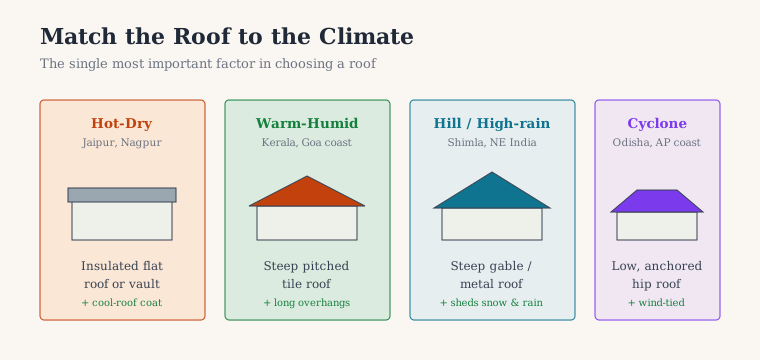
- Hot-dry (Jaipur, Nagpur): insulated flat roof or a vault, with a cool-roof coating to reflect heat.
- Warm-humid / coastal (Kerala, Goa): a steep pitched tile roof with long overhangs to throw the rain clear of the walls.
- Hill / high-rain (Shimla, the North-East): steep gable or metal roofs that shed snow and heavy rain.
- Cyclone-prone coasts (Odisha, coastal AP): a low, anchored hip roof, physically tied down to resist uplift.
The full logic of designing the whole envelope for your zone is in passive design for India's climate zones.
The takeaway
Start with your climate, not the catalogue. In a hot, dry city where you may grow upward, a flat insulated RCC roof gives you a terrace and a future floor. Where the monsoon is fierce or the wind is strong, a pitched tile or metal roof — gable inland, hip on cyclone coasts — will keep you drier and cooler for longer. Get the shape right for the sky above your plot, then spend on the covering and the waterproofing that make it last.
Disclaimer: Roof selection depends on local climate, structural design, budget and bye-laws. Spans, truss design, anchorage in cyclone zones and waterproofing systems must be designed by a qualified structural engineer and architect for your specific site.
Export this guide
Related Guides — Deep-dive reading
Flat Roof vs Sloping Roof: Which Is Right for You?
The one decision that shapes the whole house — the terrace you can use versus the pitch that sheds the monsoon. A decisive, balanced, India-grounded comparison across cost, rain, heat, space, maintenance, looks, future floors, solar and climate — with a clear verdict.
RoofingThe Metal Roofing Guide
The fast, light, long-spanning roof — GI, Galvalume and colour-coated steel, aluminium, standing-seam, stone-coated and insulated panels; the profiles and coatings; and the four things that make or break metal in India — coastal corrosion, condensation, rain noise and heat. Plain language, India-grounded.
RoofingRoofing for Heavy Monsoon Areas
Kerala, the Konkan coast, the Western Ghats and the North-East get some of the heaviest rain on earth. A plain-language, India-grounded guide to designing and detailing a roof that sheds it fast, throws it clear of the walls, drains it away and never lets it in.
RoofingRelated Tools — Try Free
Rainwater Tank Sizer
How big should your rainwater tank be? Computes annual harvest, recommended tank capacity in litres, water-bill savings, and payback — for 10 Indian cities.
RWH CalculatorMonsoon-Readiness Checklist
Pre-rain home audit across 9 categories — terrace, drains, waterproofing, electrical, HVAC, pest, vehicles, documents.
Seasonal AuditCross-Ventilation Analyzer
Estimate airflow and air changes per hour (ACH) from room size, window areas, layout, and local wind — with NBC 2016 Part 8 compliance check.
Ventilation Calculator