
Smoke Detector False Alarms in India (2026): Why It Keeps Going Off and How to Fix It Safely
Your smoke alarm keeps chirping or shrieking with no fire. A calm, ordered guide for Indian homes to find the real cause -- cooking, steam, dust, a dying battery or a detector past its life -- and fix it without ever disabling the one device that could save your family.
A smoke detector that keeps going off when there is no fire is one of the most maddening problems in a home. It shrieks while you fry onions, it chirps at 2 a.m. for no reason you can see, it wails every time someone showers. The temptation is overwhelming: pull the battery, bag it in plastic, or take it off the ceiling and shove it in a drawer. Please do not. The single most important sentence in this guide is this -- a smoke alarm crying wolf is annoying, but a disabled smoke alarm is how people die. The fix is never to silence it forever; the fix is to find the cause, remove it, and keep the alarm working.
The good news is that almost every "false" alarm has a simple, cheap, findable cause. Most of the time your detector is not broken -- it is doing exactly its job, reacting to something in the air, sitting in the wrong place, clogged with dust, or telling you its battery or its own life is running out. This guide walks you calmly through the causes in the order you are most likely to meet them, gives you a short diagnostic path, and separates the safe things you can do yourself from the few situations where you should call a competent person. It sits under the wider security-system troubleshooting pillar.
Scope & safety. This is a homeowner diagnostic guide for standalone, battery or plug-in smoke detectors in Indian homes. It is not a price guide, not a buying guide, and not for hard-wired or interconnected building fire systems or a fire alarm panel -- those are a competent contractor's job, covered in fire alarm panel faults. A smoke detector is a life-safety device. Never remove its battery permanently, paint over it, bag it, or take it down and forget it to stop the noise. Silence a nuisance briefly with the hush button while you deal with the cause -- then restore it. And the rule that overrides everything below: if there is any chance the alarm is real, treat it as real and get everyone out first.
First: is it a CHIRP or a full ALARM?
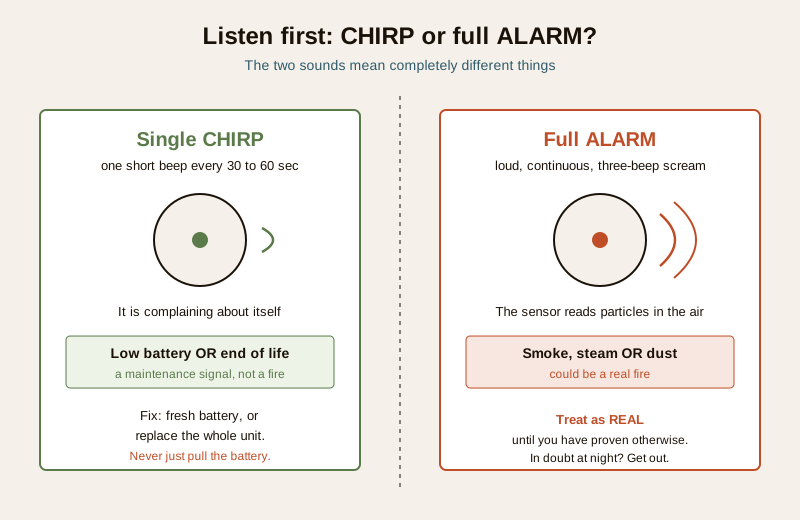
Before anything else, listen to what your detector is actually doing, because the two sounds mean completely different things.
- A single short CHIRP every 30 to 60 seconds, often politely spaced, is almost never smoke. It is the detector complaining about itself -- a low battery, or the unit reaching the end of its life. It is a maintenance signal, not a fire signal.
- A loud, continuous, urgent ALARM -- a repeating three-beep pattern or a steady scream -- means the sensor is detecting particles in the air. That could be real smoke, or it could be cooking smoke, steam, dust or insects fooling the sensor. Treat a full alarm as real until you have proven otherwise, especially at night.
Getting this distinction right sends you down the correct branch and saves you hours. The figure below lays it out.
The likely causes, from most common to rarest
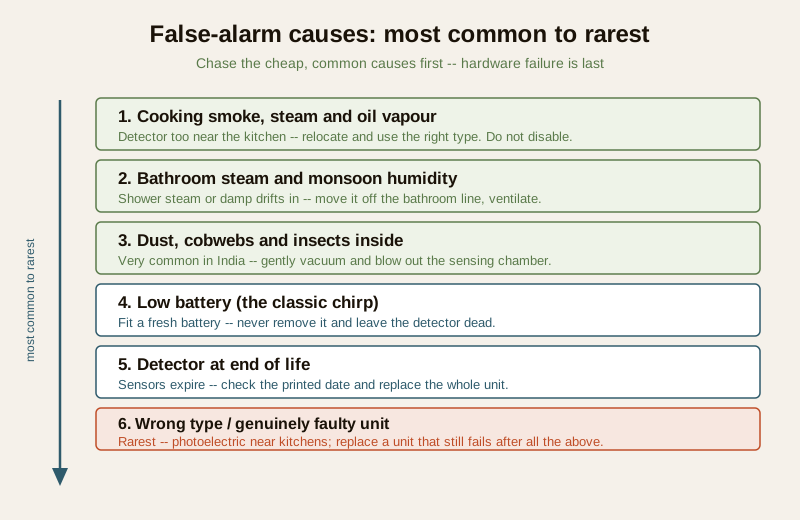
Indian homes throw a very particular set of triggers at a smoke detector: open kitchens, tawa smoke and oil vapour, monsoon humidity, bathroom steam, dust, and the small insects and cobwebs that get into everything. Work down this list roughly in order.
| Cause | Why it happens | The safe fix |
|---|---|---|
| Cooking smoke, steam or oil vapour | The detector sits too close to the kitchen; tadka, frying, grilling and toasting throw particles and aerosol that the sensor reads as smoke | Relocate the detector away from the kitchen line; use the right type; use the hush button briefly while cooking -- never disable it |
| Bathroom or monsoon steam and humidity | Hot-shower steam or heavy monsoon humidity drifts into a detector placed near a bathroom door | Move it away from the bathroom door; ventilate; wait for steam to clear |
| Dust, cobwebs and insects inside the unit | Very common in India -- fine dust and tiny insects settle inside the sensing chamber and scatter light like smoke | Gently vacuum the outside vents; blow out dust; keep it clean on a schedule |
| Low battery | The classic single chirp; a weak battery cannot hold the sensor steady | Replace the battery with a fresh one -- do not pull it and leave the detector dead |
| Detector at end of life | Sensors age and drift; most units expire after several years and then chirp or false-alarm | Replace the whole unit -- check the date printed on the back |
| Wrong type for the location | An ionisation-type sensor near a kitchen is especially prone to cooking nuisance alarms | Use a photoelectric type near kitchens and cooking areas |
| A genuinely faulty unit | Rare -- a unit that alarms randomly even after cleaning, a fresh battery and correct placement | Replace it; if hard-wired, get a competent person |
Notice the order: the cheap, common, air-and-placement causes come first, and true hardware failure is last and rare. Chase them in that sequence.
A step-by-step diagnostic path
Work through this in order. At each step, if you have found and dealt with the cause, you are done -- and the detector goes back up, working.
1. Is anyone in danger? Is there any real smoke or burning smell? If there is any doubt at all, get everyone out and only then investigate. A real fire always wins over convenience.
2. Chirp or full alarm? A single spaced chirp points to battery or end of life -- go to step 5. A loud continuous alarm with no obvious fire points to air, dust or placement -- continue.
3. Where is the detector, and when does it go off? If it screams whenever you cook, it is too near the kitchen. If it goes off after a hot shower or in heavy monsoon damp, it is catching bathroom steam or humidity. Note the pattern -- it names the cause.
4. When did you last clean it? Press the test button, then gently vacuum the vents and blow out dust and any insects. In dusty Indian homes this alone fixes a surprising share of nuisance alarms.
5. Replace the battery with a fresh one, even if you think it is fine, and press test. A weak battery causes both chirps and erratic behaviour.
6. Check the age. Look for a manufacture or "replace by" date printed on the back. If it is past the stated life, or you cannot find a date and it is clearly old, replace the whole unit.
7. Still misbehaving after clean placement, a clean chamber, a fresh battery and correct type? Now, and only now, treat it as a faulty unit and replace it. If it is hard-wired or interconnected, call a competent electrician or your fire contractor.
Safe fixes you can do yourself
These are all firmly in homeowner territory for a standalone detector reachable from a stable step-stool:
- Relocate it away from the kitchen and bathroom. The commonest single fix. Move a detector that keeps nuisance-alarming to a spot that still protects the area but sits out of the direct path of cooking smoke and shower steam -- follow placement guidance in choosing and placing smoke detectors. Relocating is the answer; removing is not.
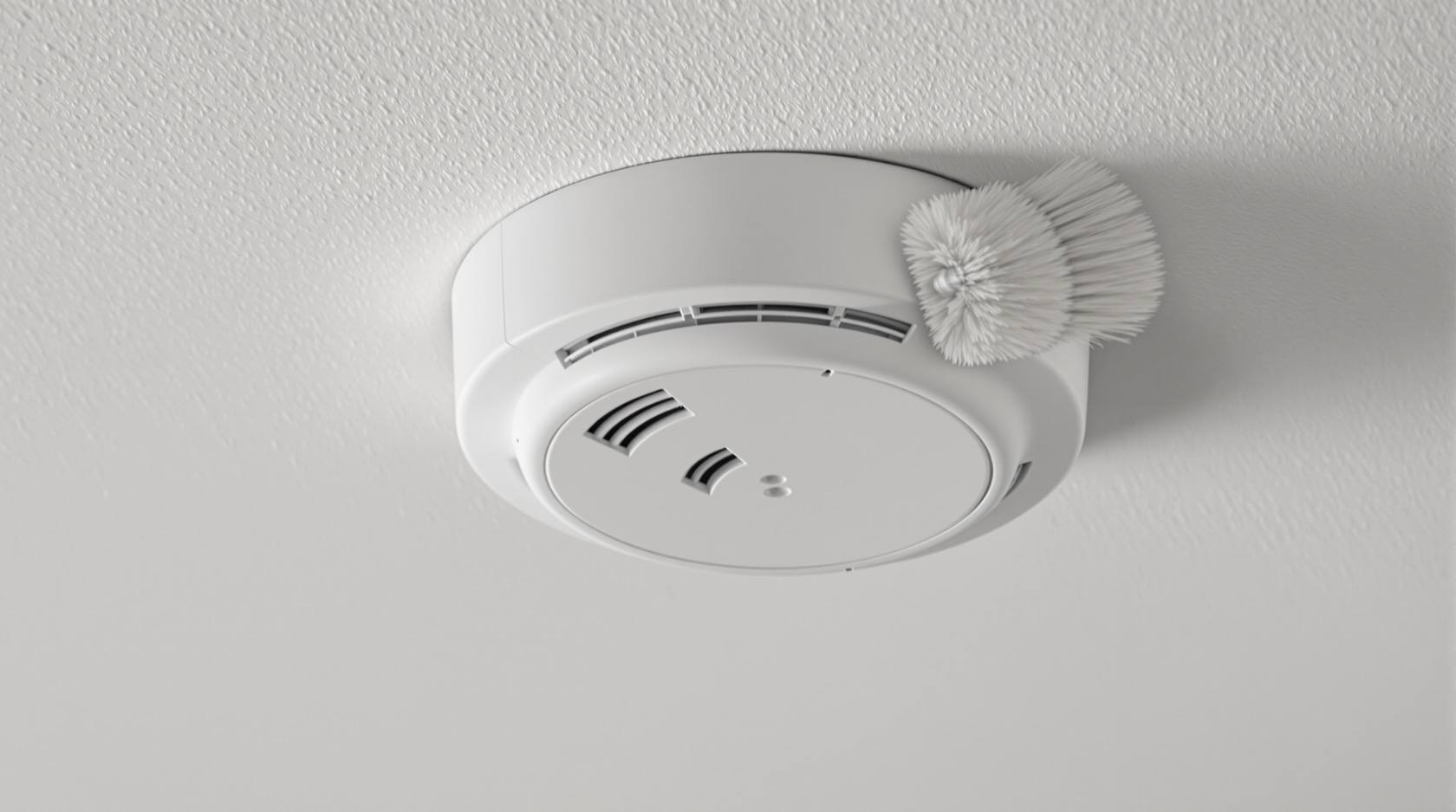
- Clean it gently. Vacuum the outer vents with a soft brush attachment, and blow out dust, cobwebs and insects. Do this every few months, and especially before and after the dusty pre-monsoon weeks.
- Replace the battery. Fit a fresh battery when it chirps, and as a habit once a year. Never respond to a low-battery chirp by removing the battery and leaving the detector dead.
- Replace an expired unit. If the printed date says it is past its life, swap the whole detector. Sensors drift with age; an old one is both more prone to false alarms and less reliable at catching a real fire.
- Use the right type near kitchens. A photoelectric sensor is generally less prone to cooking nuisance alarms than an ionisation type, which matters most near an Indian kitchen.
- Use the hush button -- briefly. Most detectors have a hush or silence button that quietens a nuisance alarm for a few minutes while you clear cooking smoke and open a window. Use it for exactly that. It is a pause, not an off switch, and it restores itself automatically. Never engineer a permanent silence.
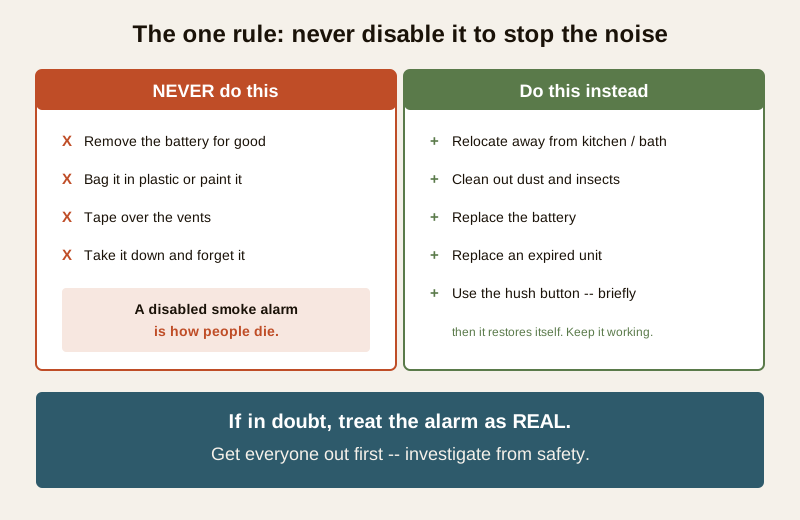
The never-disable rule. Removing the battery for good, taping over the vents, bagging the unit in plastic, painting it, or taking it down and forgetting it are all ways of turning off the device most likely to wake your family in a night fire. Every one of them is forbidden as a way to stop nuisance noise. If a detector is genuinely too annoying where it is, the answer is to relocate it, clean it, replace the battery or replace the unit -- never to kill it.
When it could be real
This deserves its own short section because it is the whole reason the device exists. If the alarm sounds and you cannot immediately and certainly rule out a fire -- get everyone out of the house first, then investigate from safety. Do not walk toward smoke to "check". Do not silence a real alarm. At night especially, when you are groggy and slow, assume it is real, wake everyone, and leave. A nuisance alarm that turns out to be steam has cost you five minutes outdoors; a real fire you slept through can cost everything. Always err toward getting out.
When to call a competent person
Most of this guide is safe DIY. Call a qualified electrician or your fire contractor when:
- The detector is hard-wired into the mains or interconnected with others in the house -- mains wiring and interconnected units are not a homeowner job.
- It is part of a building fire panel or a society's fire system -- that is a separate world; see fire alarm panel faults, and for scheduled upkeep fire alarm maintenance. A persistent fault on a building system means call the fire contractor; never leave it disabled.
- A standalone unit keeps false-alarming after correct placement, a clean chamber, a fresh battery and the right type -- treat it as faulty and replace it, and get help if you cannot reach or wire it safely.
- The detector is out of safe reach -- on a high ceiling or a stairwell -- where working at height needs proper support, not a wobbly chair.
Preventing it from recurring
Once you have fixed it, a little routine keeps the peace and keeps you protected:
- Test every detector monthly with its test button so you know it works and you recognise the sound. See fire alarm testing for how a proper test routine looks.
- Clean the vents every few months, and always before and after the dusty pre-monsoon period.
- Replace batteries yearly, or the moment a chirp starts -- never later, never by removing them.
- Place detectors right in the first place -- out of the direct line of cooking smoke and bathroom steam, but still protecting the sleeping and living areas.
- Note the expiry date when you install a new unit, and mark a reminder to replace the whole detector when its life is up.
Quick checklist
- Chirp = battery or end of life; full alarm = treat as real until proven otherwise.
- If in doubt about a real fire, get out first, investigate second.
- Cooking or steam nuisance? Relocate the detector, do not disable it.
- Dust and insects? Gently vacuum and blow it clean.
- Low-battery chirp? Fit a fresh battery -- do not pull it and leave it dead.
- Old unit past its date? Replace the whole detector.
- Never remove, bag, paint or abandon a smoke alarm to stop the noise.
Where to go next
- Security-system troubleshooting -- the pillar for every "it will not work" problem in the home.
- Choosing and placing smoke detectors -- getting the type and location right so it does not nuisance-alarm.
- Fire alarm testing and fire alarm maintenance -- keeping detectors honest over time.
- Fire alarm panel faults -- if the trouble is a building fire panel, not a standalone detector.
- The troubleshooting and fire-safety sub-hubs, and the main security hub.
References
- National Building Code of India (SP 7), Bureau of Indian Standards -- fire detection and alarm provisions for buildings; standalone household detectors supplement, never replace, a building's fire system. Verify the current edition (SP 7:2026) via the BIS catalogue: https://www.services.bis.gov.in/
- Manufacturer instructions supplied with your specific detector -- for the correct placement, cleaning method, battery type, hush-button behaviour and the printed replace-by date, always follow the maker's own guidance for your unit.
This is an educational homeowner guide, not fire-safety engineering or legal advice. A smoke detector is a life-safety device: never disable one to stop nuisance noise -- find and remove the cause and keep it working. If any alarm could be real, get everyone out first. For hard-wired, interconnected or building fire systems, engage a competent electrician or your fire contractor.
Export this guide
Related Guides — Deep-dive reading
Smoke Detectors in India (2026): Photoelectric vs Ionisation, Placement & Testing
The single most important fire-safety device every Indian home should own - how smoke detection works, which type to buy, exactly where to fit it, and how to keep it alive for a decade.
SecurityAlarm Siren Not Working (2026): Why It Triggers but Stays Silent in India
Your burglar alarm detects and the panel reacts, but the siren does not sound, or sounds weak and thin. A calm, ordered diagnostic for Indian homes: the settings, power, backup battery, wiring and hardware faults that leave an alarm that cannot be heard, what you can safely check yourself, and when to call your installer.
SecurityFalse Alarm Prevention for Burglar Alarms in India: Causes & Fixes (2026)
Why home alarms cry wolf — ceiling fans, pets, heat, insects, weak batteries, power blips and poor door alignment — and how correct placement, the right sensors and simple upkeep keep the system trusted and armed.
SecurityRelated Tools — Try Free
Acoustic Privacy (STC) Visualizer
Indian healthcare acoustic visualizer — compare wall assemblies and noise sources, see received SPL after STC attenuation, and check FGI 2018 / IS 1950 / NABH speech-privacy compliance with live dual-canvas waveform.
Acoustic ToolFull-Room BOQ — Living, Bedroom, Kitchen, Bath
Room-wise BOQ across living, bedrooms, kitchen, utility, and bathrooms with line-item pricing.
Full-Room BOQInterior Contract Clause Checklist
16 sections and 98 checkboxes covering scope, BOQ, milestones, penalties, warranty, and disputes.
Contract Checklist