
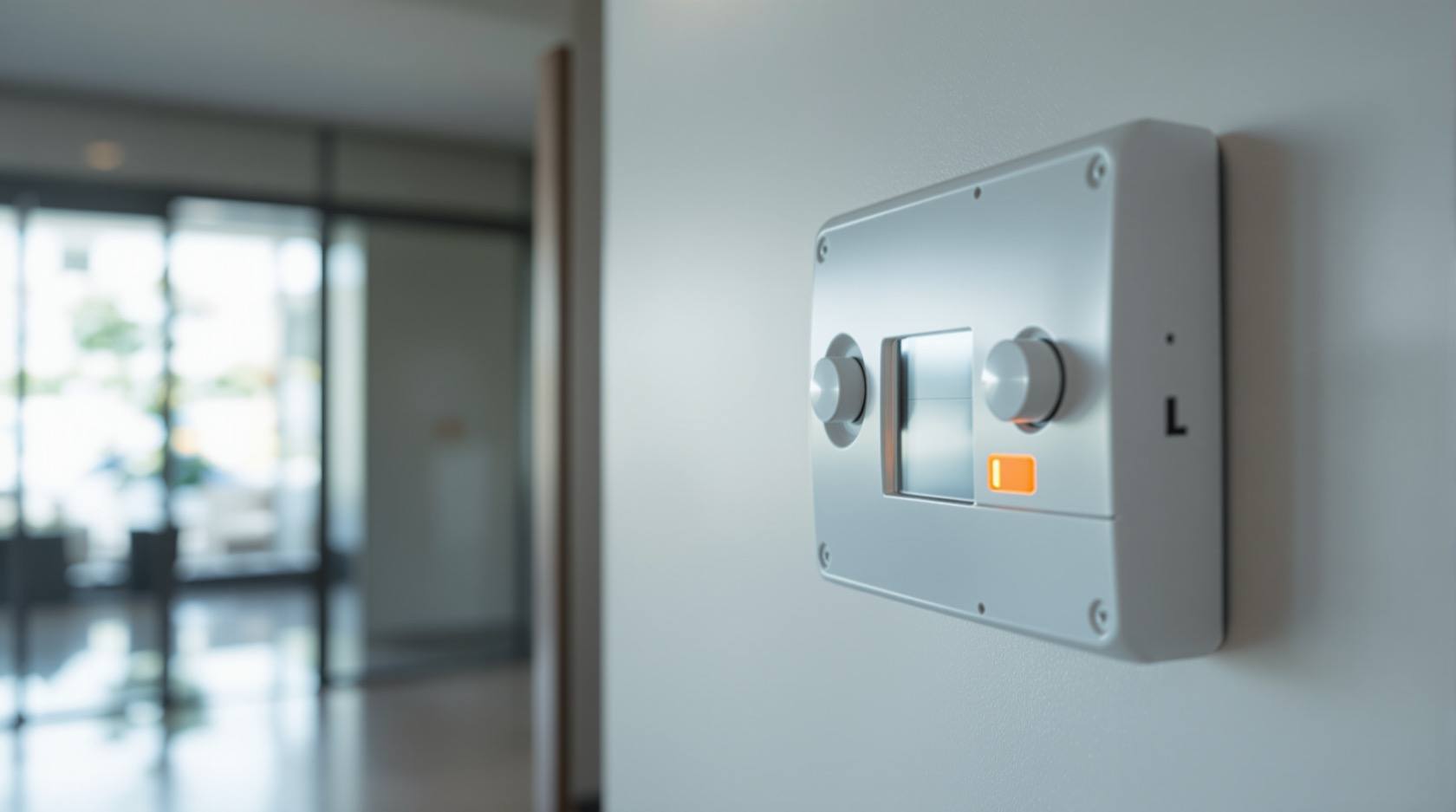
Fire Alarm Panel Faults in India (2026): Reading the Trouble Light and Restoring the System
Your building's fire alarm panel is showing a FAULT, a trouble light or a buzzing tone. A calm, ordered guide for facility managers and building teams on what the indication means, what a competent person may safely do, and why a life-safety system must be rectified and restored to normal, never left disabled.
The fire alarm panel in the lobby or the security room is showing something it does not usually show: an amber "fault" or "trouble" light, a lit zone indicator, and often a steady, insistent buzzing that everyone in earshot wants stopped. It is unsettling, and it should be taken seriously, but it is not the same as a fire, and in most buildings the cause is ordinary and fixable. A tired standby battery, a detector taken down during renovation, a loop wire nicked by a contractor, water finding its way into a device through a monsoon leak. The panel is doing exactly its job: telling you that some part of the system is not fully healthy, so that you fix it before you actually need it.
This guide is for the facility manager, the building team, the maintenance in-charge and the security supervisor who is standing in front of that panel. It explains, in plain language, what the different indications mean, walks an ordered diagnostic path, and draws a hard line between the few safe things a trained building person may do and the many things that belong strictly to your fire contractor or annual maintenance contract (AMC). Above all it insists on one rule that is not negotiable for any life-safety system.
Scope and safety. This is a diagnostic and coordination guide for building teams, not an installation or repair manual. A fire alarm panel in FAULT may fail to detect or warn in a real fire. A fault must be diagnosed and rectified by a competent fire technician and the system restored to normal. You may SILENCE the buzzer to stop the noise and you must LOG the event, but you must NEVER leave the system disabled, isolated or in permanent fault, and you must never "fix" a fault by disconnecting a zone or unplugging a device. If you cannot rule out a genuine alarm, treat it as real: evacuate and call the fire brigade. Egress, detection and warning are governed by the National Building Code (NBC = SP 7:2026). Records of faults and maintenance are statutory. This is not a price or a buying guide. When in any doubt, call your fire contractor.
First, is it a fault or a fire?
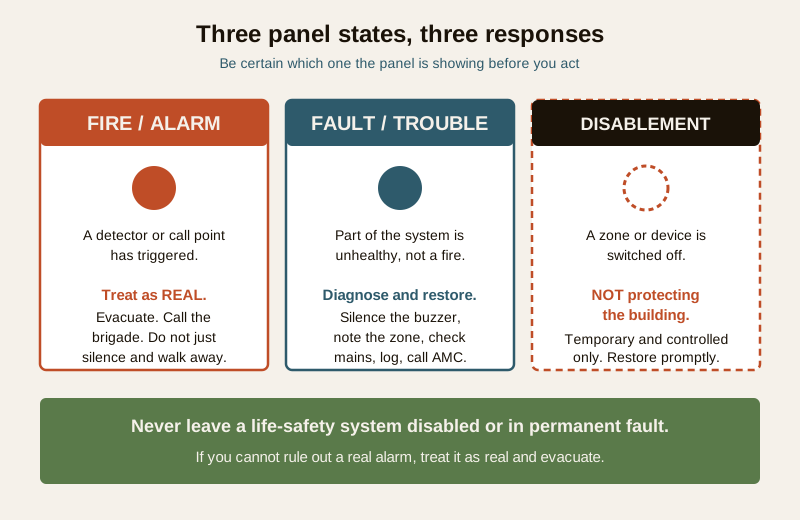
Before anything else, be certain which state the panel is in. Modern control panels distinguish clearly between conditions, usually by a separate coloured indicator and a different tone, but the words matter and people confuse them under stress.
| Panel state | What it means | The right response |
|---|---|---|
| FIRE / ALARM | A detector or call point has triggered. The system believes there is a fire. | Treat as real unless a competent person confirms otherwise. Follow the building evacuation plan. Do not silence and walk away. |
| FAULT / TROUBLE | Some part of the system is not fully healthy (power, battery, a device, wiring). The panel is warning you, not signalling a fire. | Silence the buzzer, read and note the zone and fault type, check the basics, log it, call the AMC. |
| DISABLEMENT / ISOLATE | A zone or device has been deliberately switched off, often during works. That part is NOT protecting the building. | Only ever temporary and controlled. Restore it the moment work is done. Never a way to make a fault "go away". |
The dangerous mistake is treating a fire as a fault, silencing it and getting on with the day. If you are not certain it is only a fault, treat it as a real alarm. A genuine detection is cheap to act on and catastrophic to ignore.
What a fault light is actually telling you
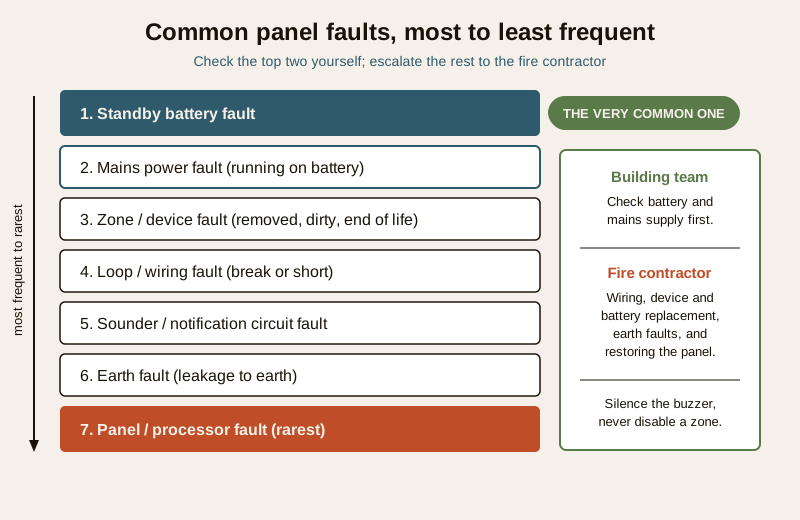
A fault condition is the panel reporting that it can no longer fully trust some part of itself. That is a good thing: a system that stays silent when a detector has died is far more dangerous than one that complains. The panel will usually indicate which zone or which category of fault is involved, and reading that is the whole first step of diagnosis.
The common causes, ordered roughly from the most frequent and ordinary to the rarest and most serious:
| Likely cause | Why it happens | Who rectifies it |
|---|---|---|
| Standby battery fault (the very common one) | The backup battery has aged, lost capacity or failed a periodic self-test. Batteries have a limited service life and are the single most frequent fault. | Fire contractor / AMC replaces to the correct specification. |
| Mains power fault | The panel has lost its normal mains supply and is running on battery; a tripped MCB, isolated circuit or genuine outage. | Building team can check the supply and MCB; electrical work by a qualified electrician. |
| Zone or device fault | A detector was removed, is dirty or contaminated, has reached end of life, or a device is faulty. Common after renovation or in dusty, humid conditions. | Fire contractor cleans, replaces or reseats the device to spec. |
| Detection loop / wiring fault | A break (open circuit) or a short in the cabling of a zone or loop, often from drilling, rodents, water ingress or a disturbed junction. | Fire contractor traces and repairs the wiring. |
| Sounder / notification circuit fault | A break or short in the wiring to the sounders, bells or beacons, so the warning devices may not operate. | Fire contractor repairs the notification circuit. |
| Earth fault | Part of the wiring is leaking to earth, often through moisture or a damaged cable. It degrades reliability even if the system still runs. | Fire contractor locates and clears the earth fault. |
| Panel / processor fault | An internal fault in the control equipment itself. Rarer, and entirely a contractor matter. | Fire contractor diagnoses and repairs or replaces. |
Notice the pattern shared with every troubleshooting guide: power and connections and consumables first, deep hardware last. In a fire panel the standby battery and the mains supply account for a large share of routine faults, and they are also the two things a trained building person can safely check before escalating.
The diagnostic path for a competent person
Work in order. The goal of the building team is not to repair the system but to understand the fault well enough to silence the noise safely, keep protection running, and give the contractor an accurate picture.
1. Read the panel. Which zone is indicated? Which category of fault, if the panel names one (power, battery, zone, earth, sounder)? Write it down exactly as shown. This single note saves the contractor an hour and you a call-out surcharge.
2. Confirm it is a fault, not a fire. Check the state indicators. If there is any sign of an actual alarm, or you cannot tell, stop diagnosing and treat it as real: raise the alarm and evacuate per the building plan.
3. Silence the buzzer only. Use the "silence buzzer" or "silence fault" control to stop the internal tone. This quiets the panel's own noise; it does NOT clear the fault, and it does NOT disable detection. Silencing is a courtesy to the building, not a fix.
4. Check the mains supply. Look at whether the panel's mains-healthy indicator is lit. Check that the panel's dedicated circuit MCB has not tripped and that there is not a wider power outage. Restoring a tripped supply (by a qualified person) may clear a mains fault; if the MCB trips again, stop and call for help.
5. Consider the standby battery. If the panel indicates a battery fault and the mains is healthy, this is almost certainly an ageing or failed battery. Note it. Battery replacement is a contractor task (correct type, rating and disposal) - do not improvise a substitute.
6. Ask what changed recently. Was there renovation, drilling, painting, cleaning or maintenance near the indicated zone? Was a detector taken down and not replaced? Has the monsoon caused a leak above a device? A disturbed or contaminated device is one of the most common zone faults, and knowing the trigger points the contractor straight to it.
7. Log it and call the AMC. Record the date, time, zone, fault type and what you checked, then call your fire contractor. Give them the panel reading. Keep the system energised and monitored until they arrive.
Throughout, the discipline is the same: understand and report, do not disassemble. You are the eyes at the panel, not the repair crew.
What a trained building person may safely do
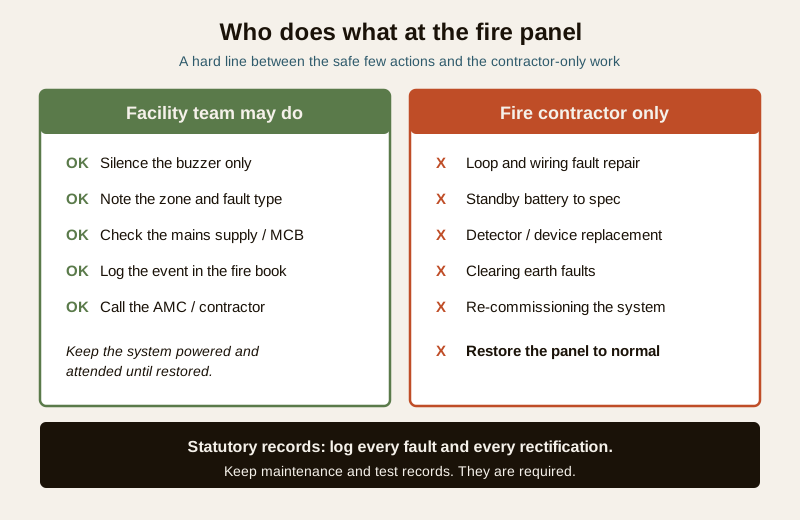
There is a small, clear set of actions a competent facility person may take without a fire technician. None of them involves opening the panel beyond the operator controls, touching field wiring, or disabling protection.
- Silence the internal buzzer using the panel's silence control, to stop the noise while you diagnose and escalate.
- Read and record the zone and fault type shown on the display.
- Check the mains supply is present: panel mains indicator, the dedicated MCB, and whether there is a building-wide outage.
- Restore a tripped supply where that is a simple, safe reset by a qualified person - and stop if it trips again.
- Identify a recent disturbance near the affected zone (works, cleaning, a leak) and pass that to the contractor.
- Log the event fully and raise the AMC call. Keep the panel powered and attended.
That is the whole safe list. If the buzzer will not silence, if the fault returns immediately, if more than one zone is affected, or if you cannot understand the indication, escalate at once.
What is strictly for the fire contractor or competent person
Everything below the operator panel belongs to a qualified fire technician working under your AMC. These are not homeowner-style jobs and attempting them can leave the building unprotected or the system unsafe.
Do not attempt these. They are strictly for a competent fire contractor: tracing and repairing detection loop or wiring faults (open or short circuits); replacing the standby battery to the correct specification; replacing or cleaning detectors and devices; diagnosing and clearing earth faults; repairing sounder and notification circuits; re-commissioning after any repair; and clearing and restoring the panel to its normal, fully-protected state. These require the right training, test equipment and parts, and a formal restoration so the system is verified as working again.
The contractor's job does not end at the repair. It ends when the panel is restored to normal - every zone active, every fault cleared, the system fully protecting the building again - and that restoration is recorded.
The rule you may never break
This is the heart of the guide, and it is different from fixing a leaking tap or a stuck lock. A fire alarm is a life-safety system. It is never acceptable to make a fault go away by disabling it.
- Silencing the buzzer is temporary and cosmetic. It stops the noise. It does not fix anything, and detection keeps running. That is fine.
- Disabling a zone, isolating a device or disconnecting a loop is NOT a fix. It stops the complaint by switching off protection for that part of the building. Whatever it was warning about is now unwatched.
- Never leave the system in permanent fault or permanent disablement. A panel that has been "made quiet" by isolating the troublesome zone is a building that will not be warned when it matters. This is how preventable fatalities happen.
- A persistent or unexplained fault means call the fire contractor now, not at the next convenient moment. Until the system is restored, consider whether a fire watch or other interim measure is needed for the affected area.
- If a genuine alarm cannot be ruled out, treat it as real - evacuate and call the fire brigade. It is always the safe choice.
Disablement has exactly one legitimate use: a controlled, temporary isolation of a zone during works that would otherwise cause false alarms (hot work, dust), applied knowingly, recorded, often with a fire watch in place, and restored the moment the work ends. It is a managed procedure, never a way to silence an inconvenient fault.
Records are not optional
A fire alarm system carries a statutory paper trail, and a fault is one of the events that must be recorded. Keep a maintained logbook (physical or digital) capturing every fault indication, what was checked, when the contractor attended, what was rectified and when the system was restored to normal, alongside the schedule of periodic tests and servicing. These records matter for the building's fire compliance, for insurance, and for any inspection - and they are exactly the history a contractor needs to spot a recurring problem. Treat the log as part of the system, not paperwork after the fact.
Preventing the next fault
Most fire panel faults are the predictable result of a system that is not being maintained on a schedule. The prevention is unglamorous and effective.
- Keep a live AMC with a competent fire contractor, with defined periodic servicing - this is the single biggest factor in a reliable system. See fire alarm maintenance.
- Test on schedule. Periodic functional testing catches a dying battery, a contaminated detector or a weak sounder before it becomes a fault at 2 a.m. See fire alarm testing.
- Replace standby batteries on a planned schedule, to specification, rather than waiting for the fault. Because batteries are the commonest fault, a proactive replacement cycle removes the commonest call-out.
- Protect devices during works. Before renovation, coordinate with your contractor to isolate and cover detectors against dust and paint, and to restore them immediately after - an uncovered detector in a dusty site is a guaranteed future fault.
- Watch for monsoon water ingress above ceiling-mounted devices and junction boxes; fix leaks promptly.
- Keep the panel accessible and its display readable, and make sure the team on shift knows how to read it, silence the buzzer and who to call.
A quick checklist for the person at the panel
- Confirm: is it FAULT, or is it FIRE? If unsure, treat it as real - evacuate and call the brigade.
- Silence the buzzer only. Do not disable anything.
- Read and note the zone and fault type exactly as displayed.
- Check the mains supply and the panel's MCB.
- Ask what changed recently near that zone (works, cleaning, a leak).
- Log the event in the fire logbook.
- Call the AMC / fire contractor and give them the reading.
- Keep the system powered and attended until restored to normal.
- Never leave it disabled, isolated or in permanent fault.
Where this sits in the bigger picture
A fire panel fault is one symptom in a family of building security and life-safety niggles. If you are working through several at once, start at the security system troubleshooting pillar, which maps the whole diagnostic landscape. For the closely related nuisance of a detector crying wolf, see smoke detector false alarms. The troubleshooting sub-hub collects these symptom-first guides, and the main security hub ties it all together.
Key takeaways
- A FAULT is not a FIRE. The panel is warning you that some part of the system is unhealthy. But if you cannot rule out a real alarm, treat it as real and evacuate.
- You may silence the buzzer and you must log the fault - but silencing fixes nothing and detection keeps running. That is correct.
- The standby battery and the mains supply are the commonest, checkable causes. Read the zone, check power and battery, note what changed recently, then call the AMC.
- Loop and wiring faults, battery and device replacement, earth faults, re-commissioning and restoring the panel are strictly for the fire contractor.
- Never make a fault go away by disabling a zone or disconnecting a device. A life-safety system must be rectified and restored to normal, never left disabled or in permanent fault.
- Records are statutory - log every fault and every rectification, and keep the AMC and testing schedule live to prevent the next one.
References
- National Building Code of India (SP 7), Bureau of Indian Standards - fire detection and alarm provisions, means of egress and life-safety requirements for buildings. Verify the current edition (SP 7:2026) via the BIS catalogue: https://www.services.bis.gov.in/
- Manufacturer operation and maintenance documentation for the installed control panel - the authoritative source for that panel's specific indications, silence and reset controls, and battery specification. Always work to the documentation for your actual equipment.
- Your building's fire alarm annual maintenance contract (AMC) and fire logbook - the record of servicing, tests, faults and restorations, and the correct first call for any fault you cannot safely clear.
This is an educational, diagnostic overview for facility managers and building teams, not an installation or repair manual and not legal advice. A fire alarm is a life-safety system: silence the buzzer if you must, but never leave it disabled, isolated or in permanent fault, and if a genuine alarm cannot be ruled out, treat it as real and evacuate. Loop and wiring faults, battery and device replacement, earth faults, re-commissioning and restoring the panel are strictly for a competent fire contractor. Keep statutory records and verify any standard's current status via the BIS catalogue before relying on it.
Export this guide
Related Guides — Deep-dive reading
Boom Barrier Not Operating (2026): Diagnose a Stuck or Dead Parking Gate Arm
A calm, ordered diagnostic path for a facility or security team when an apartment, office or parking boom barrier will not raise or lower, is stuck up or down, or will not respond — starting with the manual release so a jammed arm never traps a vehicle or blocks a fire lane, then power, trigger, safety loop and mechanical causes, and a clear line between safe checks and technician-only work.
SecurityEmergency Lighting Testing in India (2026): The Function Test, the Duration Test and the Battery That Quietly Dies
Emergency lighting is what gets people out of a building in a power cut or a fire — and it is useless if its batteries have silently gone flat. This professional guide covers what emergency lighting is, the two tests that keep it honest (the short frequent function test and the longer periodic duration test that catches dying batteries), what to test across escape routes, stairs and exit signs, the statutory test log, and the safe split of who does what.
SecurityFire Alarm Maintenance in India (2026): AMC, Battery Standby & Keeping It Alive
Most Indian fire-alarm systems are installed for the Fire NOC and then rot - dead batteries, painted detectors, isolated zones, a blank log book. This guide sets out what proper maintenance per IS 2189 : 2026 actually involves.
SecurityRelated Tools — Try Free
Access-Control Battery-Backup Calculator
Size the standby battery so an access system keeps running through a power cut, with an egress life-safety note.
Battery BackupElectrical Safety & Load Audit
Home electrical audit — 10 categories, 65+ checkpoints across earthing, RCCB, MCB, wiring, switchboards, appliance circuits, DG/inverter backup.
Safety AuditMonsoon-Readiness Checklist
Pre-rain home audit across 9 categories — terrace, drains, waterproofing, electrical, HVAC, pest, vehicles, documents.
Seasonal Audit