

Smart Security Windows in India: Sensors, Alarms and Alerts
Connected intrusion detection for windows — open/close sensors, glass-break and vibration detectors, smart locks and real-time phone alerts, built for Indian power cuts and connectivity.
A strong frame, good glass and a multipoint lock decide how long a window resists a break-in. A smart security window decides whether you, your neighbour and your phone know about it the moment it starts. This guide is about the detection-and-monitoring layer: the sensors, detectors and connected locks that turn a quiet window into one that shouts.
Be honest with yourself: no sensor stops a determined intruder. Security is delay plus deterrence plus detection. Smart devices add the third leg — and an early alert often is the deterrent.
This guide is NOT about switchable glass
Two cousin guides share the word "smart" and constantly get confused with this one. Sort them out before you spend a rupee:
- Smart Glass Windows — switchable privacy glass that turns frosted at the flick of a switch. That is about visibility, not intrusion.
- Smart Windows Cost in India — the price of that switchable glass.
- This guide — connected intrusion detection and monitoring: knowing when a window is opened, broken or forced. No special glass required; most of it bolts onto windows you already own.
If you want the full layered model — frame, glass, locks, grille, sensors and habits — start at the pillar, the Window Security Guide, then come back here for the electronics.
The five devices and what each one actually detects
Each device senses one thing. Layer two or three and you cover the realistic attack paths on a window: opening it, smashing it, or prying it.
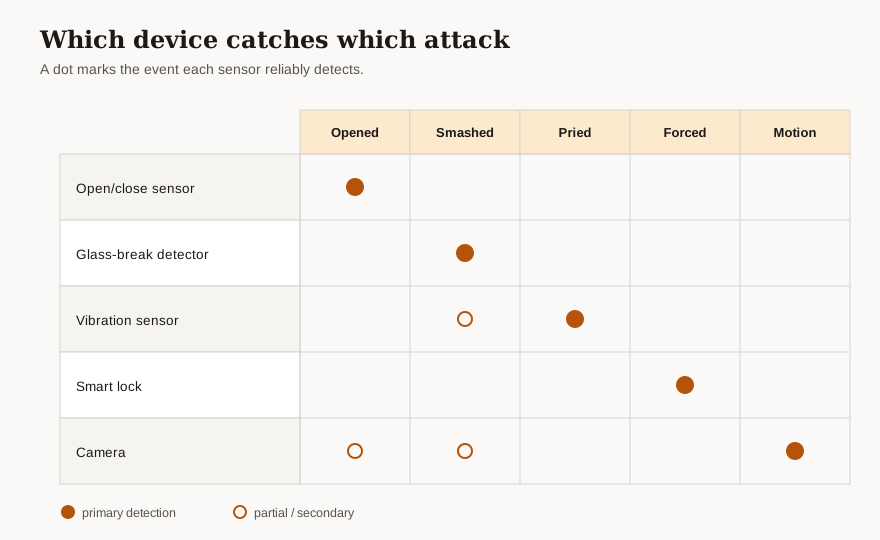
| Device | What it detects | How it works | Best window |
|---|---|---|---|
| Open/close (reed) sensor | Sash or shutter being opened | Magnet on the sash separates from a reed switch on the frame | Casement, sliding, awning |
| Glass-break detector | Glass being smashed | Acoustic mic listens for the "thud + shatter" frequency signature | Large fixed and picture glazing |
| Vibration/shock sensor | Drilling, prying, hammering the frame | Accelerometer feels impact before the glass goes | Grilles, shutters, weak frames |
| Smart multipoint lock | Lock state (locked/unlocked/forced) | Motorised or sensed bolts report status to the hub | Casement, French/patio doors |
| Smart camera (window-facing) | Motion and a visual record | PIR motion plus video clip to the cloud or local card | Verandah, ground-floor approach |
A reed sensor is the workhorse and the cheapest entry point: two parts, a five-minute stick-on job, and it tells you the instant a window opens. But it does nothing if the intruder breaks the glass and climbs through the hole without moving the sash — that is exactly the gap a glass-break detector fills. A vibration sensor catches the attempt even earlier, while the frame is still being worked.
Sensor placement — where they go on the window
Placement decides whether the device fires reliably or floods you with false alarms.
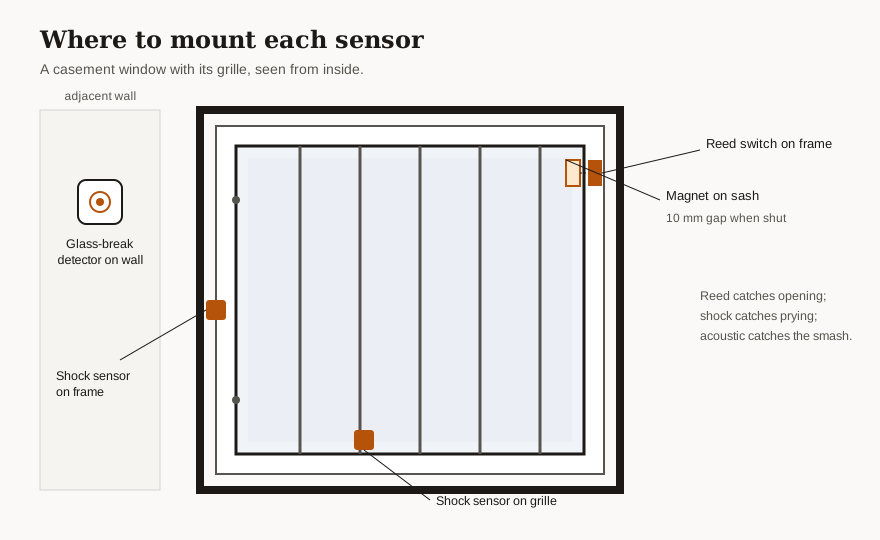
- Reed sensor: mount the switch on the fixed frame and the magnet on the moving sash, with the two halves within about 10 mm when closed. On sliding windows put it on the leading edge where the shutters meet.
- Glass-break detector: one acoustic unit covers a room if it has line-of-sound to the glass, typically up to about 6 metres. Mount it on a wall or ceiling near the largest pane, not on the glass itself.
- Shock/vibration sensor: stick it directly on the frame or on the grille, where it can feel a crowbar or drill.
- Keep sensors away from the kitchen and pooja area — clattering vessels and a ringing bell can trip an acoustic detector.
How it all talks: the alarm-integration schematic
A single sensor is a doorbell. The value comes when every device reports to one hub, the hub runs the rules, and the rules reach your phone, the siren and the camera together.
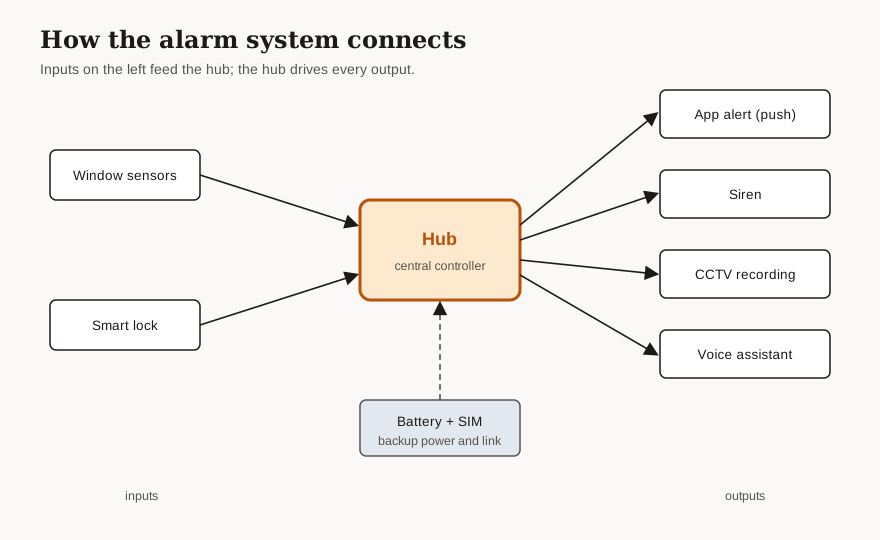
A typical chain: a reed sensor trips at 2 a.m. while the system is "armed away" → the hub fires the siren, pushes a real-time alert to your phone, and tells the CCTV to start recording and clip the next 30 seconds → you open the app, watch the live feed, and decide. Tie-ins worth setting up:
- App alerts: instant push notifications; the realistic value is knowing within seconds, wherever you are.
- CCTV trigger: the sensor event timestamps and starts the recording, so you are not scrubbing hours of footage.
- Voice assistant: "Alexa, is the house armed?" or a spoken announcement when a window opens during the day — useful, but treat it as convenience, not security.
- Geofencing: the system can arm automatically when the last phone leaves the apartment and disarm when you return, so nobody forgets to set it.
India realities: power cuts, connectivity and cost
This is where imported product specs meet Indian conditions.
- Power cuts: a Wi-Fi-only system goes blind when the mains and the router die together. Choose a hub with a battery backup (and ideally a SIM/cellular fallback) so an alert still leaves the house during a load-shed. A small UPS or inverter on the router is the cheap fix many homes already have.
- Connectivity: patchy broadband means push alerts can be delayed. Prefer systems that keep a local siren and local recording so detection still works offline; the cloud alert is a bonus, not the only line.
- Battery life: most reed and shock sensors run 1 to 3 years on a coin cell; glass-break and camera units drain faster. Pick a hub that reports low-battery status, or a dead sensor becomes a silent blind spot during the next outage.
- Mesh vs Wi-Fi: Zigbee/Z-Wave sensors mesh through the hub and sip power; pure Wi-Fi sensors are simpler to set up but heavier on battery and on your router.
- Grille rule still applies: electronics never replace a safe exit. At least one grille per room must remain openable from inside for fire escape, exactly as the pillar guide and window grills guide insist.
DIY or professional?
Most window sensors are genuinely DIY. The judgement call is the hub, the alarm logic and anything that controls a lock.
| Task | DIY | Professional |
|---|---|---|
| Stick-on reed and shock sensors | Yes — peel, align, pair in the app | — |
| Glass-break detector placement | Yes, with the app's test mode | If room acoustics are tricky |
| Smart multipoint lock / motorised bolts | Retrofit cylinders, yes | New mortise/multipoint cut-out, yes |
| Hub, rules, geofencing, CCTV tie-in | Yes for app-based kits | For monitored/wired panels |
| Wired alarm panel with monitoring | — | Yes |
Indicative costs (2026, Indian market)
Prices vary widely; treat these as planning figures, not quotes.
| Item | Indicative cost |
|---|---|
| Reed (open/close) sensor | Rs 400 to 1,200 each |
| Glass-break detector | Rs 1,500 to 4,000 each |
| Vibration/shock sensor | Rs 800 to 2,500 each |
| Smart multipoint / retrofit smart lock | Rs 6,000 to 20,000 |
| Hub with battery and SIM backup | Rs 4,000 to 12,000 |
| Window-facing smart camera | Rs 2,500 to 8,000 |
| Typical 2–3 BHK starter kit (hub + 4 sensors + siren) | Rs 8,000 to 18,000 |
Retrofit checklist
- Reed sensors on every ground-floor and accessible window first; upper floors next.
- One glass-break detector per room with large fixed glazing.
- Shock sensors on grilles and weak frames where prying is the likely method.
- A hub with battery plus cellular backup, given Indian power and broadband reality.
- Arm-away geofencing so the system is never left disarmed by habit.
- Pair detection with real delay: see Burglar-Resistant Windows for RC-rated frames and Window Locks and Hardware for the multipoint locks a smart lock should be built on.
The smart layer buys you minutes and certainty, not invincibility. Put it on top of a window that already resists — strong frame, laminated glass, multipoint lock, grille — and the sensor turns a good window into one that protects you even when you are 2,000 km away.
For where smart fits among the nine window types, see Types of Home Windows in India.
References
Export this guide
Related Guides — Deep-dive reading
Window Security Guide
The layered-defence model for Indian homes — frame, glass, locks, grille and sensors working together
Windows & GlazingGlass-Break Sensors in India (2026): Catching a Smashed Pane Before Entry
How acoustic glass-break sensors listen for the twin sound of breaking glass, why they cover what door and window contacts miss, and how to place one sensor to protect a whole room of windows in an Indian home or shop.
SecuritySmart Home Security Systems in India: CCTV, Sensors, Alarms & AI
How to think in layers — perimeter, entry, interior — and build a system that actually protects an Indian home: AI cameras, video door phones, door and glass-break sensors, alarms, panic buttons, gate automation, monitoring and DPDP-aware privacy, with real brands and rupee costs.
Smart HomeRelated Tools — Try Free
Security Backup Power Calculator
Size a UPS/inverter and battery to keep CCTV, NVR, router and alarm running through a power cut — load, Ah, VA and cost.
Backup PowerAccess-Control Battery-Backup Calculator
Size the standby battery so an access system keeps running through a power cut, with an egress life-safety note.
Battery BackupWindow Grill Design Selector
Pick a window grille style and material by priority — security, looks, budget, view — and estimate cost.
Window Tool