
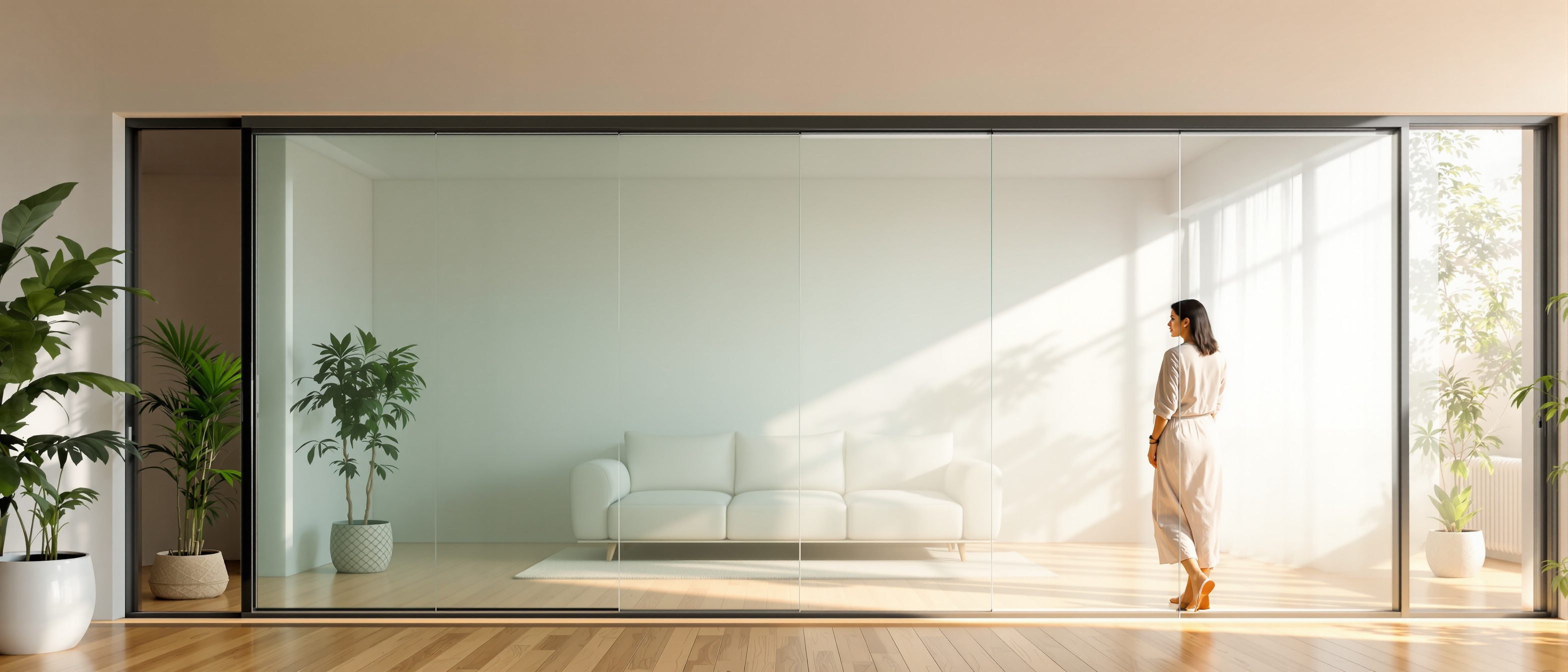
Cost of Smart Windows in India (2026): Switchable Glass, Honestly Priced
What PDLC switchable glass, retrofit smart film and electrochromic windows really cost installed in an Indian home — glass plus the controller and wiring nobody quotes — and when a blind beats them.
Smart windows promise something blinds never can: glass that turns from clear to private at the touch of a switch, with no fabric to gather Mumbai dust or fade in Chennai sun. The catch is the price tag, and the showroom rarely tells you the whole of it. The glass is only one line on the invoice; the controller, the transformer and the low-voltage wiring are the lines people forget. This is the honest cost deep-dive for switchable and smart glazing in an Indian home in 2026 — what it is, what it actually costs installed, and when it beats a good motorised blind.
All prices here are indicative for June 2026 in rupees, supply-only unless stated, and exclude 18 per cent GST. Smart glass is a low-volume, made-to-order product — confirm every number with itemised quotes from authorised fabricators.
This is the dedicated cost guide. For the full menu of frame materials and glazing physics, see the pillar Cost of Windows in India; for the look these panels usually deliver, see Floor-to-Ceiling Windows in India. Smart glass is window-scale and glass-led; if you are thinking building-skin, that is a different scale entirely — see Smart and Kinetic Facades in India.
What "smart windows" actually means
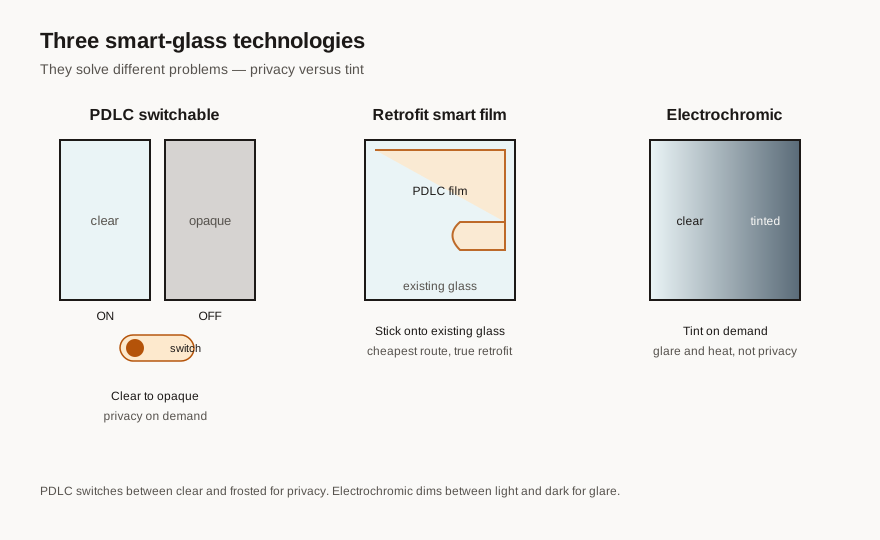
Three different technologies get sold under the same banner, and they do not cost the same.
- PDLC switchable glass (Polymer Dispersed Liquid Crystal). A liquid-crystal film is laminated between two glass panes. Power off, the crystals scatter light and the glass is milky-opaque; power on, they align and it goes clear in under a second. This is the privacy-on-demand product most Indian buyers mean. It needs continuous low-voltage AC to stay clear.
- Smart film (retrofit PDLC). The same PDLC layer supplied as a self-adhesive film you stick onto your existing clear glass. No new glass, no frame change — the cheapest way in, and the only true retrofit.
- Electrochromic glass. Self-tinting glass that darkens to cut glare and heat (it does not go fully opaque for privacy). It sips power only while changing state, but it is the priciest and least available option in India.
PDLC switches between clear and frosted for privacy. Electrochromic dims between light and dark for glare and heat. They solve different problems — do not let a vendor blur the two.
The headline rates
| Product | Indicative rate (₹/sqft, glass only) | What it does | Power |
|---|---|---|---|
| Switchable PDLC glass | ₹800–1,800 (commonly ₹1,000–1,250) | Clear to opaque privacy | Continuous low-voltage to stay clear |
| Retrofit smart film | around ₹1,000 | Clear to opaque on existing glass | Continuous low-voltage to stay clear |
| Electrochromic glass | higher than PDLC (premium) | Tint-on-demand, glare and heat | Power only when switching |
Brands you will see quoted include AIS Swytchglas, Saint-Gobain and specialist fabricators such as Smartglass. Rates move with panel size, glass thickness, toughening and order volume — a single bathroom panel costs more per square foot than a large project order.
The number that surprises people is not the glass — it is everything around it.
The cost stack: glass is not the invoice
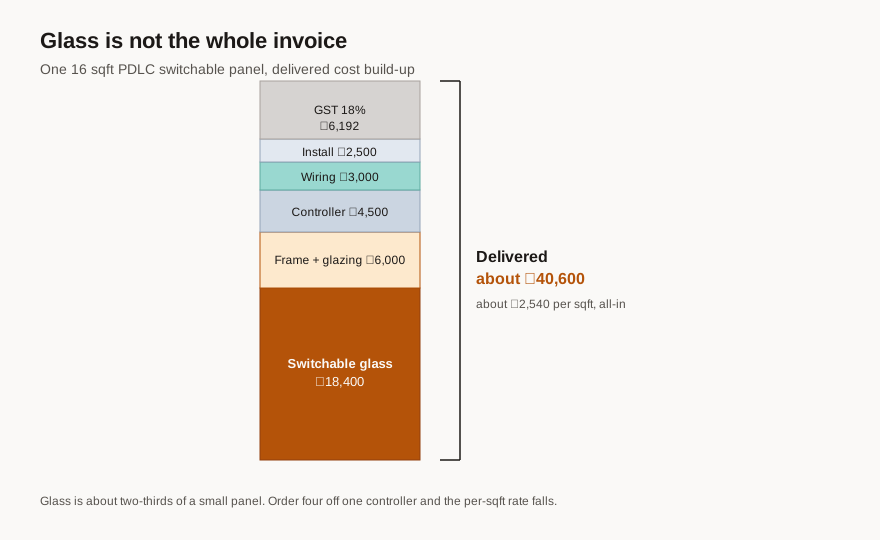
A switchable window is glass plus electronics plus a frame plus labour. Quoted as one figure, the per-square-foot rate hides the controller and wiring that any switchable panel needs.
- The smart glass itself — ₹800–1,800/sqft (PDLC), the biggest single line.
- Controller and transformer — PDLC runs on low-voltage AC, so each circuit needs a transformer or driver. A basic on/off switch is modest; a dimmable, remote or app-and-voice controller adds more. Budget a few thousand rupees per controlled zone, more for smart-home integration.
- Low-voltage wiring — concealed cabling from the transformer to the glass edge, ideally run before plastering. Retrofitting wiring into a finished wall adds chasing and making-good.
- Frame and glazing into the opening — the same frame cost as any window of that material. Smart glass is heavier and thicker (it is always laminated), so the frame and hardware must be specified to suit.
- Installation — handling laminated electrified glass needs care; figure standard glazing labour plus an electrical connection step.
- 18 per cent GST on materials and services.
Treat the glass rate as roughly two-thirds of the delivered cost of a small switchable window. The controller, wiring and frame make up the rest — and on a single panel they do not get cheaper.
Worked example: one 16 sqft switchable panel
Take a 4 ft by 4 ft partition or window — 16 sqft — in PDLC switchable glass, mid-range rate.
| Line item | Basis | Amount (₹) |
|---|---|---|
| Switchable PDLC glass | 16 sqft at ₹1,150/sqft | 18,400 |
| Controller and transformer | one zone, simple remote | 4,500 |
| Low-voltage wiring and connection | concealed run, short | 3,000 |
| Frame and glazing into opening | aluminium, mid | 6,000 |
| Installation labour | handling and electrical connect | 2,500 |
| Subtotal | 34,400 | |
| GST at 18 per cent | 6,192 | |
| Delivered total | about ₹40,600 |
That is roughly ₹2,540 per sqft, all-in for a one-off small panel — well above the bare glass rate, because the fixed costs of the controller, wiring and frame are spread over only 16 sqft. Order four panels off one controller and the per-square-foot number falls noticeably; the electronics and a single transformer get shared.
A cheaper route to the same privacy: retrofit smart film at around ₹1,000/sqft onto the glass you already have. For 16 sqft that is about ₹16,000 plus the controller, wiring and GST — you skip the frame and new glass entirely. The trade-off is durability, covered next.
The honest cost-benefit
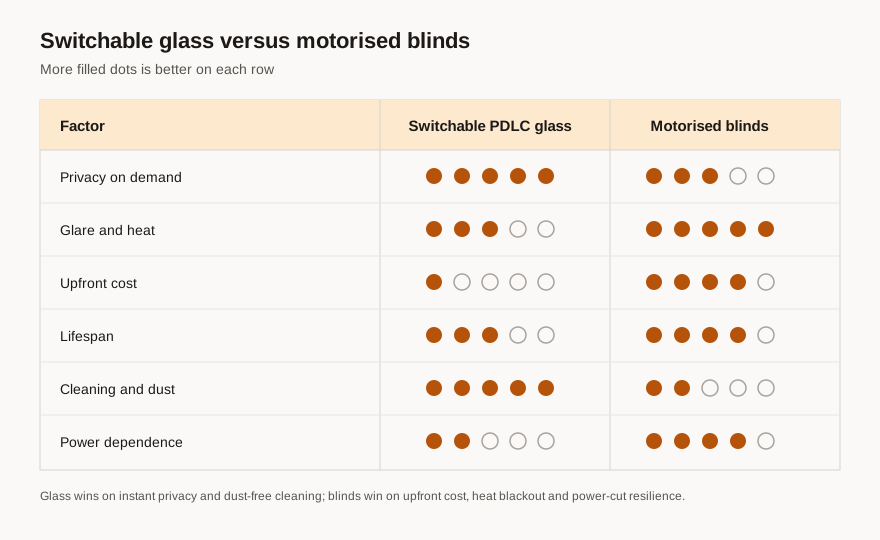
Smart glass earns its premium in specific situations and wastes it in most. The fair comparison is not "smart glass versus nothing" — it is "smart glass versus a good motorised blind".
| Factor | Switchable PDLC glass | Motorised / good blinds |
|---|---|---|
| Privacy on demand | Instant, full, no moving parts | Good, but slats or fabric visible |
| Glare and heat control | Frosting diffuses glare; modest heat cut | Blackout fabric cuts both well |
| Upfront cost (per sqft, installed) | High (₹1,500–2,500+ on small jobs) | Low to moderate |
| Lifespan | PDLC film often 10–15 years, then re-glaze | Fabric or motor swap, cheaper |
| Cleaning and dust | Flush glass, wipes clean — a real win in dusty cities | Slats and fabric trap dust |
| Power dependence | Goes opaque on power cut (fails private, not clear) | Manual override usually possible |
The standout case for the premium is the frameless flush look with zero dust traps — a glass shower or office cabin, a pooja-room or bedroom partition, a street-facing ground-floor window where a blind would look ordinary. The standout risk is the film-life replacement: PDLC film commonly lasts 10–15 years, after which the panel can yellow or develop hot-spots and effectively needs re-glazing — a future cost a blind never carries.
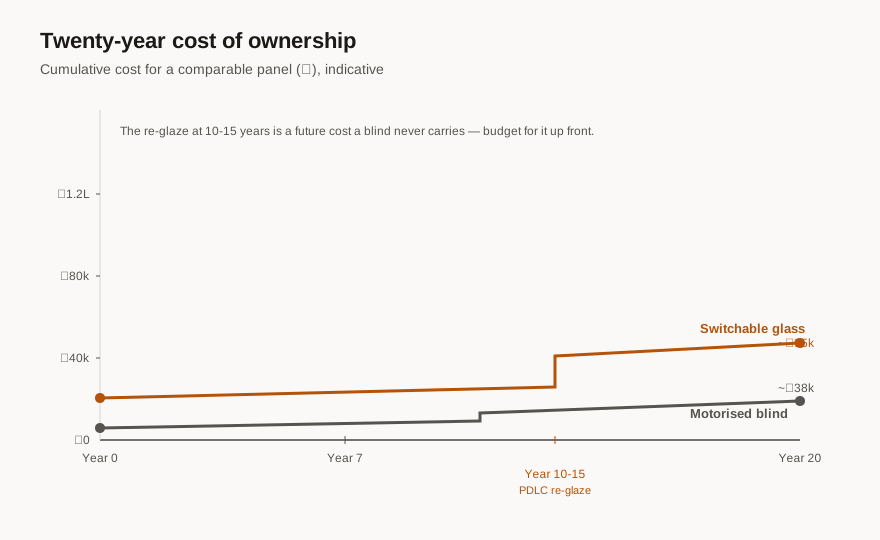
When is it worth it? When privacy must be instant and the surface must read as clean glass — bathrooms, partitions, clinics, street-level rooms, conference cabins. When is a blind the smarter rupee? Almost everywhere you simply want to block light or heat, where the budget is tight, or where a power cut leaving the glass stuck opaque would annoy you. For pure heat and glare on a large picture window, low-SHGC double glazing plus external shading is cheaper and more effective than asking switchable glass to do a job it is not built for.
How to buy without overpaying
- Specify the technology by name — PDLC for privacy, electrochromic for tint. Do not pay electrochromic prices for a privacy need PDLC handles.
- Group panels onto one controller to share the transformer and wiring cost; one-off panels carry the worst per-square-foot economics.
- Run the low-voltage wiring before plastering — retrofitting cable into finished walls is the avoidable surprise.
- Ask for the film-life warranty in writing and budget a re-glaze at the 10–15 year mark.
- Get the rate broken out — glass, controller, wiring, frame, install, GST — never a single blended figure.
For the bigger picture of where windows eat your budget, return to the pillar Cost of Windows in India. To see whether the dramatic glass wall you are picturing wants switchable panels at all, read Floor-to-Ceiling Windows in India — that guide is the full window profile; this one is purely the cost case for making the glass smart.
References
- Switchable glass price in India (Glasstronn): https://glasstronn.com/switchable-glass-price-in-india/
- AIS Swytchglas switchable smart glass (AIS): https://www.aisglass.com/building-and-construction/value-added-glass/ais-swytchglas/
- Windows price per sq ft in India 2026 cost guide (Building and Interiors): https://buildingandinteriors.com/upvc-windows-price-per-sq-ft-india-2026-cost-guide/
- uPVC windows price per sq ft in India (Weatherseal): https://weatherseal.com/upvc-windows/upvc-windows-price-per-sq-ft-in-india-latest-cost/
Export this guide
Related Guides — Deep-dive reading
Cost of Floor-to-Ceiling Windows in India (2026): What Full-Height Glass Really Costs
Why full-height glazing costs ₹900 to ₹2,000-plus per sqft installed, a worked living-room glass-wall example, and the add-ons most quotes leave out.
Windows & GlazingSmart Glass Windows in India: Switchable, Self-Tinting Glass Explained
How PDLC, electrochromic, SPD and thermochromic glass work, what each one actually does, and which switchable technology to choose for privacy, heat and glare.
Windows & GlazingThe Truth About Cost Per Square Foot
Why a ₹/sqft interior quote is the most misleading number in Indian home costing — and how to convert it into a real BOQ
Cost & MoneyRelated Tools — Try Free
Brise-Soleil Visualizer
Interactive horizontal-louvre cut-off angle calculator — sun altitude, louvre depth, and spacing inputs with a live shadow preview. Computes θ = arctan(spacing/depth) for façade shading, ECBC envelope compliance, hospital daylight design, and tropical sun-control detailing.
Sun Shading ToolWindow Cost Calculator
Estimate window price plus installation by type, frame material, size, glass and quantity.
Window CalculatorWindow Material Comparison Tool
Compare uPVC, aluminium, wood, steel and composite windows on cost, life, upkeep and insulation.
Compare