
Rolling Shutter Doors in India: Types, Cost & Security Guide (2026)
Manual vs motorised rolling shutters for garages, car porches, shop-cum-house fronts and store rooms — materials, ₹/sq ft, automation and upkeep.
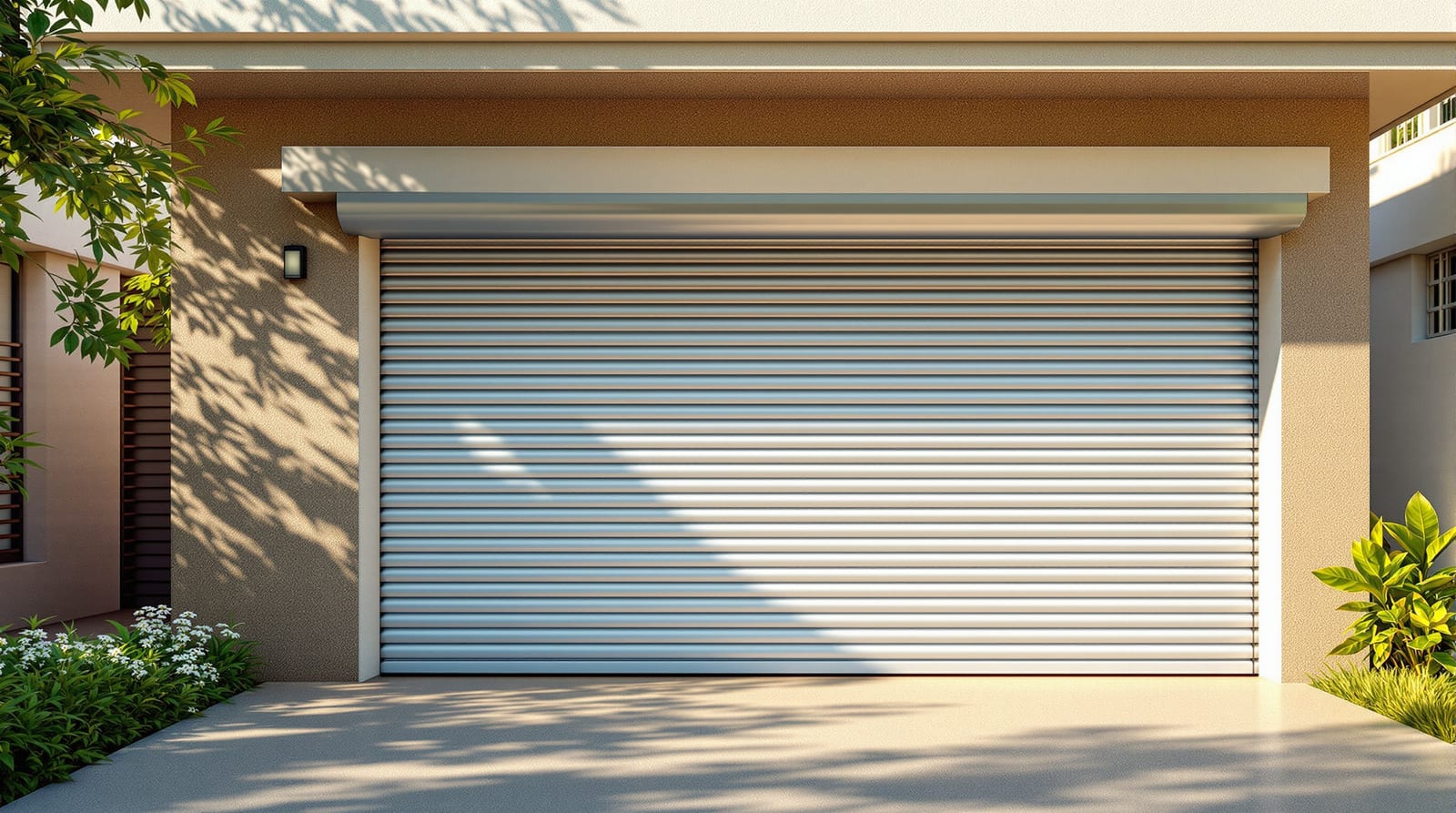
The rolling shutter is the quiet workhorse of the Indian ground floor. It seals a garage against a monsoon squall, locks down a store room, and pulls the shop half of a shop-cum-house down at closing time — all by rolling a single curtain of interlocked slats up into a barrel overhead, taking up almost no floor or swing space. For a porch or parking bay where a hinged or sliding leaf would be impossibly wide, a rolling shutter is often the only door that fits. This guide walks through the types you can actually buy in India, what each costs per square foot, how secure it really is, and what it takes to keep it rolling smoothly for fifteen years.
If you are still weighing a shutter against an openable barricade, read this alongside our guide to collapsible gate doors and the broader types of doors in India overview before you commit.
What a rolling shutter actually is
A rolling shutter is not a single panel — it is a curtain made of many horizontal slats (laths) hinged into one another, so the whole thing can curl up like a tape measure into a coil. That coil sits on a steel barrel (the roller) mounted in a hood or box above the opening. Inside the barrel are helical or torsion springs that counterbalance the curtain's weight so you (or a small motor) can move it. The curtain runs up and down inside two vertical guide channels (guide rails) fixed to the jambs, and a bottom rail with a locking arrangement seals it to the floor.
The slat profile defines the family. Solid interlocking slats give you a blank security wall. Perforated or grilled slats let in light and air while staying locked. Transparent polycarbonate slats let you keep a shopfront visible after hours. Aluminium slats cut the weight roughly in half versus steel. The diagram below shows the anatomy in section.
The main types of rolling shutter
By operation: how you move the curtain
Manual push-up (self-coiling). The simplest and cheapest. Spring tension in the barrel counterbalances the curtain, so you lift the bottom rail by hand and pull a strap or hook to bring it down. Practical up to roughly 9-10 feet wide and a sensible weight; beyond that it gets heavy and the springs strain. Ideal for a single car porch, store room or a modest shop face.
Gear / chain (manual mechanical). A reduction-gear box with a chain or crank lets one person move a much heavier or wider curtain with little effort. This is the workhorse for a double-car garage, a wide shop front, or any MS shutter above about 100-120 sq ft where push-up becomes a two-person job. Slower to operate but very reliable and cheap to maintain.
Motorised / remote (automatic). A tubular motor inside the barrel, or a side-mounted motor, drives the curtain at the press of a wall switch or a remote fob; many now pair with a phone app or work alongside your smart locks and access systems. Look for a manual override (a crank or a clutch chain) so a power cut does not trap your car inside. This is the comfort option for daily-use home garages and the security option for shopfronts.
By material and slat type
| Shutter material / type | Indicative cost (₹/sq ft) | Security | Light / air | Best home use |
|---|---|---|---|---|
| MS galvanised, solid slats (manual) | 130-260 | High | None | Garage, store room, terrace utility |
| MS galvanised, solid slats (motorised) | 280-500 | High | None | Daily-use car garage |
| Aluminium, solid slats | 250-550 | Medium-high | None | Car porch (lighter, rust-free) |
| Perforated / grille (MS or alu) | 220-450 | High | Good (locked-open look) | Shop-cum-house front, ventilated store |
| Polycarbonate / transparent | 300-650 | Medium | Excellent (see-through) | Shopfront display, glazed porch |
| Insulated (double-skin, foam core) | 450-900 | High | None | Climate-controlled garage / utility |
Costs are for the shutter curtain and operation only and are indicative for 2026, varying by city, vendor, gauge and finish; guide rails, hood, locks, electrical work and +18% GST are usually extra.
MS galvanised is the default Indian rolling shutter — strong, repairable by any fabricator, and cheap. Galvanising (a zinc coat) is essential in coastal and high-rainfall belts; bare painted MS will streak rust within a season. Aluminium is roughly half the weight, never rusts, and looks neater, but is easier to dent and pricier — a good match for a car porch on the seafront. Polycarbonate / transparent slats (often alternated with metal) keep a shop's wares visible after hours and suit a glazed front; they scratch and yellow over years and offer less brute-force resistance. Perforated or grille shutters give you a locked barrier you can still see and breathe through — popular for a shop-cum-house where you want airflow into the ground floor without rolling the curtain fully up. Insulated double-skin shutters with a foam core cut heat and noise and suit a garage you have converted to a gym or workshop.
Where each type suits an Indian home
- Single car porch / parking bay: manual push-up MS (galvanised) or a light aluminium shutter. Add a motor if it is your daily-use door and you would rather not step out in the rain.
- Double garage / wide opening: gear-operated MS, or motorised with manual override. Push-up is impractical at this size.
- Shop-cum-house ground floor: perforated or polycarbonate for the retail face by day, plus a solid roll for night security; motorised saves the shopkeeper's back twice a day.
- Store room / godown / utility: plain MS push-up — cheapest, toughest, and you do not care about looks.
- Terrace utility / pump-and-tank enclosure: compact aluminium or MS shutter to weatherproof equipment without a swinging leaf eating the terrace.
For the parts of the house behind the shutter, a separate weather-and-security door still matters — see our notes on steel doors and overall door security.
Security: how safe is a rolling shutter?
A solid interlocked MS curtain is genuinely hard to defeat without power tools — far more resistant than a single hinged leaf — which is why it is the standard for retail. The weak points are rarely the curtain itself:
- The bottom-rail lock. Cheap central slide-bolts can be jemmied. Specify multi-point locking, internal bullet locks, or a separate floor-anchored locking bar for anything valuable.
- The guide rails. If the slats can be prised out of shallow guides, the curtain can be peeled. Deeper guide channels and end-locks (clips that stop slats sliding out) close this gap.
- Motorised units. A good motor with an electronic lock and a self-locking gearbox cannot be rolled up by hand from outside — a real security upgrade. But keep the manual override key secure, and choose a brand with anti-lift features.
- Perforated and polycarbonate shutters trade some resistance for visibility and air; use them where you want a deterrent and a view, not maximum strength. Pair a transparent shopfront with a solid roll or an internal collapsible gate for overnight.
What it costs in India (2026)
Rolling shutters are usually quoted per square foot of opening, and the two biggest cost drivers are material/gauge and manual versus motorised. As a rough 2026 map (indicative, varies by city and vendor; add guide rails, hood, locks, electricals and 18% GST):
| Item | Indicative 2026 price |
|---|---|
| MS galvanised, manual push-up | ₹130-260 / sq ft |
| MS galvanised, gear-operated | ₹180-320 / sq ft |
| MS galvanised, motorised | ₹280-500 / sq ft |
| Aluminium shutter | ₹250-550 / sq ft |
| Polycarbonate / transparent | ₹300-650 / sq ft |
| Insulated double-skin | ₹450-900 / sq ft |
| Tubular motor + remote add-on (retrofit) | ₹12,000-35,000 per shutter |
| Heavy-duty side motor (wide / commercial) | ₹25,000-60,000+ |
| Annual service visit (spring, guides, lube) | ₹600-2,500 |
A worked example: a single car porch of about 10 ft × 8 ft (80 sq ft) in galvanised MS, manual push-up, lands around ₹12,000-20,000 plus rails, locks and GST. Motorise the same opening and you add roughly ₹15,000-35,000 for the motor, remote and wiring. For broader benchmarking against hinged and sliding leaves, cross-check the master door cost guide and run numbers through the door cost calculator.
Motor / automation add-on
You can buy a shutter ready-motorised or retrofit a tubular motor to an existing manual one if the barrel can take it. Budget ₹12,000-35,000 for a domestic tubular motor with one or two remotes; heavier or wider openings need a side-mounted motor at ₹25,000-60,000 and up. Always insist on a manual override (clutch chain or removable crank) and a battery-backed or hand-crank option so a power cut never traps your vehicle. Many homeowners pair the motor with a simple wall keypad and a phone-controlled relay so the shutter integrates with the rest of the home's access setup.
Maintenance: keeping it rolling
Rolling shutters are low-maintenance, not no-maintenance. The recurring issues in Indian conditions are predictable:
- Springs. The torsion springs lose tension over years; a curtain that suddenly feels heavy or will not stay up needs re-tensioning or spring replacement. Do not attempt loaded springs yourself — they store dangerous energy; call a fabricator.
- Guide rails. Grit, paint flakes and bent slats make the curtain bind or screech. Clear the channels, straighten slats, and lubricate with a dry or silicone spray (avoid sticky grease that traps dust) twice a year.
- Rust. The monsoon enemy. Galvanised curtains resist it; bare MS needs a wire-brush, primer and enamel touch-up before each rainy season, especially the bottom rail that sits on a wet floor. Coastal homes should specify galvanising or aluminium from the start.
- Bottom-rail and locks. Check the floor seal and locking bolts; a misaligned bottom rail lets water and pests under and strains the motor.
- Motor. Keep the override accessible, replace remote batteries, and have the limit switches checked yearly so the curtain stops cleanly top and bottom.
Noise
Metal rolling shutters are inherently noisier than a swinging door — the rattle of slats and the clatter of the bottom rail hitting the floor carry, which matters if the garage sits under a bedroom or shares a wall with a neighbour. To tame it: keep guides lubricated, fit nylon or rubber slat inserts and a rubber bottom seal, choose a slow-start/soft-stop motor, and consider an insulated double-skin curtain, which is markedly quieter. Aluminium is generally a touch quieter than thin MS.
Choosing well: a quick decision path
1. Width and weight first. Under ~9 ft and light? Manual push-up is fine. Wider or heavy? Gear or motor.
2. Daily use or occasional? Daily-use home garage justifies a motor; a store room does not.
3. Coast or heavy rain? Galvanise or go aluminium — never bare painted MS.
4. Need a view or airflow? Perforated or polycarbonate, with a solid backup for night security.
5. Noise-sensitive location? Insulated curtain, soft-start motor, rubber seals.
A rolling shutter is rarely the only door in the picture — most Indian homes pair it with a pedestrian wicket door or a hinged entry for the people while the shutter handles the vehicle. Plan both together using the cluster complete guide to home doors.
Frequently asked questions
Manual or motorised — which should I choose for a home garage?
If it is your everyday car door, motorise it: you will not regret never stepping into the rain to lift it. For an occasional second-car bay or a store room, a manual push-up (or gear, if wide) is cheaper, simpler and has nothing electrical to fail. Whatever you pick motorised, insist on a manual override for power cuts.
Will a rolling shutter rust in coastal or monsoon areas?
Bare painted MS will. Specify a galvanised (zinc-coated) curtain or go aluminium, both of which resist salt and rain far better. Keep the channels clear, repaint touch-ups before each monsoon, and watch the bottom rail, which sits on wet floor and corrodes first.
How secure is a rolling shutter against break-ins?
A solid interlocked MS curtain is hard to force without power tools and is the retail standard for good reason. The real weak points are the bottom-rail lock and shallow guide rails — specify multi-point or bullet locks and end-locks. Perforated and transparent shutters trade some strength for view and air, so back them with a solid roll or collapsible gate for overnight.
Can I motorise an existing manual rolling shutter?
Often yes — a tubular motor can be fitted into the barrel if it is the right diameter and the curtain weight is within the motor's rating. Budget roughly ₹12,000-35,000 for a domestic retrofit including a remote. A fabricator should check the barrel, spring tension and power supply first.
Why does my shutter feel heavy or rattle loudly?
Heaviness usually means the counterbalance springs have lost tension and need re-tensioning or replacement (a job for a fabricator, not DIY — the springs are dangerous). Rattle and screech come from dry or gritty guide rails and a hard-hitting bottom rail; clean and lubricate the channels and fit rubber slat inserts and a bottom seal.
Export this guide
Related Guides — Deep-dive reading
Guest Room Door in India: Privacy, Quiet and Smart Picks Without Overspending (2026)
How to choose a guest bedroom door for an Indian home - privacy and acoustics so visitors feel comfortable, but budget-sensible for a room used only now and then: solid-core flush for quiet, panel or laminate for looks, the right privacy lock, simple soundproofing, and a finish that matches the rest of your doors - with picks ranked and indicative rupee costs.
Home Doors & EntrancesHow to Choose a CCTV Camera (2026): The Homeowner's Decision Guide for India
Cut through the spec-sheet noise and choose the right CCTV camera for each spot around an Indian home. What actually matters — sensor and low-light performance, lens and field of view, form factor, IP and IK ratings, honest smart features — and the marketing claims to ignore.
SecuritySoundproof Doors in India: How Doors Leak Sound, STC Ratings, Seals & Real Costs
A door is the weakest acoustic link in any wall - and it usually leaks through the gaps, not the panel - so here is how to actually quieten a bedroom, home theatre or street-facing room, from a 1,500-rupee seal kit to a proper acoustic door.
Home Doors & EntrancesRelated Tools — Try Free
Door Paint Calculator
Estimate paint and primer litres and cost to paint your doors by size, number of doors, coats and paint type.
Door CalculatorAccess-Control Battery-Backup Calculator
Size the standby battery so an access system keeps running through a power cut, with an egress life-safety note.
Battery BackupDoor Cost Calculator
Estimate the all-in cost of a door — leaf, frame, hardware, fitting and GST — by type, material and size.
Door Calculator