
Security Lifecycle Cost in India (2026): The Total Cost of Owning a System, Not Just Buying It
The capstone of the cost library: how to think about the whole-life cost of a security system across its five stages — acquire, operate, maintain, upgrade and retire — so you decide on total cost of ownership over five to ten years, not the sticker price on day one.
Ask most people what a security system costs and they will quote you the price on the quotation: so many cameras, a recorder, a smart lock, installation, a total at the bottom. That number is real, but it is the smallest honest answer to the question. It is the cost of the day you buy the system, not the cost of owning it. And a security system is a thing you own for years — it draws power every hour, it rents cloud storage every month, it needs servicing every year, it ages and must be refreshed, and one day it must be wiped, stripped and thrown away responsibly. The quotation prices the first day. The real question is what the next three thousand days cost.
This is the capstone of the cost library, and its one message is this: the purchase price is often only a fraction of the lifetime cost. The true figure is the total cost of ownership — the TCO — added up across the whole life of the system, typically five to ten years. Everything else in this hub prices a piece of that life: what a camera install costs, what an apartment's share works out to, what storage costs per month. This guide is the frame that holds all of those together. It teaches the thinking — how to walk the stages, how to build a simple five-year TCO, where paying more today buys you a cheaper decade, and where it does not — rather than handing you precise prices that would be false the moment they were written.
If you read only one line, read this: buying security on sticker price is the classic and most expensive mistake. The cheapest system on quotation day is frequently the dearest system over its life, because its low price hides a subscription, a battery habit or an early death. Decide on the sum, not the tag.
Scope & safety. This is a planning and coordination guide for facility managers, RWA committees, architects, developers and security consultants — a way to think about lifetime cost, not a price list. Every rupee band here is a wide, illustrative ballpark that moves with time, place, brand and specification, and GST applies on top; treat them only as a shape to reason with, and get at least three written, itemised quotes — capex and opex on the same page — before you decide anything. Separate one-time cost (capex) from ongoing cost (opex) in every comparison. CCTV, access logs and stored footage are personal data under the DPDP Act 2023, which reaches all the way to the retirement stage — data must be securely wiped when equipment is disposed of. Guards are engaged only through a PSARA 2005-registered agency. Life-safety systems — fire detection and alarm above all — must be maintained for the whole life of the building under the National Building Code (NBC = SP 7:2026); that maintenance cost is not an optional line you may cut. Engage licensed professionals to design, install and certify anything mains-powered or life-safety.
What "lifecycle cost" actually means
Lifecycle cost, or total cost of ownership, is simply every rupee a system will consume from the moment you decide to buy it to the moment you finish disposing of it — added up over its working life. It has two halves that must never be mixed:
- Capex — capital expenditure. The one-time costs: equipment, cabling, installation, commissioning. Paid once, up front. This is what a quotation shows.
- Opex — operating expenditure. The recurring costs: electricity, SIM and data, cloud subscriptions, monitoring fees, AMC, battery and consumable replacement, repairs. Paid every month or every year, for as long as you keep the system.
The pillar of this whole hub, the home security system cost guide, makes the capex-versus-opex split the backbone of budgeting. Lifecycle thinking takes that split and extends it across time: it asks not "what is the opex this year?" but "what is the opex summed over the system's entire life, and how does that compare to the capex we paid once?" The answer, over five to ten years, is very often that opex exceeds capex — sometimes by a wide margin. A system that looked like a purchase turns out to have been a subscription with a hardware down-payment.
The five stages of a security system's life
Every security system, from a single doorbell camera to a gated community's integrated estate, passes through the same five stages. Naming them is the whole discipline, because each one carries a cost, and buyers routinely price only the first.
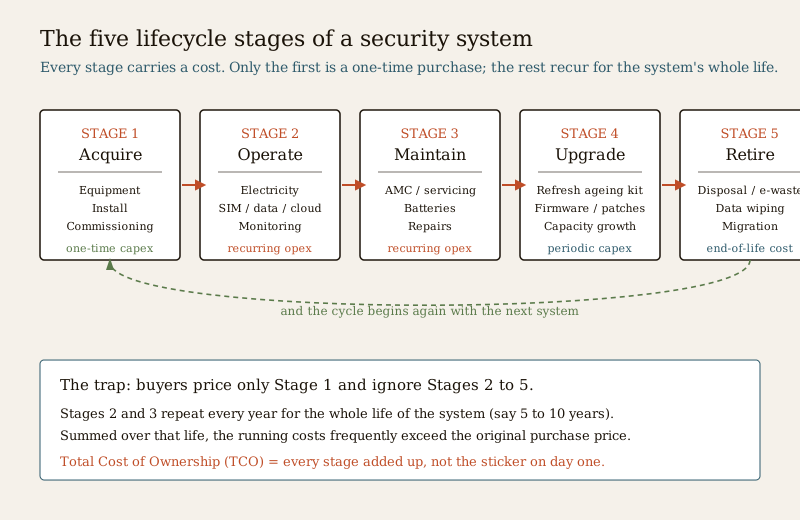
Stage 1 — Acquire. Equipment, installation and commissioning. This is the capex, the one-time cost, and the only stage a sticker price captures. Per-unit and per-area guides live here: what a camera set costs to fit, what the whole works out to per apartment or per square foot. See the security cost per apartment guide and the security cost per square foot guide for how the acquisition figure is derived and normalised.
Stage 2 — Operate. The cost of the system simply being switched on and doing its job. Electricity for cameras, recorders, routers and monitors running around the clock; SIM and data for connected devices; cloud subscriptions for off-site recording; and monitoring fees if a central station or guard watches the alarm. This is pure, relentless opex — the meter never stops. Storage is one of the largest and most misjudged lines here; the CCTV data storage cost guide shows how a "cheap" cloud plan compounds into a serious lifetime figure.
Stage 3 — Maintain. Keeping the system working as it ages. The annual maintenance contract (AMC), routine servicing, battery and consumable replacement, and repairs when things fail — and in India's dust, heat, humidity and power cuts, things fail sooner than the box promises. The CCTV maintenance and AMC guide prices this stage in detail; as a rule of thumb an AMC runs a single-digit percentage of hardware cost per year, but the honest figure is whatever three quotes agree on.
Stage 4 — Upgrade and refresh. Technology moves, and security technology moves under pressure: cameras and panels age, firmware needs security patches, analogue gives way to IP, capacity has to grow as you add coverage. Some of this is small (a firmware update) and some is a periodic capex event (a recorder or a bank of cameras reaching end of life and being replaced). A realistic lifecycle plan assumes at least a partial refresh within its window; the security upgrades for existing homes guide works through how refresh is sequenced without ripping everything out at once.
Stage 5 — Retire and replace. The stage almost nobody budgets. When a system reaches the end of its life it must be decommissioned: disposal of electronic waste through proper channels, secure wiping of all stored footage and access data before anything leaves your hands, and migration of what you keep to the replacement system. E-waste is regulated and must not simply be dumped; and under the DPDP Act, the personal data on a retired recorder is your responsibility until it is destroyed. Then the loop closes, and Stage 1 begins again for the next system.
When opex overtakes capex
Here is the arithmetic that reframes every buying decision. Capex is a single point — paid once, on day one, and then flat forever. Opex is a slope — a smaller number, but paid again and again, climbing as a cumulative total year after year. Give that slope enough years and it crosses the flat capex line. After the crossover, you have spent more keeping the system running than you ever spent buying it.
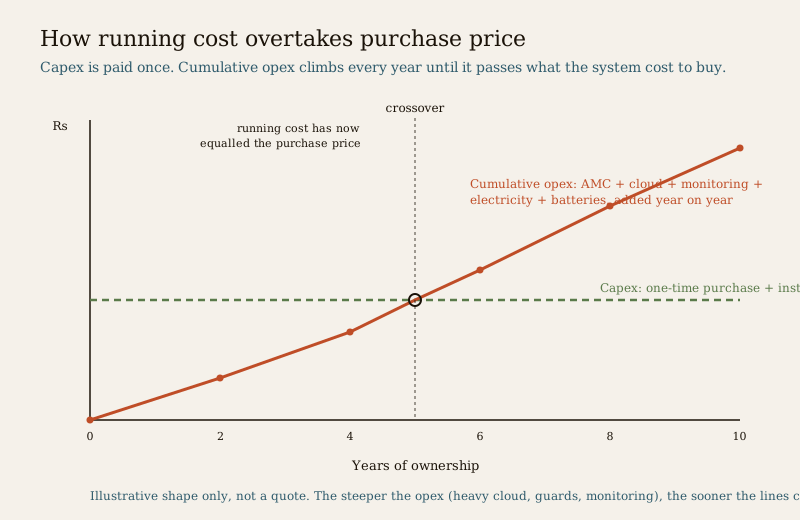
How steep the opex slope is depends entirely on the choices baked in at acquisition. A system built around forever-cloud subscriptions, a paid monitoring contract and battery-hungry wireless kit has a steep slope and crosses early — sometimes within two or three years. A system built around local storage you own, wired reliability and quality equipment has a gentle slope and may never cross within its life. The single largest recurring lifetime cost in most real systems is people and watching — professional monitoring, a central station, and above all guards, whose salaries recur every single month. The guardhouse cost guide makes this vivid: the structure is a modest one-time cost, but the guards who staff it are the biggest and most permanent line in the entire lifecycle. If your composition leans on manned guarding, your opex slope is steep and the crossover comes fast — which is a reason to design guarding deliberately, not a reason to remove it where it is genuinely needed.
Building a simple five-year TCO
You do not need a finance degree to do this well. A lifecycle cost estimate is a single table with time across the top and cost lines down the side. The security cost planning guide walks a worked homeowner example; here is the professional method for any building.
1. List every line and tag it capex or opex. Hardware, cabling, installation and commissioning are capex, entered in Year 0. Electricity, data, cloud, monitoring, AMC, batteries and repairs are opex, entered in every year they occur.
2. Choose a horizon that matches the equipment's life. Five years is the sensible default for electronics; ten if the kit and the building justify it. Do not judge a ten-year system on a one-year view.
3. Phase the opex honestly. Some costs start at Year 1 (AMC often begins after a warranty year), some grow (storage as you add cameras), some are lumpy (a refresh in Year 4). Put each in the year it truly lands rather than smearing an average.
4. Add a refresh event inside the window. Assume at least a partial Stage 4 refresh — a recorder, a few cameras, a panel — before the horizon ends. A plan with no refresh line is a plan that will be wrong.
5. Add a contingency. A sensible margin, commonly around ten to fifteen percent, for repairs, price rises and the surprises every real system delivers. Round up, do not round down.
6. Then sum across. Total the capex row and the full opex column together. That grand total, not the Year 0 figure, is the number you are actually committing to.
A light touch of discounting — the principle that a rupee spent in Year 5 is worth a little less than a rupee spent today — makes cross-option comparisons fairer, but for most decisions the raw sum is honest enough to change minds. The discipline that matters is simply including every year, not the sophistication of the maths. And remember GST sits on top of every equipment and service line; keep it visible rather than buried.
Sticker price versus true TCO: the decision
Once you have two systems costed to their full lifetime, the comparison often inverts the sticker verdict. This is the heart of value-honest buying.
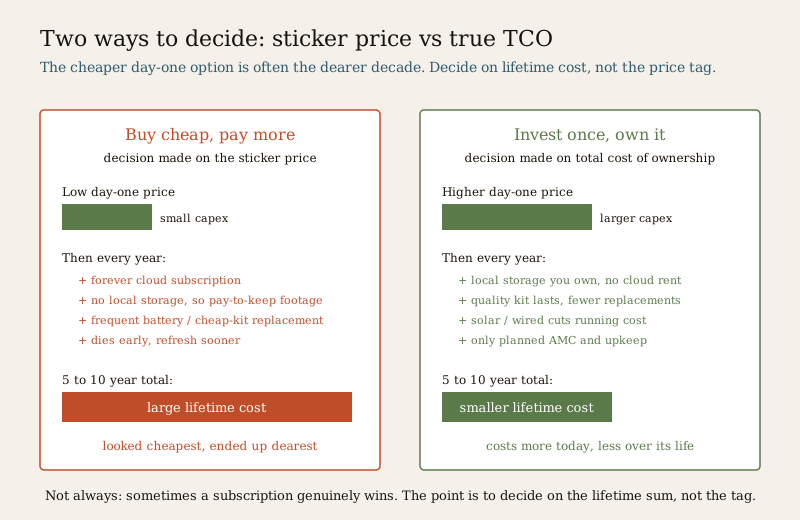
Consider two ways the same coverage can be bought:
| Buy cheap, pay more | Invest once, own it | |
|---|---|---|
| Day-one price (capex) | Low | Higher |
| Storage | Rented cloud, forever | Local recorder you own |
| Equipment quality | Budget, shorter life | Quality, longer life |
| Power | Grid only | Solar / efficient, wired |
| Ongoing (opex) | Steep — subscriptions, batteries, early refresh | Gentle — planned AMC only |
| 5 to 10 year total | Often larger | Often smaller |
Sometimes paying more upfront genuinely lowers lifetime cost: quality kit that lasts, local storage instead of a forever-subscription, solar or efficient power, wired reliability instead of an endless battery habit. But — and this matters just as much — sometimes a subscription is the right answer. A cloud plan that removes the need to own, secure and maintain a recorder; a monitoring service that provides response a self-managed system never could; a managed contract that turns unpredictable repair costs into a flat, budgetable line — each can be excellent lifetime value. The point is never "always avoid recurring cost." The point is to decide on the total, not the tag: cost both options across their full life and let the honest sum choose, rather than being seduced by the smaller number on day one.
Where the lifetime cost really lives
Three truths shape almost every real lifecycle:
- Guards and monitoring are the biggest recurring lifetime costs. Anything staffed by people, or watched by a paid service, recurs monthly and compounds fastest. Design manned guarding to the real need — right-sized, not reflexive — because it dominates the opex slope. Where technology can genuinely substitute for a body, the lifetime saving is large; where it cannot, the guard is worth the money and the honest budget carries it.
- Storage and subscriptions are the quiet compounders. A modest per-camera monthly cloud fee looks trivial on quotation day and turns into one of the largest lines over five years. Own your storage where you sensibly can; rent it where the convenience and security genuinely justify the recurring cost.
- Life-safety maintenance is not optional. Fire detection and alarm, and any life-safety system, must be maintained and tested for the entire life of the building — this is a code obligation under the NBC, not a discretionary spend. You may right-size guarding and you may debate cloud plans, but you may never economise on keeping a fire system working. Budget that maintenance for life, up front, as a fixed cost of the building.
Pulling the cost library together
This guide is deliberately the last stop, because it uses everything before it. To build a real lifecycle cost:
- Start from the acquisition figure in the home security system cost pillar, and normalise it with the per-apartment or per-square-foot guide for your building.
- Price the operate stage — especially storage — with the CCTV data storage cost guide.
- Price the maintain stage with the CCTV maintenance and AMC guide.
- Price the upgrade stage by sequencing it with the security upgrades for existing homes guide.
- Cost the largest recurring line — people — with the guardhouse cost guide.
- Turn it all into a budget with the security cost planning guide, and browse the whole shelf at the security cost sub-hub or the wider Security Hub.
Key takeaways
- Price the life, not the day. The purchase quotation is Stage 1 of five; lifecycle cost is all five added up over five to ten years.
- Opex often exceeds capex. Given enough years, cumulative running cost overtakes the purchase price — sometimes within two or three years for subscription-heavy systems.
- Build a simple five-year TCO. One table: every line tagged capex or opex, phased into the year it lands, with a refresh event and a contingency, then summed across.
- Decide on the sum, not the sticker. The cheapest day-one option is frequently the dearest decade; sometimes investing more upfront lowers lifetime cost, and sometimes a subscription is genuinely worth it — let the total choose.
- Guards and monitoring dominate opex; fire maintenance is never optional; retirement carries a real cost — e-waste disposal and DPDP-compliant data wiping close the loop.
References
- Digital Personal Data Protection Act, 2023 (DPDP) — stored CCTV footage and access logs are personal data; secure erasure on decommissioning and disposal is an obligation of the data fiduciary. Verify current rules and notifications.
- National Building Code of India (SP 7), Bureau of Indian Standards — fire and life-safety provisions require detection and alarm systems to be maintained and tested for the life of the building; verify the current edition via the BIS catalogue.
- Private Security Agencies (Regulation) Act, 2005 (PSARA) — guards must be engaged through a licensed agency; guarding is typically the largest recurring lifetime cost.
- E-waste (Management) Rules and applicable state pollution-control-board guidance — govern responsible disposal of electronic security equipment at end of life; check the current rules before decommissioning.
- Vendor and installer quotations, AMC schedules, subscription terms and electricity tariffs — the only source of firm, current pricing; always compare at least three itemised quotes across capex and opex together, with GST shown separately.
This is an educational overview for lifecycle budgeting and decision-making; all rupee figures are wide, illustrative bands that move constantly with time, place, brand and specification, and GST applies on top. Fire and life-safety systems, electronic access control, mains electrical work and structural elements are qualified professional work — engage licensed professionals for design, installation, certification and maintenance, and verify any standard's or statute's current status before relying on it.
Export this guide
Related Guides — Deep-dive reading
Security Cost Planning Guide for Indian Homes
How to budget a home or building security system sensibly in India — the real cost drivers, tiered budgets with honest rupee ranges for a flat and an independent house, the ongoing costs people forget, prioritising spend by risk, and the 5-year total cost of ownership instead of the sticker price.
SecurityWireless CCTV Cost in India (2026): Cheap to Buy, Read the Running Costs First
What Wi-Fi and wire-free CCTV really costs an Indian home — a low, DIY-friendly install price that hides a subscription, battery and reliability bill. An honest, capex-versus-opex look at where the money actually goes over three to five years, with indicative bands and the drivers that move them.
SecurityData Storage Cost for CCTV in India (2026): Local Disks vs Cloud, and How to Size It
The running cost people forget when they buy cameras. Where the footage actually lives — a one-time surveillance hard disk in the recorder, or a recurring per-camera cloud plan — and how camera count, resolution, frame rate, recording mode and retention days decide how many terabytes, and how much money, you really need.
SecurityRelated Tools — Try Free
CCTV Cloud vs Local Cost Calculator
Compare cloud CCTV subscription against a local NVR + HDD — upfront, 5-year total, monthly fee and break-even.
Cloud vs LocalSecurity System Cost Estimator
Estimate the all-in capex with GST, annual running cost and 5-year total cost of ownership of a home or building security system.
Cost EstimatorCCTV Camera Coverage & Count Calculator
Estimate how many CCTV cameras you need, the NVR channels, storage in TB for your retention period, and an indicative all-in cost with GST.
CCTV Calculator