
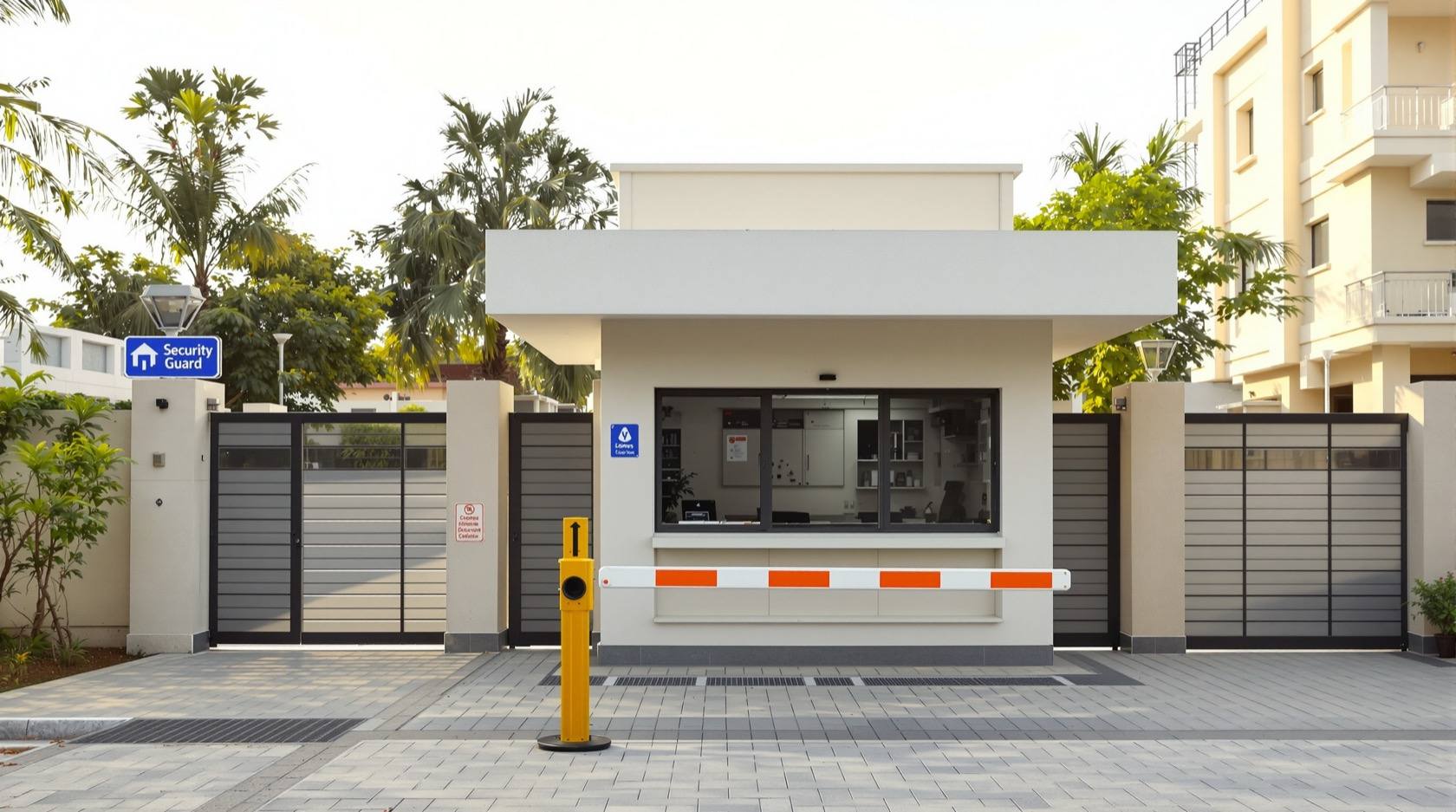
Guardhouse Cost in India (2026): The Cabin Is Cheap, the People Are Not
What a guardhouse and manned guarding actually cost in India, and why the biggest number is never the cabin. A professional cost-literacy guide separating the one-time build of the guard post from the recurring wage bill that dominates it, with wide indicative bands, the 24x7 four-guard multiplier, and honest PSARA, wage and GST discipline.
Ask what a guardhouse costs and most people picture the cabin: a small painted room at the gate with a window, a fan, a register and a barrier arm. That building is real, and it has a price. But it is the small number. The guardhouse question hides a second, far larger cost that most budgets underestimate by an order of magnitude: the people who stand in it. A cabin is bought once. A guard is paid every month, forever, and a gate that is manned around the clock does not need one guard, it needs four or more. For many properties, manned guarding is the single largest lifetime security cost there is, dwarfing every camera, lock and barrier put together.
This guide separates those two costs cleanly, because confusing them is the classic budgeting mistake. There is the guardhouse structure (one-time capex: the cabin and its fit-out), and there is manned guarding (recurring opex: wages, and lots of them). We give wide, honest indicative bands for each, always to be checked with local quotes, and we spell out the multiplier that turns "a guard's salary" into "a round-the-clock post's monthly bill." We are equally plain about the thing that is not optional: in India a guard is engaged lawfully through a licensed agency at proper wages with statutory benefits and decent conditions. Undercutting that is illegal, and a guard is a person, not a line item.
This sits inside a wider budget. For the whole picture see the home security system cost guide; for how manpower is priced alongside cameras and access control in a total plan, the security cost planning guide; and for the design of the cabin itself, guardhouse design.
Scope & how to read the numbers. These are indicative, ballpark bands to frame a conversation, not quotes and not a price list. Get at least three written, itemised quotes before committing to anything, for both the cabin and the guarding contract. Every band moves with time, city, spec, tier and the agency; treat wide as honest. Separate one-time capex (the cabin) from recurring opex (wages, the headline). GST is extra on both equipment and agency services. On life-safety, a guardhouse and a barrier must never obstruct emergency egress or fire-tender access. And on people: guards must be deployed through a PSARA 2005-licensed agency, and the price must cover lawful minimum wages, ESI and PF, and decent working conditions. A quote that is cheap because it undercuts these is both unlawful and wrong.
Two costs, and which one dominates
The whole guide turns on one picture. A guardhouse budget has a small, mostly one-time part and a large, permanent part, and they are not close in size. Over any horizon longer than a few months, the recurring wage bill overtakes the cabin many times over.
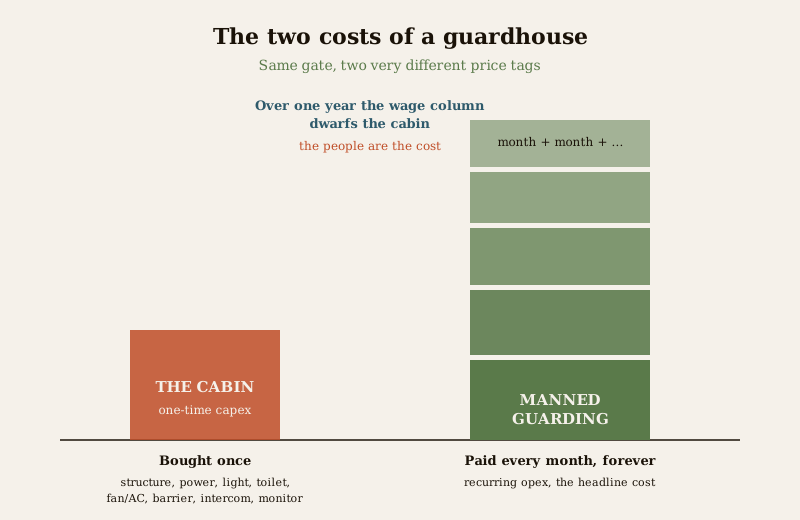
Keep the two apart in every conversation and every quote. Treat the cabin as a project line you settle once, and the guarding as an operating subscription you renew forever, budgeted per year, with an escalation built in because minimum wages rise. The rest of this guide takes each in turn, then puts them together and asks the honest question: when is a full-time guard the right spend at all?
Cost one: the guardhouse structure (capex)
The cabin is a modest, mostly one-time build or fit-out. It is a small room, and what drives its cost is size, materials and how much fit-out it carries, not anything exotic. A basic prefabricated or masonry sentry cabin at a simple gate is genuinely inexpensive relative to almost everything else in a security budget. A larger, well-built gatehouse with a toilet, air-conditioning, a proper visitor-management desk and integrated barrier and intercom costs more, but it is still a one-time number, and still small beside the wage bill.
Indicative capex bands, to verify locally with quotes:
| Guardhouse element | Indicative one-time band | What moves it up or down |
|---|---|---|
| Basic cabin (prefab or simple masonry) | roughly ₹40,000 to ₹1.5 lakh | Size, prefab vs built, finish, whether a toilet is included |
| A larger built gatehouse with toilet and AC | roughly ₹1.5 lakh to ₹5 lakh-plus | Masonry vs modular, plumbing, AC, desk, storage, aesthetics |
| Power, lighting, fan or AC, small CCTV monitor | roughly ₹15,000 to ₹75,000 | Wiring run, AC vs fan, backup power, monitor and intercom spec |
| Boom barrier or gate at the post | roughly ₹40,000 to ₹2 lakh-plus | Manual vs automatic, span, ANPR, traffic volume |
| Visitor-management desk and register or software | roughly ₹5,000 to ₹50,000-plus | Paper register vs a visitor-management app and tablet |
The drivers are simple: a prefab cabin at a small residential gate sits at the bottom of these bands; a built gatehouse with a toilet, AC and an automatic barrier at a commercial or apartment-block entrance sits at the top. Even fully loaded, the whole cabin build for most sites lands in a low-single-digit-lakh figure, one time. The barrier and access-control hardware at the gate are worth pricing on their own, because they are the piece that scales up; see access control system cost and, for the boundary the gate sits in, perimeter security cost. Note that the guardhouse is the human node of the perimeter, not a substitute for it.
That is the cheap half. Now the half that dominates.
Cost two: manned guarding (opex, the headline)
A security guard's cost is a monthly cost, and it is the number that matters. What you pay an agency per guard per month is not just take-home pay. A lawful, PSARA-compliant deployment builds in the statutory minimum wage for the state and skill category, the employer's ESI and PF contributions, the agency's administration and supervision margin, uniform and equipment, and then GST on top of the service. That is what a proper quote looks like, and a quote that is much cheaper than the pack is almost always cheap because it has quietly dropped one of these, which means someone, usually the guard, is being short-changed unlawfully.
Indicative monthly bands per guard, to verify locally with quotes:
| Per-guard monthly cost (one guard, one shift-share) | Indicative band | Drivers |
|---|---|---|
| Unarmed guard, agency-billed, one guard | roughly ₹15,000 to ₹30,000-plus per month | State minimum wage, city, day vs night, skill, agency margin |
| Supervisor or head guard | roughly ₹20,000 to ₹40,000-plus per month | Experience, responsibility, site size |
| Armed or specialist guard | materially higher | Licensing, training, risk profile |
These bands are wide on purpose. The single biggest driver is the state-notified minimum wage for private security, which differs by state and by skill category and is revised periodically, so a guard in a metro sits well above one in a smaller town. Day versus night, armed versus unarmed, and the agency's supervision quality all move it further. Add GST on the agency's service value on top of every figure here.
But the per-guard number is still not the post cost, because a gate is not manned by one guard. This is the multiplier almost everyone misses.
The multiplier: a 24x7 post needs four-plus guards
Here is the arithmetic that reshapes the whole budget. A human being works one shift, not three, and takes a weekly day off, and falls ill, and takes leave. To keep one position continuously manned, 24 hours a day, 7 days a week, you do not employ one guard, you employ a team.
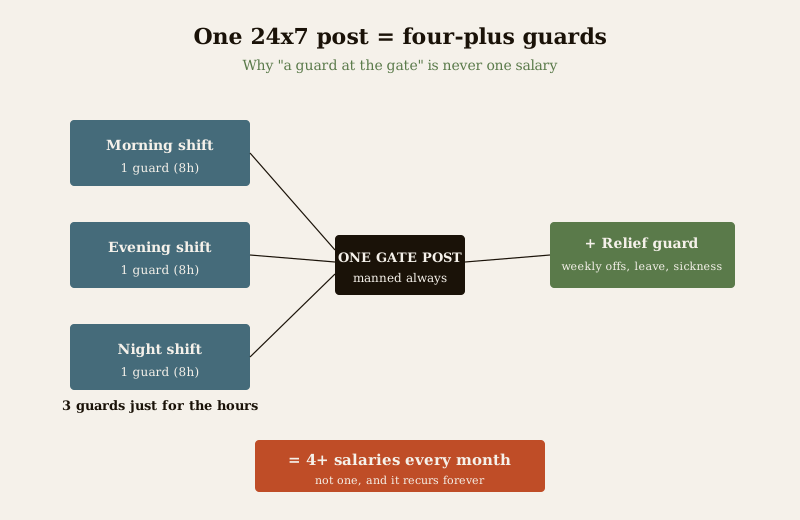
Break it down. A day has three eight-hour shifts, so covering the clock takes three guards just for the hours. But each of those three is entitled to a weekly day off, plus leave and sick days, so you need at least one relief guard who rotates in to cover everyone's off days. That is four guards minimum to hold one post continuously, and busy sites budget more to absorb absence without gaps. So the honest cost of a single 24x7 gate post is not one salary, it is four-plus salaries, every month, forever.
Put the bands together and the picture is stark:
| Manned post | Rough monthly opex | Note |
|---|---|---|
| One guard, single day shift (12h) | roughly ₹15,000 to ₹30,000-plus | The per-guard band above, one person |
| One post manned 24x7 | roughly ₹60,000 to ₹1.2 lakh-plus per month | About four-plus guards; the real cost of "a guard at the gate" |
| 24x7 post, annualised | roughly ₹7 lakh to ₹15 lakh-plus per year | And it recurs every year, rising with minimum-wage revisions |
Those are indicative and move heavily with city and wage notifications, so get quotes, but the shape is the point: a single round-the-clock gate post is a multi-lakh recurring cost every year, indefinitely. Over five years, one 24x7 post can quietly cost more than the entire rest of a property's security hardware combined. That is why manned guarding, not cameras, is the largest lifetime security cost for many properties, and why the decision to man a post is a serious financial commitment, not a default.
PSARA, wages and dignity are not optional
Because the wage bill is where cost pressure lands, it is also where the temptation to cut corners lands, and this is the line the reader must not cross. In India, private security guards are engaged through agencies licensed under the Private Security Agencies (Regulation) Act, 2005 (PSARA). A lawful deployment pays at least the state-notified minimum wage for the skill category, remits the employer's ESI and PF, provides proper uniform, rest, reasonable shift lengths and decent working conditions, and charges GST on the service. A quote that undercuts the pack is usually cheating on exactly these, which is both illegal and a real harm to a real person standing at your gate in the heat and the night.
So read a guarding quote the way you would read any other: ask what wage rate it assumes, whether ESI and PF are included, what the shift pattern and relief arrangement are, and whether the agency is PSARA-licensed. A responsible buyer treats the guard as a person owed lawful pay and humane conditions, not a line item to be squeezed. The cheapest guarding quote is very often the one you should refuse.
The honest question: guard, or technology?
Given that a 24x7 post is a permanent multi-lakh commitment, the value-honest question is whether a full-time guard is the right spend for your property at all, or whether technology covers the same need for a fraction of the recurring cost.
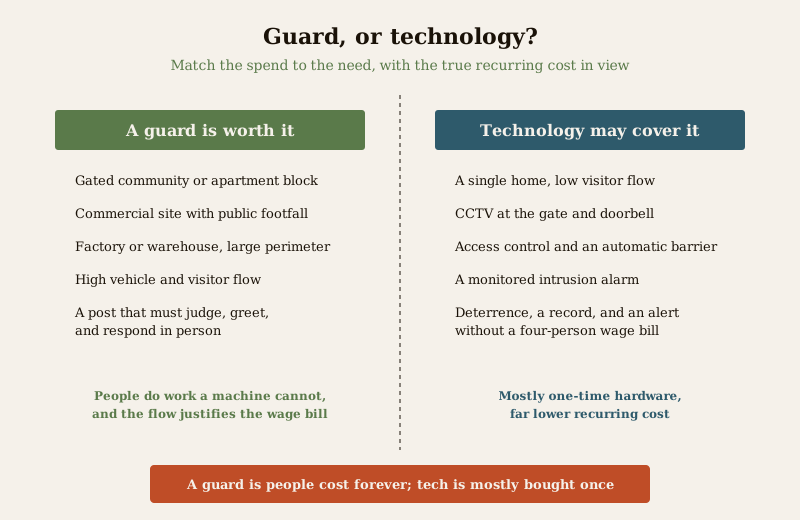
A full-time guard genuinely earns the cost where a human presence does work a machine cannot: a gated community or apartment block with constant resident, visitor, delivery and vehicle flow that must be judged, greeted and logged in person; a commercial site with public footfall, access control and incidents that need a person to respond; a factory or warehouse with gates, shifts, material movement and a large perimeter to patrol. In these cases the guardhouse and the guard are the right answer, and the cost is justified by the volume and complexity of what happens at the gate.
For a single home, the arithmetic usually points the other way. A private guard on a residential gate is a multi-lakh annual cost forever, and much of what one guard actually delivers, a deterrent presence, a record of who came and went, and an alert when something is wrong, can be delivered by a well-chosen combination of CCTV, access control and an intrusion alarm at a fraction of the recurring cost, mostly as one-time hardware with modest running costs. A camera at the gate, a video doorbell or intercom, an automatic barrier and a monitored alarm together cover the ordinary residential need without a permanent four-person wage bill. See the access control system cost guide and the home security system cost guide for how that technology stack is priced.
This is not a blanket rule, it is a right-sizing question. Some individual homes with a real, specific threat do justify a guard, and many do not. The point is to make the choice deliberately, with the true recurring cost of manpower in front of you, rather than defaulting to a guard because a gate seems to want one. Manned guarding pairs with, and is often better replaced at the low end by, perimeter security and access control; the guardhouse is one node in a layered security cost plan, not the whole of it.
Putting the guardhouse budget together
Build the number in two clearly separated parts. First, the cabin capex: a one-time figure, usually a low-single-digit-lakh sum for the room, its power, light, a toilet, a fan or AC, a barrier, an intercom and a small monitor, priced from three quotes. Second, the guarding opex: the recurring bill, sized honestly by counting posts and multiplying, one day-shift guard is one band, one 24x7 post is four-plus guards and a multi-lakh annual commitment, with GST and lawful wages built in, priced from three PSARA-agency quotes and reviewed each year for wage revisions.
Then step back and ask the value question before you sign: does this property's flow and risk actually justify a manned post, or would cameras, access control and an alarm meet the need at far lower lifetime cost? Whatever you decide, keep the two costs separate on paper, because the mistake this guide exists to prevent is treating a permanent wage bill as if it were a one-time purchase like the cabin. It is not. The cabin is cheap. The people are the cost, and they deserve to be paid properly for it.
For the surrounding budget, this guide sits within the security cost planning guide and the home security system cost pillar; browse the cost sub-hub for the rest of the cost library and the main security hub for the wider planning stance.
Key takeaways
- A guardhouse has two very different costs, and confusing them is the classic mistake. The cabin is a modest, mostly one-time capex; manned guarding is a large, permanent opex, and the opex dominates.
- The cabin is cheap. A basic sentry cabin is a low-lakh one-time build even with a toilet, AC, a barrier, an intercom and a small monitor; get three quotes and settle it once.
- A guard is a monthly cost, and a 24x7 post needs four-plus guards. Three shifts plus relief for weekly offs and leave means one round-the-clock post is roughly four or more salaries every month, a multi-lakh annual commitment that recurs forever and rises with minimum wages.
- PSARA, lawful wages, ESI and PF, decent conditions and GST are not optional. A cheap guarding quote is usually cheap because it undercuts these, which is illegal and wrong. A guard is a person, not a line item.
- Right-size the choice. A guard genuinely earns the cost at gated communities, apartment blocks, commercial sites and factories with real flow and complexity. For a single home, CCTV plus access control plus an alarm usually covers the need at a fraction of the recurring cost.
- Get at least three written, itemised quotes for both the cabin and the guarding contract, and treat every band here as indicative, to verify locally.
Where to go next
- Home security system cost — the pillar that budgets manpower alongside cameras, locks and alarms.
- Security cost planning guide — how the guardhouse and guard fit a whole-property cost plan.
- Access control system cost and perimeter security cost — the technology and boundary the guardhouse pairs with, and often the cheaper answer for a single home.
- Guardhouse design — designing the cabin itself.
- The cost sub-hub, the perimeter sub-hub and the main security hub.
References
- Private Security Agencies (Regulation) Act, 2005 (PSARA) — private security guards must be supplied through a state-licensed agency; verify the agency's licence and its compliance with minimum wages, ESI and PF before contracting.
- State minimum-wage notifications for private security / watch-and-ward — the largest single driver of a guard's cost, notified per state and skill category and revised periodically; verify the current rate for your state before budgeting.
- Goods and Services Tax (GST) — applies to both security equipment and agency security services; confirm the applicable rate and that it is shown on the quote.
- National Building Code of India (SP 7), Bureau of Indian Standards — a guardhouse and barrier must not obstruct emergency egress or fire-tender access; verify the current edition (SP 7:2026) via the BIS catalogue: https://www.services.bis.gov.in/
This is an educational cost-literacy overview for owners, facility managers, architects and security consultants, not a quote, a price list or legal advice. All figures are wide, indicative bands that move with time, city, spec and wage notifications; obtain at least three written, itemised quotes and verify locally before deciding. Deploy guards only through PSARA-licensed agencies at lawful wages with statutory benefits and decent working conditions.
Export this guide
Related Guides — Deep-dive reading
Guardhouse Design in India (2026): A Post That Sees Everything and Treats the Guard as Human
How to design the guard cabin so the guard can actually do the job — commanding sightlines to gate, approach and pedestrian entry, the controls within reach, and the shelter, water, toilet and shift that keep the post alert and manned rather than empty.
SecurityHome Security System Cost in India (2026): The Honest Budgeting Guide
There is no single price for a home security system — it is a stack of choices. This pillar gives you the mental model to budget the whole home: the cost drivers, the split between one-time capex and ongoing opex, wide indicative tier bands, a five-year total-cost lens, and how to read and compare quotes.
SecurityComplete Guide to Building Type Security in India (2026): Right-Sizing Protection to Homes, Schools, Hospitals, Warehouses and Temples
The same security building blocks — perimeter, gate and access, CCTV, alarms, lighting, fire, guards and cyber — are composed very differently for a villa, a school, a hospital, a warehouse or a temple. This pillar maps the whole library of building-type guides and gives you the framework to tailor security to each kind of building.
SecurityRelated Tools — Try Free
Apartment Video Door System Planner
Enter flats, entrances, floors and guard desk for a first-pass building intercom plan — door stations, indoor monitors, guard station, the right architecture and an indicative cost band.
Building PlannerHome Security Risk Scorecard
Score your home across six security layers — perimeter, entry points, lighting, detection, alarm and habits — and get a prioritised action plan.
Security ScorecardCCTV Camera Coverage & Count Calculator
Estimate how many CCTV cameras you need, the NVR channels, storage in TB for your retention period, and an indicative all-in cost with GST.
CCTV Calculator