

Security Data-Processing Agreements in India (2026): The Contract Behind Your Vendor
When you hand CCTV footage, faces, access logs or visitor data to a security vendor, they process it for you — and you stay accountable. A plain-English look at the data-processing agreement that should govern that relationship under the DPDP Act.
Every serious security system quietly hands someone else your data. The cloud-CCTV provider stores your footage. The gate-app startup keeps your residents' phone numbers and your visitors' photos. The monitoring company watches your feeds at 2am. The AMC technician logs into your recorder. Each of them is handling personal data — faces, number plates, biometrics, entry and exit logs — that belongs to real people, and that you decided to collect.
Under India's Digital Personal Data Protection Act, 2023 (DPDP Act), that arrangement has a shape. You are the one who decides why and how the data is collected, so in the law's language you are the data fiduciary. The vendor who handles it on your instructions is a data processor. And the law expects that relationship to sit on a contract — a data-processing agreement — rather than a handshake and an app you clicked "I agree" on. This guide explains that agreement in plain English, so you can ask the right questions before you sign.
Scope & how to read this. This is practical compliance literacy, not legal advice or authoritative code. The DPDP Act and its rules are still settling, and requirements vary and change over time — always confirm the current position with a qualified lawyer or your Data Protection Officer before you rely on any agreement. Nothing here is a substitute for a professional review of your specific contract.
The core idea: they hold the data, you stay accountable
Handing data to a processor does not hand off your responsibility. This is the single most important thing to understand. When your cloud-CCTV vendor stores footage of everyone who walks past your gate, they are doing it for you and on your instructions — you remain the party accountable to those people and to the regulator for how their data is treated.
That is why the DPDP Act's framing puts the fiduciary in charge of the relationship and expects a processor to act only under a valid contract. The vendor is not free to do as they please with your data; they are meant to do only what you have authorised, in writing. If they lose the footage, misuse it, or quietly sell insights from it, the accountability trail leads back to you as the fiduciary — which is exactly why the terms of that contract matter to you and not just to a lawyer.
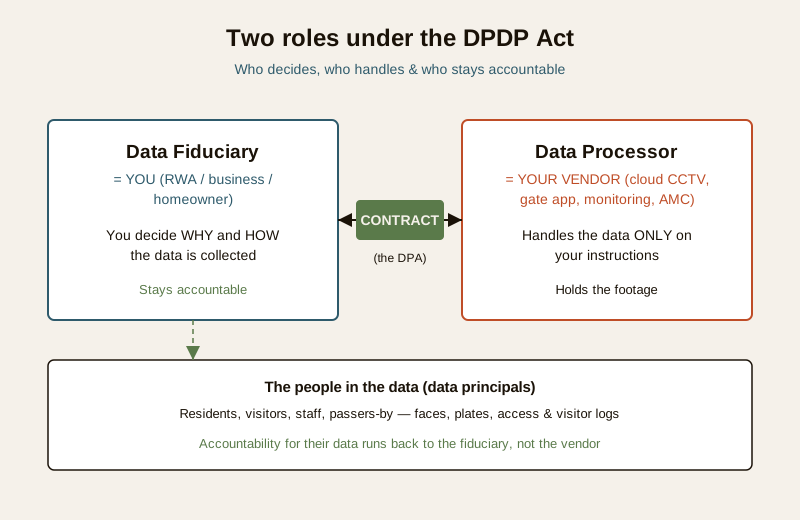
The practical translation: before you let any vendor touch personal data, you want a written agreement that pins down what they may do, how they must protect it, and what happens when things go wrong. That document is the data-processing agreement (often just called a DPA). It is your instrument of control over data you can no longer see.
What a good security data-processing agreement covers
You do not need to draft this yourself — that is a lawyer's job — but you should be able to read a DPA and check that the essentials are there. A sound agreement, in plain language, generally addresses the following.
Purpose and scope — only what you authorise
The heart of a DPA is a clear statement that the vendor processes your data only for the purposes you specify and only to the extent you authorise. For a security system that means: to run and maintain the CCTV, cloud storage, monitoring or access system you engaged them for — and nothing else. A good clause explicitly forbids the vendor from using your footage, faces or logs for their own purposes: training their AI products on your residents' faces, building analytics they resell, or marketing.
Security safeguards and confidentiality
The vendor should commit to reasonable security measures to protect the data — access controls, encryption where appropriate, staff who are bound by confidentiality. The DPDP Act expects a fiduciary to protect personal data with reasonable safeguards, and when a processor holds that data on your behalf, the safeguards need to live in your contract with them. Vague wording like "we take security seriously" is not a safeguard; look for concrete commitments and the ability to check them. Our companion notes on assessing a security vendor's cybersecurity go deeper on what "reasonable" should look like.
Retention, secure deletion and return on exit
Data should not live forever, and it should not linger after the relationship ends. A good agreement states how long the vendor keeps data and commits to securely deleting or returning it when you tell them to and when the contract ends. The exit clause matters more than people expect: when you switch cloud-CCTV providers, does the old one actually delete your archive, or does it quietly keep a copy? The contract is where you get that answer in writing.
Breach notification to you
If the vendor suffers a breach — footage leaked, database exposed, credentials stolen — they must tell you, promptly, so that you as the fiduciary can respond and meet your own obligations. A DPA that is silent on breach notification is a serious gap: you would be accountable for an incident you were never told about. Look for a clear duty to notify you without undue delay and to help you deal with the fallout.
Sub-processors — who else touches your data
Your cloud-CCTV vendor may itself rely on a third party — a hosting provider, an analytics partner, an offshore support team. Those are sub-processors, and they are handling your data at one remove. A good DPA restricts the vendor from bringing in sub-processors without your knowledge or consent, and passes the same obligations down the chain. Silence here means you have no idea who is really holding your residents' faces.
Data location and cross-border transfer
Where does the data physically live? Increasingly this matters, and the DPDP Act contemplates rules on transferring personal data outside India. A sound agreement tells you where data is stored and commits the vendor not to move it across borders in ways that are not permitted. For cloud services especially, "the cloud" is a real building somewhere — ask which country, and get it in writing. The cloud-CCTV data-protection guide covers this ground for footage specifically.
Audit, assurance and cooperation with rights requests
Finally, a good DPA lets you verify — through audit rights, certifications or assurance reports — that the vendor is doing what they promised, and commits them to help you honour data-principal rights. Under the DPDP Act, the people in your footage have rights over their data; when someone asks you what you hold about them or asks for erasure, you need the vendor's cooperation to answer. The contract is where that cooperation is guaranteed.
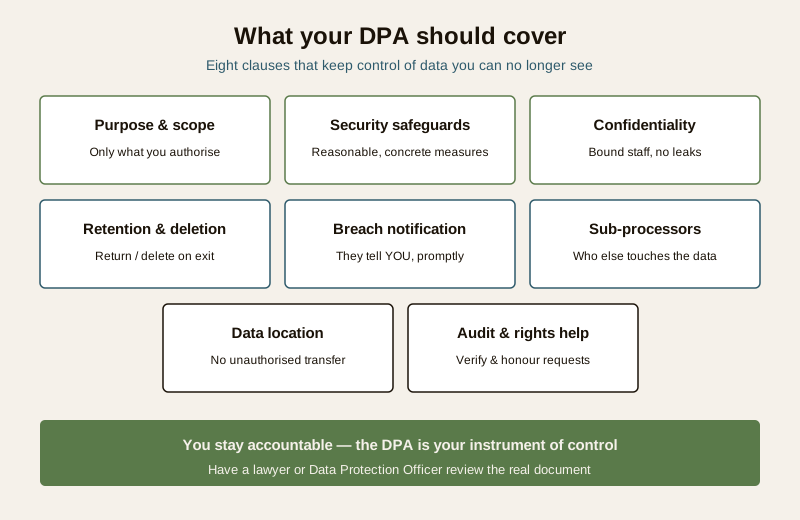
| What the clause does | Why it protects you | Watch for |
|---|---|---|
| Purpose and scope | Vendor uses data only as you authorise | "Own purposes" or AI-training carve-outs |
| Security and confidentiality | Reasonable safeguards on your data | Vague "we value security" wording |
| Retention and deletion | Data is not kept forever | No exit deletion, no return of archive |
| Breach notification | You learn of incidents in time to act | Silence on breaches |
| Sub-processors | You know who else holds the data | Unlimited sub-contracting, no notice |
| Data location / transfer | No unauthorised cross-border movement | "Global cloud", location unstated |
| Audit and rights help | You can verify and honour rights requests | No audit right, no cooperation duty |
Who needs a data-processing agreement most
Not every arrangement carries the same risk, but three groups should treat a DPA as essential.
- RWAs and housing societies running a gate-management app or cloud CCTV. You are collecting residents' contact details and every visitor's photo and phone number, then handing them to a startup you barely know. This is the classic case, and it pairs with a proper housing-society CCTV policy and clear visitor-data protection.
- Businesses and commercial premises using third-party monitoring, cloud storage or managed security. Footage of customers and staff, access logs, and often biometrics all leave your premises and sit on someone else's servers.
- Serious homeowners using cloud cameras or app-based systems who care about where their family's footage actually goes. The bar is lower than for an RWA, but the questions are the same.
If a vendor never touches personal data — a technician who only fixes hardware and never sees footage or logs — the risk is smaller. But the moment anyone stores, views or manages personal data for you, the relationship deserves a written agreement.
Practical steps: from inventory to signed agreement
You do not fix this all at once. Work through it in order.
1. Inventory who touches your data. List every vendor, app and service that stores, views or processes personal data for you — cloud CCTV, gate app, monitoring service, AMC provider, analytics add-on. You cannot govern what you have not mapped.
2. Ask each vendor for their DPA or data-processing terms. Most established providers already have one. If a vendor cannot produce any data-processing terms at all, that is itself a finding.
3. Read it — do not just click-accept. App terms and "I agree" boxes are contracts too, but they are written to protect the vendor, not you. Read what they actually say about purpose, deletion, sub-processors and breach.
4. Negotiate the gaps where you can. For a significant engagement — an RWA-wide gate app, a business monitoring contract — you often have room to ask for stronger terms before signing.
5. Get a lawyer or DPO to review anything significant. For anything beyond a small home setup, have a qualified lawyer or your Data Protection Officer review the agreement. This guide helps you ask good questions; it does not replace that review.
Get professional help for the actual agreement. Drafting, negotiating or relying on a data-processing agreement is legal work. Treat everything here as a way to understand and question a DPA — then have a qualified lawyer or Data Protection Officer review the real document for your specific situation before you sign or renew.
Vendor red flags
Some signals should make you slow down. If a security vendor shows several of these, press for answers before you hand over any personal data.
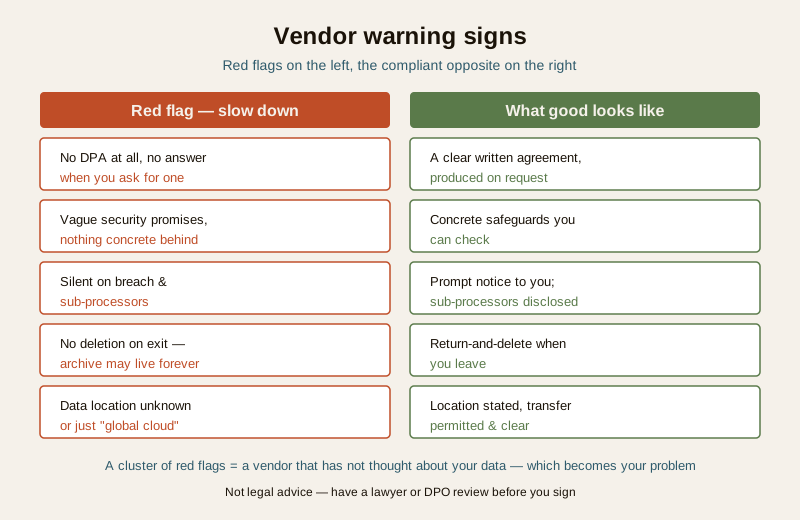
- No DPA at all, and no answer when you ask for one.
- Vague security promises with nothing concrete behind them.
- Silence on breach notification — no commitment to tell you if data leaks.
- Silence on sub-processors — you cannot find out who else holds your data.
- No deletion or return on exit — your archive may live on their servers forever.
- Data location unknown or "global", with no clarity on cross-border transfer.
None of these alone proves a bad vendor, but a cluster of them tells you the vendor has not thought seriously about the data you are trusting them with — and under the DPDP Act, that becomes your problem.
Who to ask
- A qualified lawyer for drafting, reviewing or relying on any agreement, and for anything with real exposure.
- Your Data Protection Officer, if you are an organisation that has one, to own the vendor-DPA process end to end.
- The vendor's own compliance or security contact — a serious provider will have one and will not be defensive about these questions.
For the wider regulatory picture around security systems, start from the security regulations overview; for the privacy side of cameras specifically, the CCTV privacy guide sits alongside this one.
Key takeaways
- You stay accountable. Handing data to a processor does not transfer your responsibility as the data fiduciary — the DPA is how you keep control of data you can no longer see.
- Get an agreement in place. A written data-processing agreement should govern any vendor that stores, views or manages personal data for you.
- Know what it must cover — purpose and scope, security, confidentiality, retention and deletion, breach notification, sub-processor limits, data location, and audit plus rights-request cooperation.
- RWAs, businesses and cloud users need one most, especially with gate apps and cloud CCTV.
- Watch the red flags — no DPA, vague security, silence on breach, sub-processors or deletion.
- Have a lawyer or DPO review the real document. This is compliance literacy, not legal drafting.
References
- Digital Personal Data Protection Act, 2023 — establishes the data-fiduciary and data-processor roles and the expectation that processing on a fiduciary's behalf sits under a valid contract; verify the current text and rules before relying on it.
- Your vendors' own data-processing agreements and data-protection terms — request, read and compare them against the checklist above.
- A qualified lawyer or Data Protection Officer — for drafting, reviewing and negotiating any agreement that matters to your situation.
This is an educational overview, not legal advice. The DPDP Act and its rules are still settling and vary in application — confirm the current position and have a qualified lawyer or Data Protection Officer review any data-processing agreement before you rely on it.
Export this guide
Related Guides — Deep-dive reading
CCTV Footage Retention in India (2026): How Long to Keep It, and When to Delete
Footage of identifiable people is personal data, and the honest answer to how long to keep it is almost never forever. Here is how to set a sensible retention window for a home, an RWA or a small office, delete on schedule, and preserve only what a real incident needs.
SecurityData Breach Response in India (2026): When Your Security System Is the Leak
Your cameras, cloud account and access logs hold personal data about real people. If that data is hacked, exposed or stolen, here is a calm, step-by-step plan: contain, assess, notify and remediate, and what you must never do.
SecurityCCTV Remote Access in India (2026): Watch From Your Phone, Safely
How to view your own cameras from anywhere without leaving the front door open to the internet — change the defaults, use strong credentials and 2FA, keep firmware current, prefer the vendor's secure cloud relay or a VPN, segment the camera network, and treat footage as personal data.
SecurityRelated Tools — Try Free
Interior Contract Clause Checklist
16 sections and 98 checkboxes covering scope, BOQ, milestones, penalties, warranty, and disputes.
Contract ChecklistCCTV Placement Compliance Checker
A quick DPDP-grounded privacy and safety self-check for where a camera is pointed — flags the items to fix.
ComplianceContract Studio
AI generates professional architecture service agreements with milestones and scope.
ArchitectAI