
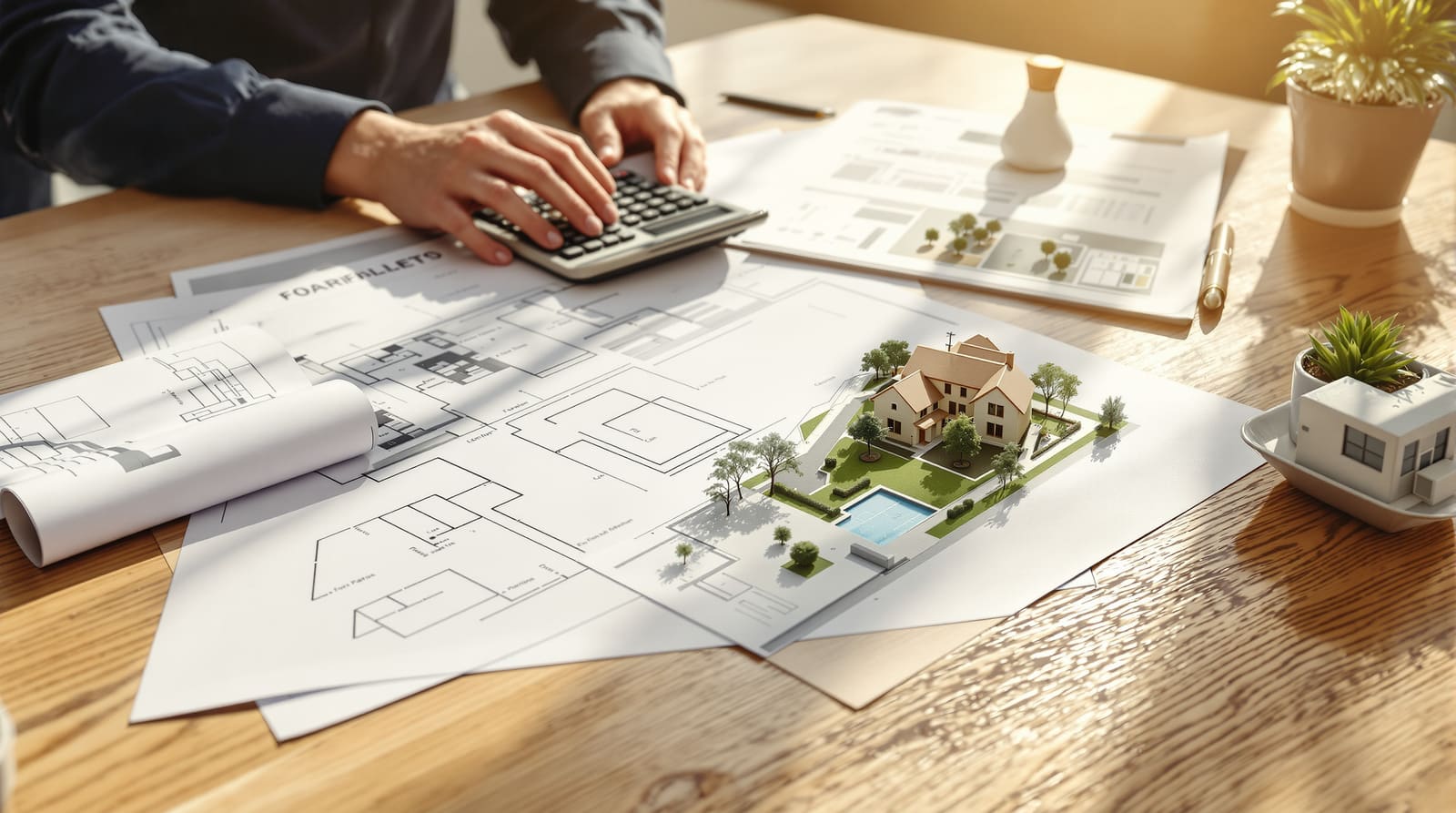
Plot Feasibility Analysis
The structured go/no-go before you commit — testing a plot's legal, technical, financial and market feasibility, the due-diligence workflow, and the honest verdict
A Pune software manager named Rohit had all but signed for a 2,400 sq ft plot in a fast-growing corridor east of the city. The broker was charming, the rate was "below market," and a board at the entrance promised an approved layout. Rohit had walked it twice, liked the morning light, and even sketched a three-bedroom house on the back of the brochure. What he had not done was ask why the plot was cheaper than its neighbours. The answer surfaced only when a friend's father — a retired town planner — asked three quiet questions: Is the khata an A khata or a B khata? Has the layout actually received final sanction, or only provisional? And what does the development plan reservation say about that strip along the eastern edge? Each answer turned out to be the wrong one.
That plot was not a bad plot. It was an unviable purchase at that price for Rohit's purpose, and the gap between those two statements is the entire subject of this guide. Buying land is the one moment in a building project where a mistake cannot be designed around, value-engineered away, or fixed in a later phase — it is fixed at the title deed. A feasibility analysis is the structured, four-dimensional study you run before you commit money, so that "I like this plot" is forced to survive the harder test of "this plot will legally, physically, financially and practically deliver what I need."
Feasibility is not the same as a checklist
There is a quick, useful screen that every plot-hunter should run on every site they shortlist — does it face the right way, is the road wide enough, is the price in range, does it feel right. That fast scoring pass is covered well in how to evaluate a residential plot, and you should do it first, on a dozen plots, to find the two or three worth taking seriously.
Feasibility analysis is what you do after that filter, on the one or two finalists, before the cheque. It is slower, structured, often paid (you may engage an advocate and a soil engineer), and it produces a verdict you can defend with documents. The checklist asks "is this plot decent?" Feasibility asks "will this specific plot, at this specific price, for my specific brief, actually work — and what could go wrong?" It draws its raw material from two companion studies: the limits of the land, catalogued in understanding site constraints, and the latent upside, mapped in understanding site potential. Feasibility is the desk where constraint and potential are weighed against money and law to reach a single decision.
The four dimensions
A plot is feasible only when it passes all four screens. A failure in any one can sink the whole proposition, which is why this is an and, not an average — a plot can be legally pristine and financially attractive and still be unbuildable on bad soil over a high water table.
Legal feasibility asks whether you can own this land cleanly and build on it lawfully. That means a clear and marketable title traced back ideally thirty years; the correct khata in the owner's name; an encumbrance certificate showing no undisclosed mortgage, lien or charge; an approved, sanctioned layout rather than a provisional or "under process" one; land-use and zoning conformity (the plot must sit in a zone where residential use is permitted, not on agricultural land, a green or no-development reservation, a road-widening line, or a CRZ strip); the absence of pending litigation or family partition disputes; and, where the project or the layout falls under it, RERA registration. In India this dimension fails more deals than any other, and it fails them most expensively.
Technical or physical feasibility asks whether the ground can carry what you want to build, and whether the plot can actually be serviced. The questions are concrete: what is the safe soil bearing capacity, established by a geotechnical investigation rather than assumed; how high is the water table, and does the area flood in monsoon; what do the contours and levels demand in cut, fill and retaining; how does the access road meet the plot, and is it legally a public road of adequate width; are water, sewerage, power and a storm drain available at the boundary or kilometres away. Above all it asks what the buildable envelope is — the volume that survives after setbacks are deducted on all sides and the permissible FSI caps the floor area, the subject worked through in FSI/FAR computation.
Financial feasibility asks whether the numbers close. Land is only the visible cost. To it you add stamp duty and registration, statutory sanction and development charges, the construction cost of the building you actually intend, finance cost if you borrow, professional fees, and a contingency that a sober person sets at no less than ten per cent. That all-in figure is then weighed against the value or the use you will get — a residual sense for a developer, a "would I pay this to live here" sense for an end-user — alongside the quiet, ongoing cost of holding the land if you do not build at once.
Market or use feasibility asks the most easily skipped question: does this plot suit the brief? For a homeowner, will the house your family needs sit comfortably inside that envelope with the orientation, privacy and parking you want — or are you bending the brief to fit the plot? For a small developer, will the units this plot yields actually sell or let in this micro-market at the price the financial case assumes? A plot can pass the first three screens and still be the wrong plot for you.
The cost-versus-value balance
Most disappointing land purchases are not legal disasters; they are quiet financial ones, where the buyer anchored on the land rate and forgot everything stacked on top of it. The honest financial test lays the full cost stack on one side of the scale and the realisable value or use on the other.
A worked sense, with figures kept deliberately round and illustrative rather than precise: a Rs 60 lakh plot is rarely a Rs 60 lakh project. Stamp duty and registration might add several lakh; sanction, development and betterment charges another tranche that varies sharply by authority; the house you mean to build could cost more than the land itself; finance, if used, accrues from day one; and contingency sits on top of all of it. The plot that looked cheap because its neighbour was unsold may be cheap because servicing it costs a fortune, or because it cannot be built out for two years while a reservation is sorted — and two years of holding cost is real money. This time-and-value lens, of what the land does to your wealth across the years you own it, is developed further in future-proofing a plot investment.
The feasibility workflow
Feasibility is a sequence, not a single afternoon. Run it in order, because each stage is cheaper than the next and exists to kill a doomed plot before you spend on the costly stage that follows.
The desk study comes first and costs almost nothing: pull the zoning and development-plan position, read the layout sanction and its conditions, look up the road width and reservations, and run the rough FSI and envelope maths to see whether your brief even fits in principle. Many plots die here, on a laptop, and that is the cheapest death.
The site visit is the reality check — not the casual viewing you did while shortlisting, but a structured walk with measurements, photographs of access and levels, a look at neighbouring construction depth and water marks, and conversations with adjacent owners. What an experienced eye reads on a plot is catalogued in what architects look for on a site visit.
Due diligence is the paid, expert stage you reach only for a finalist: a title search and legal opinion from an advocate, an encumbrance certificate, a geotechnical soil report, and written confirmation of service availability. Then comes the verdict — the disciplined act of writing down a decision and its conditions rather than letting enthusiasm decide.
The four dimensions, side by side
| Dimension | Core question | What you actually check | Common India trap | A red flag |
|---|---|---|---|---|
| Legal | Can I own & build here lawfully? | Title chain, khata type, encumbrance certificate, sanctioned layout, zoning & land use, litigation, RERA | A khata vs B khata; provisional layout sold as "approved" | Seller resists a title search or won't share the EC |
| Technical | Can the ground carry & be serviced? | Soil bearing & geotechnical report, water table & flooding, contours & access, services at boundary, buildable envelope after setbacks & FSI | Assuming bearing capacity; ignoring monsoon water marks | Soft soil, high water table, or no legal road access |
| Financial | Do the numbers close? | Land + stamp duty & registration + statutory + construction + finance + contingency vs value/use; cost of holding | Anchoring on land rate; forgetting OC delays & holding cost | All-in cost exceeds realisable value or your budget |
| Market / use | Does it suit my brief or the market? | Brief-to-envelope fit, orientation & privacy, parking; for a developer, saleability & absorption | Bending the brief to fit a plot you've fallen for | Your needed house simply won't fit comfortably |
Doing this in India
Three Indian realities deserve to be named, because they catch good, careful people. The A khata versus B khata distinction — and its equivalents under other authorities — is not paperwork pedantry: a B khata or otherwise irregular property can mean restricted sanctions, harder home loans and a discount you only discover when you try to sell. Always confirm which you are buying, in the owner's name, before anything else.
OC and CC matter even for raw land, because they tell you whether the surrounding layout is fully regularised and serviced or still notional. A plot in a layout that has never received its completion sanction inherits that layout's uncertainty. And the broker-optimism trap is structural, not personal: the broker is paid to close, "clear title" and "approved" are spoken loosely, and "all NOCs done" is a sentence to verify in writing, never to accept on warmth. The cure for all three is sequence and paper — verify in the order above, and keep the document, not the assurance. The classic versions of these errors are gathered in plot selection mistakes to avoid, and the wider site-planning context lives across the site planning library.
The honest output
A feasibility study that ends in a fog has failed. It should end in one of three plain verdicts.
Proceed means all four dimensions pass cleanly and you can sign with confidence. Proceed with conditions is the most common honest outcome — the plot is sound if the seller first converts the khata, if the price is renegotiated to absorb a soil-strengthening cost, if RERA registration is produced, if the reservation is confirmed cleared. Conditions must be written, met before money moves, and tied to milestones. Walk away is a result, not a failure — the discipline that let Rohit keep his money was the willingness to say no to a plot he already liked. The feasibility verdict is the moment intelligence overrides infatuation, and a brief described to a tool like DesignAI early can sharpen the use-fit question long before the cheque is written.
References
1. Bureau of Indian Standards, National Building Code of India 2016 (NBC), Parts on general building requirements and structural design.
2. The relevant State Town and Country Planning Act and the local Development Control Regulations / building bye-laws (zoning, land use, FSI, setbacks and ground coverage as notified by the planning authority).
3. The Real Estate (Regulation and Development) Act, 2016 (RERA) and the applicable State RERA rules.
4. Kevin Lynch and Gary Hack, Site Planning, 3rd edn, MIT Press.
5. Mike E. Miles et al., Real Estate Development: Principles and Process, Urban Land Institute.
6. IS 1892 and IS 6403, Code of Practice for Subsurface Investigation and Determination of Bearing Capacity of Shallow Foundations.
For the quicker first-pass filter, run how to evaluate a residential plot; to feed this study its raw inputs, read understanding site constraints and understanding site potential — and let DesignAI test your brief against the envelope before you commit.
Export this guide
Related Guides — Deep-dive reading
How to Evaluate a Residential Plot in India
A practical, layered framework for assessing a plot before you buy — from clear title and the buildable-area maths to access, soil, orientation and a weighted scorecard.
Site PlanningSite Analysis for Homeowners: How to Read a Plot Before You Build
The master guide to reading your land — its legal envelope, sun, wind, slope, soil, access, neighbours, views, services and microclimate — before you buy a plot or draw a plan.
Site PlanningUnderstanding Site Constraints
The limits that decide what you can build — regulatory (zoning, FSI, setbacks, NOCs), physical (soil, water table, slope), legal (title, easements, access) and contextual — and how they shrink a plot to its buildable envelope
Site PlanningRelated Tools — Try Free
Stamp Duty Calculator — All Indian States
Stamp duty + registration charges for all 28 states and 8 UTs — gender concessions, urban/rural variants, metro cess built in.
Stamp DutyBefore vs After — Cost Reality Check
Compare what you expected to pay vs what you actually paid, category by category.
Reality CheckInterior Budget Planner
Live room-wise and component-wise cost breakdown in ₹ with contingency, GST, and PDF summary.
Budget Calculator