
Vastu for Home Windows (India): Direction, Size and Placement
Where Vastu and the sun-path agree: big windows north, east and north-east, small west and south, with the building science to back it
Vastu gives windows a simple, memorable rule: open up the north and east, hold back the west and south. What surprises most homeowners is that this old direction-by-direction advice lands almost exactly where modern building science lands too. The cool, glare-free walls Vastu wants you to glaze are the same walls a climate engineer would glaze first. This guide takes Vastu specifically to your windows (not the whole plan) and shows where the tradition and the sun-path agree, so you can follow it with confidence rather than superstition.
This is the window-specific lens. For the whole-home picture, read the broader Vastu for modern homes and Vastu in your house plan. For where windows sit in a plan generally, start at the window placement pillar.
The core rule: size your window by its direction
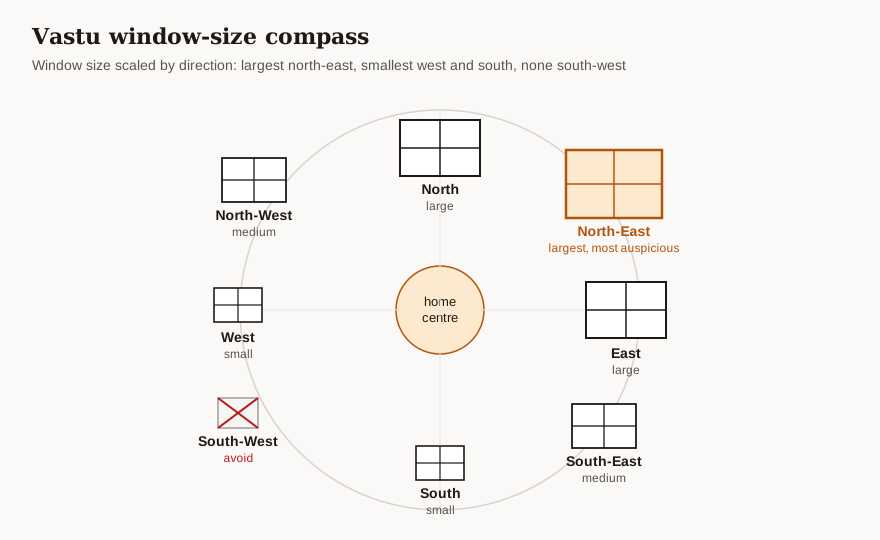
Vastu treats the north and east as the auspicious, light-giving quarters and the south and west (especially the south-west) as the heavy, "earth" quarters to keep solid. Translated to glazing, that becomes a sizing rule.
| Direction | Vastu window size | Why (Vastu) | Best rooms |
|---|---|---|---|
| North-east (Ishanya) | Largest | Most auspicious zone; light and prosperity | Pooja, study, living |
| North | Large | Wealth, steady positive energy | Living, study, office |
| East | Large | Health, morning sun, new beginnings | Bedroom, kitchen, breakfast |
| North-west | Medium | Movement, air | Bedroom (guest), toilet |
| South-east (Agni) | Medium | Fire zone; suits kitchen | Kitchen |
| West | Small | Keep heavier, controlled | Storage, stairs, utility |
| South | Small | Keep solid, stable | Master bedroom wall |
| South-west (Nairutya) | Avoid / very small | Anchor of the home; keep massive and closed | Master bedroom (solid wall) |
The shorthand worth memorising: big windows north, east and north-east; medium north-west and south-east; small west and south; almost none south-west.
The best three walls for a generous window, in Vastu, are east, north-east and north because they are tied to health, prosperity and gentle morning light.
Why Vastu and the sun-path agree
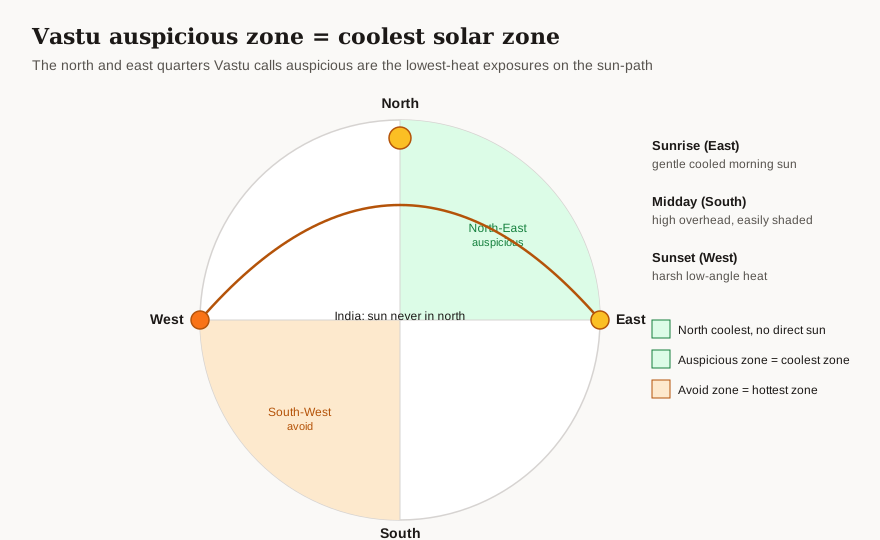
Here is the reconciliation that matters. In the Northern Hemisphere (all of India), the sun is never in the north, so a north window gives soft, even, glare-free daylight with almost no direct heat. The east gives gentle low morning sun that has cooled overnight. The west delivers harsh, low-angle afternoon sun and the most heat and glare of any wall. The south is high-overhead at midday and the easiest to shade.
So the two systems line up:
| Wall | Vastu says | Sun-path / building science says | Verdict |
|---|---|---|---|
| North | Large windows, auspicious | Coolest, even glare-free light; least heat penalty | Agree: glaze freely |
| East | Large, health and morning sun | Gentle cooled morning sun; pleasant | Agree: glaze well |
| North-east | Largest, most auspicious | Combines the two coolest exposures | Strong agree |
| West | Small windows | Worst heat and glare; minimise glass | Agree: keep small |
| South | Small windows | Hottest at midday but easiest to shade | Mostly agree |
| South-west | Avoid | High heat from two hot exposures | Agree: minimise |
The one nuance: building science is slightly kinder to south glass than Vastu, because a horizontal overhang or chajja sized to your latitude shades the high midday sun very effectively, giving controllable daylight and winter warmth. If your plan favours a southern window, a deep chajja plus low-SHGC glass reconciles it. For the full per-wall science, see the orientation guides such as north-facing window design and east-facing house plans (those carry the building-science depth; this guide carries the Vastu lens).
Vastu is not fighting the climate. The directions it calls auspicious for windows are, almost line for line, the directions a passive-design engineer would glaze first.
Room by room: window Vastu
Direction is the headline, but each room layers its own logic. Use this with the standard sill heights and the NBC light rule, not against them.
| Room | Best wall (Vastu) | Window note |
|---|---|---|
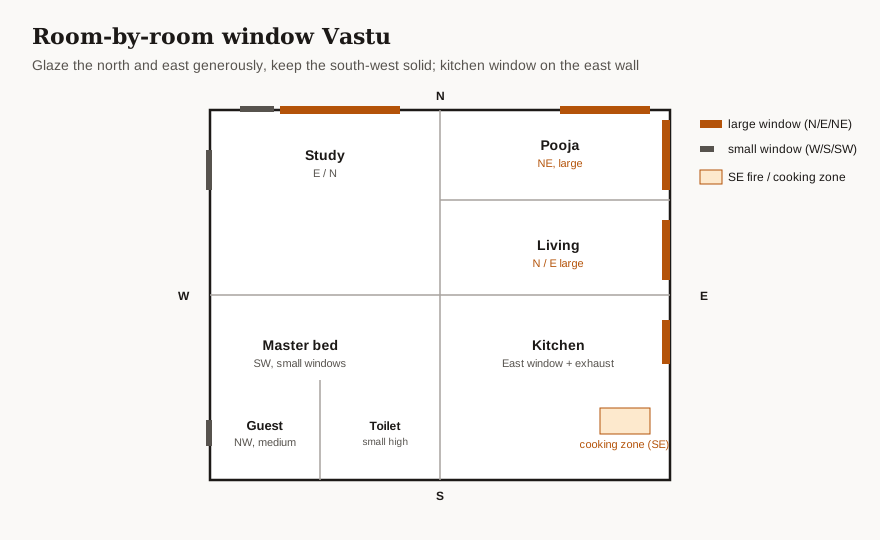
| Pooja room | North-east / east | Largest light; morning sun on the deity; keep clean and uncluttered |
| Kitchen | East wall, with a south-east cooking zone | East window for morning light; pair with an exhaust on the east or south-east |
| Master bedroom | South-west room, window small on south / west | Keep the south-west corner heavy; a modest east or north window is fine |
| Living room | North / east / north-east | Generous glazing for prosperity, view and daylight |
| Children's / study | East or north | Steady, glare-free light for concentration |
| Guest bedroom | North-west | Medium window; the movement zone |
| Toilets / utility | North-west or west | Small, high awning window plus exhaust |
The kitchen deserves a line of its own. Vastu places the cooking platform in the south-east (the fire, or Agni, zone) but wants the window on the east wall for morning light, with a chimney or exhaust to carry away heat and steam. This also happens to be sound building practice: an east window cools overnight and an exhaust removes the cooking load before it builds up. Use a higher kitchen sill (about 1050 to 1200 mm, above the counter) so the window sits clear of the worktop.
Practical sizes and the legal minimum
Vastu sets the direction and relative size; the building code sets the minimum. Both must be satisfied.
- NBC 2016 rule of thumb: openable window area at least 10 per cent of the room's carpet area for habitable rooms (confirm your local bye-laws; some ask for window area around one-seventh to one-eighth of the floor for light and ventilation combined).
- Indicative standard sizes: bedroom about 4 ft x 4 ft, living 5 ft x 4 ft to 6 ft x 4 ft, kitchen 4 ft x 3 ft, bathroom 2 ft x 1.5 ft for privacy.
- Sill heights: living and bedroom 600 to 750 mm; kitchen 1050 to 1200 mm; bathroom about 1500 mm for privacy.
- Eco-Niwas Samhita then steps in once glazing grows: as your window-to-wall ratio rises, the code demands lower-SHGC glass and a minimum VLT, and asks the wall's RETV to stay at or below 15 W per m2. A big north or east window is easiest to make code-compliant because it carries the least heat.
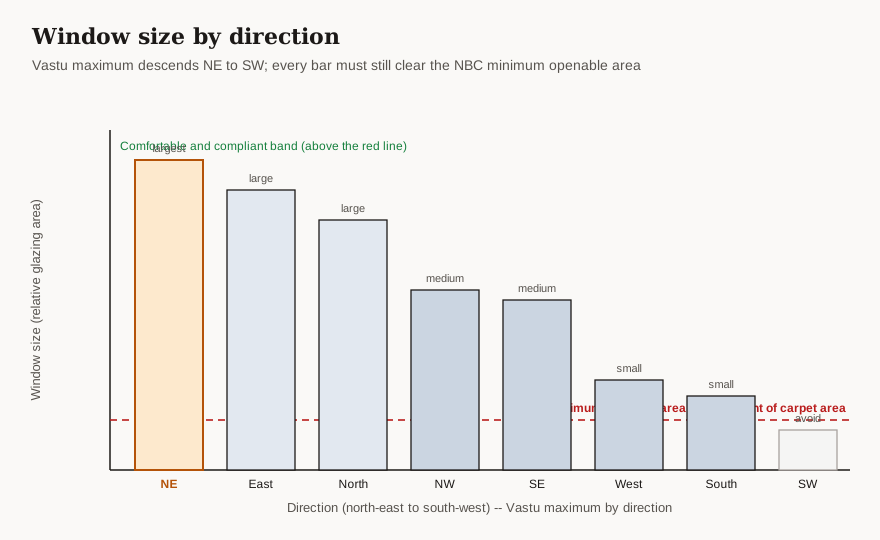
So a north-east window can be large and still comfortable and compliant; a west window should be kept small both because Vastu asks it and because the climate punishes it.
What to do and what to avoid
| Do | Avoid |
|---|---|
| Put your biggest windows on north, east, north-east | Large unshaded glass on the west or south-west |
| Place the kitchen window on the east wall with an exhaust | A heavily glazed south-west corner |
| Keep the south-west corner solid and grounded | Cluttering or permanently shutting a north-east window |
| Shade any south or west window with a chajja or fins | Treating Vastu and climate as opposites |
| Meet the NBC 10 per cent openable minimum in every room | Ignoring local bye-laws for a "perfect" Vastu plan |
A reassuring closing thought: if you cannot achieve the ideal Vastu direction because of your plot or apartment, the building-science overlap means a well-shaded, well-glazed home is already doing most of what Vastu intends. Follow the direction where you can, shade where you must, and let the sun-path settle the rest.
For sibling reading in this cluster, see the window placement pillar and the types of home windows overview.
References
- Vastu for house doors and windows (Livspace): https://www.livspace.com/in/magazine/vastu-for-house-doors-windows
- 15 guidelines for windows Vastu (Subhavaastu): https://www.subhavaastu.com/vastu-for-windows.html
- BIS Guide for Using NBC 2016: https://www.bis.gov.in/wp-content/uploads/2022/08/Booklet-Guide-for-Using-NBC-2016.pdf
- Eco-Niwas Samhita 2018 (BEE/ECBC): https://ecbc.in/econiwas.html
- IS 3362 natural ventilation of residential buildings: https://law.resource.org/pub/in/bis/S03/is.3362.1977.pdf
Export this guide
Related Guides — Deep-dive reading
North-Facing Window Design (India): The Best Light With the Least Heat
Why the north wall gives soft, even, glare-free daylight with almost no heat, and how to design large, high-VLT windows that make the most of it.
Windows & GlazingWindow Placement Guide for Indian Homes (2026): Where Windows Should Go
The planning pillar for where windows go: orientation, the inlet-outlet pair, daylight reach, sill heights, WWR balance and a room-by-room checklist for Indian homes.
Windows & GlazingSouth-Facing Window Design (India): High Sun You Can Actually Shade
Why the south wall's high midday sun is the easiest to block, how to size a chajja by latitude, and how big south glass works with the right shade and glass
Windows & GlazingRelated Tools — Try Free
Cross-Ventilation Analyzer
Estimate airflow and air changes per hour (ACH) from room size, window areas, layout, and local wind — with NBC 2016 Part 8 compliance check.
Ventilation CalculatorBrise-Soleil Visualizer
Interactive horizontal-louvre cut-off angle calculator — sun altitude, louvre depth, and spacing inputs with a live shadow preview. Computes θ = arctan(spacing/depth) for façade shading, ECBC envelope compliance, hospital daylight design, and tropical sun-control detailing.
Sun Shading ToolVastu Window Planner
Vastu guidance for window placement and size by wall direction and room — rating and remedies.
Vastu