
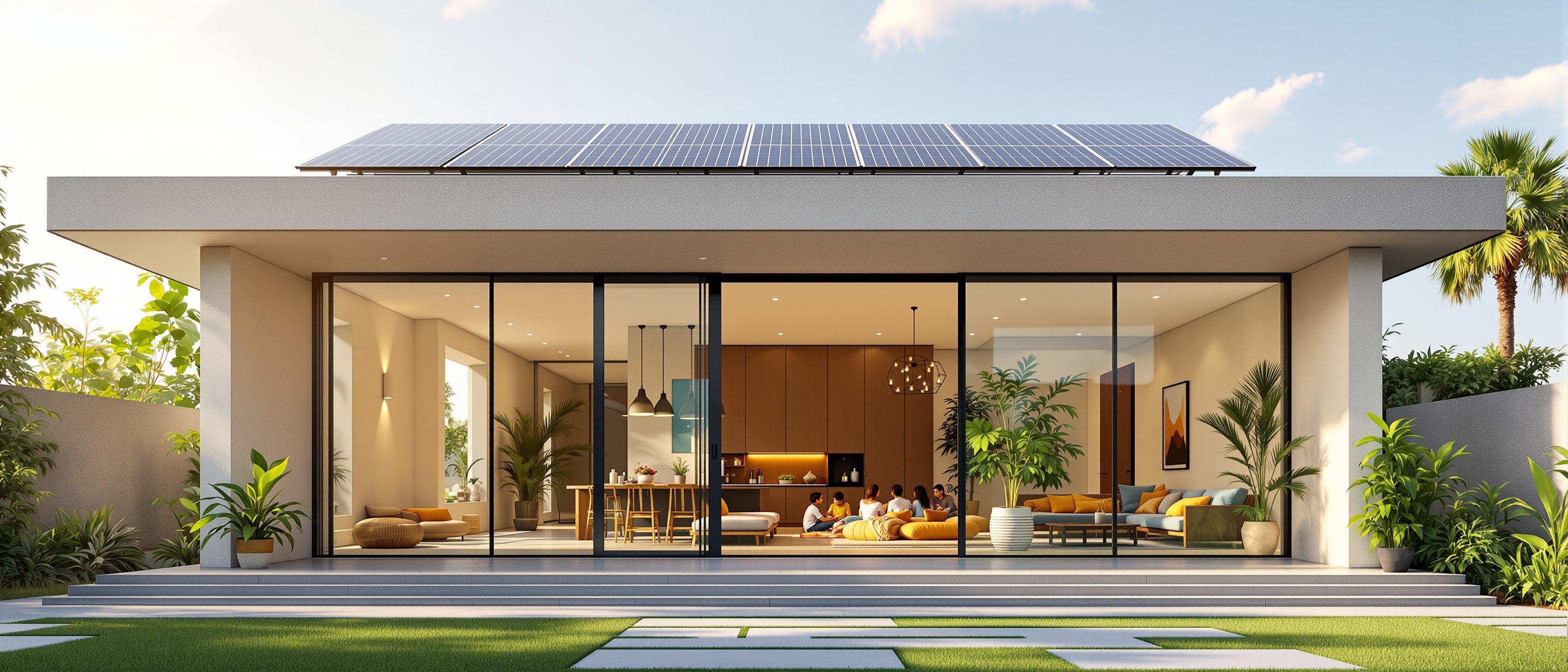
Net-Zero Home Windows in India
The role of windows in a net-zero-energy home — the Passive House spec, and an honest hot-India verdict on what actually pays
A net-zero-energy home generates, over a year, at least as much energy as it consumes — usually with a rooftop solar array offsetting the rest. The maths only closes if you first shrink the demand, and in India the single biggest demand is cooling. Windows are the largest variable in that equation: they admit the solar heat that drives the air-conditioner, and they leak the cool air you paid to make. Get the windows wrong and no realistic PV array can rescue the balance. This guide is about the role of windows in a net-zero or passive home — and an honest verdict on which parts of the famous Passive House window recipe actually pay in hot India.
The path to net-zero is not "generate more" — it is "need less, then offset the small remainder". Windows are where you decide how small that remainder gets to be.
The net-zero logic: shrink the load first
A net-zero home is a loop: minimise the load, then size a PV array to cancel it. The loop fails at the first step if the envelope is leaky, because every extra unit of cooling load is a unit of solar generation you now have to buy, mount and maintain on the roof. Windows sit at the heart of the load side.
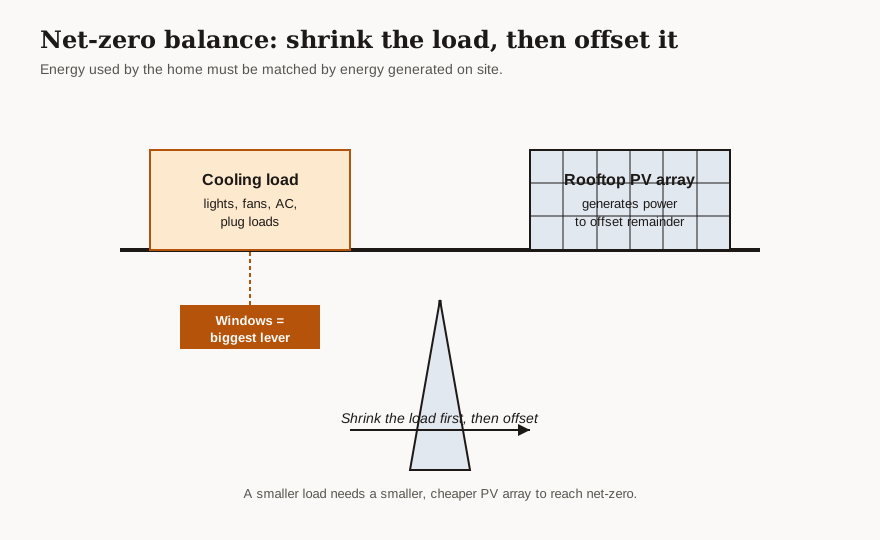
The cheapest kilowatt-hour is the one you never need. A square metre of well-shaded low-SHGC glazing can keep out far more cooling energy over a summer than the same square metre of PV will ever generate. So in a net-zero brief, the window budget is spent before the solar budget — and it is spent on stopping heat, not on a heroic insulation number.
The Passive House window spec
The Passive House (Passivhaus) standard, born in cold Germany, sets the strictest window bar in the world. Its recipe is worth knowing because it is the benchmark every net-zero discussion quotes:
- Whole-window U-value less than or equal to 0.8 W/m2K — passive-house glazing must barely conduct.
- Triple glazing — two cavities, usually two Low-E coatings.
- Argon or krypton fill in the cavities; krypton allows thinner gaps at the same U.
- Thermally broken or insulated frame — uPVC multi-chamber, composite, or aluminium with a deep polyamide break.
- Airtight — continuous gaskets and tested low air leakage, because passive houses chase a whole-building airtightness target.
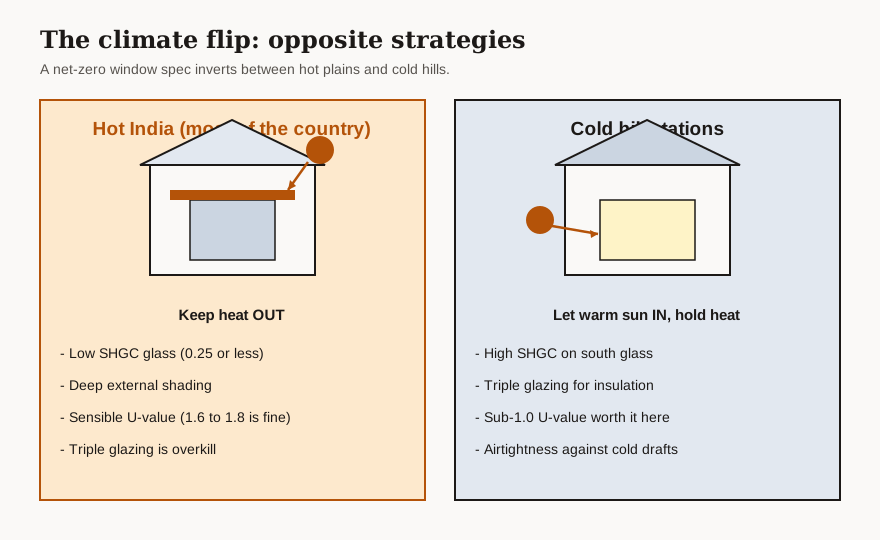
- In a cold climate, high-SHGC south-facing glass to harvest free winter sun — the opposite of what hot India wants.
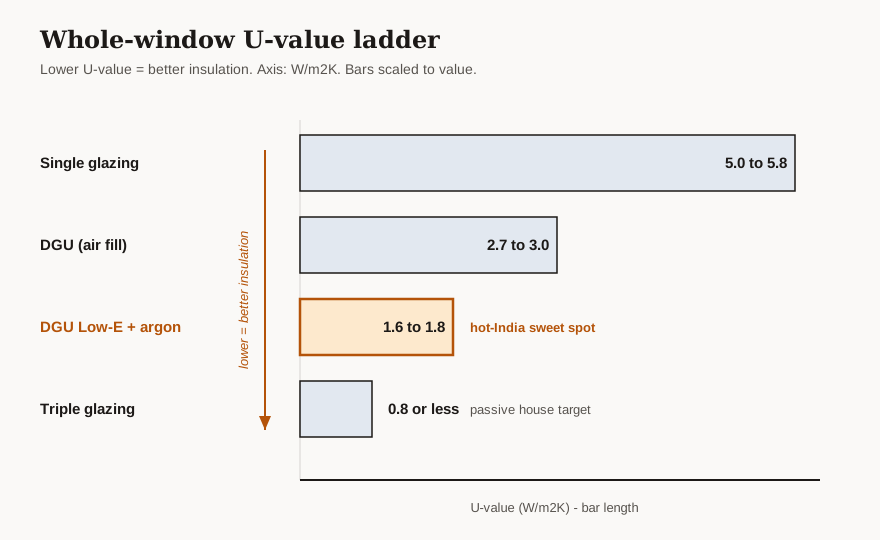
| Assembly tier | Indicative whole-window U (W/m2K) | Typical SHGC | Fits net-zero where |
|---|---|---|---|
| Single glazing (clear) | 5.0 to 5.8 | 0.82 | Nowhere — never net-zero ready |
| DGU, air-filled | 2.7 to 3.0 | 0.70 | Baseline composite/temperate |
| DGU + solar-control Low-E + argon | 1.6 to 1.8 | 0.25 to 0.40 | Most of hot India — the sweet spot |
| Triple-glazed, passive-house | 0.8 or below | 0.50+ (high, for solar harvest) | Cold hill stations only |
Notice the SHGC column. In the passive recipe for a cold climate, you want a LOW U-value AND a HIGH SHGC. In hot India you want a sensible U-value and an aggressively LOW SHGC. They are different problems, and that is the whole reframe.
The honest hot-India verdict: triple glazing is usually overkill
Here is the verdict our triple-glazed windows in India guide already makes in full, and we will not repeat the cost workings here: for the great majority of India, full passive-house triple glazing is overkill and a poor return on investment. The reasoning is climate physics, not penny-pinching.
In hot India, solar gain dwarfs conduction. The air-conditioner is fighting heat that pours straight through the glass as sunlight (governed by SHGC), not heat that slowly conducts through the pane (governed by U-value). Spending lakhs to drive U from 1.6 down to 0.8 buys you very little when the room is being cooked by a west sun the glass is happily admitting. The money is better spent on:
1. Low-SHGC double glazing (SHGC around 0.25) — stops the solar heat that actually loads the room.
2. Aggressive external shading — chajja, fins and reveals that block the sun before it ever reaches the glass.
3. Airtightness — continuous gaskets and a properly sealed install, the cheapest win on the list.
4. A right-sized window-to-wall ratio (WWR) — Eco-Niwas Samhita caps RETV at 15 W/m2; a leaner glazed area makes that easy. Our window-to-wall ratio guide sets the targets.
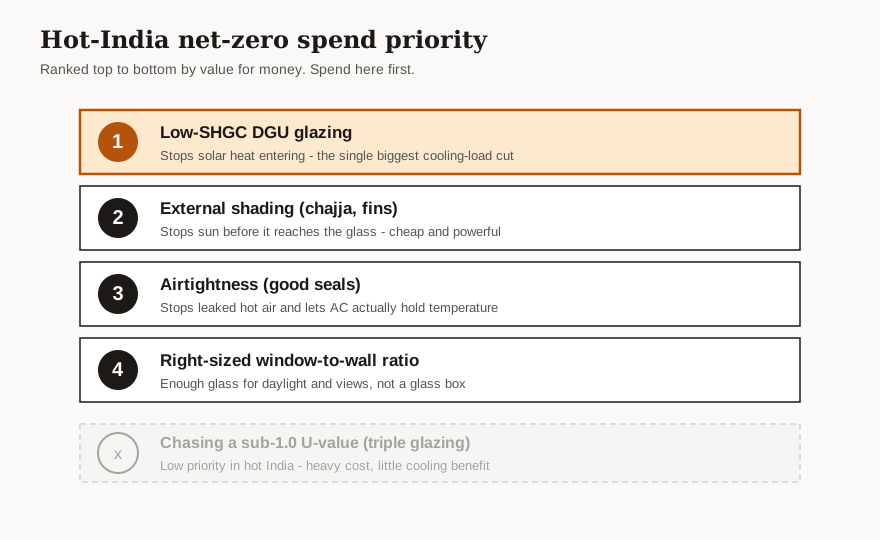
In hot India, a net-zero window is defined by its SHGC and its shading, not by a sub-1.0 U-value. Chasing the German number is fighting the wrong enemy.
The exception: cold hill stations
The honest verdict flips in the cold temperate zone — Shimla, Manali, Leh, Gangtok, the high Himalaya. Here the building is HEATING-dominated, the problem is genuinely conduction, and the passive-house recipe earns every rupee:
- Triple glazing and a sub-1.0 U-value stop precious heat from conducting out through the glass on a -5 degree C night.
- High-SHGC south-facing glass becomes an asset, not a liability — it harvests free solar heat through the day (direct-gain passive solar), exactly as the German original intends.
- Argon or krypton fill and warm-edge spacers matter because the temperature difference across the glass is large enough for them to pay back.
So the climate zone, not the brand of standard, decides the window spec.
Net-zero window priority by climate zone
| Climate zone | Dominant problem | U-value priority | SHGC target | Top window move | Triple glazing? |
|---|---|---|---|---|---|
| Hot-dry (Jaipur, Ahmedabad) | Solar gain | Moderate (1.6 to 2.7) | less than or equal to 0.25 | Deep external shading + low-SHGC DGU | No |
| Warm-humid (Chennai, Mumbai) | Solar gain + ventilation | Moderate | less than or equal to 0.27 | Low-SHGC DGU + shaded openable area | No |
| Composite (Delhi, Lucknow) | Mostly cooling, brief heating | Moderate | 0.25 to 0.35 | Low-SHGC DGU + movable E/W shading | No |
| Temperate (Bengaluru, Pune) | Mild both ways | Moderate | 0.30 to 0.40 | DGU + modest shading | Rarely |
| Cold (Shimla, Manali, Leh) | Heat loss (conduction) | HIGH — chase sub-1.0 | HIGH (south, 0.5+) | Triple glazing + high-SHGC south glass | Yes |
Does this scale to a whole community?
A single net-zero home and a net-zero neighbourhood are different design problems. This guide is the single-home window angle — the SHGC, shading and U-value decisions you make for your own openings. The shared-infrastructure, district-PV and master-plan side lives in net-zero residential communities in India; read that for the community scale, and this guide for the windows in your own walls. For the glass layer itself — which coating, which substrate — pair this with best glass for hot climate India.
The takeaway
A net-zero home is won on the load side, and windows are the biggest load lever you own. In hot India that means a low-SHGC double-glazed unit, aggressive external shading, airtight seals and a right-sized WWR — not a chase for the passive-house sub-1.0 U-value, which mostly fights conduction that India does not have. Reserve the full triple-glazed recipe for the cold hills, where the physics finally rewards it. Spend the saved money on better shading and a slightly bigger PV array, and the net-zero balance closes far more cheaply. For the system-level picture of how frame, glass, seals, shading and rating combine into an energy-efficient window, start at the pillar: energy-efficient windows explained.
Related guides
- Energy-efficient windows explained — the pillar that ties frame, glass, seals and shading into one energy device.
- Triple-glazed windows in India — the full "overkill in hot India" cost verdict, and where the second cavity pays.
- Net-zero residential communities in India — the same goal at neighbourhood and master-plan scale.
- Best glass for hot climate India — choosing the low-SHGC, high-VLT glass these windows depend on.
- Window insulation guide for Indian homes — the cavity, frame and air-sealing mechanism behind the U-value.
References
- Eco-Niwas Samhita 2018 (BEE residential envelope code, RETV less than or equal to 15 W/m2): https://ecbc.in/econiwas.html
- What is a Passive House (Passive House Institute): https://passivehouse.com/02_informations/01_whatisapassivehouse/01_whatisapassivehouse.htm
- Passive House windows and glazing criteria (PHI component database): https://passiv.de/en/03_certification/02_certification_components/01_thermal_envelope/01_thermal_envelope.htm
- Glass and window solutions for homes (Saint-Gobain India): https://in.saint-gobain-glass.com/knowledge-center/glass-and-windows
- Rooftop solar for homes (Ministry of New and Renewable Energy): https://mnre.gov.in/solar/schemes/
Export this guide
Related Guides — Deep-dive reading
Energy Efficient Windows Explained: The Whole-System Guide for Indian Homes
Treat the window as an energy device — frame, glass, seals, shading, install and rating — and learn why low SHGC and shading beat chasing a cold-climate U-value in hot India.
Windows & GlazingEnergy-Efficient Facades in India: How the Building Skin Cuts Your Cooling, Heating & Lighting Bills
How a building facade drives cooling, heating and lighting energy in India, the three levers of solar-heat-gain control, insulation and daylighting, U-value, SHGC, VLT and WWR in plain terms, ECBC and Eco-Niwas expectations, and real Indian green buildings.
Building FacadesDesigning a Naturally Energy-Efficient Indian Home
Comfort first, gadgets last — passive design, orientation, insulation, ventilation and the climate wisdom that cuts Indian energy bills
SustainabilityRelated Tools — Try Free
Brise-Soleil Visualizer
Interactive horizontal-louvre cut-off angle calculator — sun altitude, louvre depth, and spacing inputs with a live shadow preview. Computes θ = arctan(spacing/depth) for façade shading, ECBC envelope compliance, hospital daylight design, and tropical sun-control detailing.
Sun Shading ToolCross-Ventilation Analyzer
Estimate airflow and air changes per hour (ACH) from room size, window areas, layout, and local wind — with NBC 2016 Part 8 compliance check.
Ventilation CalculatorWindow Energy Savings Calculator
Compare standard glazing vs Low-E and DGU windows — annual cooling savings, 10-year savings and payback.
Window Calculator