
Window-to-Wall Ratio Explained (India): Balancing Light, View and Heat
How WWR trades daylight and view against heat, why the Eco-Niwas Samhita ties your glass spec to it, and the 20 to 40 per cent sweet spot for Indian rooms.
Every window is a bargain. Glass buys you daylight, a view and a sense of openness, and in the same breath it sells you heat, glare and a higher cooling bill. The single number that captures that bargain is the Window-to-Wall Ratio (WWR) -- and India's residential energy code, the Eco-Niwas Samhita, ties the glass you are allowed to use directly to it. Get the WWR right and a room feels bright, calm and cool. Get it wrong and you are running the air conditioner against your own architecture.
This guide explains what WWR is, how it is calculated, why the code cares, and the practical sweet spot for most Indian rooms. Numbers here are indicative -- confirm against your local bye-laws and an itemised fabricator quote.
WWR is the dial between light and heat. Turn it up for view and brightness; the code then asks you to spend that openness back in better glass and shading.
What WWR actually means
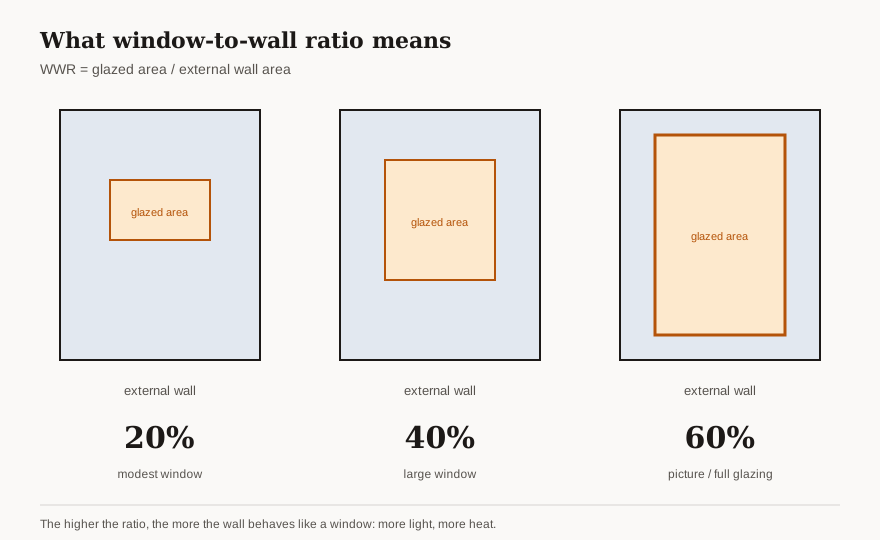
WWR = glazed (non-opaque) area divided by external wall area. Under the Eco-Niwas Samhita 2018 (ENS), it is measured on the external wall envelope excluding the roof, so a skylight does not count toward wall WWR (the roof has its own U-value limit). Expressed as a fraction (0.30) or a percentage (30 per cent), it tells you how much of a sun-facing wall is glass rather than masonry.
A wall that is mostly brick with a modest window sits around 0.15 to 0.25. A wall with a large picture window or floor-to-ceiling glazing climbs to 0.50 and beyond. The higher the WWR, the more the wall behaves like a window -- and a single sheet of glass admits far more heat than the same area of insulated wall.
Why it matters: more glass, hotter room
A high WWR is not free. As glass area rises:
- Daylight rises -- good, up to a point, after which you get glare not brightness.
- View and openness rise -- the emotional payoff people pay for.
- Solar heat gain rises -- the same glass that lets light in lets the sun's heat in, raising the room temperature and the cooling load.
- The wall insulates less -- glass has a far worse U-value than an insulated wall, so heat conducts in and out more freely.
This is why the ENS treats windows as the biggest single lever on a home's heat performance. The code's headline limit is the Residential Envelope Transmittance Value (RETV), which must be 15 W/m2 or lower for the composite, hot-dry, warm-humid and temperate climate zones. RETV is essentially how much heat the wall-plus-window envelope lets through. Push WWR up and RETV climbs fast unless you change the glass.
The ENS trade: higher WWR demands better glass
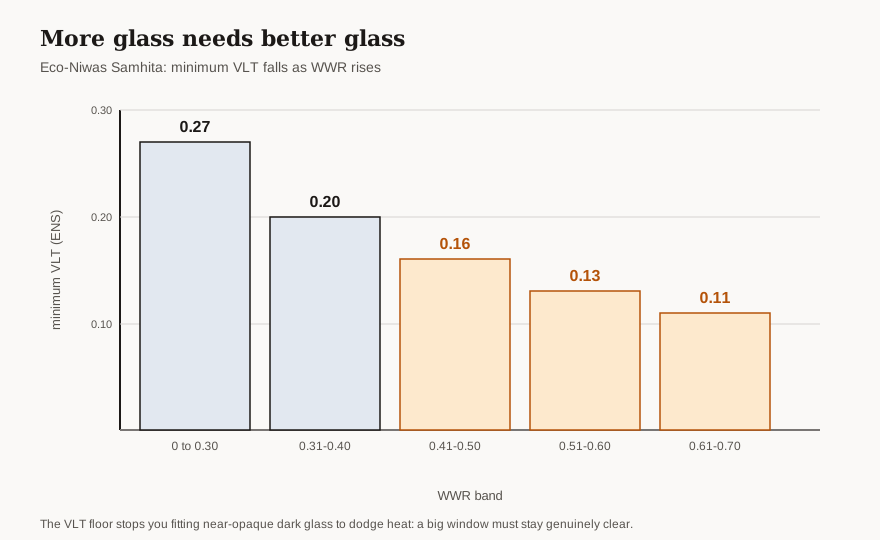
The code does not ban large windows. Instead, it makes a deal: the more glass you want, the lower the SHGC (Solar Heat Gain Coefficient) must be and the higher the minimum VLT (Visible Light Transmittance) the glass must achieve. The VLT floor stops you compensating for heat by fitting near-opaque dark glass that leaves the room gloomy. The bands run like this:
| WWR band | ENS minimum VLT | What it implies |
|---|---|---|
| 0 to 0.30 | 0.27 | Ordinary clear or lightly coated glass is fine |
| 0.31 to 0.40 | 0.20 | Low-E or solar-control glass starts to be needed |
| 0.41 to 0.50 | 0.16 | Spectrally selective Low-E, ideally in a DGU |
| 0.51 to 0.60 | 0.13 | High-performance solar-control DGU |
| 0.61 to 0.70 | 0.11 | Premium spectrally selective glass plus shading |
The VLT floor falls as WWR rises because with more glass you can hit the same daylight target through less-transmitting glass -- and the code wants that glass to also be cutting heat. The practical reading: above roughly 40 per cent WWR you are committed to performance glazing and probably external shading to keep RETV at or under 15. The glass that high WWR demands is covered in depth in Energy-Efficient Glass for Indian Homes and Best Glass for Hot Climates in India -- this guide sizes the glass; those two specify it.
A worked WWR calculation
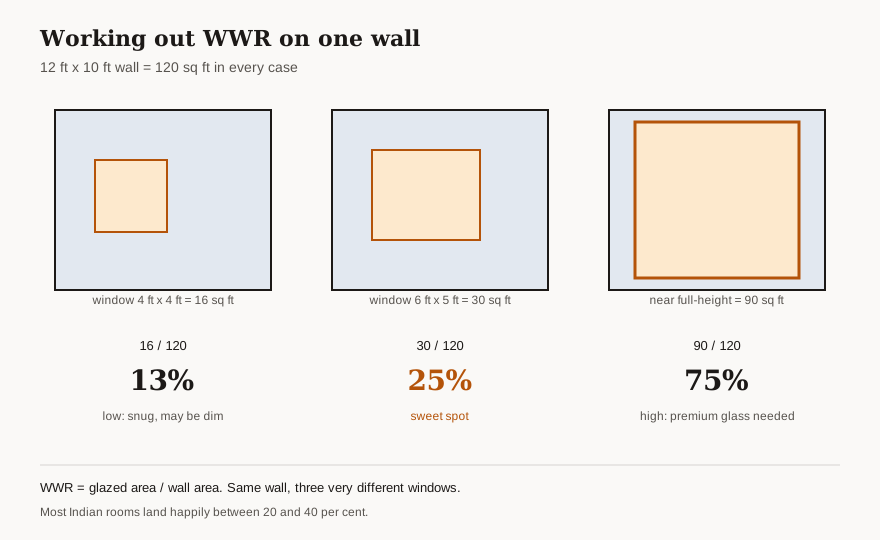
Take a typical 12 ft by 12 ft bedroom on an outer wall, ceiling 10 ft (about 3 m) high.
- External wall area (the 12 ft wide outer wall): 12 ft x 10 ft = 120 sq ft.
- A standard bedroom window of 4 ft x 4 ft = 16 sq ft of glazed area.
- WWR = 16 / 120 = 0.13, or 13 per cent.
That sits comfortably in the lowest band, so ordinary glass meets the VLT floor and RETV is easy. Now suppose the owner wants a generous view and fits a 6 ft x 5 ft window (30 sq ft):
- WWR = 30 / 120 = 0.25 (25 per cent) -- still the lowest band, brighter, and a real upgrade in daylight depth. This is the comfortable target.
Push to floor-to-ceiling glass across most of the wall, say 10 ft x 9 ft (90 sq ft):
- WWR = 90 / 120 = 0.75 -- beyond the 0.70 band, which means premium solar-control glazing plus deep shading just to comply, and an expensive cooling load to run.
Remember the floor for daylight and air does not move with WWR: the NBC 2016 rule of thumb still asks for an openable area of at least 10 per cent of the room's carpet area, and many bye-laws want window area around one-seventh to one-eighth of floor area for light and ventilation combined. WWR is the ceiling set by energy; NBC sets the floor for habitability. Sizes per room are in Window Size Standards for Indian Homes.
The sweet spot: 20 to 40 per cent
For most Indian rooms, the comfortable band is about 20 to 40 per cent WWR with good glass and shading.
| WWR | Feel and cost |
|---|---|
| Under 20 per cent | Easy to cool, low light -- rooms can feel dim and cave-like |
| 20 to 40 per cent | The sweet spot: bright, viewable, manageable heat with Low-E and a chajja |
| 40 to 60 per cent | Dramatic, but needs performance DGU plus shading; cooling cost climbs |
| Over 60 per cent | Feature glazing only -- expect premium glass, deep shading and high running cost |
Within that band, two rooms can perform very differently depending on which wall the glass is on.
Orientation changes everything
The same WWR behaves differently by orientation, because the sun strikes each wall differently in the Northern Hemisphere.
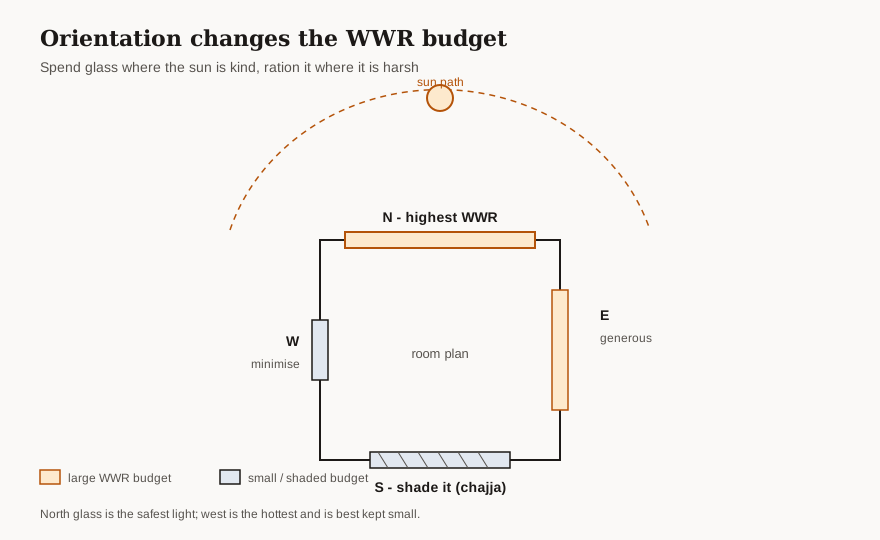
| Wall | Sun behaviour | WWR guidance |
|---|---|---|
| North | Soft, even, almost no direct sun or heat | Highest WWR allowed -- big glass with the least heat penalty; ideal for studies, studios |
| East | Gentle low morning sun, manageable heat | Generous WWR; hard to shade with overhangs (use verticals) |
| South | High midday sun, easiest to shade | Generous WWR if you add a horizontal chajja sized to the latitude |
| West | Harsh low afternoon sun, most heat and glare | Lowest WWR -- minimise glass, low-SHGC or reflective, vertical fins |
The takeaway: spend your WWR budget on the north and (shaded) south, and ration it hard on the west. This sits inside the wider placement logic in the planning pillar Window Placement Guide for India, which covers where openings go across the whole plan, not just how much glass a wall carries.
Do and avoid
- Do keep most rooms in the 20 to 40 per cent band, then raise it only on the north or a well-shaded south wall.
- Do match glass to WWR: above 40 per cent, specify low-SHGC Low-E in a DGU and design external shading.
- Do confirm RETV at or below 15 W/m2 for your zone with your designer's ENS calculation.
- Avoid big unshaded west glazing -- it is the most expensive WWR you can buy in heat and glare.
- Avoid chasing a view with dark, heavily tinted glass to "fix" heat -- it fails the VLT floor and leaves the room gloomy.
- Avoid treating WWR as a target on its own -- pair it with shading, orientation and the NBC openable-area floor.
References
Export this guide
Related Guides — Deep-dive reading
Floor-to-Ceiling Windows (India): Maximum Light, and the Heat Trade-Off
Full-height glazing for Indian homes — how to win the daylight and view without losing the energy code, comfort or safety.
Windows & GlazingNorth-Facing Window Design (India): The Best Light With the Least Heat
Why the north wall gives soft, even, glare-free daylight with almost no heat, and how to design large, high-VLT windows that make the most of it.
Windows & GlazingEnergy-Efficient Facades in India: How the Building Skin Cuts Your Cooling, Heating & Lighting Bills
How a building facade drives cooling, heating and lighting energy in India, the three levers of solar-heat-gain control, insulation and daylighting, U-value, SHGC, VLT and WWR in plain terms, ECBC and Eco-Niwas expectations, and real Indian green buildings.
Building FacadesRelated Tools — Try Free
Brise-Soleil Visualizer
Interactive horizontal-louvre cut-off angle calculator — sun altitude, louvre depth, and spacing inputs with a live shadow preview. Computes θ = arctan(spacing/depth) for façade shading, ECBC envelope compliance, hospital daylight design, and tropical sun-control detailing.
Sun Shading ToolCross-Ventilation Analyzer
Estimate airflow and air changes per hour (ACH) from room size, window areas, layout, and local wind — with NBC 2016 Part 8 compliance check.
Ventilation CalculatorWindow Orientation Planner
Pick the best window type, glass and shading by wall direction — north, east, south and west.
Window Tool