
Colonial Architecture in India
The bungalow, the verandah and the Goan villa - Europe taught by the tropics
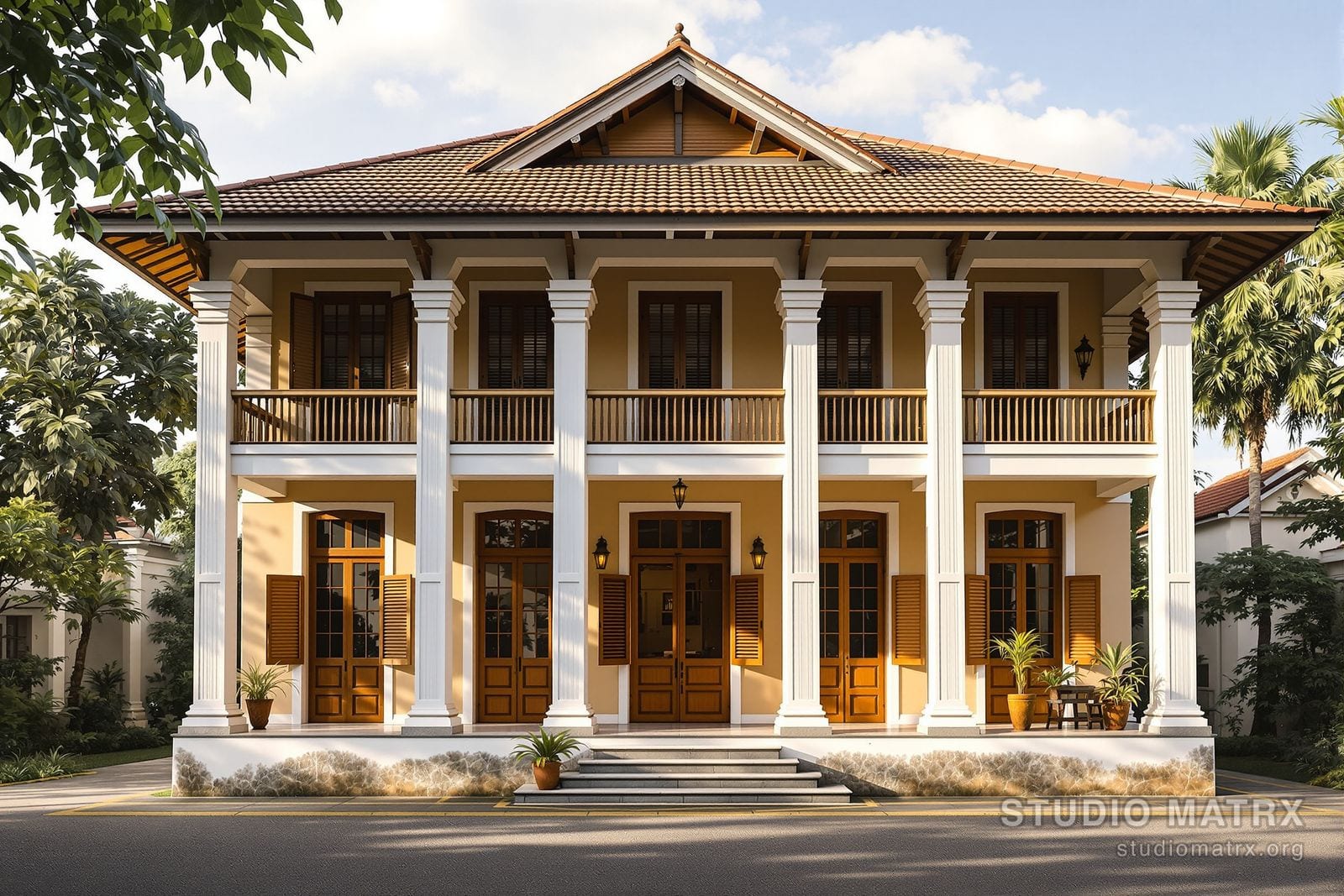
Colonial architecture in India is really two stories, four centuries long. The Portuguese came first, in the 1500s, and left Goa a legacy of baroque churches and brightly painted villas with shaded porches. The British came later and, over two centuries, gave India the bungalow, the hill station, the classical civic building and a whole grammar of verandahs, louvres and high ceilings. Both were European traditions forced to come to terms with the Indian sun and monsoon - and both, in adapting, produced some of the most liveable homes the country has ever built.
The bungalow is the great survivor. The word itself comes from the Bengali bangla, a low thatched house, which British officers adapted into the single-storey, hip-roofed home wrapped in a deep verandah that still defines gracious living across India. In Goa, meanwhile, Portuguese baroque fused with local craft to create the Indo-Portuguese mansion - colour-washed, balcony-fronted, built around an internal courtyard. Restored or reinterpreted, both remain deeply desirable today.
What defines it
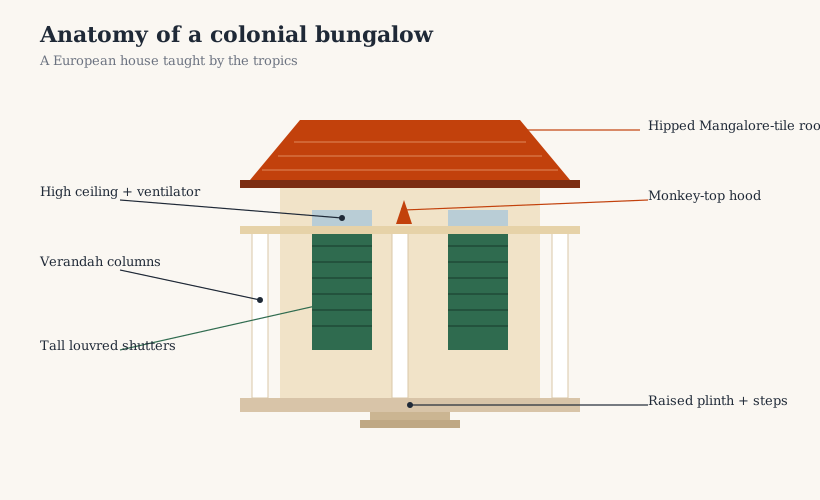
Whatever the colonial power, the underlying move was the same: a European house taught to handle a tropical climate.
| Trait | What it looks like | The idea behind it |
|---|---|---|
| Deep verandahs | Shaded perimeter porches, often wrapping the house | Shade, rain cover and a cool outdoor room |
| High ceilings and tall openings | Lofty rooms, tall louvred windows, ventilators | Hot air rises and escapes; cross-ventilation throughout |
| Classical or baroque facades | Columns and pediments (British); colour and curves (Portuguese) | European dignity, locally built |
| Sloping tiled roofs and raised plinths | Hipped Mangalore-tile roofs on a high base | Sheds the monsoon; lifts the house above damp and flood |
The genius of the colonial house is that almost every grand gesture is also a climate device. The verandah is shade; the high ceiling is ventilation; the louvre is light and breeze without glare.
The design elements
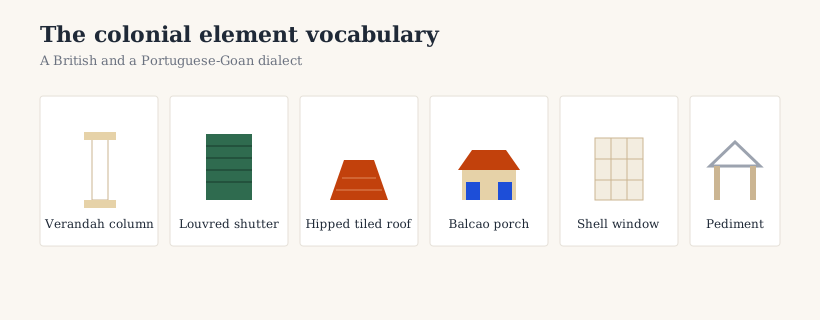
The kit of parts splits into a British and a Portuguese-Goan dialect, with much in common.
| Element | Tradition | What it does |
|---|---|---|
| Verandah and columns | British and Portuguese | The shaded outdoor room - the heart of the house |
| Louvred shutters (jalousie) | Both | Light and breeze without sun or rain |
| Hipped Mangalore-tile roof | Both | Sheds heavy rain; the warm red signature of the coast |
| Monkey-top | British (Bangalore) | A little timber-and-tile hood shading the window |
| Balcao | Portuguese-Goan | A covered entrance porch with built-in seats for street life |
| Oyster-shell windows and colour | Portuguese-Goan | Translucent shell panes and vivid lime-washed facades |
Where you'll find it
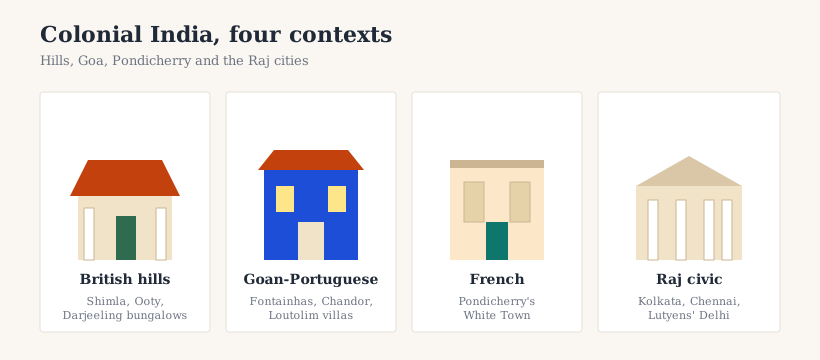
Colonial India built differently in the hills, the port cities and the Goan and French enclaves.
| Context | Where | What to look for |
|---|---|---|
| British hill stations | Shimla, Ooty, Darjeeling, Kodaikanal | Gabled bungalows, timber detail, fireplaces |
| Goan-Portuguese | Fontainhas, Chandor, Loutolim | Colour-washed villas, balcaos, baroque churches |
| French | Pondicherry's White Town | Pastel facades, deep verandahs, bougainvillea walls |
| Raj civic and bungalow | Kolkata, Chennai, Lutyens' Delhi | Classical public buildings and garden bungalows |
The bungalow itself descends from the Bengali vernacular, and its climate logic is the same one the wider Indian vernacular had always known.
Best for
The colonial idiom suits anyone who wants old-world calm and serious shade. It works beautifully for:
- Heritage bungalow and villa restorations, a specialised craft that starts with careful heritage documentation.
- Plantation, hill and weekend homes, where deep verandahs and tiled roofs belong to the landscape.
- Goan-style homes and boutique hotels, where colour, the balcao and the courtyard create instant warmth.
Built new, it asks for generous plots - the verandah eats floor area - and genuine materials: thin imitations with shallow eaves and applied columns lose both the looks and the climate performance. Done properly, few styles age as gracefully, and few are as comfortable to live in without air-conditioning.
Notable buildings and places
There is no single author of the colonial house - it was the collective work of British military engineers and public-works departments, Portuguese friars and Goan master craftsmen, and the French planners of Pondicherry. The bungalows of the hill stations, the painted mansions of Chandor and Loutolim, the white-and-pastel grid of Pondicherry, and the garden bungalows of Lutyens' Delhi together form one of India's most loved built inheritances - and the model for much of how the country still imagines a gracious home.
For neighbouring styles, see our Indo-Saracenic, Art Deco and Neo-Traditional profiles; if you are choosing, start with the right style for your home.
Colonial architecture endures in India not because of who built it, but because of how well it works: a European idea, humbled and improved by the Indian climate, into a house that is cool, shaded and quietly grand. The verandah, the high ceiling and the tiled roof it perfected are lessons no modern home has bettered.
This profile refreshes every 12 months. Last verified: June 2026 · Next verify: June 2027.
Export this guide
Related Guides — Deep-dive reading
Modern Farmhouse Architecture in India
The clean gable, the deep verandah and the weekend home reimagined
Design StylesNeo-Traditional Indian Architecture
Where traditional aesthetics meet modern planning and contemporary construction
Design StylesIndo-Saracenic Architecture in India
The Raj-era revival that gave India its grandest landmarks
Design StylesRelated Tools — Try Free
Cross-Ventilation Analyzer
Estimate airflow and air changes per hour (ACH) from room size, window areas, layout, and local wind — with NBC 2016 Part 8 compliance check.
Ventilation CalculatorBrise-Soleil Visualizer
Interactive horizontal-louvre cut-off angle calculator — sun altitude, louvre depth, and spacing inputs with a live shadow preview. Computes θ = arctan(spacing/depth) for façade shading, ECBC envelope compliance, hospital daylight design, and tropical sun-control detailing.
Sun Shading ToolDesign Style Finder Quiz
Answer 10 visual questions to discover your Indian interior style profile with materials and colours.
Interactive Quiz