
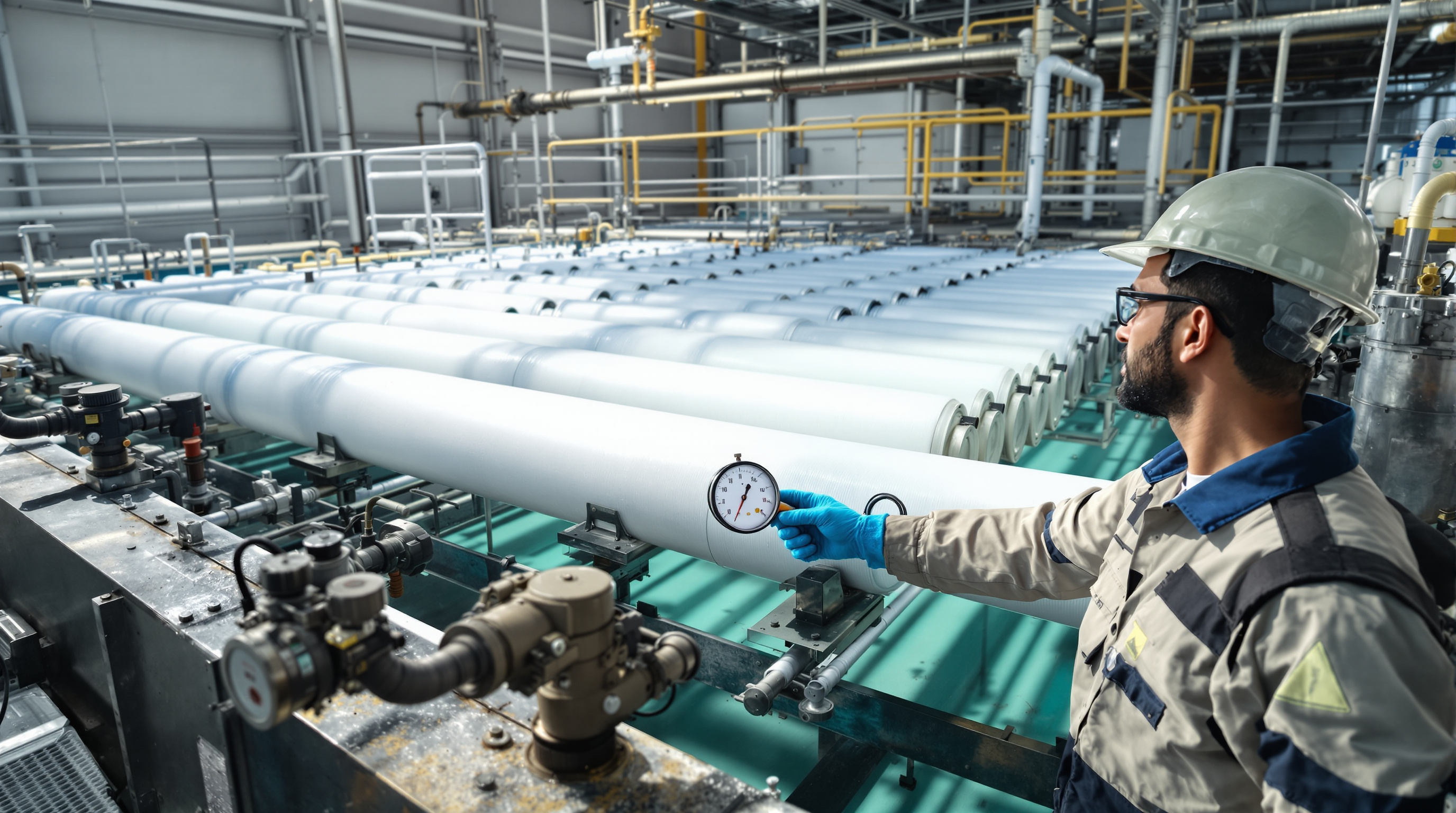
Membrane Cleaning in MBR/UF STPs: The Complete O&M Guide
Why UF and MBR membranes foul, how to tell maintenance cleaning (CIP) from recovery cleaning, which chemicals to use, how to read flux and TMP, and how to make an expensive membrane stack last its full life.
In a conventional activated-sludge plant the clarifier does the final separation of clean water from biomass, using nothing but gravity and patience. In a UF (ultrafiltration) or MBR (membrane bioreactor) plant, that job is done by a physical barrier — a wall of hollow fibres or flat sheets with pores so fine that bacteria, suspended solids and most turbidity simply cannot pass. The reward is superb, consistent effluent from a compact footprint. The catch is that this barrier is the single most expensive component in the plant, and it slowly clogs every hour it runs.
Keeping that barrier clean is the defining maintenance task of any membrane STP. Get it right and a membrane stack lasts seven to ten years; neglect it and you can destroy a lakhs-worth stack in a single monsoon of bad operation. This guide is the practical playbook.
A membrane is not a filter you replace when dirty — it is an asset you clean on schedule so it never gets dirty enough to fail. The operator who waits for the alarm has already lost part of the membrane's life.
Why membranes foul
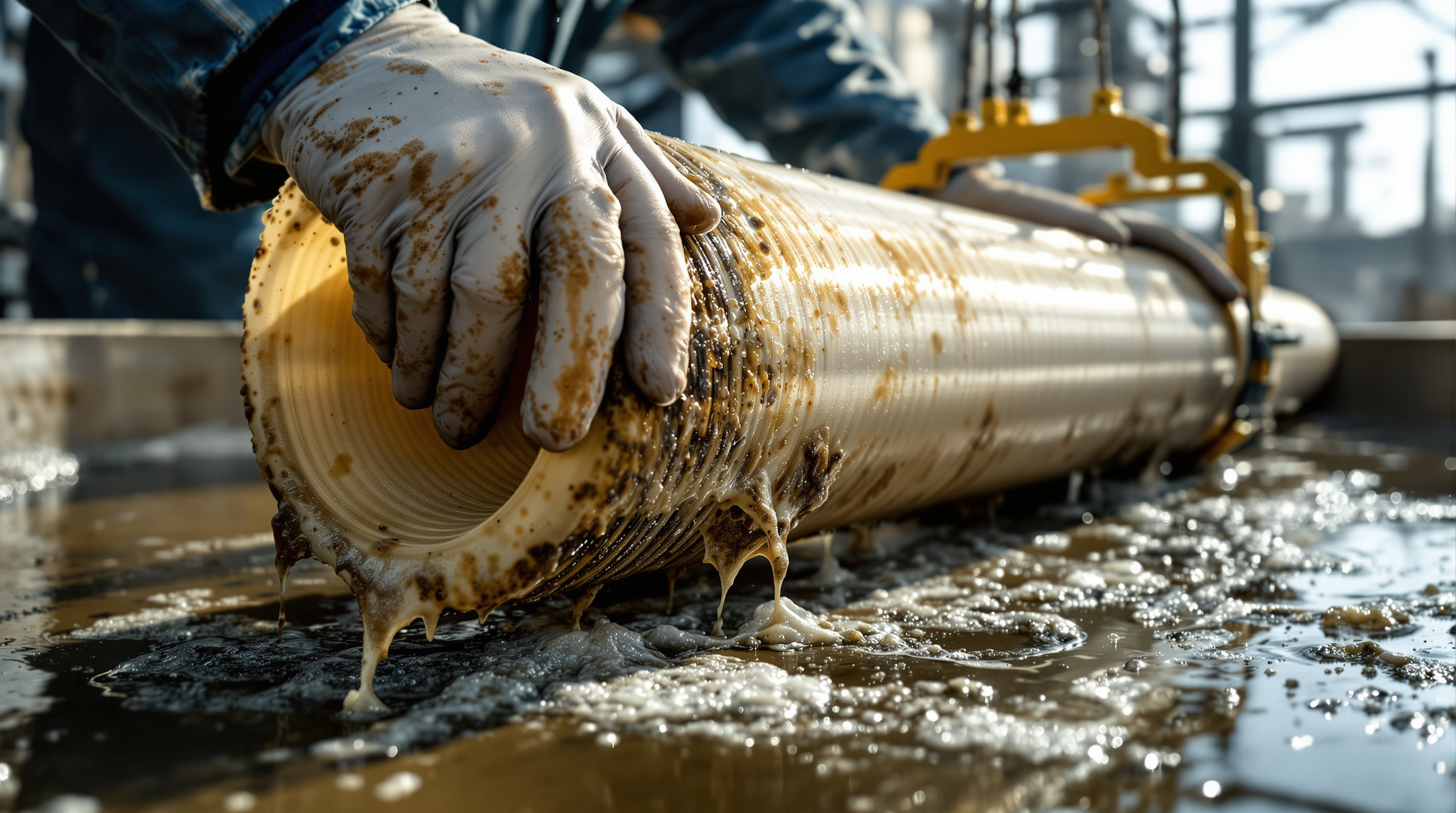
Fouling is the accumulation of material on and inside the membrane that resists the flow of water through it. It is not one problem but several, and the cleaning strategy depends on which kind you are fighting.
- Particulate / colloidal fouling — fine solids and biomass flocs pressing against the surface, forming a cake layer. The most common and the most reversible.
- Organic fouling — sticky extracellular polymers (EPS/SMP) secreted by the biology, plus oils and greases that slipped past the pre-treatment. These glue the cake down.
- Biofouling — a living biofilm that grows on the membrane itself, feeding on the organics. Chlorine is the weapon here.
- Inorganic scaling — calcium, magnesium, iron and silica precipitating as hard scale, especially in hard Indian feed water. This needs acid, not chlorine.
Fouling is also classified by how hard it is to remove: reversible fouling comes off with a backwash or a relaxation cycle; irreversible fouling needs chemicals; irrecoverable fouling is permanent loss you never get back. Good O&M is simply the art of keeping fouling in the first two categories.
Reading the plant: flux, TMP and permeability
You cannot manage what you do not measure. Three numbers tell you everything about membrane health.
- Flux — the flow of permeate per unit of membrane area, in litres per square metre per hour (LMH). Run at a sensible, conservative flux and fouling stays slow; push flux to squeeze out more water and fouling accelerates sharply.
- Transmembrane pressure (TMP) — the pressure difference driving water through the membrane. For submerged UF/MBR modules this is the suction the permeate pump has to pull. Rising TMP at constant flux is the single clearest fouling signal.
- Permeability — flux divided by TMP, normalised to 20°C. This is the true health score because it removes the effect of temperature and flow. A steady downward trend in permeability, cycle after cycle, is your early-warning system.
Log TMP and flow at every shift and plot permeability weekly. The STP daily checklist and instrumentation guide cover where these readings sit in the wider routine.
The three levels of cleaning
Membrane cleaning is a ladder. Each rung is more aggressive, less frequent, and harder on the membrane than the one below. Always clean at the lowest rung that restores performance.
1. Physical cleaning (every cycle, automatic)
Built into normal operation and needing no chemicals:
- Relaxation — the permeate pump stops for a minute or two while aeration keeps scouring the surface; the cake layer loosens and sloughs off. Standard on submerged MBR.
- Backwash / backpulse — permeate is pushed backwards through the fibres to lift the cake. Common on pressurised UF (like tertiary UF after a pressure sand filter).
- Air scour — coarse bubbles along the module continuously shear solids off the surface. If the blowers and diffusers feeding the membrane tank underperform, fouling races ahead — treat scour air as critical, not optional.
2. Maintenance cleaning — CIP (weekly to monthly)
Clean-In-Place (CIP), also called maintenance or chemically-enhanced backwash, is a short, low-dose chemical dose done without removing the modules from the tank. A dilute cleaning solution is dosed into the fibres and held ("soaked") for 30–60 minutes, then rinsed. The whole event takes an hour or two and is done frequently precisely to stop fouling ever becoming stubborn. This is the workhorse cleaning of a membrane plant.
3. Recovery cleaning — intensive CIP (every 3–6 months, or on trigger)
When maintenance cleaning no longer restores permeability, you step up to a recovery clean (also called intensive or restoration CIP): higher chemical concentration, longer soak (often several hours or overnight), sometimes with the modules lifted into a dedicated cleaning tank and the solution warmed to 30–35°C to boost effectiveness. This is the deep clean that resets the membrane close to its original permeability. Trigger it on schedule OR condition — whichever comes first.
The chemicals: what dissolves what
Two chemical families do almost all membrane cleaning, and you must match the chemical to the fouling. Follow the membrane manufacturer's dosing limits exactly — over-concentrated hypochlorite is the fastest way to oxidise and ruin a stack.
| Foulant | Cleaning agent | Typical use | Notes |
|---|---|---|---|
| Organic + biofouling | Sodium hypochlorite (NaOCl) | Maintenance & recovery | Oxidises EPS and biofilm; stay within the maker's ppm and contact-time limits |
| Organic (alkaline) | Caustic soda (NaOH) | Recovery | Raises pH to hydrolyse organics; often paired with hypochlorite |
| Inorganic scale | Citric acid | Maintenance & recovery | Chelates calcium/iron scale; gentle and widely used |
| Hard scale / iron | Hydrochloric acid (HCl) | Recovery | Stronger acid clean where citric is not enough |
The usual pattern is an alkaline/oxidant clean first (to strip organics and biofilm), a thorough rinse, then an acid clean (to remove scale) — never mix an acid and a hypochlorite in the same step, as that releases chlorine gas. Handling, storage and dosing of these chemicals follow the same safety discipline as your chemical dosing and chlorination systems: PPE, ventilation, and separated storage.
A workable cleaning schedule
Every membrane and feed water is different, so treat this as a starting frame to tune against your own permeability trend, not a fixed rule.
| Task | Frequency | Trigger |
|---|---|---|
| Relaxation / backwash | Every cycle | Automatic |
| Air scour check | Daily | Shift log |
| Maintenance CIP (hypochlorite) | Weekly–fortnightly | Schedule |
| Maintenance CIP (citric acid) | Monthly | Schedule / scaling signs |
| Recovery clean | Every 3–6 months | TMP or permeability threshold |
| Integrity / fibre check | Quarterly | Turbidity spike in permeate |
Protecting membrane life
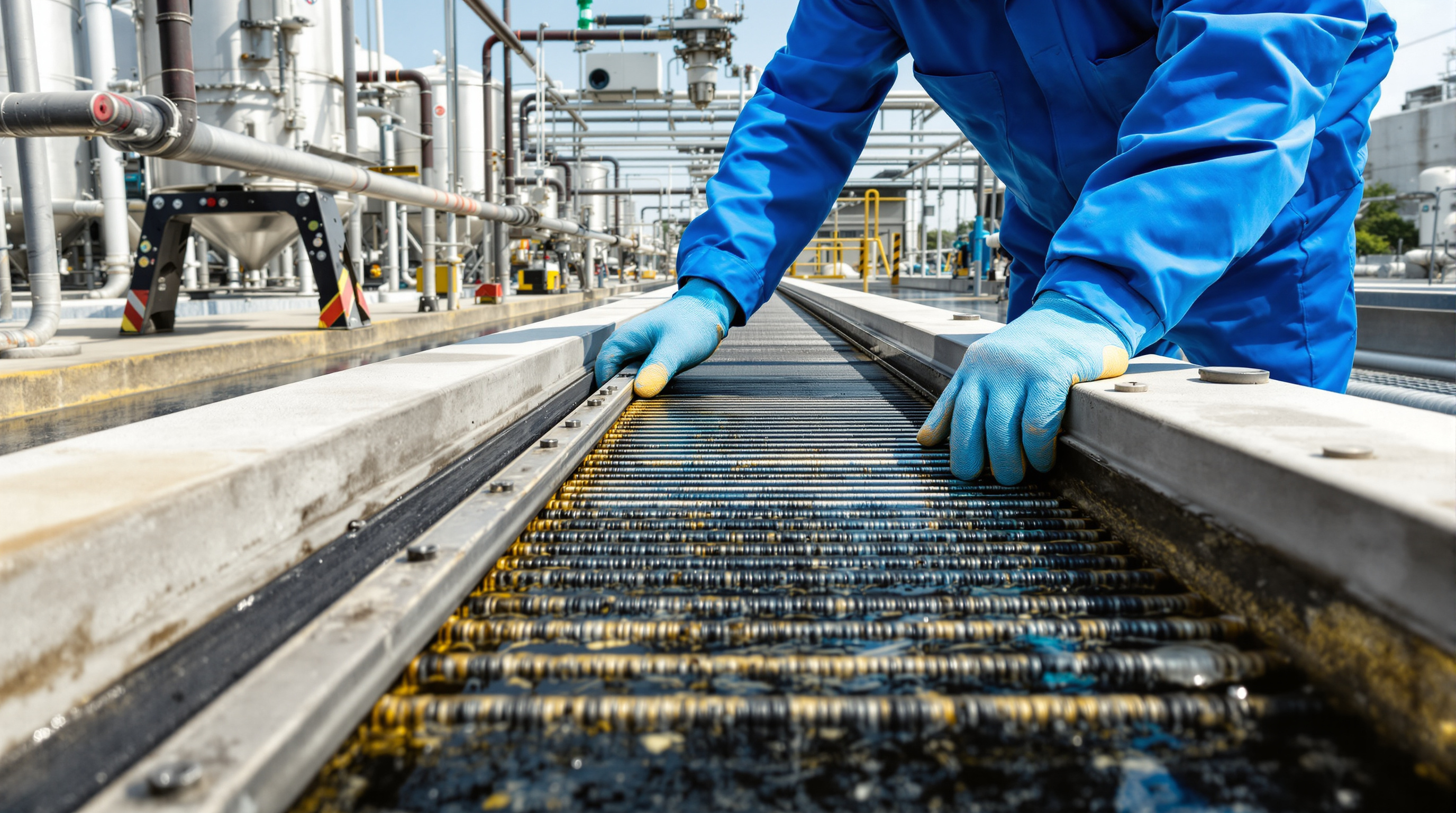
Cleaning removes fouling, but the biggest gains come from stopping foulants reaching the membrane at all. The membrane tank is only as healthy as the biology and pre-treatment upstream.
- Guard the pre-treatment. A failed oil-and-grease trap or bar screen sends foulants straight to the fibres. Fine screening (typically 1–2 mm) ahead of an MBR is non-negotiable.
- Keep the biology in range. Excess MLSS makes sludge viscous and hard to scour; a stressed or under-aerated culture secretes more sticky EPS. Manage it as covered in biological culture management and the wider MBR guide.
- Never let a membrane sit dirty and dry. If the plant is shut for a spell, clean the modules first and keep them wet (preservative solution for long lay-ups). A dried-out fouled fibre is often unrecoverable.
- Watch the temperature. Cold monsoon feed water raises viscosity and TMP; hot water can exceed the membrane's limit. Always temperature-correct your permeability before judging fouling.
- Respect chlorine tolerance. Track the cumulative chlorine dose the membrane has seen — every stack has a lifetime oxidant budget, and blasting it with strong hypochlorite at every alarm burns through that budget years early.
Done well, this discipline is also an energy story: a fouled membrane makes the permeate pump work harder for every litre, so clean membranes quietly lower your power bill — see reducing STP electricity consumption.
When cleaning stops working
If a recovery clean no longer restores permeability, the fouling has become irrecoverable and the modules are near end of life. Confirm it is the membrane and not a pump, valve or instrument fault first — the STP troubleshooting guide walks through isolating the cause. A membrane that has been cleaned on schedule its whole life will reach this point gracefully at seven to ten years; one that was run to failure gets there in two or three.
The bottom line
Membrane cleaning is not an occasional chore — it is the core rhythm of running a UF or MBR STP. Measure permeability, clean at the lowest effective level, match the chemical to the foulant, and protect the fibres upstream and during shutdowns. Do that and the most expensive asset in your plant delivers crystal-clear effluent for its full design life. To place this within the whole plant, start at the Sewage Treatment Plants guide library, and to check how much treated water your membrane stack should be producing, use the STP Capacity Calculator.
Export this guide
Related Guides — Deep-dive reading
Biological Culture Management in an STP: The Heart of Good O&M
The microbes in your aeration tank do the actual work of cleaning sewage. Keep them healthy — the right MLSS, food, oxygen and nutrients — and everything else falls into place. Here is how operators manage the living culture, diagnose bulking and foaming, and recover after a crash.
Sewage Treatment PlantsSTP Troubleshooting: Common Problems & Fixes (Operator's Guide)
Odour, cloudy effluent, high BOD, sludge bulking, foaming, choked diffusers, pump trips and rising power bills — a practical symptom-to-cause-to-fix guide for facility managers running an Indian building STP.
Sewage Treatment PlantsDaily STP Checklist: What Operators Must Check Every Day
The exact round an STP operator should walk every single day — dissolved oxygen, blowers, MLSS colour and smell, flow, chlorine residual, screens, pumps and the logbook — laid out as a practical checklist a facility manager can actually follow.
Sewage Treatment PlantsRelated Tools — Try Free
Daily STP O&M Checklist Tool
An interactive daily operator round for a sewage treatment plant — tick off biology, flows, equipment and output checks and see a live completion score, per-section progress and shift readiness.
ChecklistAcoustic Privacy (STC) Visualizer
Indian healthcare acoustic visualizer — compare wall assemblies and noise sources, see received SPL after STC attenuation, and check FGI 2018 / IS 1950 / NABH speech-privacy compliance with live dual-canvas waveform.
Acoustic ToolLift Safety Audit Checklist
Interactive checklist that scores your home lift on safety devices, compliance and upkeep.
Checklist