
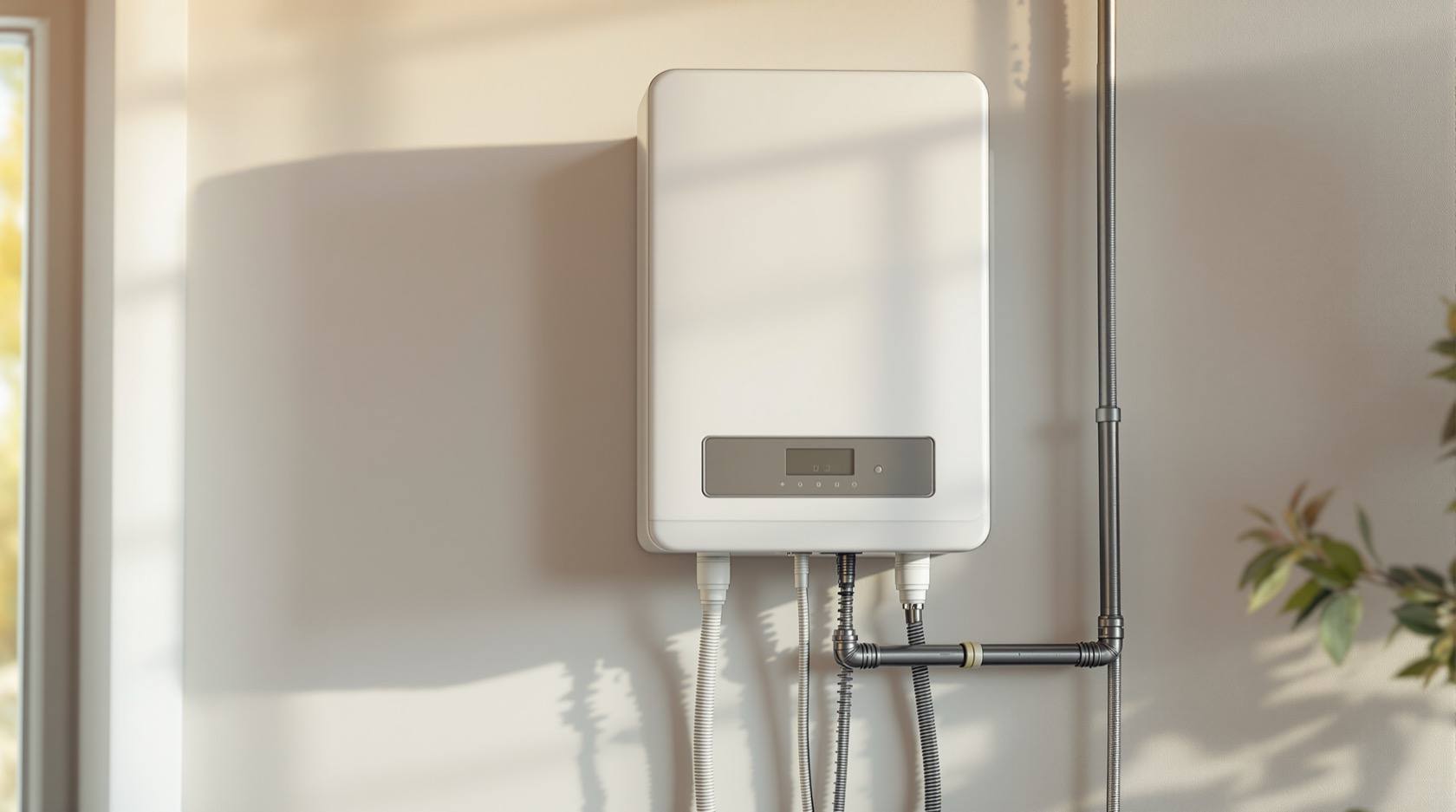
Solar Inverter Buying Guide (India): Choosing the PV Inverter (2026)
The PV inverter is the brain of a rooftop system: it turns panel DC into home AC and manages the grid tie. How to pick the type, size it to the array, compare the specs that matter, and buy an approved-list model for the subsidy.
The panels get all the attention, but the component that decides how much of that sunshine actually reaches your sockets is the solar inverter -- the brain of a rooftop system. It converts the panels' direct current (DC) into the alternating current (AC) your home and the grid use, tracks the array's best operating point, and enforces the grid-tie rules that let you export surplus. Get the inverter right and the system runs efficiently for a decade; get it wrong and you lose yield, monitoring and, sometimes, the subsidy.
This is the PV-inverter buying guide in the Solar and Energy Hub, and it pairs with the rooftop solar overview. It is deliberately different from a backup or UPS inverter guide: that box keeps lights on during a cut and does not know your panels exist. A PV inverter (also called a grid-tie or hybrid inverter) is built around the solar array.
Scope and safety. This guide helps you design and specify -- choose the inverter type, size it to the array, read the datasheet and question a quote. The sizing sign-off, rooftop wiring, mounting, grid interconnection and the net-metering application are done by a licensed solar installer / electrician and your DISCOM. Rooftop electrical work at height is a fall, shock and fire hazard -- never DIY. Subsidy slabs, approved lists, net-metering rules and tariffs are indicative and change and vary by state and DISCOM; verify current rates on the official national rooftop portal and with your DISCOM before you commit.
What the PV inverter actually does
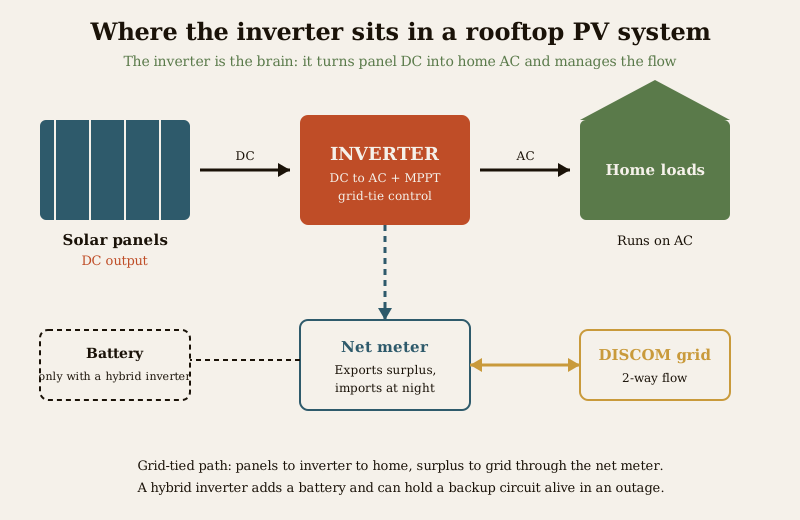
Four jobs sit inside that wall-mounted box:
- DC to AC conversion. Panels make DC; your home and the grid run on AC. This is the core function.
- Maximum power point tracking (MPPT). Sun, temperature and shade constantly shift the array's ideal voltage. The MPPT circuit hunts for the point that harvests the most power, moment to moment.
- Grid-tie control and anti-islanding. The inverter matches grid voltage and frequency and, crucially, shuts down if the grid goes dead so it cannot back-feed a line a lineworker thinks is safe. This anti-islanding behaviour is a hard requirement for net metering.
- Monitoring. Modern units log yield and faults to an app or web portal so you can see the system working -- and spot a panel or string that has quietly stopped.
A hybrid inverter adds a fifth job: it charges and discharges a battery and can keep a backup circuit alive in an outage. That overlaps with the hybrid solar system guide, which goes deeper on storage.
The four types, and when each suits
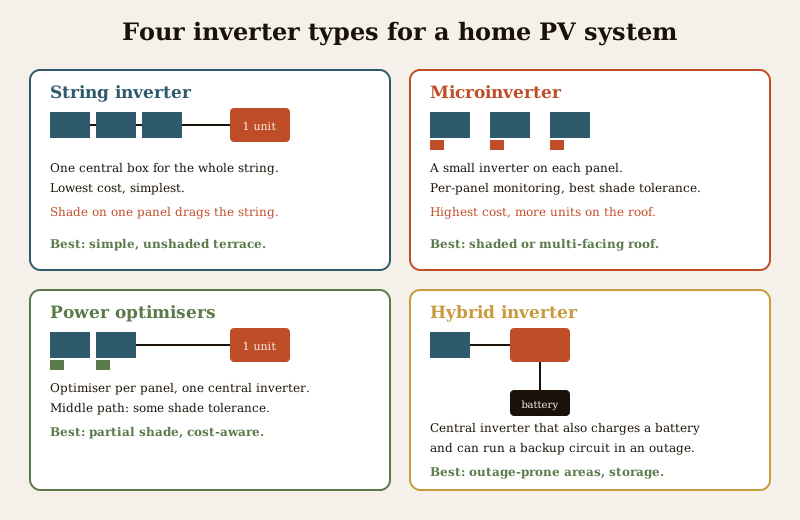
Most Indian rooftops end up with one of four architectures. The difference is where conversion and optimisation happen, and whether a battery is involved.
- String inverter. Panels are wired in series into one central box. It is the simplest and cheapest option and suits a clean, unshaded, single-orientation terrace. Its weakness is shade: a shadow on one panel can drag the whole string down.
- Microinverter. A small inverter sits under each panel, so every panel works independently and reports its own output. Best shade tolerance and per-panel monitoring, at the highest cost and with more units on the roof.
- Power optimisers. A small optimiser conditions each panel's DC and feeds one central inverter -- a middle path that recovers much of the shade loss at lower cost than full microinverters.
- Hybrid inverter. A central inverter that also manages a battery and can run a backup circuit. Chosen where outages are frequent or the household wants evening self-supply.
For the deep dive on the first three -- how shading and roof complexity tilt the choice -- see the dedicated string vs microinverter guide. For most simple Indian terraces, a string inverter is the sensible default; shade, multiple roof faces or a storage plan push you up the list.
| Type | Where it converts | Shade tolerance | Cost | Per-panel data | Best for |
|---|---|---|---|---|---|
| String | One central unit | Weakest | Lowest | No | Simple, unshaded terrace |
| Power optimisers | Per panel + central | Good | Middle | Yes | Partial shade, cost-aware |
| Microinverter | Per panel | Best | Highest | Yes | Shaded or multi-facing roof |
| Hybrid | Central + battery | Depends on setup | Highest with battery | Varies | Outage-prone, storage wanted |
Sizing the inverter to the array
The inverter is not sized to your electricity bill -- it is sized to the panel array, in kW. A common shorthand is the DC:AC ratio: the panels' DC rating divided by the inverter's AC rating.
- A ratio of about 1.1 to 1.3 is normal. Panels rarely hit their nameplate DC output (heat, dust, angle all cut it), so a modestly oversized array relative to the inverter keeps the inverter working near full output for more of the day. This is deliberate and called "clipping" only at the rare peak.
- Undersizing the inverter too far throws away midday yield; oversizing the inverter wastes money and can dip its efficiency at part load.
- The installer also checks the string voltage and current stay inside the inverter's MPPT window across the temperature range -- a design step, not a rule of thumb.
Estimate your likely system size first with the solar sizing calculator, then let the installer set the exact inverter rating and string layout. Treat the DC:AC ratio as a sanity check on their quote, not a number to fix yourself.
The specs that matter on the datasheet
Once the type and size are settled, these are the numbers to compare between models:
- Efficiency. Look at peak and the weighted (European or CEC) figure. 97 per cent or better is expected today. A couple of points of efficiency compounds over a decade of generation.
- MPPT count and inputs. More independent MPPT trackers let you run panels on different roof faces (east and west) without one dragging the other. A single-facing roof needs one; a split roof benefits from two or more.
- Grid-tie compliance and anti-islanding. The unit must meet the relevant Indian grid-interconnection standards and carry proper protections -- non-negotiable for a DISCOM net-metering approval.
- BIS / MNRE approval. For the subsidy, the inverter must be a model on the approved list (more below).
- Monitoring. App or web portal, ideally with per-string or per-panel data, and a data logger included rather than a paid extra.
- Warranty. Typically 5 years standard, often extendable to 10. Read what is covered and who honours it -- the brand or the installer.
- IP rating. If it is mounted outdoors or on an exposed terrace, look for IP65 or better so rain and dust do not get in. Indoor units can be lower.
Single phase or three phase
Match the inverter to your sanctioned load and connection, not to preference:
- A single-phase connection (common for smaller homes) takes a single-phase inverter, generally suiting systems up to roughly 3 to 5 kW.
- A three-phase connection (larger homes, higher sanctioned load, or where the DISCOM requires it above a threshold) needs a three-phase inverter, which also spreads export evenly across phases.
- Your electrician confirms the sanctioned load and phase from the bill and the DISCOM rules before the model is chosen.
Buying tips: approved lists and service
| Check | What to confirm | Why it matters |
|---|---|---|
| Approved-list model | On the current BIS / MNRE approved list | Required to claim the PM Surya Ghar subsidy |
| Correct sizing | DC:AC ratio about 1.1 to 1.3, MPPT window checked | Protects yield and inverter life |
| Efficiency | Peak 97 per cent or better | Compounds over 10-plus years |
| MPPT inputs | Enough for your roof faces | Avoids shade or orientation losses |
| Compliance | Anti-islanding and grid-tie standards | Needed for DISCOM net metering |
| Phase | Single or three, matching sanctioned load | Correct interconnection |
| IP rating | IP65-plus if outdoors | Weather and dust protection |
| Monitoring | App or portal, logger included | You see faults early |
| Warranty | 5 to 10 years, terms in writing | Long-term cover |
| Service network | Support and spares near you | Fast repair, less downtime |
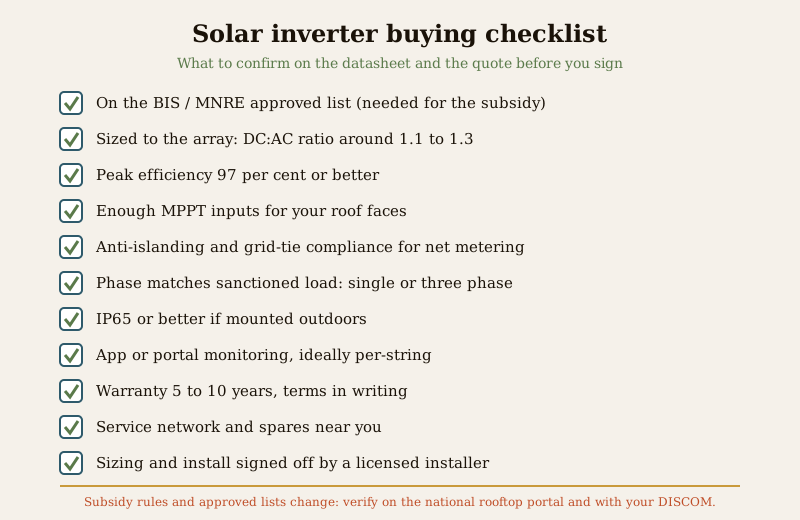
Three practical rules pull it together. First, buy from the approved list if you want the subsidy -- the inverter (and panels) must be MNRE/BIS-approved models; an off-list bargain can quietly disqualify the whole claim, so check the PM Surya Ghar subsidy guide and confirm the current list on the national portal. Second, weigh the service network as heavily as the spec: an inverter is a ten-year relationship, and a brand with local support and stocked spares beats a slightly cheaper unit no one can fix. Third, let the installer own the sizing -- give them the roof, the shade and the bill, and use this guide to read their answer back critically rather than to set the numbers yourself.
Key takeaways
- The solar inverter is a PV component -- it converts panel DC to AC, runs MPPT, and enforces the grid tie -- distinct from a backup or UPS inverter.
- Pick the type to fit the roof: string for a simple unshaded terrace, optimisers or microinverters for shade and multiple faces, a hybrid where storage and backup matter.
- Size to the array, not the bill: a DC:AC ratio of about 1.1 to 1.3, with the MPPT window checked by the installer.
- Compare efficiency (97 per cent-plus), MPPT inputs, compliance, monitoring, warranty and IP rating, and match single vs three phase to the sanctioned load.
- For the PM Surya Ghar subsidy, the inverter must be an approved-list model; verify the current list officially.
- Design and specify yourself; leave sizing sign-off, wiring, interconnection and the net-metering application to a licensed installer and the DISCOM. Figures here are indicative and change.
References
- Ministry of New and Renewable Energy (MNRE) -- rooftop solar programme and approved models list.
- PM Surya Ghar Muft Bijli Yojana -- national rooftop portal (subsidy eligibility, approved vendor and equipment lists).
- Bureau of Indian Standards (BIS) -- grid-connected inverter and safety standards.
- Central Electricity Authority -- grid interconnection and safety regulations.
- Studio Matrx -- rooftop solar guide, string vs microinverter, hybrid solar system guide, PM Surya Ghar subsidy and the solar sizing calculator.
Indicative and educational. Verify current subsidy slabs, approved lists, net-metering rules and tariffs on the official national portal and with your DISCOM. Have the system sized and installed by a licensed solar installer / electrician.
Export this guide
Related Guides — Deep-dive reading
Rooftop Solar Approvals & Net Metering in India: The Permissions You Actually Need
The approvals side of putting solar on an Indian roof — not how solar works, but the permissions: the DISCOM net-metering application and feasibility, an empanelled installer, the structural load check, the electrical safety inspection, the PM Surya Ghar subsidy, and metering and commissioning. These are DISCOM, state and MNRE rules — not one national IS code — so amounts and caps change; always confirm the current rule locally.
RoofingElectrical Safety for Security Systems in India (2026): Powering It Without Peril
A homeowner's guide to the power side of home and RWA security systems, CCTV, alarms, gates, access control and NVRs, done so it protects you instead of quietly becoming a shock or fire hazard. What makes a supply safe, what to insist on, and why the mains work belongs to a licensed electrician.
SecurityRooftop Solar for Indian Homes: The Complete Guide
How rooftop solar actually works and pays back — the panels, inverter and net meter, the on-grid, off-grid and hybrid choice, how much roof and money a system needs, the PM Surya Ghar subsidy and net metering, and how to judge a good installation.
Electrical & WiringRelated Tools — Try Free
Cross-Ventilation Analyzer
Estimate airflow and air changes per hour (ACH) from room size, window areas, layout, and local wind — with NBC 2016 Part 8 compliance check.
Ventilation CalculatorLift Power Requirement Calculator
Connected load, single vs three phase, MCB and cable guidance for a home lift.
Lift CalculatorSolar Sizing Calculator
Size a rooftop solar system from your monthly electricity use — the kW system, number of panels, roof area and yearly generation.
Solar