
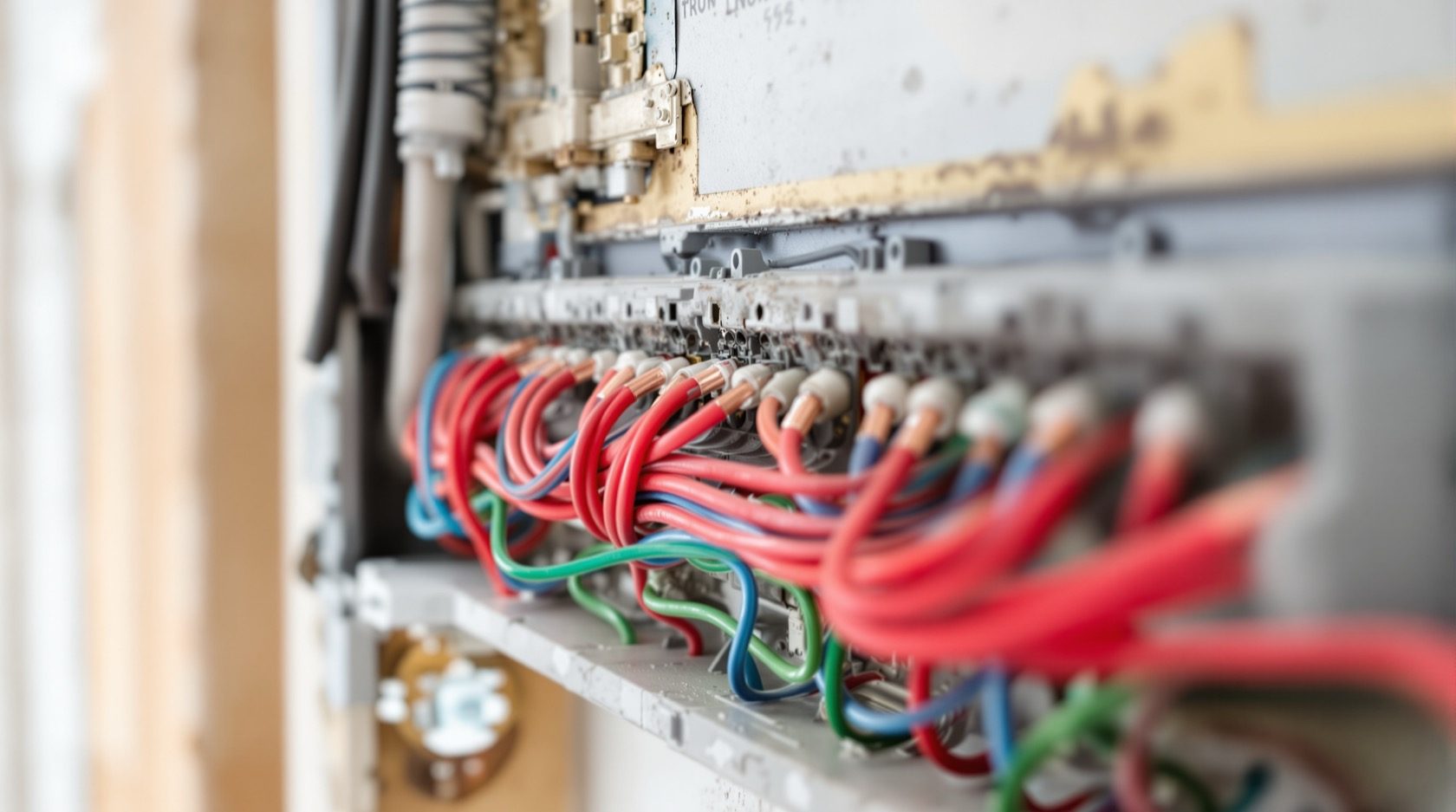
Home Electrical Wiring: Methods, Cables & Safety
The complete guide to how an Indian home is wired — concealed versus surface wiring, the conduit system that carries the cables, the copper conductors and their sizes, the colour code, and how to judge a good wiring job — without ever asking you to touch a live wire.
Wiring is the nervous system of a home — the network of insulated copper conductors that carries power from the distribution board to every light, fan and socket. It is also the part of a home you will never see again once the plaster goes on, which is exactly why understanding it before it is buried matters so much. This guide explains how an Indian home is wired: the methods, the conduits, the cables and their sizes, and the signs of a good job — so you can specify and judge the work, even though the work itself belongs to a licensed electrician.
It sits under the residential electrical systems pillar and connects to the home electrical planning guide. For the deeper choices, it links out to the focused guides on wiring methods, conduits, conductors and cables as we go.
The safety line. This guide is about understanding and specifying wiring — reading it, judging it, knowing the standards. The physical wiring must be done by a licensed electrician to IS 732 : 2019 (Code of Practice for Electrical Wiring Installations) and the National Electrical Code (SP 30 : 2023). Nothing here is an instruction to wire anything yourself.
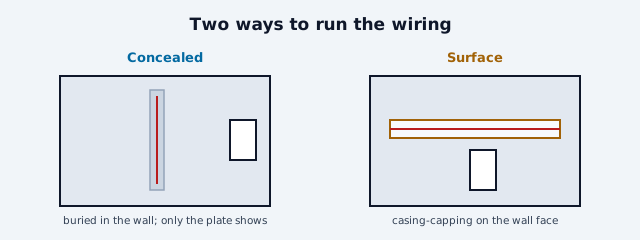
Two ways to wire a home: concealed and surface
There are two broad ways to run wiring, and Indian homes use both.
- Concealed wiring — conduits are buried in chased walls and cast into slabs, and the cables are drawn through them. Everything is hidden behind plaster, leaving clean walls with only the switch plates and sockets visible. This is the standard for modern homes.
- Surface wiring — conduits or casing-capping run on the wall surface, visible and screwed to the wall. Faster and cheaper, easy to modify, and used in workshops, temporary structures, older homes and additions where chasing the wall is not worth it.
The trade-off is looks and durability versus cost and flexibility — concealed is neat and protected but hard to alter; surface is accessible and cheap but visible. The full comparison, with where each belongs, is in concealed versus surface wiring.
The conduit: the protective sleeve
In both methods, home wiring is almost never bare — the cables run inside a conduit, a protective tube that shields them from damage, moisture and rodents, and (crucially) lets them be drawn out and replaced later without breaking the wall. Indian homes mostly use rigid PVC conduit (light, non-corroding, non-conducting), with steel conduit where mechanical protection matters and flexible conduit for short final connections. Conduits are made to IS 9537 (Part 3 for rigid PVC, Part 2 for steel). The single most valuable wiring instruction a homeowner can give: use adequately sized conduits with spare capacity — a conduit packed full can never be rewired. The electrical conduits guide covers the types in detail.
The cable: copper, sized to its job
The conductor of choice for home wiring is copper — a better conductor than aluminium, more durable at joints, and the standard for final circuits in modern homes. The cables are PVC-insulated, made to IS 694 : 2010 (the standard for cables up to 1100 V), and their conductors to IS 8130 : 2013. Whether copper or aluminium is right — and why homes almost always choose copper — is set out in copper versus aluminium wiring.
The cable is sized by the current it must carry: too thin and it overheats (a fire risk hidden in the wall); oversized and you waste money. Typical sizes in an Indian home:
| Circuit | Typical copper size | Carries |
|---|---|---|
| Lighting, fans | 1.0 – 1.5 sq mm | 6 A |
| General 5–6 A sockets | 2.5 sq mm | up to ~16 A |
| Kitchen / power points | 4 sq mm | up to ~20 A |
| Geyser, AC, heavy points | 4 – 6 sq mm | up to ~25–32 A |
| Earth conductor | Sized to the circuit | fault current |
Sizes are indicative and must be confirmed by a licensed electrician against the actual load and cable length. Use the wire size calculator for a first estimate — and note that a long run needs a bigger size to limit voltage drop.
The colour code
Indian wiring follows a colour code so any electrician can read the installation safely. Under the current convention (harmonised with international practice):
- Live (phase / line): brown (older installations: red).
- Neutral: light blue (older: black).
- Earth: green, or green-and-yellow striped.
For three-phase, the three lines are brown, black and grey. The earth is always green/green-yellow — never anything else. Consistent colour coding is not decoration; it is a safety system that lets the next person work on the wiring without guessing which wire is live.

How to judge a good wiring job
You cannot inspect wiring once it is plastered, so judge it while it is open, and by the visible signs afterwards:
- Generous, neatly routed conduits with draw wires and junction boxes at sensible points — not tight, over-full pipes.
- Copper cable of the right size for each circuit, from a reputable maker, ISI-marked (IS 694).
- Separate circuits for lighting, sockets and each heavy appliance, and the colour code followed throughout.
- Proper earthing run to every point, and an RCCB in the board.
- Joints only in accessible boxes, never buried in a wall — a buried joint is a future fault you cannot reach.
- Afterwards: switch plates that sit flush and cool, no flickering, no tripping, and a circuit chart in the DB.
If the conduits are generous, the copper is correctly sized, the circuits are separated and the earthing is real, the invisible parts are almost certainly right too.
The one-line answer
An Indian home is wired with insulated copper cables (to IS 694), sized to each circuit's current, drawn through protective conduits (to IS 9537) that are either concealed in the walls or run on the surface, and colour-coded live-neutral-earth for safety. Understand the methods, the conduit, the cable sizes and the colour code and you can specify and judge a wiring job well — while the wiring itself stays firmly with a licensed electrician working to IS 732.
Where to go next
- Methods compared: Concealed vs Surface Wiring.
- The protective sleeve: Electrical Conduits Guide.
- The conductor choice: Copper vs Aluminium Wiring.
- Fire-safety cables: FR, FRLS & FRLSH Cables.
- What it costs: House Wiring Cost in India.
- Size a cable: Wire Size Calculator.
References
- IS 732 : 2019, Code of Practice for Electrical Wiring Installations (Fourth Revision), Bureau of Indian Standards.
- IS 694 : 2010, PVC Insulated Unsheathed and Sheathed Cables/Cords up to and including 1100 V, BIS.
- IS 8130 : 2013, Conductors for Insulated Electric Cables and Flexible Cords, BIS.
- IS 9537 (Parts 1–8), Conduits for Electrical Installations, BIS.
- National Electrical Code of India, SP 30 : 2023, BIS: https://www.bis.gov.in/
Wire sizes and colour conventions are indicative for typical Indian homes; older installations may use the previous colour code. All wiring must be installed by a licensed electrician to the current code. Verify any standard's status via the BIS catalogue before relying on it.
Export this guide
Related Guides — Deep-dive reading
Future-Proof Wiring Systems for Indian Homes
Build electrical headroom now so tomorrow's loads are plug-and-play, not demolition.
Future-Ready HomesResidential Electrical Systems: The Complete Guide for Indian Homes
How the electricity in an Indian home actually works — from the utility supply and meter through the distribution board, circuits, wiring, earthing and protection, to lighting, safety, energy efficiency, smart controls, solar and backup — written so a homeowner can understand, plan and judge it, and know exactly where a licensed electrician must take over.
Electrical & WiringConcealed vs Surface Wiring: Which Is Right for Your Home?
The two ways to wire a building compared — concealed conduit buried in the walls versus surface conduit or casing-capping run on the wall face. Cost, looks, durability, safety, and how easy each is to change, so you can choose the right method for a new home, an addition or a renovation.
Electrical & WiringRelated Tools — Try Free
Electrical Safety & Load Audit
Home electrical audit — 10 categories, 65+ checkpoints across earthing, RCCB, MCB, wiring, switchboards, appliance circuits, DG/inverter backup.
Safety AuditEarth Conductor Size Calculator
Find the minimum protective (earth) conductor size for a circuit from its phase conductor size, using the standard IS 732 / IEC 60364 rule.
ElectricalWire Size Calculator
Find the minimum copper or aluminium cable size for a circuit that satisfies both current-carrying capacity and voltage drop over the run length.
Electrical