
Electrical Conduits: PVC, Steel & Flexible — A Complete Guide
The protective tubes that carry a home's wiring — rigid PVC, rigid steel and flexible conduits compared, what each is for, the sizes used in Indian homes, why spare capacity is the cheapest future-proofing there is, and the IS 9537 standard that governs them.
A conduit is the humble tube that carries a home's wiring — and it does far more than tidy the cables. It protects them from mechanical damage, moisture, heat and rodents; it keeps them electrically isolated from the wall; and, most valuably, it lets the cables be drawn out and replaced in the future without breaking the building. Choosing and sizing conduit well is one of the quietest, highest-value decisions in a home's electrics. This guide covers the types, where each belongs, and the one rule that matters most.
It is a companion to the home electrical wiring guide and the concealed vs surface wiring guide.
The safety line. Conduit selection and installation are part of a wiring job done by a licensed electrician to IS 732 : 2019 and the National Electrical Code (SP 30 : 2023); conduits themselves are made to IS 9537. This guide helps you understand and specify, not install.
The three types
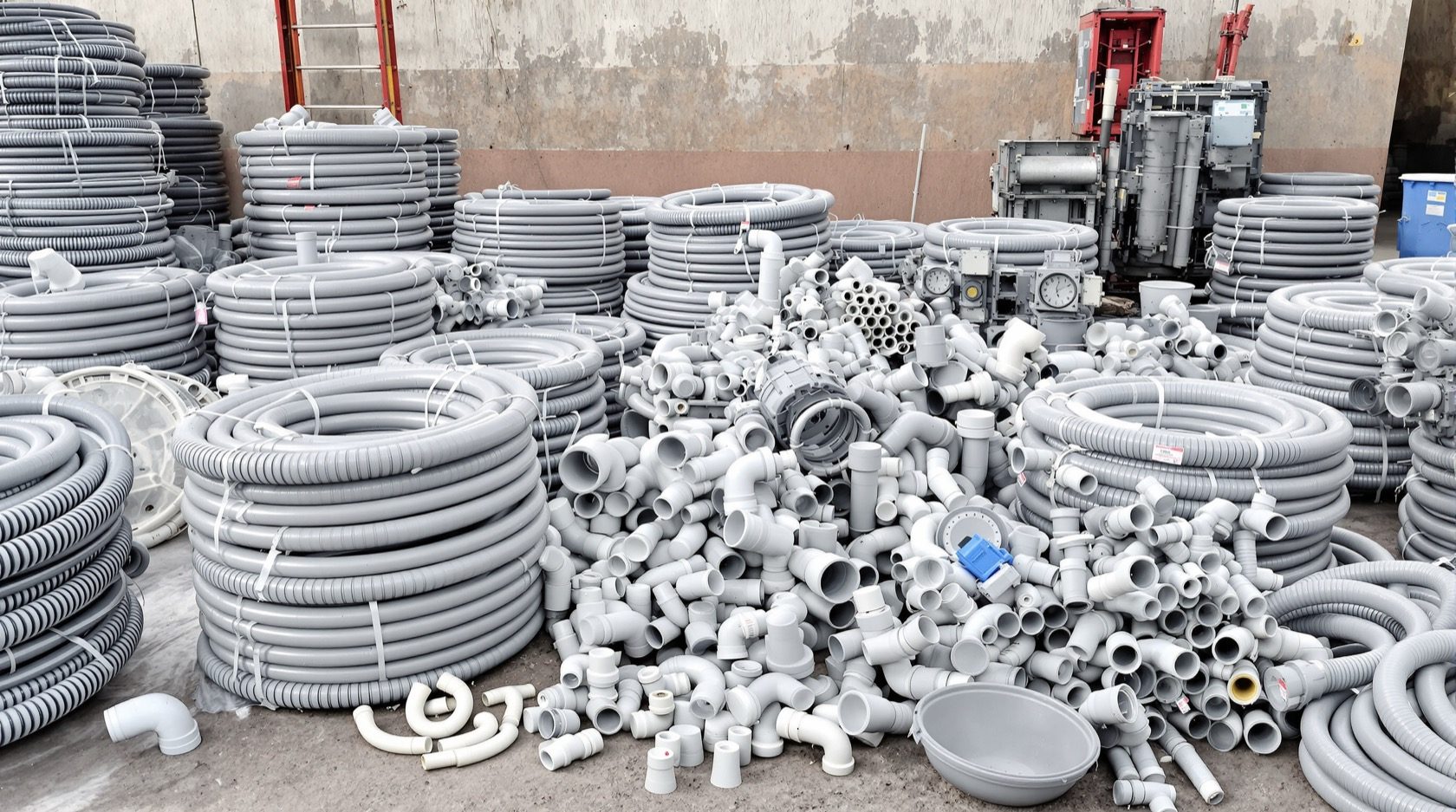
Rigid PVC conduit is the workhorse of Indian home wiring. It is light, cheap, non-corroding, non-conducting and easy to bend and join. It is used for the vast majority of concealed and surface home wiring. Made to IS 9537 Part 3 (rigid conduits of insulating material).
Rigid steel conduit (often called MS or GI conduit) is used where mechanical protection matters — exposed industrial runs, areas at risk of impact, or where codes or specifications require metal. It is stronger and provides physical and electromagnetic shielding, but it is heavier, costlier, can corrode if unprotected, and being conductive must itself be properly earthed. Made to IS 9537 Part 2 (rigid steel conduits).
Flexible conduit is a bendable tube (corrugated PVC, or metal/composite) used for short final connections — from a fixed conduit to a motor, a pump, a light fitting or across a small gap — where a rigid conduit cannot follow the bend. Pliable conduits are covered by IS 9537 Parts 4–6.

| Type | Made to | Best for | Watch out for |
|---|---|---|---|
| Rigid PVC | IS 9537 Part 3 | Most home wiring, concealed & surface | Softens at high heat; UV-degrades outdoors unless rated |
| Rigid steel (MS/GI) | IS 9537 Part 2 | Mechanical protection, exposed runs | Heavier, costlier; must be earthed; can corrode |
| Flexible | IS 9537 Parts 4–6 | Short final connections, bends | Not for long structural runs |
Sizes and the one rule that matters
Conduits are sized by outside diameter — common home sizes are 20 mm and 25 mm, with 32 mm and above for heavier or multi-cable runs. The size must suit the number and thickness of cables it carries: pack too many cables into a conduit and they cannot dissipate heat, cannot be drawn or replaced, and the installation is effectively frozen forever.
This is the single most important conduit rule, and it is worth stating plainly:
Never fill a conduit to capacity. Leave spare room. Codes limit how full a conduit may be (typically cables should occupy only around 40% of its cross-section) precisely so heat escapes and cables can be pulled. A conduit with spare capacity can be rewired and upgraded for decades; a full one cannot be touched without breaking the wall.
Spare conduit capacity — and a spare conduit or two to key areas — is the cheapest future-proofing in a whole house. The wire size calculator and the home electrical planning guide help you plan it.
Fittings and good practice
A conduit system is more than tube. It includes bends and elbows, couplers to join lengths, junction and inspection boxes where cables are pulled and joined (never bury a joint in a wall), saddles and clips to fix surface runs, and glands and bushes to protect cables where they enter boxes. Good practice a homeowner can look for:
- Draw wires left in concealed conduits so cables can be pulled later.
- Accessible junction boxes at pull points and every joint.
- Smooth bends, not sharp kinks that snag or damage cables.
- Conduits kept clear of hot water and gas lines, and PVC kept away from concentrated heat.
- Steel conduit properly earthed.
The one-line answer
An electrical conduit protects a home's wiring and lets it be replaced without demolition: rigid PVC (IS 9537 Part 3) for most home wiring, rigid steel (Part 2) where mechanical protection is needed, and flexible conduit (Parts 4–6) for short final connections. Size conduits generously and never fill them to capacity — spare room is what keeps a home rewireable, and it is the cheapest future-proofing there is. Selection and installation belong to a licensed electrician.
Where to go next
- The wiring overview: Home Electrical Wiring Guide.
- Concealed vs surface: Concealed vs Surface Wiring.
- The cables inside: Copper vs Aluminium Wiring.
- Plan the runs: Home Electrical Planning.
References
- IS 9537 (Parts 1–8), Conduits for Electrical Installations, Bureau of Indian Standards.
- IS 732 : 2019, Code of Practice for Electrical Wiring Installations (Fourth Revision), BIS.
- National Electrical Code of India, SP 30 : 2023, BIS: https://www.bis.gov.in/
Sizes and fill limits are indicative for typical Indian homes; confirm against the current code. All conduit installation must be done by a licensed electrician. Verify any standard's status via the BIS catalogue before relying on it.
Export this guide
Related Guides — Deep-dive reading
Home Electrical Wiring: Methods, Cables & Safety
The complete guide to how an Indian home is wired — concealed versus surface wiring, the conduit system that carries the cables, the copper conductors and their sizes, the colour code, and how to judge a good wiring job — without ever asking you to touch a live wire.
Electrical & WiringSmart Infrastructure Planning for Indian Homes
The invisible backbone you lay during construction so any smart system clicks in later
Future-Ready HomesResidential Electrical Systems: The Complete Guide for Indian Homes
How the electricity in an Indian home actually works — from the utility supply and meter through the distribution board, circuits, wiring, earthing and protection, to lighting, safety, energy efficiency, smart controls, solar and backup — written so a homeowner can understand, plan and judge it, and know exactly where a licensed electrician must take over.
Electrical & WiringRelated Tools — Try Free
Electrical Safety & Load Audit
Home electrical audit — 10 categories, 65+ checkpoints across earthing, RCCB, MCB, wiring, switchboards, appliance circuits, DG/inverter backup.
Safety AuditCCTV Cable-Length Calculator
Total cable to buy for a CCTV job and a warning when a run exceeds the cable's maximum length.
Cable LengthRoom Electrical Points Calculator
See how many light points, fan points, sockets and dedicated appliance points a room needs — by room type and size — as a planning starting point.
Rooms