
Glass Door Maintenance Guide: Care & Cleaning (India 2026)
Streak-free cleaning, hard-water spot removal, patch-fitting and track care, plus the safety line where you must call a professional.
Good glass door maintenance is mostly about two things: keeping the glass clear and streak-free, and keeping the hardware that carries the weight, patch fittings, floor springs, pivots, rollers and seals, working smoothly. Glass itself is tough, but it is unforgiving: hard water etches it, a sagging floor spring drops the door onto the frame, and a loose patch fitting on a toughened-glass door is a genuine safety risk. The good news is that almost all of the routine care is easy, takes minutes, and stops small problems from turning into a ₹2,000+ service call. This guide covers framed, frameless (patch-fitting), shower and sliding glass doors, with an honest line on when to stop and call a professional.
Why glass door maintenance is different
A wooden door swells, warps and rots; a glass door does almost none of that. Instead, glass doors fail at the surface and at the hardware. Indian conditions make three problems common:
- Hard water. Most Indian municipal and borewell supply is hard. Every splash that dries leaves calcium and magnesium deposits, the cloudy white film you see on shower screens and on doors near gardens or wash areas. Left alone for months it etches into the glass and becomes permanent.
- Humidity and monsoon. Damp air rusts cheap fasteners, swells rubber gaskets and lets mould grow in track corners and gasket folds.
- Dust and grit. Fine dust settles in sliding tracks and acts like sandpaper, chewing up rollers and scratching the bottom rail.
None of this needs a professional. It needs a simple, regular routine.
Tools and materials you'll need
| Item | Use | Indicative ₹ (GST 18% on goods) |
|---|---|---|
| Microfibre cloths (2-3) | Streak-free wipe and buff | ₹150-400 set |
| Squeegee (rubber blade) | Shower and large panes | ₹150-500 |
| Glass cleaner / DIY vinegar mix | General cleaning | ₹120-350 |
| White vinegar | Hard-water spots | ₹40-80 |
| Soft nylon brush / old toothbrush | Tracks, patch-fitting edges, gasket folds | ₹30-100 |
| Silicone spray (NOT oil) | Floor-spring pivots, rollers, gaskets | ₹150-400 |
| Vacuum with crevice nozzle | Track grit | already owned |
| Cotton buds, masking tape | Detail work, protecting hardware | ₹50-120 |
Avoid: scouring pads, steel wool, acidic toilet/tile cleaners on glass, and ammonia-heavy cleaners near rubber gaskets (they harden them). Never use blades or scrapers on toughened/coated glass.
How to clean glass doors streak-free
Difficulty: easy. Time: 5-10 minutes per door.
1. Dry-dust first. Wipe loose dust off with a dry microfibre cloth so you are not turning grit into a muddy smear.
2. Spray the cloth, not the glass (around hardware), or mist the glass lightly. A DIY mix of one part white vinegar to four parts water in a spray bottle works as well as branded cleaner for everyday grime.
3. Wipe in one direction, top to bottom, in overlapping strokes. Avoid circles, they leave swirl marks.
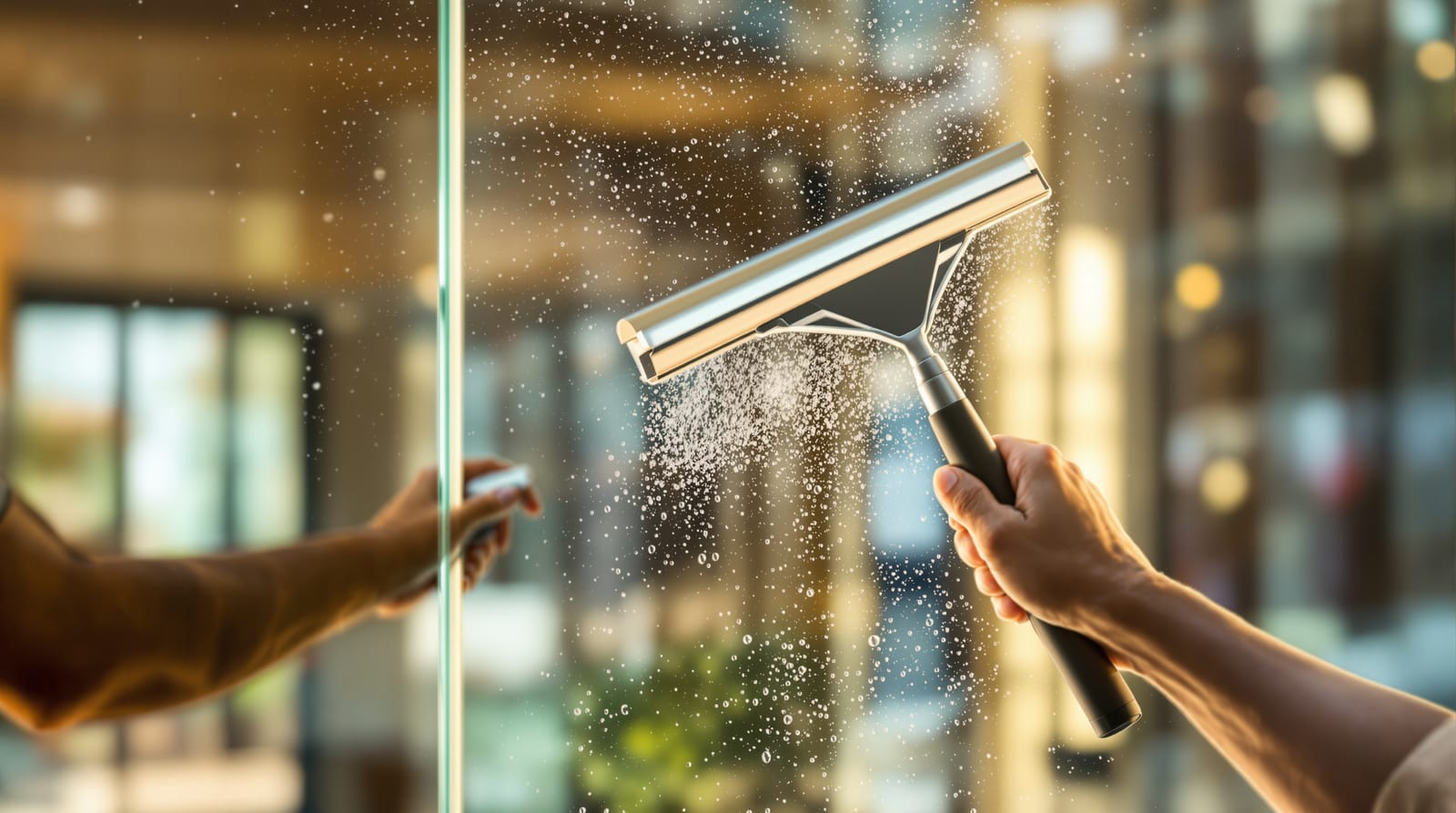
4. Buff dry immediately with a second, clean, dry microfibre cloth before the liquid evaporates, this is the real secret to no streaks. On large panes a squeegee from top to bottom, wiping the blade each pass, is faster.
5. Do edges and corners with a cotton bud where the cloth can't reach.
6. Clean both sides, then step back at an angle to the light to catch missed streaks.
Tip: clean in the cooler part of the day or out of direct sun. On hot glass the cleaner flashes off and streaks before you can buff.
Removing hard-water spots
This is the single most common glass-door complaint in India. For fresh, light spots, plain white vinegar usually works:
1. Soak a microfibre cloth in undiluted white vinegar.
2. Lay it flat against the spotted area and leave for 5-10 minutes to dissolve the deposit.
3. Gently rub, rinse with clean water, and buff dry.
4. For stubborn patches, make a paste of baking soda and a little water, apply with a soft cloth, work gently, rinse and buff.
For a heavy, etched white haze that has built up over years, household methods only get you so far, the minerals have bonded to the surface. A specialist glass-restoration polish (cerium oxide) applied by a professional can sometimes recover it; badly etched toughened glass may have to be replaced. Prevention beats cure: a 30-second squeegee after every shower stops the haze ever forming.
Caring for patch fittings, floor springs and pivots
Frameless glass doors hang on patch fittings (the polished metal clamps top and bottom) and usually pivot on a floor spring set into the floor. These carry the entire weight of a heavy glass leaf, so they deserve attention.
- Wipe patch fittings with a damp cloth and dry them, standing water around the clamp screws causes rust streaks on the floor and corrosion at the fixing.
- Listen and watch. A door that no longer self-closes fully, slams, or sags so the leading edge catches the frame usually means the floor spring needs adjustment, not replacement. Floor springs have small adjustment screws (often under a cover plate) for closing speed and latching speed.
- A drop of silicone on the top pivot point keeps movement smooth. Do not pour oil into a floor spring, it is a sealed hydraulic unit.
SAFETY, this is the line. If a patch fitting feels loose, if you can see movement between the metal clamp and the glass, or if there is any chip or crack at the clamped corner, stop using the door and call a professional immediately. Toughened (tempered) glass does not crack gently; it shatters all at once into thousands of pieces, and a loose clamp or a stressed corner is exactly what triggers it. Never try to tighten or re-bed a patch fitting yourself, and never drill, grind or scrape toughened glass. Floor-spring replacement and patch re-fixing are professional jobs.
Checking and replacing seals and gaskets
Framed and shower glass doors use rubber or PVC gaskets and sweep seals to stop water and draughts. These are the cheapest part to fail and the easiest to replace.
- Check them every few months: are they brittle, torn, mouldy or pulling away? A perished gasket lets shower water leak onto the floor and lets draughts past a balcony door.
- Clean gasket folds with a soft brush and diluted vinegar to clear mould, then dry.
- Replace a worn sweep or magnetic shower seal yourself, most slide or clip into a channel, or are stuck with a self-adhesive strip. Measure the length and channel profile, buy a matching strip (₹100-500), trim to length and fit. See door seals and weatherstripping and our broader draught-stopping guide for the channel types.
Sliding glass door track care
Sliding doors fail when the track clogs with grit and the rollers wear, this is almost always a maintenance failure, not a manufacturing one.
1. Vacuum the track with a crevice nozzle every couple of weeks, more during dusty/construction periods.
2. Scrub the corners with an old toothbrush and a little diluted vinegar to lift caked grime, then wipe dry.
3. Lubricate with silicone spray, never oil or grease, oil traps dust and turns the track into a grinding paste. A light spray on the rollers and a wipe along the track is enough.
4. Test the glide. If it still drags or jumps, the rollers may be worn or off their adjustment, see sliding-door track cleaning and sliding-door roller repair.
Minimising scratches
Glass scratches mostly from grit, jewellery, and abrasive cleaning. To prevent them: dust before wiping, never use scouring pads or blades, keep tracks clean so the bottom rail doesn't grind, and fit clear bumper pads where a handle or door edge swings into another surface. Very fine surface scratches can sometimes be reduced by a professional with cerium-oxide polishing; deep scratches and any scratch on coated/toughened glass are effectively permanent, plan to live with them or replace the pane.
Maintenance schedule (cadence)
| Task | Weekly | Monthly | Quarterly | Yearly |
|---|---|---|---|---|
| Streak-free clean (high-use doors) | yes | |||
| Squeegee shower glass after use | every use | |||
| Vacuum sliding track | yes | |||
| Vinegar de-spot hard-water film | yes | |||
| Wipe + dry patch fittings | yes | |||
| Silicone rollers / top pivot | yes | |||
| Inspect seals/gaskets for wear | yes | |||
| Check patch fittings for any looseness | yes | |||
| Adjust floor-spring closing speed (if drifting) | as needed | |||
| Professional safety check (frameless/heavy doors) | yes |
When to call a professional and likely cost
| Symptom | Likely cause | DIY or pro? | Indicative ₹ |
|---|---|---|---|
| Streaks / general grime | Technique, dust | DIY | consumables only |
| White cloudy film | Hard-water deposits | DIY (light) / pro polish (heavy) | ₹0-2,000 |
| Door sags, won't self-close | Floor spring out of adjustment / failing | DIY adjust screw / pro replace | adjust free; replace ₹2,000-6,000+ |
| Loose patch fitting, movement at clamp | Fixing loosened, stress risk | PRO, stop using the door | service ₹800-2,500 + parts |
| Chip/crack at any corner | Toughened-glass stress point | PRO, replace pane | pane cost varies, large |
| Leaking shower / draughty door | Worn gasket or sweep seal | DIY | ₹100-500 part |
| Sliding door drags/jumps | Dirty track / worn rollers | DIY clean / pro for rollers | roller set ₹200-900 + labour |
For the full picture across all door types, see the complete door guide, the cluster's door troubleshooting guide, and the broader door maintenance guide. If you're weighing a like-for-like glass door choice, the glass doors overview helps. To plan your routine, try the home door maintenance planner and, for any paid work, the door repair cost estimator.
Frequently asked questions
Can I use newspaper to clean glass doors?
It works but is messy and inconsistent, modern soy inks can smear and the paper can leave lint. A clean microfibre cloth and a quick buff-dry gives a more reliable streak-free finish.
What's the best way to stop hard-water spots returning?
Dry the glass after it gets wet. A 30-second squeegee after every shower, and buff-drying doors near gardens or wash areas, stops the minerals ever bonding to the surface. Once etched, deposits are very hard to remove.
Is it safe to oil a sliding glass door track?
No. Oil and grease trap dust and turn the track into an abrasive paste that destroys rollers. Use a light silicone spray only, after vacuuming the track clean.
My frameless glass door feels slightly loose at the bottom clamp, what should I do?
Stop using it and call a glass professional. A loose patch fitting on toughened glass is a shattering risk. Do not try to tighten it, drill, or scrape the glass yourself.
My glass door no longer closes by itself, do I need a new floor spring?
Not necessarily. Floor springs have adjustment screws for closing and latching speed, a technician can often re-tune them. If the unit is leaking hydraulic fluid or fully failed, it needs replacing (₹2,000-6,000+ with labour).
Can scratches on glass doors be removed?
Very fine surface scratches can sometimes be reduced by a professional with cerium-oxide polishing. Deep scratches, and any scratch on coated or toughened glass, are effectively permanent.
Export this guide
Related Guides — Deep-dive reading
Sliding Door Track Cleaning: Easy DIY Fix (India 2026)
Why Indian sliding doors get stiff — dust, grime and hard-water scale in the track — and the step-by-step clean-dry-lubricate routine that fixes it.
Home Doors & EntrancesDoor Maintenance Guide India: A Seasonal Care Routine to Keep Doors Smooth for Decades
Oil the hinges, tighten the screws, lube the lock, check the seals and re-coat the finish — a simple seasonal calendar that stops Indian doors from binding in the monsoon, sagging, tarnishing on the coast or falling to termites.
Home Doors & EntrancesBathroom Leak Repair in India: Find & Fix Common Leaks (2026)
A practical, India-first guide to finding and fixing the everyday bathroom leaks — dripping taps, weeping traps and angle valves, a running cistern, failed silicone seals — plus how to tell a simple fixture leak from a waterproofing failure that needs a professional.
BathroomsRelated Tools — Try Free
False Ceiling Cost Estimator
Live ₹/sqft across 8 ceiling types — POP, gypsum, designer, metal, PVC, wooden — with cove and spot lighting for 20 Indian cities.
Cost CalculatorMaterial Schedule Generator
Generate a room-wise finish schedule — walls, floors, ceilings, trim, and joinery by location.
Material ScheduleAccess-Control Schedule Generator
Build the time schedules that decide when each access group can enter — an editable list for your integrator.
Time Schedules