
Foam Interlocking Tiles in India: EVA Floor Mats for Kids' Play Areas, Home Gyms & Garages — Types, Thickness, Cost & Care
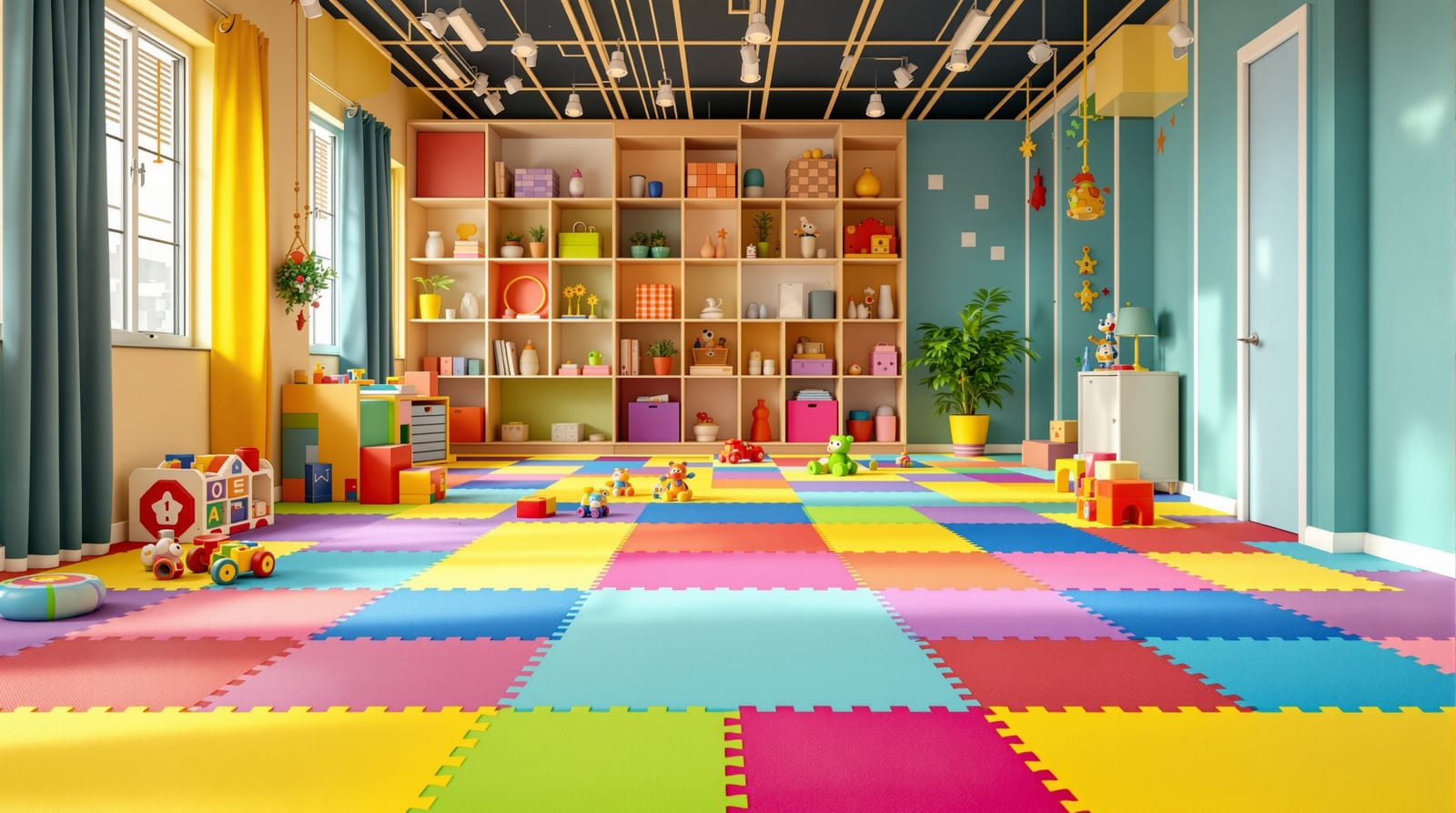
Foam interlocking tiles are the soft, cushioned, click-together EVA mats that turn any room into a safe kids' play zone, a knee-friendly home gym or a temporary exhibition floor — at ₹30–150 per sq ft, DIY, portable and washable. Here are the types, thicknesses, where they fit, how to lay them, and where they fall short.
Foam interlocking tiles are the cheapest, softest floor you can lay in an afternoon with no tools, no adhesive and no mason. They are squares of EVA foam with jigsaw-puzzle edges that press together into a cushioned mat — the floor that turns a corner of the living room into a baby-safe crawl zone, a spare room into a home gym, or a bare garage into a tolerable workshop. At roughly ₹30–150 per sq ft, fully DIY, washable and portable enough to roll up and take to your next flat, they solve a very specific problem brilliantly.
They also have firm limits. This guide covers what EVA foam tiles actually are, the types and thicknesses to buy for each use, where they belong in an Indian home, how to lay and care for them, and — just as important — where they will let you down so you do not floor a whole house in them by mistake.
What foam interlocking tiles are
The tiles are moulded from EVA — ethylene-vinyl acetate, the same closed-cell foam used in slippers, yoga mats and the midsole of running shoes. Closed-cell means the foam does not soak up water, which is why these mats wipe clean and shrug off spilled juice. Each tile is a square (commonly 30x30 cm, 60x60 cm or the larger 60x60 to 100x100 cm gym sizes) with interlocking puzzle tabs on the edges. You also get straight-edge "border" or "end" strips that snap onto the outer tiles to give the mat a clean, non-jigsaw boundary.
Because they simply press together and rest on the floor under their own weight and friction, there is no glue, no curing and no permanence. That single fact — a floor you can lay, lift, wash and relay — is the whole reason they exist, and the reason they are loved by parents, renters, home-gym owners and exhibition stall builders alike.
The common tops you will see
EVA tiles come with several decorative top surfaces, and the top is mostly about looks and grip, not strength:
- Plain colour — solid bright or muted colours; the daycare and play-school staple, often in primary colours.
- Alphabet / number — tiles with a letter or digit cut into them as a pop-out insert; the classic "ABC mat" for toddlers and learning corners.
- Wood-look / textured — a printed wood-grain or leather-grain top so the mat reads less like a toy and more like a casual floor — popular for home gyms and exhibition booths that want to look tidier.
- Tatami / textured grip — a raised tatami or coin pattern for extra grip underfoot, common on gym and martial-arts mats.
Types and thickness — match the tile to the job
Thickness is the single most important choice. Thin tiles are cheap floor protection; thick tiles are genuine impact cushioning. Buying a 10 mm play-mat for a home gym, or a 25 mm gym mat for a toddler's reading corner, both waste money. Use the table below.
| Type / top | Typical thickness | Best use | Indicative ₹/sq ft |
|---|---|---|---|
| Thin plain/alphabet EVA | 8–12 mm | Toddler crawl & play corners, daycare floors, exhibition carpet base | ₹30–60 |
| Standard colour/alphabet EVA | 12–15 mm | Kids' play rooms, daycares, play-schools, temporary event floors | ₹40–80 |
| Wood-look / textured EVA | 12–20 mm | Home gym (light), yoga, casual room cover, stall flooring | ₹50–100 |
| Thick gym / tatami EVA | 20–25 mm | Home gym free-weights, martial arts, heavy-impact zones | ₹80–150 |
| Garage / utility EVA | 12–20 mm | Garage floor, workshop, parking, basement, terrace dry zone | ₹50–110 |
Prices are indicative and vary by city, brand, thickness, density and top finish; add 18% GST. Higher-density foam (it feels firmer and dents less) costs more for the same thickness and is worth it for gyms and high-traffic daycares — cheap low-density tiles compress permanently and tear at the tabs within months.
Why foam interlocking tiles win
For the right job, nothing else competes on speed, softness and price.
- Cheap. At ₹30–150 per sq ft with no laying labour, a play corner costs a few hundred rupees, not the thousands a tiled or wooden floor would.
- Soft and safe. The cushioning genuinely protects — a toddler who topples or a dumbbell that drops lands on yielding foam, not hard vitrified tile or stone. This is the core reason daycares and play-schools across India use them.
- Kind to knees and joints. For home gyms, yoga and floor exercise, the give underfoot is easier on knees, elbows and spine than a hard floor — and protects the floor (and downstairs neighbours) from dropped weights.
- Sound damping. The foam absorbs footfall and impact noise, useful in apartments and upstairs rooms.
- DIY in minutes. No tools, no glue, no mason, no skill. Press tiles together on any flat floor; trim with a sharp knife.
- Portable. Lift, stack or roll the tiles, wipe them and relay them in a new home or a different room — ideal for renters and for exhibition and event floors that travel.
- Washable and water-tolerant. Closed-cell EVA does not absorb spills; wipe with a damp cloth, or lift a tile and rinse it. Spilled milk, juice and crayon clean off easily.
Where foam tiles fall short
These are honest limits, not minor caveats — respect them and you will not be disappointed.
- Not durable for heavy or long-term use. EVA is foam; it is not a permanent floor. As a daily living-room floor it scuffs, flattens and looks tired within a year or two.
- Dents and compresses. Furniture legs, heavy appliances, gym-rack feet, high heels and even a dropped pointed tool leave dents — some permanent. Keep heavy point-loads off it.
- Not for furniture. Sofas, beds, dining tables and cupboards sink into the foam and crush it; foam tiles are for clear open floor, not furnished rooms.
- Not heat-tolerant. EVA is a thermoplastic foam — it softens, deforms and can release odour near heat. Keep it away from kitchens, stoves, heaters, halogen lamps and direct hot sun (so no uncovered terrace exposure). It is also flammable; keep it clear of open flame.
- Looks casual. Even wood-look tiles read as utility/play flooring, not finished interior. It is a functional floor, not a decorative one for living and dining rooms.
- Cheap foam tears. Low-density tiles split at the interlocking tabs, curl at edges and shed tiny foam crumbs that toddlers may mouth — buy denser, reputable tiles for children, ideally tested to be free of formamide and harmful plasticisers.
Where foam tiles suit an Indian home
Used for what they are good at, foam tiles are excellent.
- Kids' play areas and crawl corners. The headline use — a soft, washable, colourful zone for babies and toddlers, in a corner of any room.
- Daycares, play-schools and learning corners. Cushioned, cheap, cleanable and easy to replace tile-by-tile — which is why nearly every Indian play-school uses them.
- Home gyms. Under treadmills, for free-weight zones, yoga and floor work; the thick gym/tatami tiles protect joints, floor and the flat below. For a heavier, more permanent gym floor, compare our rubber flooring in India guide.
- Garages, workshops and basements. A cushioned, anti-fatigue, somewhat oil-tolerant standing surface — though heavy vehicles and sharp tools will mark it.
- Temporary and event floors. Exhibition stalls, pop-ups, party zones and stage areas — quick to lay, easy to transport, reusable.
- Cold-floor relief in winter. A warmer surface than bare stone or tile for a child's room corner in a cold-winter city.
Where foam tiles are the wrong choice: any furnished living, dining or bedroom as a finished floor, kitchens (heat and grease), bathrooms or wet areas (the seams trap water beneath and breed mould), and uncovered terraces (sun and heat). For bedrooms you want something warm but proper, see our bedroom flooring in India guide; for kitchens, the kitchen flooring in India guide; and for the full menu of soft and resilient options, our specialty flooring guide for India.
How the jigsaw edge works — an inline look
The diagram below shows how the puzzle tabs of two tiles interlock, and how a straight border strip finishes the open edge so the mat has a clean boundary instead of exposed jigsaw teeth.
How to lay foam interlocking tiles
This is the easiest floor in this whole guide series to install — most people manage it without any instructions, but a little care gives a neater, longer-lasting result.
1. Prep the floor. Lay on a clean, dry, reasonably flat surface. Sweep away grit; a stone or screw under a tile creates a lump and tears the foam over time. The mat does not stick down, so the floor underneath is untouched.
2. Plan the layout. Dry-lay the tiles loosely first to work out how many fit and where cuts fall. Aim to keep cut tiles at the back or against a wall, full tiles in the visible field.
3. Press the tabs together. Align two tiles so the puzzle tabs meet, and press the seam down with your palm or stand on it — it clicks flat. Work row by row across the area.
4. Trim to fit. At walls and around pillars, measure, mark and cut tiles with a sharp utility knife and a steel ruler on a cutting board (not your good floor). EVA cuts cleanly.
5. Fit the border strips. Snap the straight-edge border pieces onto the outer tabs of the perimeter tiles for a finished, trip-free boundary.
6. Settle and check. Walk the mat, press down any high seams, and butt the whole field gently against one wall so it cannot creep. For large gym areas, a few dabs of double-sided tape under the corner tiles stop the mat sliding.
No underlay, no adhesive, no sealing, no curing time — you can use the floor the moment it is laid.
Care and everyday maintenance
Foam tiles are almost no-maintenance, but they reward a little routine.
- Daily: sweep, dry-mop or vacuum (suction or brush head) to lift grit that would otherwise grind into the foam.
- Spills: wipe with a damp cloth and mild soap; closed-cell EVA does not absorb, so most spills lift straight off. For sticky messes, lift the affected tile, rinse it under a tap, dry it and click it back.
- Avoid: harsh solvents, thinners and very hot water, which attack and discolour the foam; and dragging heavy furniture across it, which gouges the surface.
- Replace tile-by-tile: the great advantage of a modular floor — if one tile tears, stains or dents, swap just that tile, not the whole floor. Keep a few spares from your original batch and colour.
- Sun and heat: do not leave foam tiles in direct hot sun or near heaters for long; they soften, warp and fade. Bring event mats indoors and store them flat or rolled.
Foam tiles vs rubber tiles — which soft floor?
Both are resilient, cushioned, modular floors, and people often confuse them. The short version: foam is the cheap, soft, light, temporary choice; rubber is the heavier, tougher, more permanent choice.
| Foam (EVA) interlocking tiles | Rubber tiles / mats | |
|---|---|---|
| Feel | Very soft, plush, lightweight | Firmer, denser, heavier |
| Cost (₹/sq ft) | ₹30–150 | ₹80–400 |
| Durability | Low — dents, scuffs, tears | High — years of heavy use |
| Heavy weights / racks | Poor — compresses | Good — built for it |
| Heat tolerance | Poor — softens, flammable | Better — more heat- and fire-tolerant |
| Best for | Kids' play, light gym, daycare, events | Serious gyms, garages, hospitals, utility |
| Permanence | Temporary, portable | Semi-permanent |
If your gym has free weights, a power rack or you want a floor that lasts years, choose rubber — see our rubber flooring in India guide. If it is a child's play corner, a yoga or light-cardio space, a daycare or a temporary event floor, foam wins on price and softness. For the bigger picture of where each resilient and soft floor fits, and the technical and paving alternatives, our specialty flooring guide for India maps them all; for a synthetic sprung floor for a real sports court or hall, see our sports flooring in India guide.
Frequently asked questions
Are foam interlocking tiles safe for babies and toddlers?
Used correctly, yes — that is their main purpose. The cushioning protects against falls and the closed-cell EVA wipes clean. The cautions are: buy denser, reputable tiles tested free of formamide and harmful plasticisers; avoid very thin low-density tiles that tear at the tabs and shed crumbs a baby might mouth; and keep the mat away from heat and open flame, since EVA is flammable.
How thick should foam tiles be for a home gym?
For light use — yoga, stretching, bodyweight, light dumbbells — 12–20 mm wood-look or textured tiles are enough. For free weights, a power rack or martial arts, use 20–25 mm high-density gym or tatami tiles so dropped weights and heavy impact do not crush the foam or reach the floor below. For a heavier, longer-lasting gym floor, compare rubber tiles.
Can I use foam interlocking tiles on a terrace or balcony?
Only in a covered, shaded dry zone, and even then with caution. Direct hot sun softens, warps and fades EVA, and any water trapped under the seams breeds mould. For terraces and balconies, heat-reflective and proper outdoor floors are a far better choice — see our terrace and balcony flooring guidance rather than foam.
Do foam tiles dent under furniture?
Yes — and this is their biggest limitation. Furniture legs, beds, sofas, appliances and gym-rack feet all sink into and crush the foam, often permanently. Foam interlocking tiles are meant for clear, open floor — play corners, gym zones, event spaces — not for furnished living, dining or bedrooms.
How much do foam interlocking tiles cost in India?
Indicatively ₹30–150 per sq ft depending on thickness, foam density and top finish: thin plain or alphabet play tiles around ₹30–60, standard play and wood-look tiles ₹40–100, and thick high-density gym or tatami tiles ₹80–150. Add 18% GST. Because there is no laying labour, the per-sq-ft figure is close to the all-in cost — one of the cheapest floors you can buy.
Export this guide
Related Guides — Deep-dive reading
Interlocking Tiles in India: Click-Together Floor Tiles for Terraces, Balconies, Garages & Rented Homes — Types, Cost & DIY Install
Interlocking tiles are the loose-lay, click-together floor tiles you snap down over any flat surface with no glue, no grout and no demolition — at ₹40–150 per sq ft, fully DIY, removable and reusable, ideal for terraces, balconies, utility areas, garages, gyms and rented homes.
Flooring & SurfacesCork Flooring in India: Warm, Quiet, Eco Floors for Bedrooms, Study & Kids' Rooms
Why cork is genuinely sustainable (bark is harvested while the tree lives on), the comfort and acoustic benefits, the natural look, ₹200-500/sq ft, click-floating vs glue-down tiles, sealing, and the dent, moisture and sun-fade caveats every Indian homeowner should know.
Flooring & SurfacesGym Flooring India: Commercial Fitness-Centre Floors by Zone, with Thickness and Costs
How to floor a commercial gym in India zone by zone — heavy rubber for free-weights and drop zones, vinyl or rubber rolls for cardio, artificial turf for the functional lane, sprung wood or cushioned vinyl for the studio, cork or foam for yoga, and anti-slip vitrified or LVT for reception and lockers — with thickness, impact, noise, grip, hygiene and ₹/sq ft for each.
Flooring & SurfacesRelated Tools — Try Free
Apartment Furniture Size Chart
Standard furniture dimensions for Indian apartments — sofas, beds, tables, dining, storage.
Reference ChartFull-Room BOQ — Living, Bedroom, Kitchen, Bath
Room-wise BOQ across living, bedrooms, kitchen, utility, and bathrooms with line-item pricing.
Full-Room BOQHome Building & Interior Cost Calculator — 20 Cities
Construction + interior costs for 20 Indian cities across kitchen, wardrobes, flooring, painting, ceiling.
Cost Calculator