
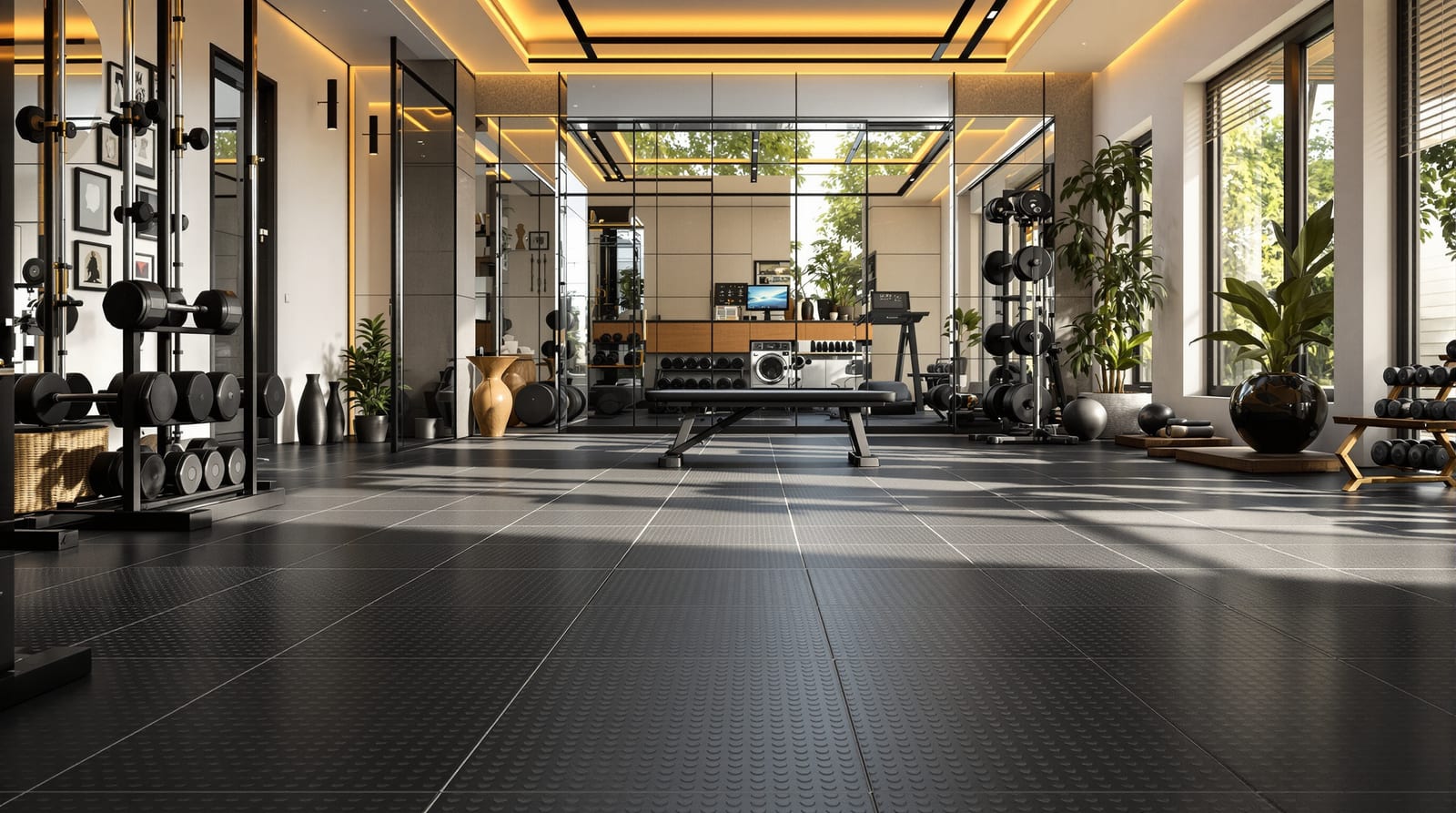
Rubber Flooring in India: Rolls, Tiles & Interlocking Mats for Gyms, Play Areas, Clinics & Garages — Types, Cost & Care
Rubber flooring — supplied as rolls, tiles or interlocking mats in recycled SBR or virgin EPDM — is the tough, slip-resistant, cushioned and sound-absorbing floor for gyms, play areas, hospitals, clinics, garages, balconies and utility zones. Here are the types, thickness by use, costs of ₹80–400 per sq ft, install methods, pros, cons and care.
Rubber flooring is the floor that takes a beating and shrugs it off. Supplied as rolls, square tiles or click-together interlocking mats — in either recycled SBR crumb or premium virgin EPDM — it is tough, slip-resistant, cushioned and quiet underfoot, which is exactly why you find it under gym weights, in children's play areas, across hospital and clinic corridors, in garages, on utility balconies and in any space where a hard tile floor would be cold, noisy or unforgiving. At ₹80–400 per sq ft it spans from cheap recycled gym matting to designer coloured EPDM, and most of it can be loose-laid or interlocked by a homeowner over a weekend.
This guide explains the types of rubber flooring sold in India, how to pick thickness for your use, where it suits, how it is installed (glue, loose-lay or interlock), what it costs, its honest pros and cons, and how to care for it so it lasts.
What rubber flooring is
Rubber flooring is a resilient floor made from vulcanised rubber, supplied in three physical formats and two main material grades. It belongs to the same family of resilient and soft floors as vinyl, carpet and foam — floors that give underfoot rather than staying hard like tile or stone. Where it stands apart is its combination of grip, bounce and durability: it absorbs impact, deadens sound, resists slipping even when damp, and survives dropped weights, dragged equipment and constant foot traffic.
The two material grades you will meet in India are:
- Recycled SBR (styrene-butadiene rubber). Made from ground-up recycled tyres and industrial rubber bonded with polyurethane, this is the workhorse — black with optional coloured fleck (EPDM speckle). It is tough, cheap and eco-friendly because it diverts tyre waste, but it has a stronger initial rubber smell and a limited, utilitarian look. This is most gym flooring.
- Virgin EPDM (ethylene-propylene-diene monomer). A purpose-made synthetic rubber available in solid colours, much lower odour, more UV- and weather-stable and finer-looking. It costs more and is used where appearance and colour matter — play areas, designer gyms, clinics. Many premium floors are an SBR base with an EPDM wear layer to balance cost and looks.
Studio Matrx groups rubber with the resilient, soft and specialty floors — the alternatives you reach for when comfort, safety and noise control beat the hardness of tile.
Types: rolls vs tiles vs interlocking mats
The format you choose drives the install method, the cost and how seamless the result looks.
| Format | What it is | Best for | Install |
|---|---|---|---|
| Rolls (broadloom) | Wide rubber sheet, typically 1.2–1.5 m, cut to length | Large continuous areas — gym floors, studios, corridors | Glued down (often) for a near-seamless look |
| Tiles | Square tiles, commonly 50x50 cm or 1x1 m | Medium areas, easy replacement of damaged tiles | Glued or loose-laid |
| Interlocking mats | Tiles with puzzle/jigsaw edges that clip together | Home gyms, play areas, garages, temporary or DIY | Loose interlock, no glue (DIY-friendly) |
Rolls give the most continuous, professional finish with the fewest seams, and are preferred in commercial gyms and hospitals. Interlocking mats are the DIY favourite — they need no adhesive, can be lifted and relaid, and are forgiving on uneven floors. Tiles sit between the two: tidier than mats, more replaceable than rolls.
The diagram below shows a typical interlocking tile and a section through a cushioned rubber tile, so you can see how the puzzle edges lock and how the resilient layer absorbs impact.
Choosing thickness for the use
Thickness is the single most important spec, because it controls how much impact the floor absorbs and how much it protects the slab beneath. Buying too thin for heavy weights is the commonest mistake.
| Use | Recommended thickness | Why |
|---|---|---|
| Light home gym, cardio, yoga | 6–10 mm | Comfort, grip, modest sound damping |
| General gym, free weights | 12–20 mm | Cushions dropped dumbbells, protects slab and joints |
| Heavy lifting / deadlift / drop zones | 25–50 mm (or stacked) | Absorbs heavy barbell drops, prevents slab damage |
| Children's play areas | 15–40 mm | Fall-height safety cushioning (higher equipment = thicker) |
| Hospital / clinic corridors | 2–4 mm (sheet) | Hygiene and quiet, not impact |
| Garage / utility / balcony | 6–12 mm | Durability and grip more than cushioning |
For play areas especially, thickness is a safety spec — the higher the play equipment, the thicker (or denser) the rubber needs to be to cushion a fall. For heavy lifting, many home gyms either buy thick tiles or stack a second layer under the drop zone.
Where rubber flooring suits
Rubber's grip, cushioning and quiet make it the natural choice for working, active and safety-critical spaces:
| Space | Why rubber suits it |
|---|---|
| Gyms & home gyms | Cushions dropped weights, protects the slab, anti-slip, anti-fatigue underfoot |
| Children's play areas | Soft, fall-cushioning, colourful in EPDM, easy to wipe |
| Hospitals & clinics | Quiet, slip-resistant, seamless sheet is hygienic and easy to clean |
| Garages & workshops | Tough, oil- and chemical-tolerant grades, anti-slip, comfortable to stand on |
| Balconies & utility areas | Weather-tolerant (EPDM), grippy when wet, hides an ugly slab |
| Commercial kitchens & back-of-house | Anti-fatigue mats reduce standing tiredness; grippy when wet |
| Stairs & ramps | Anti-slip studded or ribbed rubber treads for safety |
It is generally not chosen for living rooms, bedrooms or premium retail, where the look of stone, wood or a refined seamless floor is wanted — though designer EPDM is increasingly used in modern interiors.
How rubber flooring is installed
There are three install routes, and which you use depends on the format and the area.
Loose-lay interlock (DIY)
Interlocking mats simply clip together edge-to-edge across the floor, with border pieces trimmed to fit. No adhesive is needed, the floor can be lifted and relaid, and a homeowner can lay a small gym in a couple of hours. This is the cheapest, most flexible route and forgiving on slightly uneven sub-floors. The downside is visible seams and a small risk of edges lifting under heavy dragging.
Loose-lay rolls and heavy tiles
Thick, heavy rolls and tiles can be loose-laid in large rooms — their own weight holds them down — with double-sided tape or a perimeter bead of adhesive to stop creep. This keeps the floor liftable while reducing movement, a common approach in home and commercial gyms.
Glue-down (permanent)
For the most seamless, professional and durable result — commercial gyms, hospitals, studios — rolls and tiles are fully bonded with a rubber-compatible polyurethane or acrylic adhesive over a clean, dry, level screed. Seams in sheet rubber can be heat-welded in clinical settings for a fully hygienic, waterproof floor. This is permanent and best left to an experienced installer.
In all cases the sub-floor must be clean, dry, sound and reasonably level; rubber is forgiving of minor unevenness but telegraphs major humps and lumps. Let the rubber acclimatise flat in the room for a day before laying so it relaxes.
Cost of rubber flooring in India
Rubber flooring is priced by the square foot of material, with laying and adhesive extra for glued jobs; the figures below are indicative for 2026 and vary by city, brand and grade.
| Type / grade | Indicative cost (₹/sq ft) | Best use |
|---|---|---|
| Recycled SBR interlocking mats / tiles, 6–15 mm | ₹80–180 | Home gyms, garages, DIY play areas |
| Recycled SBR rolls, 6–15 mm | ₹90–200 | Larger gym and studio floors |
| Heavy SBR drop-zone tiles, 25–50 mm | ₹150–300 | Heavy-lifting and deadlift zones |
| EPDM-flecked / coloured rubber, 8–15 mm | ₹180–350 | Designer gyms, branded play areas |
| Solid virgin EPDM, low-odour coloured | ₹250–400+ | Premium play areas, clinics, feature interiors |
| Rubber sheet (clinical, 2–4 mm) | ₹120–300 | Hospitals, clinics, labs |
| Anti-fatigue / studded mats | ₹100–250 | Kitchens, standing workstations, stairs |
Adhesive and labour for glue-down add roughly ₹40–100 per sq ft. Interlocking and loose-lay save that entirely. For a project-wide budget use the Studio Matrx rubber flooring calculator and flooring cost calculator, and see the broader flooring cost per square foot in India guide.
Pros and cons of rubber flooring
| Pros | Cons |
|---|---|
| Impact-absorbing — protects joints, equipment and the slab | Initial rubber smell, strongest in recycled SBR (airs off in days to weeks) |
| Anti-fatigue — comfortable to stand and train on | Limited looks — mostly black/fleck unless you pay for EPDM colours |
| Slip-resistant, even when damp | Oils, grease and some solvents can stain or degrade it |
| Excellent sound and impact-noise absorber | Heavy rolls and thick tiles are awkward to handle |
| Very durable — survives dropped weights and heavy traffic | Cheaper mats can curl, gap or shift at seams |
| Easy to clean — sweep, damp mop, hose down | Not a premium-living-room look; some grades not for permanent wet immersion |
| Eco-friendly (recycled tyres) and often DIY-friendly | Sharp objects and stiletto heels can gouge it |
Care and maintenance
Rubber is low-maintenance, but a few habits keep it good for years:
- Air it out first. New recycled rubber smells of rubber. Lay it, ventilate the room well for a few days to a couple of weeks, and the odour fades. Virgin EPDM smells far less.
- Sweep and damp-mop. Regular sweeping or vacuuming plus a damp mop with a mild pH-neutral cleaner is all most floors need. Avoid harsh solvents, strong acids and oil-based cleaners, which can degrade or discolour rubber.
- Wipe spills, especially oils. Greases, machine oils and solvents are rubber's enemies — wipe them quickly. In garages, use a chemical-tolerant grade and clean oil promptly.
- Protect from sharp loads. Use mats or pads under sharp equipment feet, and avoid dragging heavy steel directly across thin mats.
- Check seams. On loose-laid interlocking floors, occasionally push edges back together; a perimeter bead of adhesive or transition trim stops creep in high-traffic gyms.
Done this way, a good rubber floor easily lasts 10–20 years in a home gym or play area, and longer in glued commercial installs.
Where rubber fits among the alternatives
Rubber is one of several resilient and safety-led floors, and the right pick depends on the job. For sports halls, courts and sprung gym floors, see the dedicated sports flooring guide, which covers PU, acrylic and wooden sprung systems. For the cheapest, lightest DIY cushioning in kids' rooms and home gyms, compare foam interlocking tiles, which are softer and lighter but far less durable than rubber. Where grip in showers, bathrooms and wet zones is the priority, see anti-slip flooring for wet areas. Because recycled-tyre rubber diverts waste, it also features in the eco-friendly flooring guide. For the full map of every alternative and specialty floor — seamless, resilient, paving, industrial and technical — start at the specialty flooring guide.
Frequently asked questions
Is rubber flooring good for a home gym?
Yes — it is the standard home-gym floor. It cushions dropped dumbbells and barbells, protects the slab and your joints, grips when sweaty, and deadens the noise of weights. Choose at least 12–20 mm for free weights and 25–50 mm (or a stacked layer) in a drop zone. Interlocking mats let you lay it yourself without glue.
Does rubber flooring smell?
New rubber, especially recycled SBR made from tyres, has a noticeable rubber odour at first. It fades within a few days to a few weeks if you ventilate the room well. Virgin EPDM rubber smells much less, so it is the better choice for play areas, bedrooms-adjacent gyms and anywhere the smell would bother you.
Recycled rubber or virgin EPDM — which should I buy?
Recycled SBR is cheaper, tougher and more eco-friendly (it reuses tyres) but is mostly black with coloured fleck and smells more initially — ideal for gyms, garages and utility. Virgin EPDM costs more but offers solid colours, low odour and better UV and weather stability — better for play areas, clinics, designer gyms and outdoor balconies. Many premium floors combine an SBR base with an EPDM wear layer.
Can rubber flooring be used outdoors or on a balcony?
Yes, if you use a UV- and weather-stable grade — EPDM or EPDM-topped tiles are best, as plain recycled SBR can degrade and fade in strong sun over time. Rubber's grip when wet makes it good for balconies and terraces, but choose an outdoor-rated product, ensure water can drain, and avoid permanent standing water under loose mats.
Is rubber flooring waterproof and easy to clean?
The rubber itself is water-resistant and easy to clean — sweep and damp-mop with a mild neutral cleaner. Loose-laid mats are not fully waterproof at the seams, so water can seep through to the sub-floor; for a fully waterproof, hygienic floor in clinics or wet areas use glued sheet rubber with heat-welded seams. Avoid harsh solvents and oils, which can stain or damage rubber.
Export this guide
Related Guides — Deep-dive reading
Gym Flooring India: Commercial Fitness-Centre Floors by Zone, with Thickness and Costs
How to floor a commercial gym in India zone by zone — heavy rubber for free-weights and drop zones, vinyl or rubber rolls for cardio, artificial turf for the functional lane, sprung wood or cushioned vinyl for the studio, cork or foam for yoga, and anti-slip vitrified or LVT for reception and lockers — with thickness, impact, noise, grip, hygiene and ₹/sq ft for each.
Flooring & SurfacesPVC Roll & Sheet Vinyl Flooring in India: Homogeneous vs Heterogeneous Rolls, Heat-Welded Seamless Floors for Hospitals, Labs & Schools — Types, Cost & Care
PVC roll (sheet vinyl) flooring lays in wide rolls that are glued down and heat-welded into a near-seamless, water-tight, hygienic surface — the standard floor for hospitals, operation theatres, labs, clinics, pharma and schools, and a budget option for homes and rentals. Here are the types, costs of ₹60–250 per sq ft, install method, where it suits, pros, cons and care.
Flooring & SurfacesSports Flooring in India: PU, Acrylic, Sprung Wood, Vinyl & Rubber Floors for Courts, Gyms & Halls — Types, Standards & Cost
Sports and gym flooring — PU synthetic, acrylic hard courts, sprung wooden, vinyl/PVC sports rolls, rubber and modular interlocking sport tiles — gives you the shock-absorbing, slip-controlled, ball-bounce-true surfaces that badminton, basketball, table-tennis, multipurpose and home-gym spaces need, at ₹150–800 per sq ft.
Flooring & SurfacesRelated Tools — Try Free
Acoustic Privacy (STC) Visualizer
Indian healthcare acoustic visualizer — compare wall assemblies and noise sources, see received SPL after STC attenuation, and check FGI 2018 / IS 1950 / NABH speech-privacy compliance with live dual-canvas waveform.
Acoustic ToolFlooring Cost Calculator
Estimate the all-in cost of a floor — material, laying, wastage, skirting and GST — by area and material.
Flooring CalculatorFull-Room BOQ — Living, Bedroom, Kitchen, Bath
Room-wise BOQ across living, bedrooms, kitchen, utility, and bathrooms with line-item pricing.
Full-Room BOQ