
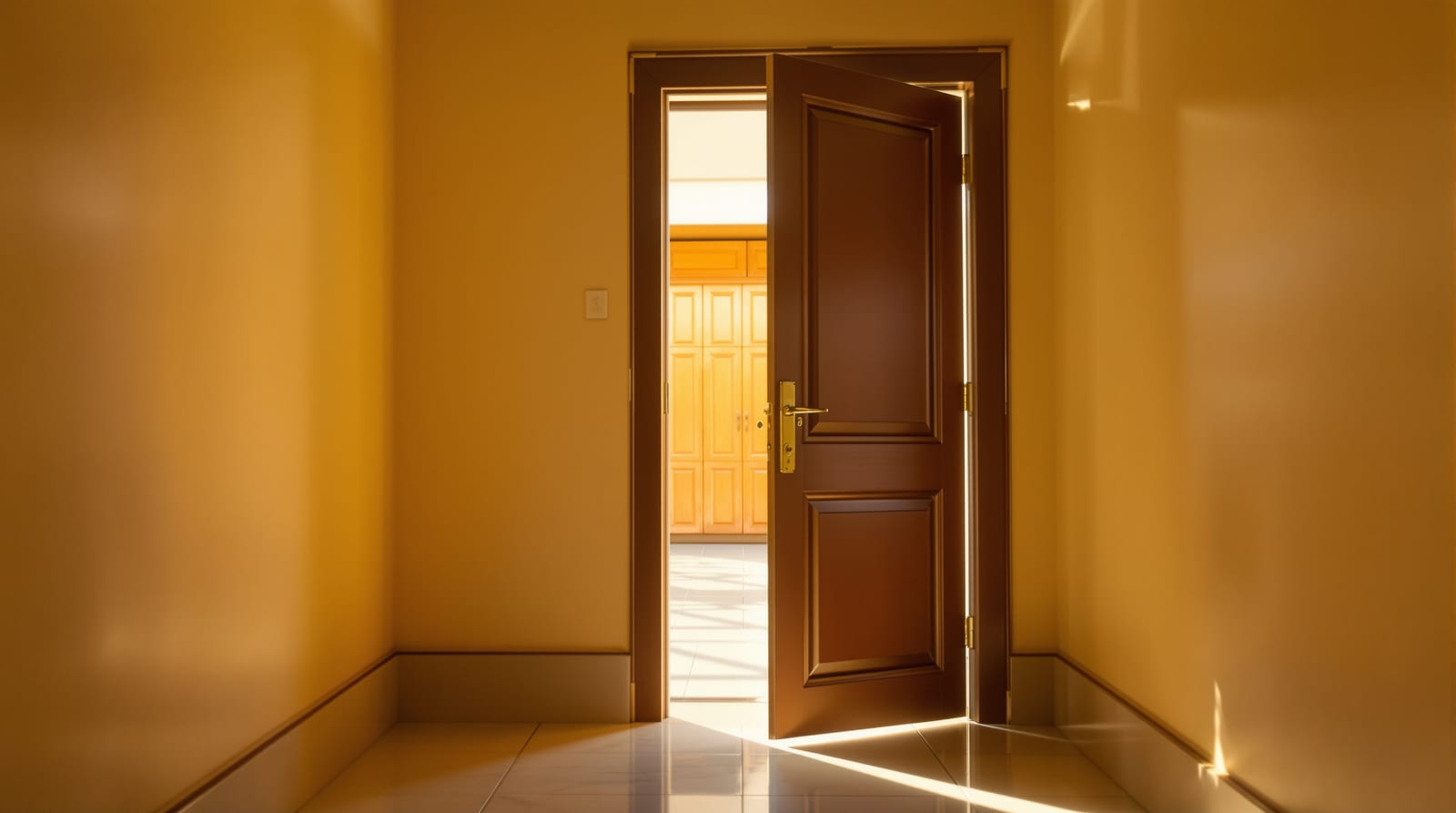
Door Swings Open By Itself? 4 Easy DIY Fixes India 2026
A door that drifts open or shut on its own is almost always out of plumb — here is how to confirm it and four DIY fixes.
You let go of the handle and the Door Swings Open By Itself — or worse, creeps shut and clicks while you have your hands full. It is a small thing that becomes a daily irritation, especially on a bedroom or bathroom door. The good news: a door that won't stay put is almost never broken. In 9 cases out of 10 the frame or the door has gone slightly out of plumb, so gravity does the rest. Once you confirm that with a spirit level, the fixes are cheap, quick and very DIY-friendly. This guide walks you through diagnosis and four reliable fixes, from a 5-minute hinge-pin trick to a proper re-shim.
Difficulty: easy to moderate. Time: 10 minutes to about an hour. Cost: ₹0–₹500 in parts for most fixes.
Why a Door Swings Open By Itself
A door is just a heavy panel hanging on a vertical hinge line. If that hinge line is perfectly vertical (plumb), the door has no reason to move and will sit wherever you leave it. The moment the hinge line tilts even a degree or two, gravity pulls the leaf toward the "downhill" side — open or closed depending on which way the lean goes.
Common causes in Indian homes:
- Settling or original sloppy fitting — the frame was never set truly plumb, or the building has settled.
- Loose hinge screws letting the top hinge sag, tilting the leaf (see fix loose door hinges).
- Monsoon swelling and seasonal movement that shifts the frame slightly (see fix swollen door in monsoon).
- Worn hinges with too much play, so the door rocks freely.
- Floor or wall not level, which is common in older and renovated homes.
Important distinction: a self-closing door is different. If your door has a spring hinge or an overhead door closer, it is designed to swing shut on its own — that is not a fault. If it slams or won't latch, you adjust the closer, not the plumb. See door closer adjustment. Everything below is for an ordinary door on plain butt hinges that should stay where you put it.
Step 1: Confirm the door is out of plumb
Don't guess — prove it. This takes two minutes.
1. Open the door to about 45 degrees and let go. Watch which way it drifts. Drifts open = leans one way; drifts shut = leans the other. Note the direction.
2. Hold a spirit level vertically against the hinge-side edge of the door (or against the frame leg the hinges screw into). A long level is best; a phone level app works in a pinch.
3. Read the bubble. If it sits off-centre, the hinge line is tilted. The high side tells you which way gravity is pulling the leaf.
4. Drop a plumb line if you want a second opinion: tie a small weight to a string, hold it at the top of the frame leg, and see if the string runs parallel to the frame edge.
5. Check the hinge screws while you are there — wiggle the door. If it rocks at a hinge, loose screws may be the whole problem; tighten them first and re-test before doing anything else.
If the level confirms a tilt, pick one of the fixes below. If the door is dead plumb yet still moves, the hinges are worn out — replace them (see door hinge replacement).
Tools & materials you'll need
- Spirit level (or phone level app); optional plumb line
- Screwdriver set (Phillips + flat)
- A flat-head screwdriver and a nail/punch for the hinge pin
- Hammer (light) and a soft cloth or scrap wood
- A few thin cardboard, plastic or metal shims (or a stiff visiting card cut to size)
- Nylon or brass hinge washer, and/or a friction-detent washer (₹20–₹100)
- A doorstop or floor/wall stopper, or a spring stay (₹80–₹400)
- Pencil, and graphite/silicone spray for re-fitting smoothly
The four fixes (easiest first)
Fix A — Bend a hinge pin slightly (5 minutes, easy)
This adds friction so the leaf holds position. It works best for a mild drift.
1. With the door closed, tap one hinge pin up and out using a nail and hammer from below. Do one hinge at a time so the door stays hung.
2. Lay the pin on a hard surface and give it a very gentle bend — a slight bow, not a kink. A hammer tap or pressure in a vice is enough.
3. Tap the pin back into the hinge knuckle. The bent pin grips the knuckle, creating drag.
4. Test. Still drifts? Repeat on a second hinge. Done? Stop.
This is the classic no-cost trick. The downside: it can make the door slightly stiff to open — fine for a bedroom, less ideal for an elderly user's room.
Fix B — Insert a friction washer or nylon washer (10 minutes, easy)
A cleaner version of Fix A. Slip a thin nylon, brass or PTFE washer (or a purpose-made friction-detent washer) onto the pin between the hinge knuckles.
1. Drive out one hinge pin as above.
2. Lift the door edge a hair (a helper or a wedge under the leaf helps) and slide the washer onto the pin or over the knuckle gap.
3. Re-seat the pin. The washer adds controlled resistance so the door stays put without the stiffness of a bent pin.
Detent washers have a little bump that gives the door a few "hold" positions — nice for a door you like to leave half-open.
Fix C — Re-shim a hinge to re-plumb the door (30–60 minutes, moderate)
This is the real fix because it corrects the cause, not the symptom. You move the hinge line back to vertical by packing behind a hinge.
1. From Step 1 you know which way the door leans. To pull the top of the door toward the latch side, you shim behind the bottom hinge (or recess the top hinge deeper); to do the reverse, shim behind the top hinge. Make one change and test.
2. Unscrew the chosen hinge leaf from the frame side (support the door first).
3. Cut a thin shim (cardboard, plastic, or thin metal) to the hinge size and place it in the mortise behind the leaf.
4. Re-screw. Close the door and check plumb again with the level.
5. Add or remove shim thickness until the bubble centres and the door holds. Then check the gaps look even — see uneven door gaps fix.
If the hinge mortise is too deep on one side, you can instead deepen it slightly with a chisel rather than shimming. Go slow.
Fix D — Add a stay or stopper (15 minutes, easy)
Sometimes you just want the door to behave without touching the hinges — for example on a rented flat. Fit a floor or wall doorstop to catch it at the open position, or a spring/hydraulic stay that holds the door open. A magnetic catch on the frame can hold a light door shut. This treats the symptom but is fast, tidy and reversible.
Symptom, cause and fix
| What you see | Likely cause | First fix | If that fails |
|---|---|---|---|
| Drifts open every time | Hinge line leans toward open side | Fix A or B | Fix C re-shim |
| Creeps shut and latches | Hinge line leans toward frame | Fix C re-shim | Add a stay (Fix D) |
| Door rocks at the hinge | Loose screws / worn hinge | Tighten screws | Replace hinge |
| Started after the monsoon | Frame swelled and shifted | Let it dry, re-check plumb | Swollen door fix |
| Plumb but still moves | Hinges worn loose | New hinges | Loose hinges |
DIY difficulty, time and cost
| Fix | Difficulty | Time | DIY parts (₹) | Carpenter (₹) |
|---|---|---|---|---|
| A — Bend hinge pin | Easy | 5–10 min | ₹0 | 400–800 visit |
| B — Friction/nylon washer | Easy | 10 min | 20–100 | 400–800 |
| C — Re-shim hinge | Moderate | 30–60 min | 0–50 | 500–1,000 |
| D — Stay / stopper | Easy | 15 min | 80–400 | 400–800 |
Most stoppers and washers attract 18% GST as goods; carpenter labour is charged separately. A simple visit in a metro runs ₹400–₹800, a tier-2 city less. For a full picture of repair pricing, try the door repair cost estimator, and to diagnose first use the door problem diagnoser.
When to stop and call a carpenter
These fixes assume a sound door and frame. Stop and get a pro if:
- The frame leg itself has dropped or twisted — a real structural sag needs re-fixing the frame, not a washer (see fix sagging door).
- The door leaf is warped — a warped solid door rarely sits plumb again; it may need replacement. See warped door fix.
- The frame bottom is rotted by water or termite/borer — fix the rot first (see door frame repair).
- It is a heavy glass door, an automatic/sensor door, or a sprung self-closing door — isolate power before touching auto operators, and call a specialist for toughened-glass or gas-strut faults.
For the bigger picture, the complete door guide and the door troubleshooting hub cover every related fault, and the door maintenance guide helps you keep things from drifting again.
Frequently asked questions
Why does my door swing open by itself only in summer or after the monsoon?
Seasonal humidity makes the timber frame swell and shrink, which can tilt the hinge line a degree or two. Let the door dry out, re-check plumb with a level, and re-shim if the drift persists. The change is usually small and reversible.
Is bending the hinge pin safe for the door?
Yes, if you bend it gently — a slight bow, not a sharp kink. It simply adds friction inside the knuckle. Avoid it on doors used by children or the elderly, where the extra stiffness to open can be a nuisance; use a friction washer (Fix B) instead.
My door swings shut and the latch clicks — is that the same problem?
Usually yes: it means the hinge line leans toward the frame, so gravity closes it. Re-shim to plumb (Fix C), or fit a stay to hold it open (Fix D). But if the door has a spring hinge or overhead closer, it is meant to close — adjust the closer instead.
How much shim thickness do I need?
Start thin — a single layer of stiff card or a 1–2 mm plastic shim is often enough. Add or remove until the spirit level reads plumb and the door holds. Over-shimming can throw off the gaps, so re-check the clearances after each change.
Can I just fit a doorstop and ignore the lean?
For a quick, rental-friendly fix, yes — a stopper or stay will keep the door put. But the door is still out of plumb, which can stress the hinges and uneven the gaps over time. If it is your own home, re-shimming once (Fix C) is the lasting answer.
Export this guide
Related Guides — Deep-dive reading
Door Not Closing Properly? Fix It Step-by-Step (India 2026)
A clear decision tree for a door that won't shut — latch, hinge-bind, swelling, sag, warp or a moved frame — with DIY fixes and ₹ costs.
Home Doors & EntrancesDoor Repair Guide India: Fix Holes, Dents, Swelling, Hinges & Locks (2026)
A fix-it reference for Indian homes: every common door problem with a quick fix, a proper repair, a replace verdict, the materials needed, and indicative rupee costs.
Home Doors & EntrancesDoor Troubleshooting Guide: Fix Any Door Fault (India 2026)
Symptom to cause to fix for every common door problem in Indian homes, with difficulty, time, cost and when to call a carpenter.
Home Doors & EntrancesRelated Tools — Try Free
Door Problem Diagnoser
Tell us the symptom and get the likely cause, the fix, DIY difficulty and indicative cost for any door fault.
Diagnostic ToolDoor Hardware Cost Estimator
Estimate the all-in hardware cost for a door — hinges, lock, handle, closer, bolts, stopper and fitting — with GST.
Door CalculatorDoor Hinge Selector
Get the right hinge type, size and count for a door by its height, weight and material — with a coastal SS-304 note.
Door Tool