
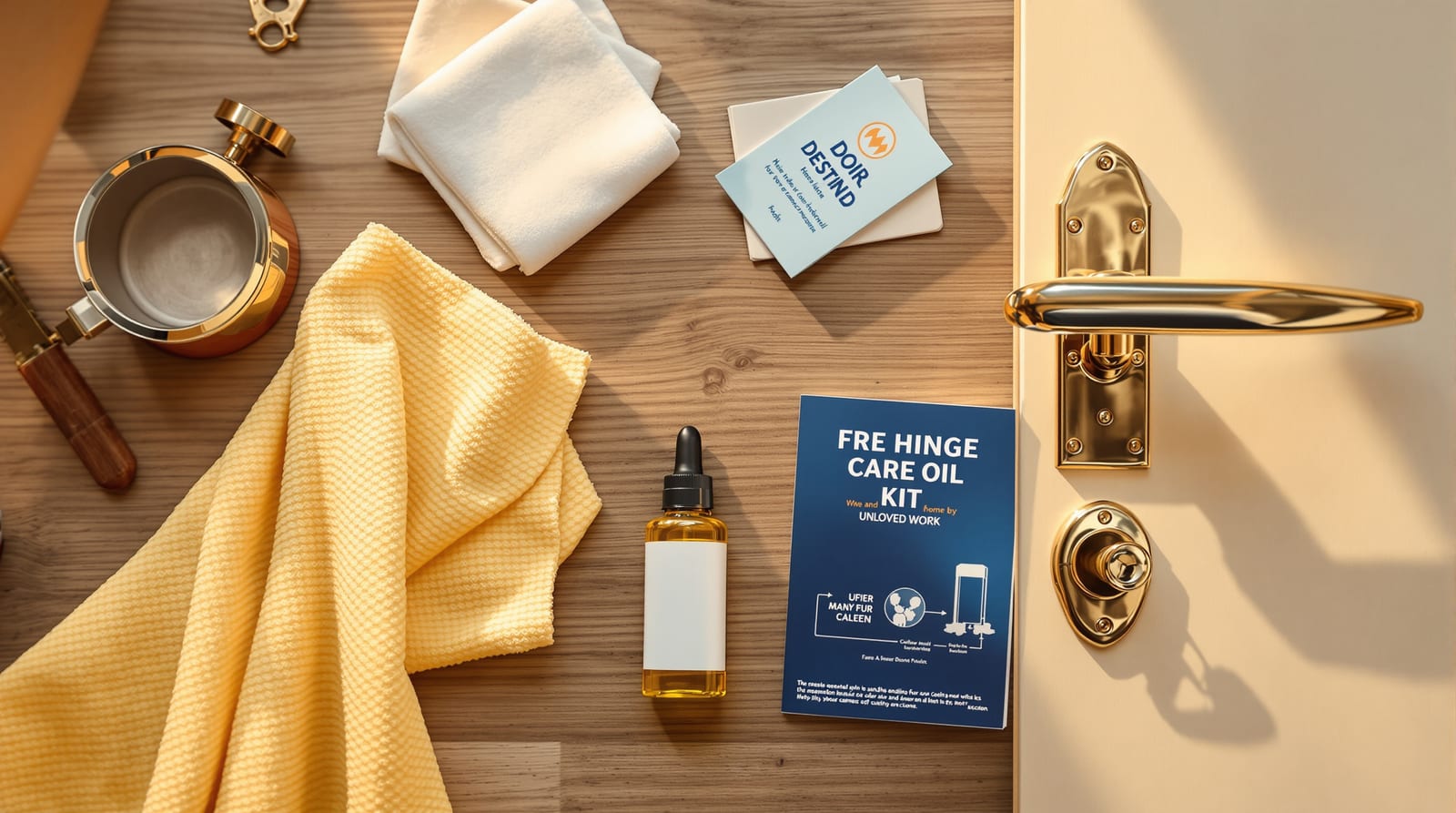
Door Care & Aftercare Handover Pack for Homeowners (India 2026)
The homeowner-friendly door care pack handed over at completion — cleaning by material, hinge and lock lubrication, what not to do, and when to call back under the DLP.
When your project finishes and the snags are cleared, you should be handed more than a set of keys — you should receive a door care handover pack: the short, plain-language instructions that tell you how to look after every door in the home so it stays smooth, safe and good-looking for years. This is the homeowner's aftercare guide, the document a good contractor or interior firm gives you at completion. It is deliberately simpler than the trade-level door maintenance guide — that one is for whoever services the doors; this pack is the everyday care card for you, the resident. Keep it with your warranties and your as-built door schedule, because between simple cleaning, occasional lubrication, a half-yearly screw-tightening and knowing what not to do, almost every common door problem is avoidable.
What a proper handover pack contains
A door is a moving, hard-worked part of the house, and a thin "here are your keys" handover is not enough. Insist that your door care handover pack — usually part of the wider door handover documents — includes the items below, ideally in one printed folder plus a digital copy. On Indian sites this is often skipped, so ask for it before you make the final payment.
| Pack item | Why it matters to you |
|---|---|
| Care & cleaning instructions by material | So you don't use the wrong cleaner and ruin a polish or laminate |
| Lubrication schedule (hinges, locks, closers) | The single biggest cause of squeaks and stiff locks is no lubrication |
| "What not to do" list | Avoids the mistakes that void warranties or damage finishes |
| Hardware-tightening reminder | Loose screws are the most common avoidable fault |
| Fire-door dos & don'ts | Life-safety — these doors must never be wedged or altered |
| Warranty cards & contacts | So you know who to call and for how long |
| Keys register & spare-key plan | Tracks every key, master and duplicate |
| As-built door & ironmongery schedule | Tells a future fitter exactly what is fitted |
| Defect-liability (DLP) terms & call-back contact | What is fixed free, and until when |
The two documents people lose first are the warranty cards and the keys register — file them the day you move in. If your pack is missing any row above, the door handover pack generator can help you assemble a clean version, and you should still chase the contractor for the warranty cards and the as-built schedule.
Cleaning your doors — by material
The golden rule is gentle and dry-ish. Doors do not need aggressive cleaning; they need dusting and the occasional wipe with a barely-damp cloth. Harsh chemicals, scouring pads and a soaking wet cloth do far more harm than dirt ever will. Match the method to the finish on your door — your as-built schedule or door painting notes will tell you which you have.
| Door finish | Do this | Never do this |
|---|---|---|
| Painted / enamel / PU paint | Dust weekly; wipe with a soft, barely-damp cloth and mild soap; dry off | No thinners, no scouring pads, no nail-polish remover |
| Wood with melamine / PU polish | Dry microfibre dust; occasional wood-friendly polish if advised | No water-soaking, no silicone spray, no abrasive cream |
| Veneer | Soft dry cloth; wipe spills at once; keep out of standing water | No wet mopping, no harsh solvents |
| Laminate / acrylic faced | Damp soft cloth + mild detergent; dry immediately | No scourers, no bleach, no leaving edges wet |
| Glazed panels / vision panels | Glass cleaner on the cloth, not sprayed on the frame | Don't let cleaner pool on timber beads or seals |
| Metal / flush fire doors | Damp cloth, mild detergent, dry off | No abrasives that scratch the certified finish |
| Hardware (lever, hinges, bolts) | Wipe with a dry or barely-damp cloth | No metal polish on coated/PVD finishes — it strips them |
Two India-specific habits matter most. First, wipe spills and splashes immediately, especially near the bottom edge and around bathrooms and kitchens — standing water is the main cause of swelling and lifting laminate. Second, in the monsoon, keep doors able to dry: don't leave a wet cloth against them and wipe off condensation, because trapped damp is what warps a leaf and rusts hardware.
Lubrication — the five-minute job that prevents most problems
Most "my door has gone wrong" calls are simply a dry hinge or a dry lock. A few minutes of lubrication on a sensible schedule keeps everything silent and smooth and protects the moving parts from wear. Use the right product: a light machine oil or a dedicated lubricant for hinges, and a dry / graphite (PTFE) lubricant for locks and cylinders — never thick oil or grease inside a lock, because it gums up and attracts dust.
- Hinges: a single drop of light oil at the top of each knuckle, then swing the door a few times to work it in; wipe away the excess so it does not drip onto the finish.
- Locks & latches: a puff of dry graphite/PTFE into the keyway and onto the latch bolt; work the key and handle. Do not use cooking oil or thick grease.
- Door closers: these are usually sealed — do not try to open or oil them. If a closer leaks oil or slams, that is a door closer service or replacement, not a home job.
- Sliding tracks & rollers: keep the track clean and dust-free; a dry lubricant on rollers if they stiffen.
If a hinge still squeaks after oiling, or a lock stays stiff after lubrication, stop and call your fitter — it usually means a loose screw, a misaligned strike or a worn part rather than dryness, and forcing it makes it worse.
The home door-care schedule
Keep this simple calendar on the inside of a cupboard or in your phone. It is the heart of the handover pack: a few small, regular jobs that prevent almost every avoidable door fault. Most are a few minutes; none need a tradesperson.
| How often | Task | Notes |
|---|---|---|
| Weekly | Dust door faces & tops; wipe handles | Soft dry/microfibre cloth |
| Monthly | Wipe spills, check no door is binding or scraping | Catch swelling early in monsoon |
| Every 3 months | Lubricate hinges; puff dry lube into locks | Light oil on hinges; PTFE/graphite in locks |
| Every 6 months | Tighten all visible screws (hinges, handles, strikes, closers) | The single most useful job — see below |
| Every 6 months | Check fire-door self-closing & seals (if you have them) | Door must close fully on its own |
| Yearly | Inspect finish; re-seal or touch up bottom edges if bare | Stops moisture entering the core |
| As needed | Wipe condensation; keep doors able to dry in monsoon | Trapped damp warps leaves |
Door-care schedule calendar
Tightening hardware — the most useful five-minute job
Doors are used thousands of times a year, and that constant movement gradually loosens screws. A loose hinge screw lets the door drop and bind; a loose handle rocks and eventually fails; a loose strike-plate stops the door latching. Twice a year, go round every door with a screwdriver and snug up every visible screw on hinges, levers, strike-plates, bolts and closer brackets — not over-tight, just firm. If a screw simply spins and won't bite, the hole has worn; don't force it — that is a quick fitter job (a wooden plug or a longer screw), covered in the door hinge replacement and door strike plate alignment guides. This one habit prevents a large share of the faults that otherwise become call-backs.
What NOT to do — the homeowner's don't list
Most door damage is self-inflicted. Keep this short list visible:
- Don't slam doors or let children swing on them — it loosens hinges and cracks frames.
- Don't hang heavy weight (laundry, bags) on a lever handle or the top of a door.
- Don't force a stiff lock or binding door — find the cause (a loose screw, a swollen edge, a misaligned strike) instead.
- Don't use harsh chemicals, thinners or scouring pads on any finish.
- Don't soak a door or leave standing water against the bottom edge.
- Don't paint over, drill, plane, wedge or re-cut a fire door — any alteration can void its certification (more below).
- Don't fit your own heavy closers or smart locks without checking the door is rated for it.
- Don't ignore a small problem — a tiny gap, drip or squeak is cheapest to fix early.
Fire doors — special dos and don'ts
If your home has fire-rated doors — common in apartments at the main entrance, service shafts, staircases and some duplex/villa layouts — they are life-safety equipment, not ordinary doors, and the rules are stricter. A fire door only works if it is kept exactly as it was tested and installed under NBC 2016 and IS 3614. Your pack should flag every fire door and its rating.
Do: keep them shut (never wedged or propped open); let the self-closer pull the door fully closed every time; keep the intumescent and smoke seals intact and clean; check twice a year that the door closes fully on its own from any position; keep the "Fire door — keep shut" sign in place; report any damage to the leaf, frame or seals at once.
Don't: never wedge, prop or hold a fire door open; never remove or paint over the seals or the signage; never drill large holes, plane the leaf, or cut new letterplates/vents into it; never replace its certified hinges, lock or closer with non-rated parts; never block the door's swing or the escape route. Any of these can void the fire rating and put lives at risk. For the deeper inspection routine, keep the fire-door maintenance & inspection guide with your pack — but as a homeowner the golden rule is simply: keep it shut, keep it intact, and call a specialist for anything more.
When to call back — warranties and the defect-liability period
Not everything is yours to fix. New doors come with a defect-liability period (DLP) — commonly 6 to 12 months in India — during which the contractor must put right genuine defects in workmanship or materials free of charge: a door that binds, won't latch, drops on its hinges, has a finish that fails, a seal that falls off, or a closer that leaks. Keep the contractor's call-back contact and your warranty cards in the pack, and report defects in writing while you are still inside the DLP — this is exactly what the door defect liability terms are for.
Draw a clear line between maintenance (yours: cleaning, lubricating, tightening, wiping spills) and a defect (theirs, under the DLP and warranty): if you have been doing the care schedule and a door still fails, that is a call-back, not your fault. Hardware also carries its own manufacturer warranty — track it with the door warranty tracker and follow the process in door warranty claims. For the full picture of how all the doors in your home fit together, your as-built schedule and the complete door guide are the master references to keep alongside this care pack.
Frequently asked questions
How do I stop my new doors squeaking?
A squeak is almost always a dry hinge. Put a single drop of light machine oil at the top of each hinge knuckle, swing the door a few times to work it in, and wipe off the excess. Do this every three months. If it still squeaks after oiling, a screw is probably loose or the hinge is worn — call your fitter rather than forcing it.
What should I clean my wooden doors with?
For most painted, polished or veneered doors, dust regularly with a soft dry or microfibre cloth and, when needed, wipe with a barely-damp cloth and a little mild soap, then dry off. Never use thinners, bleach, scouring pads or a soaking-wet cloth, and wipe spills immediately — especially near the bottom edge, where standing water causes swelling.
Can I oil the inside of my door lock?
Use a dry graphite or PTFE lubricant in the keyway and on the latch, not thick oil or grease — heavy oil gums up inside a lock and attracts dust, making it worse over time. A puff of dry lube every three months keeps the key turning smoothly. If the lock stays stiff after lubricating, the strike may be misaligned; call your fitter.
Is it really a problem to wedge my fire door open?
Yes. A fire door only protects you if it is shut when a fire starts. Wedging or propping it open defeats its entire purpose and can breach building regulations under NBC 2016. Keep fire doors closed, let the self-closer work, and never wedge, prop, paint over the seals, or cut into a fire door — any alteration can void its certification.
A door has started to bind a few months after handover — who fixes it?
If you have been doing routine care and a door now binds, drops or won't latch, that is most likely a workmanship defect — and if you are still within the defect-liability period (commonly 6 to 12 months in India), the contractor should fix it free. Report it in writing with your warranty contact. Don't plane or force the door yourself, as that can void the warranty.
Export this guide
Related Guides — Deep-dive reading
Door Maintenance Guide India: A Seasonal Care Routine to Keep Doors Smooth for Decades
Oil the hinges, tighten the screws, lube the lock, check the seals and re-coat the finish — a simple seasonal calendar that stops Indian doors from binding in the monsoon, sagging, tarnishing on the coast or falling to termites.
Home Doors & EntrancesDoor Repair Guide India: Fix Holes, Dents, Swelling, Hinges & Locks (2026)
A fix-it reference for Indian homes: every common door problem with a quick fix, a proper repair, a replace verdict, the materials needed, and indicative rupee costs.
Home Doors & EntrancesSliding Door Track Cleaning: Easy DIY Fix (India 2026)
Why Indian sliding doors get stiff — dust, grime and hard-water scale in the track — and the step-by-step clean-dry-lubricate routine that fixes it.
Home Doors & EntrancesRelated Tools — Try Free
Door Paint Calculator
Estimate paint and primer litres and cost to paint your doors by size, number of doors, coats and paint type.
Door CalculatorFire Door Rating Checker
See the likely fire-door rating (30/60/90/120 min) and components a location needs per IS 3614 / NBC — guidance, confirm with your architect.
Compliance ToolWarranty & Maintenance Tracker
Track every warranty, AMC, and maintenance schedule for your home in one place.
Homeowner Tracker