
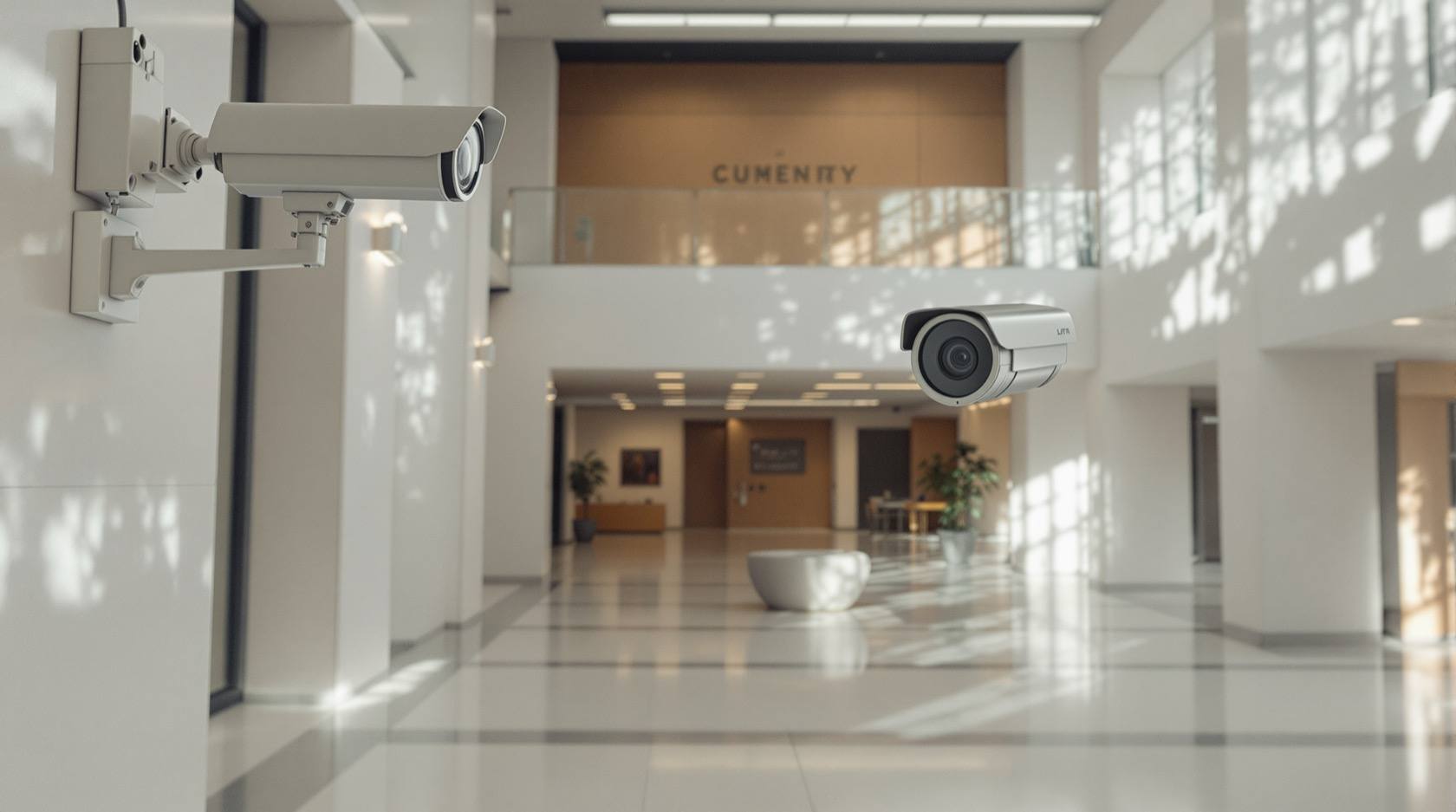
Facial Recognition Privacy in India (2026): The Face Is Not Just Another Password
A face is biometric data you can never change if it leaks, and it can be captured without your cooperation. Before you enrol anyone's face into a lock, camera or entry system, understand the privacy duties, the consent it demands, and the alternatives you must always offer.
A password is a secret you choose, and change the moment it leaks. A face is neither. It is the most public part of you and, at the same time, one of the most sensitive pieces of data you own. Once a facial recognition privacy breach exposes a face template, there is no reset button. You cannot issue yourself a new face. That single, permanent difference should sit at the centre of every decision about face-based locks, cameras and entry systems in a home, an apartment community, or a small office.
Face recognition has arrived quietly in Indian homes: the smart lock that opens when it sees you, the door phone that names your visitors, the society gate that waves residents through. The technology is genuinely convenient. But convenience is not consent, and a face captured without cooperation is a different thing entirely from a PIN typed on purpose. This guide sits inside Studio Matrx's privacy and data-protection hub and is written to help you use faces, if at all, lawfully, sparingly and with everyone's dignity intact.
Scope & how to read this. This is practical, DPDP-aligned guidance, not legal advice. A face template is sensitive personal data, and enrolling other people's faces (residents, workers, visitors) carries real obligations. For any community-wide or workplace face system, take professional advice from a lawyer or a Data Protection Officer, and always choose the least-intrusive option that meets a genuine need.
Why a face is special, and not just another password
Every reason to treat faces with extra care comes back to four properties that a password simply does not share.
- It is permanent. You change a leaked password in seconds. A leaked face template is compromised for life. There is no revocation, no rotation, no fresh credential.
- It uniquely identifies you. A face links directly to who you are across systems, places and time. Combined with other data, it enables tracking and profiling in a way a random passcode never could.
- It is collected passively, at a distance, without cooperation. A PIN requires a deliberate act. A face can be captured while you walk past a camera, unaware, having agreed to nothing. That is what makes face systems uniquely easy to abuse.
- Its misuse is quiet and hard to detect. Someone can match your face against footage, build a movement log, or share a template, and you may never know it happened.
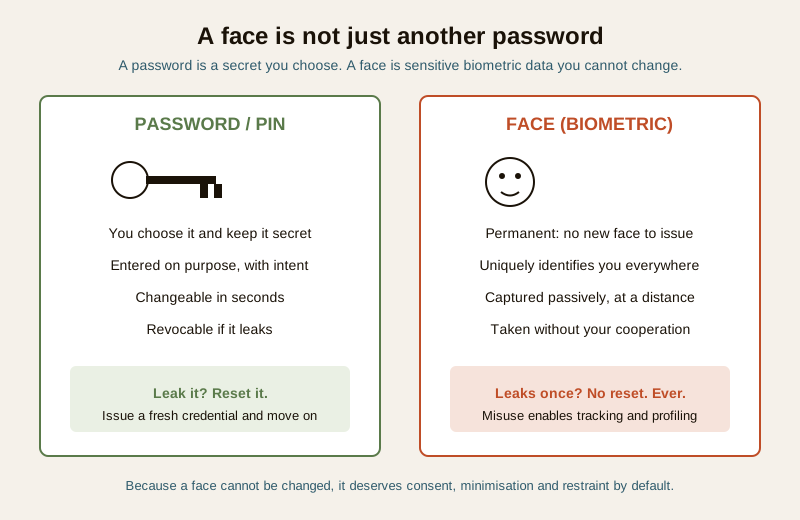
None of this makes face recognition forbidden. It makes it a decision you take deliberately, for a narrow purpose, with the people involved genuinely on board, and never the only door in.
What the DPDP Act asks of anyone who enrols faces
India's Digital Personal Data Protection Act, 2023 (DPDP Act) governs personal data, and a face template is exactly that. A single household running one face-unlock lock for its own members may fall under purely personal or domestic use, but the ethical duties still apply, and the moment you enrol other people's faces (a domestic worker, a tenant, every resident of a block), you are handling their personal data and the duties bite in earnest.
Translated into plain practice, the Act's spirit gives you a short list of obligations:
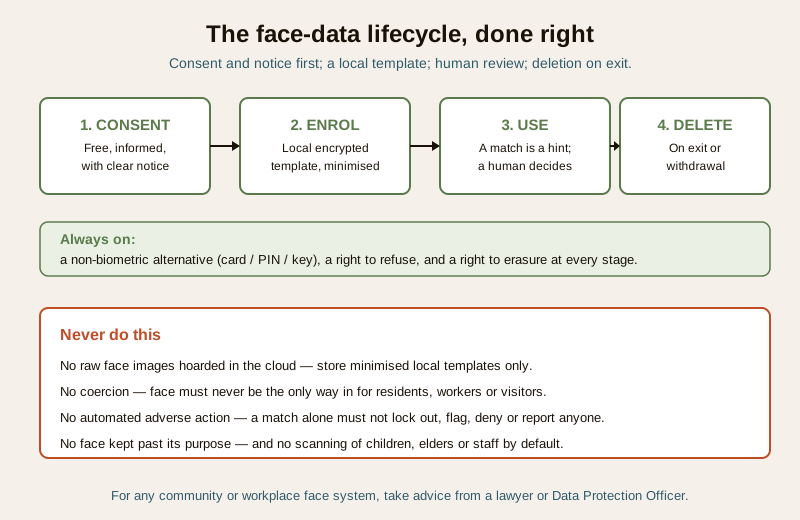
- Lawful purpose and consent. Enrol a face only for a clear, narrow, stated purpose, and only with the person's free consent. Never coerce a resident, worker or visitor into enrolling. Consent that is the price of getting through your own front gate is not free consent.
- Notice. Tell people plainly that faces are being captured, by whom, why, for how long, and how to opt out. Silent or hidden face capture is the worst version of this.
- Data minimisation. Store the least you can. Where the device allows it, keep a mathematical template rather than raw face images, hold it locally on the device rather than in a cloud, and never collect more faces than the purpose truly needs.
- Storage limitation and erasure. Keep a face only while the reason lasts. Delete it when someone moves out, leaves the job, or withdraws consent. A face database that outlives its purpose is pure risk.
- Security safeguards. A face database is a high-value target. Encrypt it, restrict who can access it, change default device passwords, and keep firmware current.
- Accountability and rights. Be able to say what you hold, honour requests to access or erase it, and give people a way to raise a grievance.
The consent test. Before you enrol anyone's face, ask: have they genuinely agreed, freely, knowing the purpose, with a real alternative available if they say no? If the honest answer is that they had no choice, you do not have consent. You have compliance under pressure, which is not the same thing.
The rights of the person whose face is enrolled
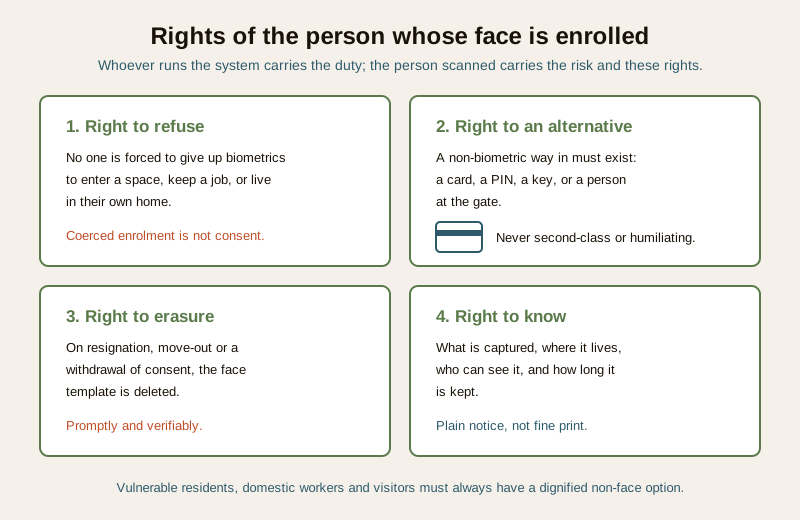
Flip the perspective. Whether you are the homeowner, the RWA secretary or the office manager, the people whose faces you capture are the ones carrying the risk. They hold rights, and treating those rights as central is what separates responsible custody from surveillance.
- The right to refuse. No one should be forced to hand over their biometrics to enter a space, do their job, or live in their own home.
- The right to an alternative. There must always be a non-biometric way in, a card, a PIN, a physical key, or a person at the gate, that is not second-class or humiliating to use.
- The right to erasure. When someone leaves, whether a worker resigns, a tenant moves out, or a resident sells the flat, their face template must be deleted, promptly and verifiably.
- The right to know. People are entitled to understand what is captured, where it lives, who can see it, and how long it is kept.
For homes and communities weighing whether cameras should recognise faces at all, the companion guides on facial recognition on CCTV cameras and facial recognition door phones walk through the device-level choices, and the broader ethical AI surveillance guide covers the restraint that all of this demands.
RWAs and apartments: a community cannot force your face
Apartment face-entry systems are where good intentions most often slide into coercion. A resident welfare association may genuinely want smoother gates and fewer visitor registers. That is fine, up to a firm line: a community cannot make face enrolment the only way in.
- Face entry must be optional. Every resident, family member, tenant, domestic worker, driver, delivery worker and visitor must have a working non-face route, a card, a PIN, an intercom, or a guard who lets them in without a scan.
- Vulnerable people come first. Elderly residents, children, people with disabilities and anyone uncomfortable with biometrics must never be pushed toward a face scanner as their only option. Under the spirit of the RPwD Act 2016, accessibility is not a favour.
- Workers and visitors are not the community's data to keep. A domestic worker who cleans in three flats has not agreed to have her face permanently logged by a society management company. Offer her a card. A visitor should never be face-scanned to enter for an hour.
- Decisions belong in the open. A face system that affects everyone should be discussed transparently, with a genuine opt-out, not slipped in as a firmware update to the gate.
These are decisions with legal weight, and the details of who controls the database, how consent is recorded, and how erasure works are precisely where a community should get professional advice. The biometric access control guide covers the wider question of fingerprints and face at shared doors.
Accuracy, bias, and why a match must never act alone
Face recognition is not a perfect oracle, and pretending it is causes real harm. Matching accuracy varies with lighting, angle, age, and, well-documented in the research, across skin tones and faces, meaning error is not evenly distributed. A false match or a false rejection is not a rare abstraction; it is a resident locked out in the rain, or the wrong person flagged at a gate.
The rule that follows is simple and non-negotiable: a face match must never trigger automatic adverse action. No door should stay shut, no alarm should sound, no person should be turned away or reported purely because software decided their face did or did not match. A human being must review any consequential decision, and there must always be a fallback way in when the system is wrong.
Human oversight, always. Treat any face match as a suggestion for a person to check, never as a verdict the machine gets to enforce. If a face system is configured to lock people out, flag them, or deny entry on its own, that configuration is unsafe and unfair. Keep a human in the loop and a non-biometric door open.
Before you enrol faces: a checklist
Work through this honestly before a single face goes into any system.
| Question to ask | Why it matters |
|---|---|
| Is there a real, narrow need face recognition uniquely meets? | If a card or PIN does the job, a face is disproportionate. Start with the least-intrusive option. |
| Has everyone freely consented, with a genuine opt-out? | Coerced enrolment is not consent under the DPDP Act's spirit. |
| Is there a non-biometric alternative for everyone? | Refusers, visitors and vulnerable people must have a dignified way in. |
| Is data stored as a local template, encrypted, not raw cloud images? | Minimisation and security shrink the harm if it leaks. |
| Is there a clear notice explaining purpose, retention and opt-out? | Transparency is both a duty and basic decency. |
| Is there a defined erasure process for exit, move-out and withdrawal? | A face kept past its purpose is pure liability. |
| Does every consequential match get human review? | No automated lockout, flagging or denial on a match alone. |
What NOT to do
- Do not make a face the only key. Never remove the card, PIN or physical alternative and force enrolment.
- Do not coerce residents, workers, tenants or visitors into giving up their biometrics as the price of entry, employment or tenancy.
- Do not capture faces covertly. No hidden face recognition, no scanning people who were never told.
- Do not hoard raw face images in a cloud account or on an unsecured recorder. Prefer local, encrypted templates, and only for as long as the purpose lasts.
- Do not keep a face after someone leaves. Delete on move-out, resignation or withdrawal of consent.
- Do not let a match act on its own. No automatic lockout, alarm, denial or reporting without a human deciding.
- Do not point face recognition at the vulnerable. Not children, not the elderly, not domestic staff, just because a product offers the feature.
For turning a scheme into concrete device settings, the privacy-by-design guide shows how to bake minimisation and consent into the setup rather than bolt them on later.
When to get legal or professional advice
Treat everything above as a starting point, not a ruling. Bring in a professional whenever a face system reaches beyond your own household, because that is where the obligations and the liability grow real.
- Any community or apartment face system affecting residents, workers and visitors deserves a lawyer's or Data Protection Officer's review of consent, control and erasure before it goes live.
- Any workplace face system for staff or contractors engages consent and labour dignity, and should be run past qualified advice and a clear, opt-out policy.
- A suspected breach of a face database is serious. Follow due process, take professional advice, and act on any applicable reporting obligations promptly.
Legal and ethics caution (not legal advice). A face is sensitive biometric data that cannot be changed once leaked. Enrolling other people's faces carries DPDP-aligned duties of consent, notice, minimisation, security and erasure. The safe default is not to use face recognition on residents, workers or the vulnerable at all; where a genuine, narrow need exists, obtain free consent, always offer a non-biometric alternative, keep a human in the loop, and confirm your specific situation with a lawyer or Data Protection Officer.
Key takeaways
- A face is not another password. It is permanent, uniquely identifying, captured passively at a distance, and impossible to reset if it leaks, so treat it as sensitive data from the first decision.
- Consent must be free, and never the price of your own front gate. Coerced enrolment is not consent under the DPDP Act's spirit.
- Always offer a dignified non-biometric alternative, a card, PIN, key or a person at the gate, for everyone, and especially for vulnerable people, workers and visitors.
- A community cannot force face enrolment as the only way in; face entry must be optional and decided in the open.
- Minimise and delete. Prefer local encrypted templates over raw cloud images, and erase a face on exit, move-out or withdrawal.
- Never let a match act alone. Accuracy and bias errors are real, so a human reviews any consequential decision, and no door locks anyone out on software's say-so.
- This is not legal advice. For any RWA or workplace face system, or any breach, consult a lawyer or Data Protection Officer.
References
- Digital Personal Data Protection Act, 2023 — collect personal data, including biometric face templates, only for a clear, lawful purpose, with consent and notice, minimised, secured, and deleted when the purpose ends; verify current text and rules before relying on it.
- Right to privacy — the constitutional right recognised in K.S. Puttaswamy underpins restraint in collecting biometric data; seek qualified legal advice for community or workplace systems.
- Rights of Persons with Disabilities Act, 2016 — accessible, non-biometric alternatives support the dignity and access rights of vulnerable residents and users.
- Manufacturer specification sheets — confirm whether a device stores a local encrypted template or raw cloud images, and how enrolment and erasure work, before you buy or deploy.
This is an educational overview, not legal advice. Whether and how you may lawfully deploy facial recognition depends on your exact facts — consult a qualified lawyer or Data Protection Officer, keep a human in every consequential decision, and always leave a non-biometric door open.
Export this guide
Related Guides — Deep-dive reading
Security Privacy Assessment for Indian Homes
Getting the privacy side of home security right: camera placement ethics and limits, notice and consent, the extra caution audio demands, and treating footage as personal data you store, retain and delete responsibly under India's DPDP Act 2023 direction.
SecuritySmart Security Privacy in India: The System That Watches You More Than Any Burglar
A smart security system spends every hour of every day watching your family, your staff and your routines — and that footage and data, not a burglar, is the long-term risk most buyers never think about. Where cameras belong and where they must never go, where your video actually goes, what a smart home learns about you, your rights under the DPDP Act 2023, and the honest practice for keeping it all yours.
SecurityBiometric Data Protection in India (2026): Guarding What You Cannot Change
Fingerprints, faces and iris scans are permanent. If a home lock, an office attendance reader or an RWA gate collects them, they demand more care than any password. Here is how to hold biometric data lawfully, minimally and decently.
SecurityRelated Tools — Try Free
Biometric-Capacity Calculator
Whether a biometric reader can hold all the enrolments and how many devices you need, with a 1:N speed note.
Biometric CapacityCCTV Camera Coverage & Count Calculator
Estimate how many CCTV cameras you need, the NVR channels, storage in TB for your retention period, and an indicative all-in cost with GST.
CCTV CalculatorCCTV Placement Compliance Checker
A quick DPDP-grounded privacy and safety self-check for where a camera is pointed — flags the items to fix.
Compliance