
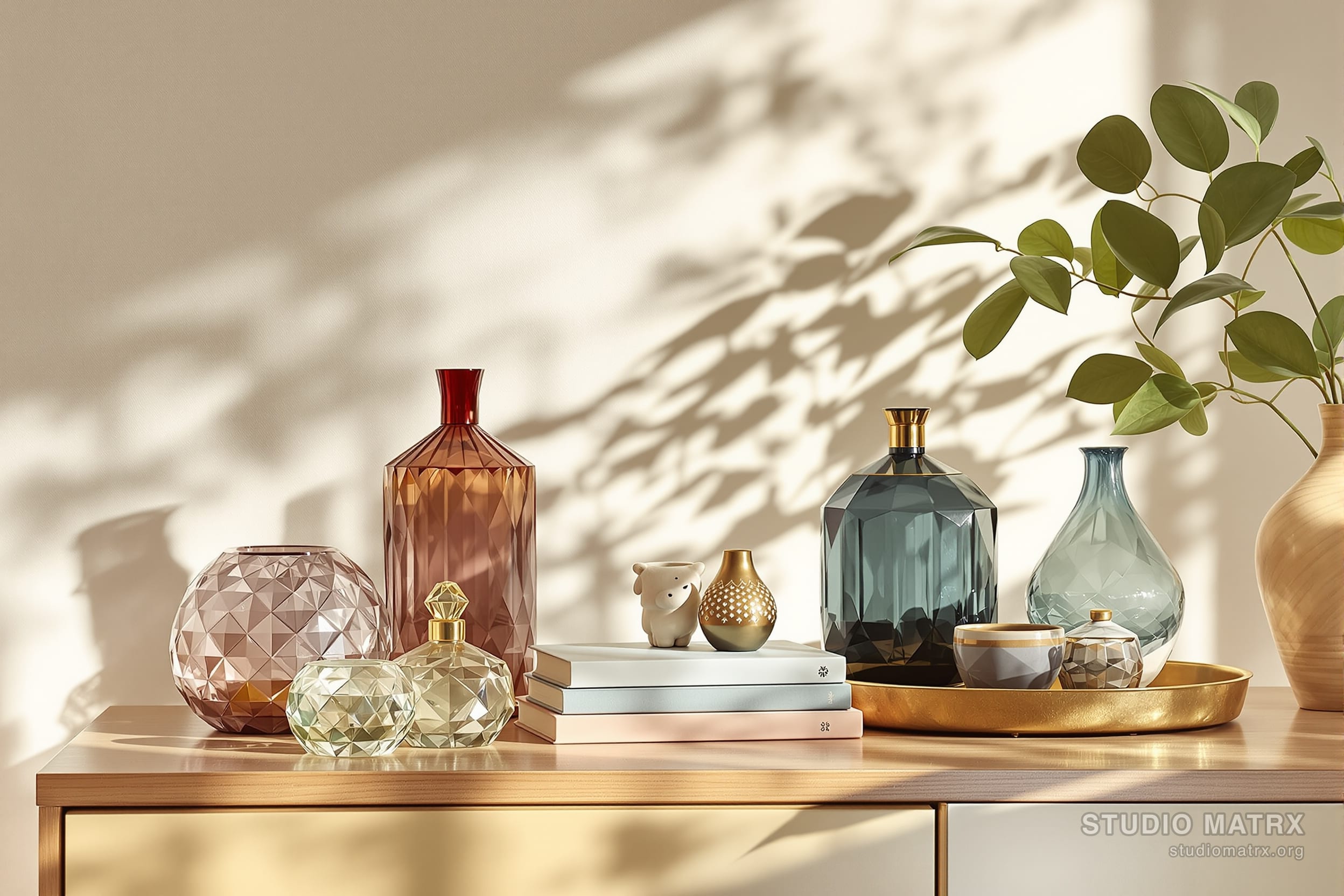
Decorative Objects: Crystal, Glass, Ceramic & Collectible Art for the Home
Crystal, glass, handcrafted, ceramic, tribal and antique objects - styling, authenticity, budget and care for Indian homes.
There is a particular moment, after the sofa is chosen and the walls are painted and the curtains are finally hung, when a room is technically complete and yet somehow still feels like a showroom. What it lacks is not another piece of furniture but the small things: a faceted crystal catching the late afternoon light, a Dhokra horse with the rough fingerprints of its maker still visible, a pair of blue pottery bowls that you bought on a trip to Jaipur and have never quite stopped loving. Decorative objects are how a house becomes a home. They carry story, texture and collected memory in a way that no big-ticket purchase ever can.
This guide is about those finishing pieces and the quiet craft of arranging them. We will walk through the six families of decorative objects an Indian home tends to gather: crystal, glass, handcrafted artefacts, ceramic figurines, tribal pieces and antique collectibles. Then we will get practical about the thing most people find hardest, which is not buying objects but composing them: the art of the vignette, where a triangle of well-chosen pieces on a console can do more for a room than an expensive painting. Along the way we will be honest about money, about authenticity, about the law around genuine antiques, and about caring for delicate things in a climate of heat, dust and monsoon damp.
A field guide to decorative objects
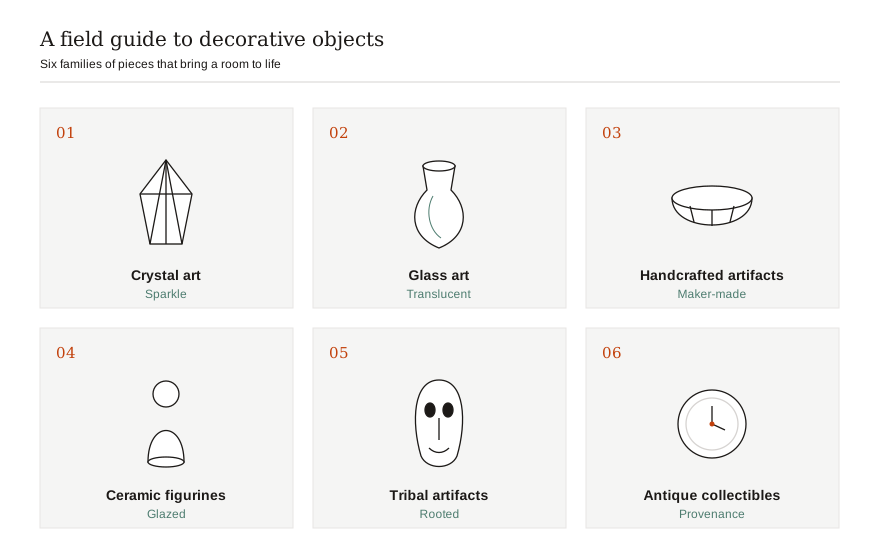
Before you can style a shelf you need a feel for the materials, because each behaves differently in the hand, in the light and over the years. Here are the six families, what they bring to a room, where to find the good ones in India, and what they cost in 2026.
Crystal art pieces
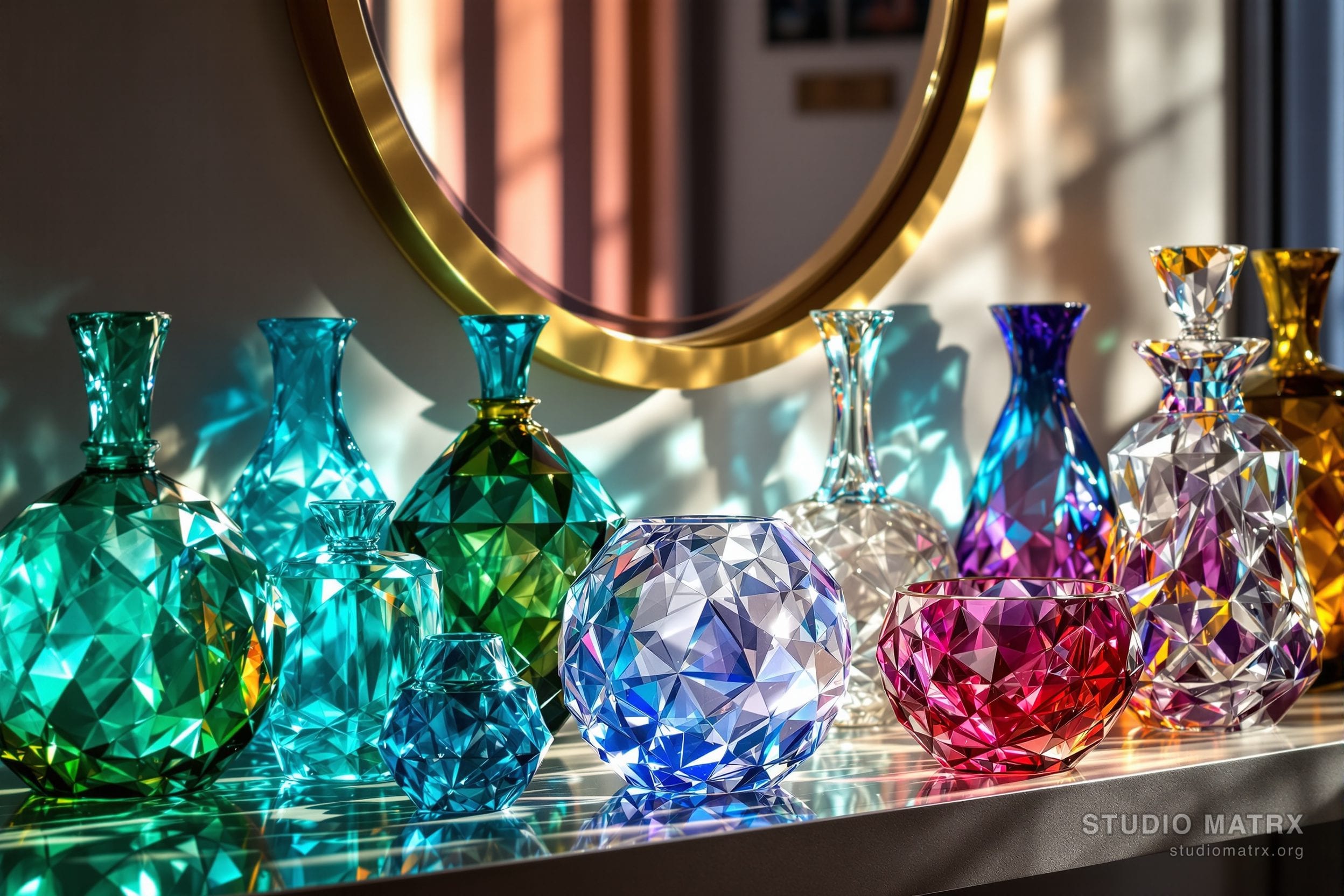
Crystal is glass with lead oxide added, which gives it weight, a high refractive sparkle and the deep ring it makes when tapped. That extra brilliance is the whole point: a faceted crystal sculpture, a paperweight or an abstract block exists to take ordinary daylight and throw it back as fire and rainbows. Place crystal where light moves across it through the day, near an east or west window, on a glass shelf, or under a small puck light. Imported names like Swarovski, Baccarat and Lalique anchor the luxury end, while Indian retailers and lifestyle stores stock plenty of capable unbranded lead crystal. A small faceted piece runs around ₹1,500 to ₹6,000; signature crystal sculptures climb from ₹15,000 well into the lakhs. The care nuance is simply that crystal shows everything, so fingerprints and dust dull it fast and it wants gentle, regular cleaning rather than a once-a-year scrub.
Glass art objects
Ordinary art glass has no lead, so it is lighter and softer in tone, but in skilled hands it is wonderfully expressive. India's glass capital is Firozabad in Uttar Pradesh, which has a GI tag and supplies the country with everything from bangles to vases and decorative glassware. For art pieces, look at hand-blown vases, millefiori paperweights, coloured-glass bowls and Murano-style swirled figures, the technique that made the Venetian island of Murano famous for centuries. Coloured glass is the cheapest way to add a jewel-tone accent to a neutral shelf. Expect ₹400 to ₹3,000 for decorative vases and paperweights, more for hand-blown studio work. The one rule glass enforces without mercy is fragility: keep it back from table edges, away from toddler reach, and never stack it.
Handcrafted artifacts
This is the richest seam in any Indian home, because the country's craft traditions are extraordinary and many carry Geographical Indication protection. Moradabad in Uttar Pradesh is the brass city, turning out engraved urlis, diyas, lamps and sculptural pieces. Agra is home to marble inlay, the parchin kari or pietra dura technique perfected on the Taj Mahal, where semi-precious stones are set flush into white marble. Bidriware, the striking black-metal craft inlaid with silver, comes from Bidar in Karnataka and holds a GI tag. Jaipur gives us blue pottery, and Channapatna in Karnataka its lacquered wooden toys, both GI crafts. Prices span a vast range, from a ₹500 brass diya to a ₹40,000 marble inlay platter. The care and authenticity point is to buy from craft cooperatives or GI-certified sellers so your money reaches the artisan and the work is genuine.
Ceramic figurines
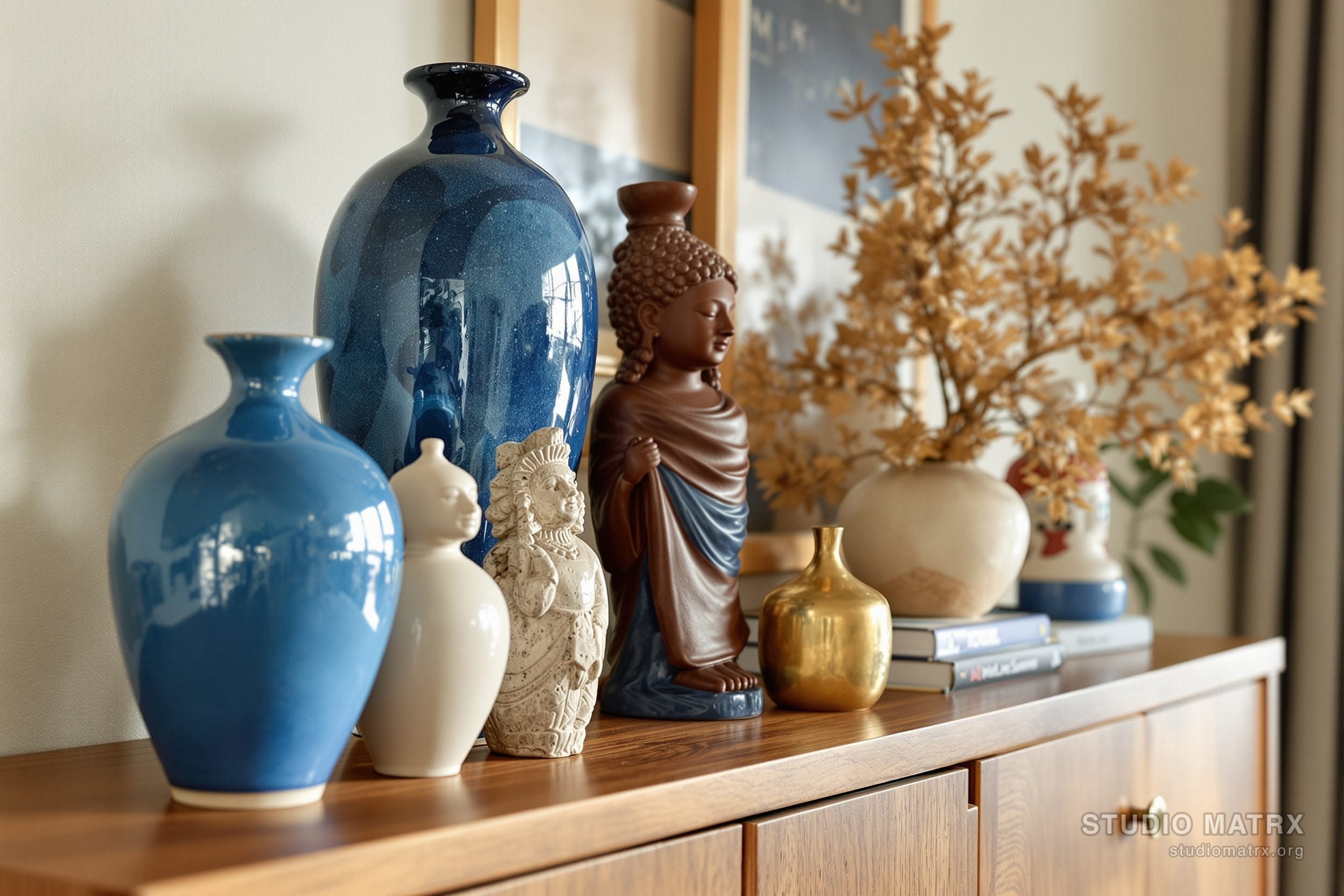
Ceramic covers a spectrum from earthy terracotta to refined glazed stoneware, and it brings warmth and a handmade softness that polished metal and crystal cannot. Terracotta, fired unglazed clay, has deep roots across India, from Bankura horses in West Bengal to the temple terracotta of Tamil Nadu. Khurja in Uttar Pradesh is a major pottery hub, while Jaipur blue pottery brings cobalt-and-white glaze to figurines and bowls. At the contemporary end, India's studio-ceramic scene produces beautiful one-off stoneware figures and abstract forms. Small terracotta or studio pieces start around ₹300, with collectible studio ceramics reaching ₹5,000 to ₹20,000. The vulnerability here is chipping, especially on glaze edges and slender extremities, so place ceramic where it will not be knocked, and seal raw terracotta if it will face damp.
Tribal artifacts
Tribal and folk objects bring a raw, narrative energy that polished decor cannot match. Dhokra is the best known: a lost-wax brass casting tradition practised across Chhattisgarh, Jharkhand, Odisha and West Bengal, recognisable by its fine raised threadwork and unrepeatable forms. Bastar in Chhattisgarh is famous for wrought-iron figures, while masks, Gond and Warli painted objects, and Naga and other Northeastern crafts each carry their own visual language. The single most important thing about buying tribal art is ethics. These are living communities, and a fair price matters, so buy through bodies like Dastkar, the Crafts Council of India, state emporia and registered cooperatives rather than middlemen who squeeze the maker. Genuine Dhokra carries irregular, hand-pulled detail; cheap cast reproductions feel uniform and seamless. Prices run from ₹600 for a small Dhokra figure to ₹15,000 and beyond for large or fine work.
Antique collectibles
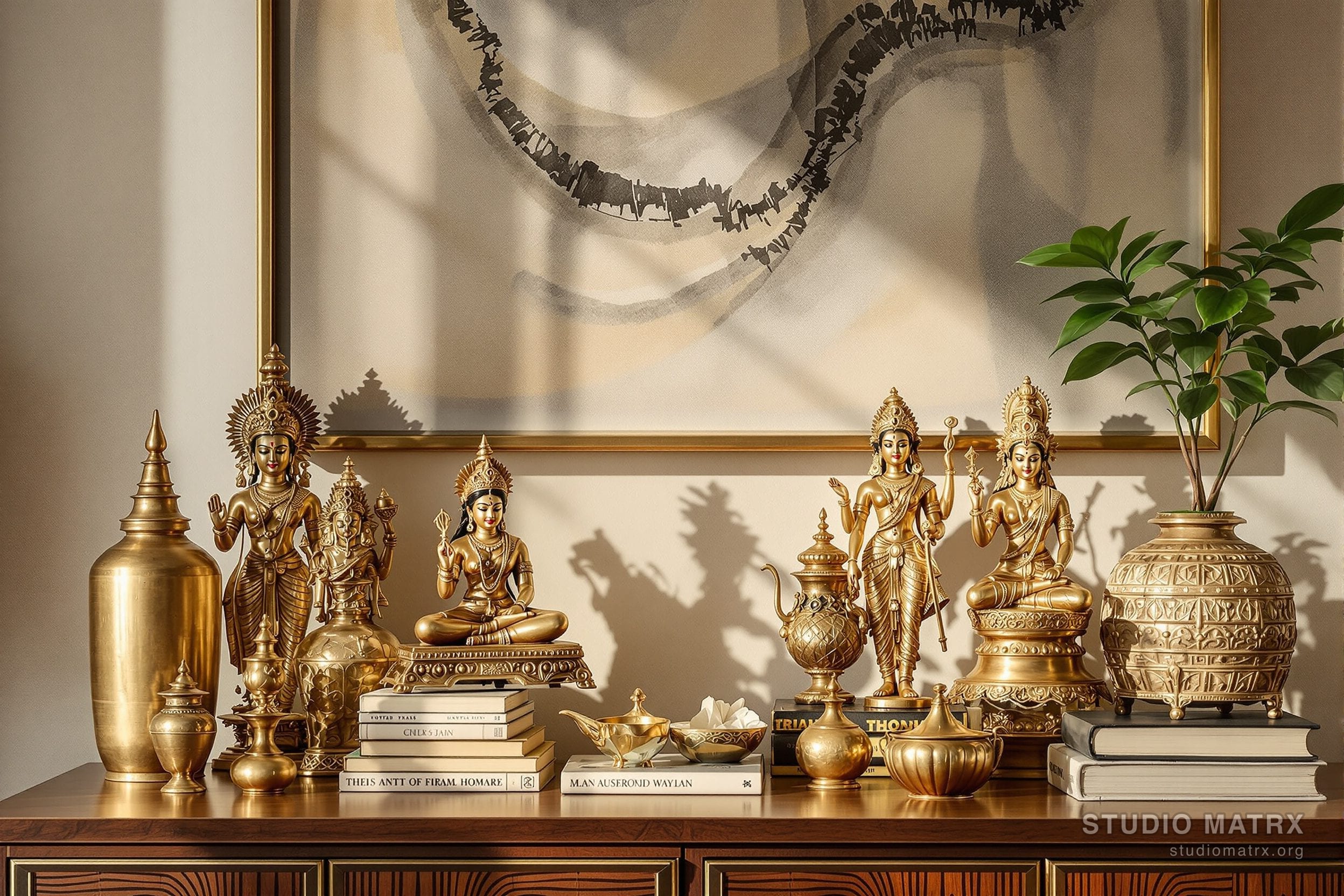
Vintage brass, colonial-era objects, old temple lamps and aged wooden pieces give a room instant depth and patina. But here you must be careful, because India regulates genuine antiques tightly. Under the Antiquities and Art Treasures Act, 1972, any object more than one hundred years old is treated as an antiquity: it cannot be freely exported, dealers must be licensed and registered with the Archaeological Survey of India, and genuine antiquities should be registered. This is not a formality to wave away. Buy only from reputable, registered dealers, insist on provenance and paperwork, and assume that any "300-year-old temple idol" sold casually at a roadside stall is either fake or illegal. For most homes the honest, legal pleasure is in vintage brass and well-aged pieces under the hundred-year line, which run from a few thousand rupees upward depending on quality.
How to choose objects that work together
A shelf full of beautiful things can still look like a jumble sale if the pieces have nothing in common. The trick is to give the collection one or two threads to hold it together. Palette is the easiest: decide whether the room reads warm (brass, terracotta, amber glass) or cool (crystal, silver, blue pottery, clear glass) and lean into one, letting only small accents cross over. The 60-30-10 logic that governs a room works in miniature on a tabletop too.
Material mix is the second thread. A vignette of all glass feels cold; all brass feels heavy; the magic is in the contrast of a few materials, say one piece of crystal, one of rough terracotta and one of dark Bidri metal, so the eye has texture to travel across. Scale is the third consideration and the one people most often get wrong: you need a clear hero piece, then supporting pieces that step down in size, never three things competing at the same height and importance.
Finally, restraint. The hardest discipline in decorating with objects is the edit. A few well-chosen, well-spaced pieces always read as more considered and more expensive than a crowded surface. Collect around a theme you genuinely love, whether that is hand-thrown ceramics, brass animals or coloured glass, and let the collection grow slowly. Resist the urge to display everything you own at once; rotate pieces seasonally and let some rest in the cupboard. A useful test before you place anything: ask whether it earns its spot, either by being beautiful, by being meaningful to you, or by doing a real job. If the answer is none of those, it belongs in storage, not on the shelf. The pieces you choose to leave out are as much a part of good styling as the ones you put on show.
The art of the vignette
A vignette is a small, deliberate grouping of objects on a surface, and learning to compose one is the single most useful styling skill you can develop. The foundation is the styling triangle: arrange your pieces so their high points form a triangle rather than a straight line, with the tallest object at the apex and the others stepping down on either side. This one move instantly makes a grouping look intentional instead of random.
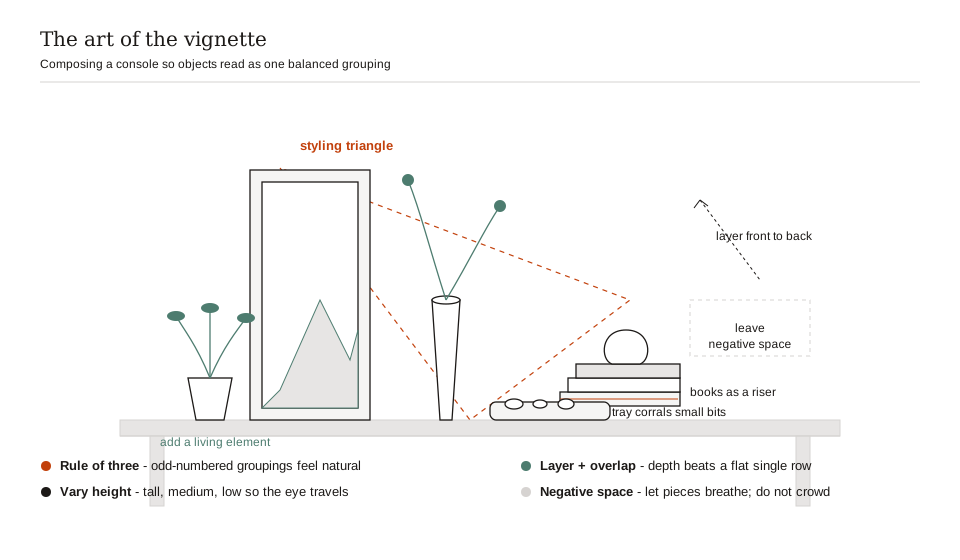
Build the grouping in layers from back to front: a taller anchor at the rear (a vase, a framed picture, a sculptural object), mid-height pieces in the middle, and something low and small in front, perhaps a little bowl or a stack of two books. Work in odd numbers, the classic rule of three, because odd groupings feel more dynamic and less static than pairs or fours. Vary height deliberately, and when an object is too short, lift it on a stack of hardback books used as a riser. Use a tray or a flat dish to corral smaller pieces into a single visual unit so they read as one composition rather than scattered clutter. And leave negative space; the empty surface around a vignette is what lets it breathe and gives the eye somewhere to rest.
Every flat surface is a stage. A console table in the entryway welcomes guests with a lamp, a tray for keys and one beautiful object. A coffee table wants a low, wide arrangement you can see across, often a tray with a small stack of books, a candle and a single sculptural piece. Open shelves come alive when you mix horizontal book stacks, vertical spines and objects placed in the gaps. A mantel or ledge loves a leaning frame anchored by objects of descending height. Match the scale of the vignette to its surface and never let objects crowd right to the edges. One quick check that designers use is to photograph the finished vignette on your phone, because the camera flattens it and shows you the silhouette the eye actually reads, exposing gaps, awkward gaps in height, or pieces that fight each other in a way that is hard to notice up close.
Display and lighting
Where you display objects matters as much as how you group them. Open shelves keep things casual, accessible and easy to restyle, which suits ceramics, books and brass. A glass-fronted curio cabinet, by contrast, protects delicate crystal and antiques from India's relentless dust while still showing them off, and is the better choice for valuable or fragile collections. For a bookshelf, think in zones: cluster objects and books into pleasing pockets across the shelves rather than spreading one item per slot, and stagger the heights so your eye moves diagonally across the unit.
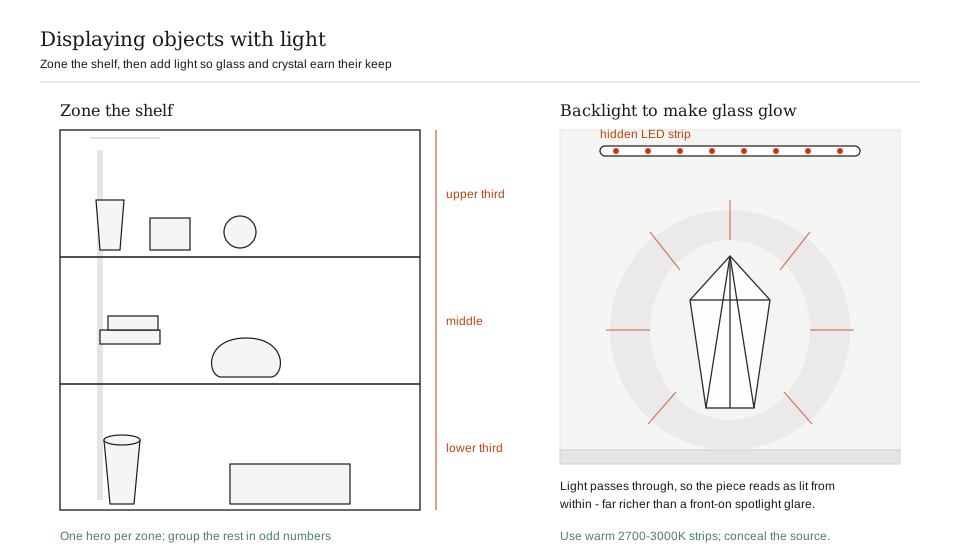
Lighting is what separates a display from a collection. Crystal and glass were made to be lit, so backlight them: a strip of warm LED behind or beneath a glass shelf turns clear objects into glowing jewels, and a small puck or picture light angled across a faceted crystal sets it sparkling. Battery-powered puck lights stuck inside a cabinet are an easy, wireless upgrade. Reflective surfaces multiply the effect: place glass and crystal in front of a mirror or against a glossy back panel and the light bounces, making a modest collection feel abundant. Keep the light warm (2700K to 3000K) so brass and wood glow rather than going flat and clinical under cold white.
What decorative objects cost in 2026
Prices vary enormously with maker, material and provenance, but these bands give a realistic 2026 picture for Indian homeowners. As a rule, GI-tagged handmade craft costs more than mass-produced lookalikes and is worth it, both for quality and for the artisan.
| Object type | Typical price band (₹) | Handmade/craft vs mass | Where to buy (Indian hubs/GI) |
|---|---|---|---|
| Crystal art pieces | 1,500 to 1,00,000+ | Imported branded vs unbranded lead crystal | Lifestyle stores, brand boutiques (Swarovski, Baccarat) |
| Glass art objects | 400 to 8,000 | Studio hand-blown vs factory glass | Firozabad (GI), studio glass makers, craft fairs |
| Handcrafted artefacts | 500 to 50,000 | GI craft cooperative vs decor-store repro | Moradabad brass, Agra inlay, Bidar (Bidri GI), Jaipur blue pottery |
| Ceramic figurines | 300 to 20,000 | Studio ceramic vs mass terracotta | Khurja, Jaipur, studio potters, Dastkar melas |
| Tribal artifacts | 600 to 25,000 | Genuine artisan vs cast reproduction | Dastkar, Crafts Council of India, state emporia, Bastar |
| Antique collectibles | 3,000 to several lakh | Provenanced antique vs distressed new | Registered antique dealers only (ASI-licensed) |
| Vintage brass (under 100 yrs) | 2,000 to 30,000 | Genuine old vs artificially aged | Reputable vintage dealers, curated flea markets |
Authenticity, ethics and care
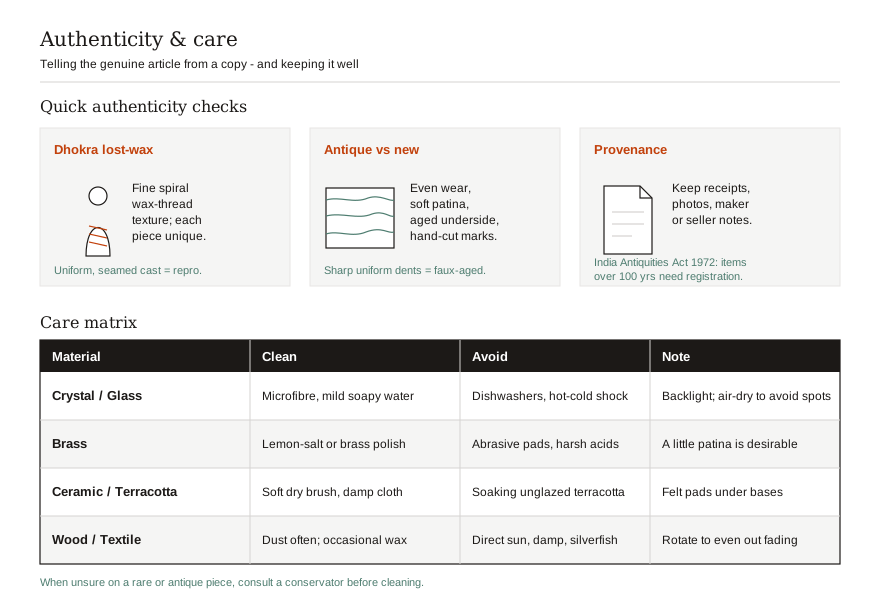
Two skills protect both your money and your conscience: knowing what is genuine, and treating makers fairly. To spot real Dhokra, look for the fine, slightly irregular raised threadwork and the small imperfections of lost-wax casting; mass repros are smooth, uniform and seamless because they are sand-cast from a mould. With antiques, real age shows as uneven wear, genuine patina in the recesses where hands do not reach, and honest repairs, whereas distressed new pieces wear evenly and too conveniently. And remember the law: under the Antiquities and Art Treasures Act, 1972, true antiquities over one hundred years old are regulated by the Archaeological Survey of India, cannot be freely exported, and must be bought from registered dealers with provenance. When in doubt, walk away.
Ethics is the other half. Buying craft through Dastkar, the Crafts Council of India, GI-certified sellers and registered cooperatives means a fair share of the price reaches the artisan and the tradition survives. Look for the GI tag on Bidriware, blue pottery, Channapatna toys and Firozabad glass as a mark of both authenticity and origin.
Care is material by material. Crystal and glass want only mild soapy water, a soft cloth and a thorough dry; never put fine crystal in a dishwasher, and dust it regularly so the sparkle does not dull. Brass tarnishes in our humid air, so either embrace the patina, polish it occasionally with a gentle brass cleaner or lemon-and-salt, or buy lacquered brass that needs only dusting. Ceramic and terracotta chip easily, so handle by the body not the rim, and seal raw terracotta with a clear sealant if it will sit in a damp bathroom or balcony. Wood needs occasional waxing and a spot away from direct sun, which fades and cracks it. Textiles and any organic tribal materials should be kept dry and aired. Above all, respect the monsoon: damp invites tarnish on brass, mould on wood and textiles, and a film on glass, so a glass-fronted cabinet, silica gel sachets and good ventilation are your collection's best friends from June to September.
Common mistakes
- Over-cluttering surfaces so nothing stands out; a crowded shelf reads as mess, not abundance.
- Lining everything up at the same height instead of building a triangle with varied levels.
- Skipping the edit; failing to curate and rotate means good pieces drown among ordinary ones.
- Buying unprovenanced "antiques" that are either fakes or illegal under the 1972 Act.
- Ignoring scale, so tiny objects vanish on a large console or a big piece overwhelms a small ledge.
- Using harsh cleaners or abrasive pads on crystal and brass, which scratch facets and strip patina.
Related reading
- Sculptures & Art Objects: How to Choose, Place & Style Them
- Wall Art & Paintings: How to Choose, Place & Combine Art
- Architectural Decorative Elements
- The 60-30-10 Rule for Interiors
- Living Room Design (India)
- Colour Palette Generator
References
1. Victoria and Albert Museum, "Bidri Ware" and South Asian metalwork collections, vam.ac.uk.
2. The Metropolitan Museum of Art, "Decorative Arts of India" and Indian metalwork collection notes, metmuseum.org.
3. Geographical Indications Registry, Government of India, registered crafts including Bidriware, Jaipur Blue Pottery, Channapatna Toys and Firozabad Glassware, ipindia.gov.in.
4. Archaeological Survey of India and the Antiquities and Art Treasures Act, 1972, Ministry of Culture, Government of India, asi.nic.in.
5. Crafts Council of India, profiles of Indian craft traditions and artisan cooperatives, craftscouncilofindia.in.
6. Dastkar, Society for Crafts and Craftspeople, on fair-trade craft sourcing, dastkar.org.
7. Encyclopaedia Britannica, "Pietra dura" (parchin kari) and "Murano glass" entries, britannica.com.
8. Development Commissioner (Handicrafts), Ministry of Textiles, Government of India, on Geographical Indication crafts, handicrafts.nic.in.
This guide refreshes every 12 months. Last verified: June 2026 · Next verify: June 2027.
Export this guide
Related Guides — Deep-dive reading
2026 Interior Decor Trends in Indian Homes — Ten Ideas Shaping the Year
From large statement artwork and handmade Indian crafts to sculptural lighting, indoor greenery and quiet, sustainable styling — the ten decoration trends defining how Indian homes look and feel in 2026, and how to bring each one home.
Design StylesCultural & Heritage Decor for Indian Homes — A 2026 Guide
Brass lamps, urli, Bidriware, Channapatna & more · Real craft that roots a modern home
Design StylesDecorative Mirrors — A 2026 Guide for Indian Homes
Space, light and a focal point in one move · Full-height to Venetian · Where to place them and why
Design StylesRelated Tools — Try Free
Cross-Ventilation Analyzer
Estimate airflow and air changes per hour (ACH) from room size, window areas, layout, and local wind — with NBC 2016 Part 8 compliance check.
Ventilation CalculatorWindow Orientation Planner
Pick the best window type, glass and shading by wall direction — north, east, south and west.
Window ToolFalse Ceiling Cost Estimator
Live ₹/sqft across 8 ceiling types — POP, gypsum, designer, metal, PVC, wooden — with cove and spot lighting for 20 Indian cities.
Cost Calculator