
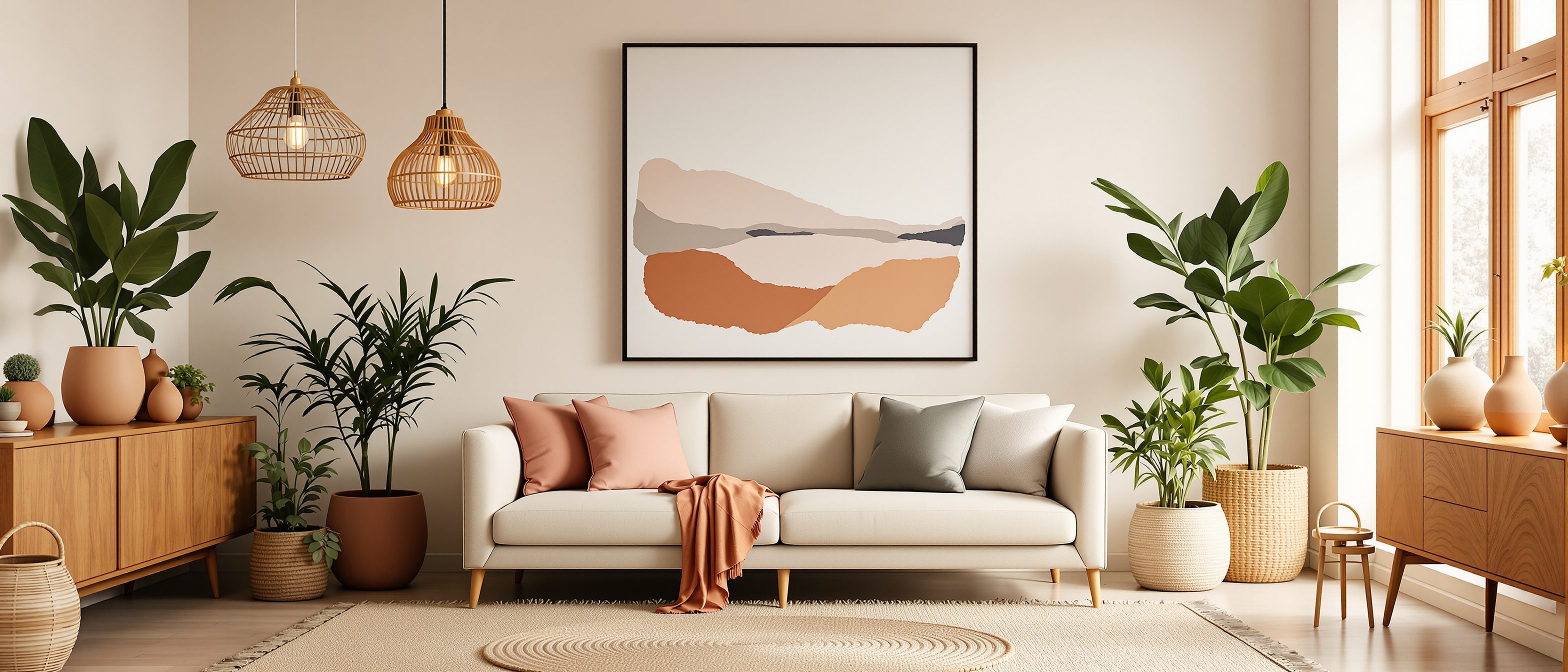
2026 Interior Decor Trends in Indian Homes — Ten Ideas Shaping the Year
From large statement artwork and handmade Indian crafts to sculptural lighting, indoor greenery and quiet, sustainable styling — the ten decoration trends defining how Indian homes look and feel in 2026, and how to bring each one home.
The year Indian homes got personal
For a long stretch, the aspirational Indian home looked like a showroom: high-gloss laminates, mirror-finish marble, a chandelier doing all the talking, and a sofa set that matched a curtain that matched a cushion. It photographed well and felt like nobody in particular lived there. 2026 is the year that quietly ends. The mood now is warmth over shine, craft over catalogue, individuality over imitation — what the design world has been calling "quiet luxury," but which in an Indian context means something older and truer: a home that carries the hand of its maker and the memory of its owner.
Three forces are pushing this shift. First, a generation that travelled, scrolled and saw the world is tired of sameness and wants rooms that say something about them. Second, a real reckoning with sustainability — fewer disposable purchases, more pieces meant to age and be inherited. And third, a homegrown rediscovery: the realisation that the most coveted "global" looks — wabi-sabi imperfection, handmade ceramics, natural fibres, artisanal lighting — are things Indian craft has done brilliantly for centuries. Channapatna, Dhokra, Kota stone and khadi were "slow design" long before the phrase existed.
So the ten trends below are less about buying new things and more about choosing differently — fewer, better, more personal. None of them require a renovation. Most live in the last 10% of a room — the accessories, the art, the lighting — which, as any decorator will tell you, is exactly where a space stops looking furnished and starts looking inhabited. If you take one idea from this guide, take that: in 2026, the styling layer is where the soul of the home now lives.
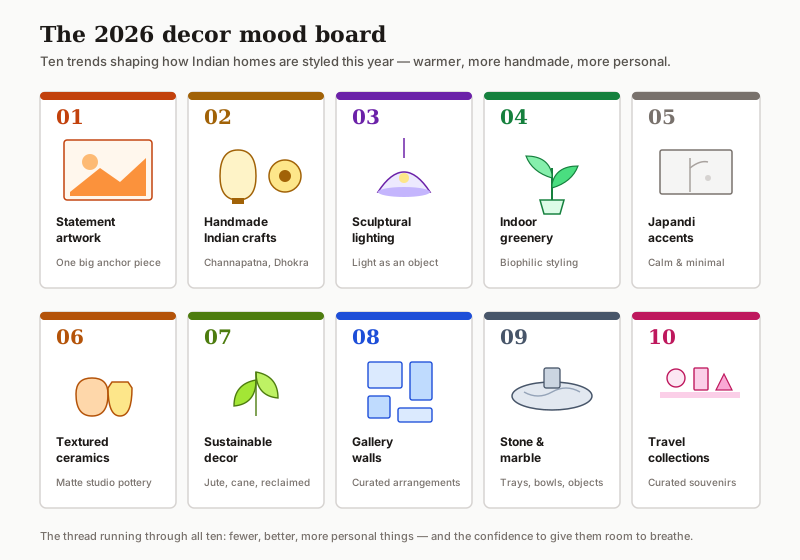
The ten trends at a glance
| Trend | What it is | How to start (₹ range) | Best for |
|---|---|---|---|
| Large statement artwork | One big piece that anchors a wall | ₹3,000 canvas print – ₹50,000+ original | Bare walls above sofas/beds |
| Handmade Indian crafts | Channapatna, Dhokra, blue pottery, brass, handloom | ₹500 – ₹8,000 a piece | Adding warmth and story cheaply |
| Sculptural lighting | Pendants/lamps treated as art | ₹2,000 paper/rattan – ₹25,000 designer | Dining, corners, entryways |
| Indoor greenery | Plants + considered planters | ₹300 plant – ₹6,000 styled corner | Softening any room, renters |
| Japandi accessories | Muted, natural, imperfect, calm | ₹1,500 – ₹15,000 to style a vignette | Minimal, calm-seekers |
| Textured ceramics | Handmade stoneware, matte glazes | ₹800 – ₹6,000 a vessel | Shelves, tables, sideboards |
| Sustainable decor | Reclaimed, jute/cane/cotton, upcycled | ₹600 jute rug runner – ₹20,000 reclaimed piece | Eco-minded, characterful homes |
| Gallery walls | Curated multi-frame arrangements | ₹2,000 – ₹15,000 for a wall | Hallways, staircases, large walls |
| Stone & marble accessories | Trays, bowls, travertine objects | ₹800 coaster set – ₹8,000 marble tray | Quiet luxury accents |
| Curated travel collections | Souvenirs displayed with intent | ₹0 (you own them) – ₹3,000 shelving | Storytellers, frequent travellers |
1. Large statement artwork
The single fastest way to make a room look considered in 2026 is to stop hanging small, timid frames and commit to one large piece. A generous artwork above the sofa or bed does the work of ten knick-knacks: it sets a colour story, draws the eye, and signals confidence. The "gallery of postage stamps" — five tiny frames marooned on a vast wall — is firmly out.
How to do it in an Indian home
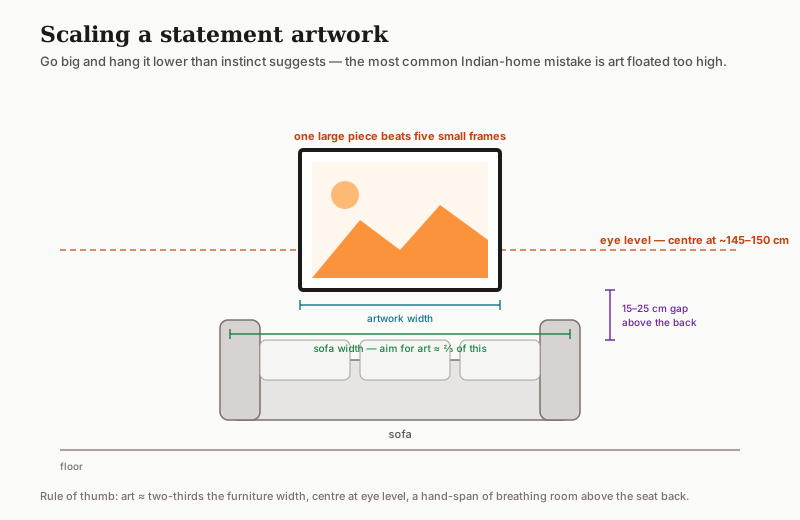
Scale is everything. The artwork (or the cluster acting as one) should span roughly two-thirds the width of the furniture beneath it. Hang it so the centre sits at eye level — about 145–150 cm from the floor — and leave 15–25 cm of breathing room above the sofa back. In Indian homes with tall, often double-height walls, go bigger than instinct suggests; a piece that feels "too large" in the shop is usually right at home.
Where to source and budget
You do not need an original to make an impact. A large-format canvas or framed giclée print runs ₹3,000–₹8,000. Original works from emerging artists at city art fairs, college degree shows and online Indian art platforms start around ₹8,000–₹15,000 and climb from there. For something rooted, consider a large Pichwai, Gond or Madhubani work, or a single oversized black-and-white photograph of a place you love. The mistake to avoid is hanging it too high — the most common error in Indian homes by a mile. Best for: anyone staring at a blank wall above a sofa, bed or console.
2. Handmade Indian crafts
If 2026 has a heart, this is it. After years of importing the "handmade" aesthetic, Indian homes are turning to the extraordinary craft traditions on their own doorstep. A Channapatna toy elephant in lacquered wood, a Dhokra figurine in lost-wax brass, a cluster of Jaipur blue pottery vases, a Pattachitra scroll, a Madhubani-painted tray — each carries a region, a community and a technique that no factory can fake.
Handmade is not a style you buy; it is a maker you support. Each imperfect piece is a small act of patronage.
A sourcing guide
| Craft | Region | What to buy | Approx ₹ |
|---|---|---|---|
| Channapatna | Karnataka | Lacquered toys, bowls, candle stands | ₹400 – ₹3,000 |
| Dhokra | Chhattisgarh / Odisha / WB | Brass figurines, lamps, tribal motifs | ₹800 – ₹6,000 |
| Blue pottery | Jaipur, Rajasthan | Vases, coasters, tiles, knobs | ₹500 – ₹4,000 |
| Pattachitra | Odisha / West Bengal | Painted scrolls, coasters, boxes | ₹600 – ₹8,000 |
| Madhubani | Bihar | Framed art, painted trays, fabric | ₹500 – ₹7,000 |
| Brass & bidri | UP / Karnataka (Bidar) | Urli bowls, diyas, inlay boxes | ₹600 – ₹8,000 |
| Terracotta | Bengal / TN / Gujarat | Planters, murals, horses, vessels | ₹300 – ₹5,000 |
| Handloom | Pan-India | Cushion covers, throws, runners | ₹500 – ₹4,000 |
Source from state emporia (the Cottage Industries network, state-run craft stores), GI-tagged cooperatives, craft fairs like the seasonal melas, and reputable online artisan marketplaces. Mistake to avoid: over-matching. One or two well-placed craft objects read as collected; a roomful reads as a souvenir shop. Best for: every home — this is the most budget-friendly way to add warmth and story.
3. Sculptural lighting
Lighting in 2026 has been promoted from utility to sculpture. The bare-bulb-and-false-ceiling era is giving way to fixtures that are objects of beauty even when switched off — oversized paper lanterns, rattan and cane pendants, hand-beaten metal domes, and lamps with forms borrowed from pottery and stone.
How to do it
Treat one fixture per room as the "hero" and keep the rest quiet. A large paper or rattan pendant over the dining table, a sculptural floor lamp arcing over a reading chair, or a pair of ceramic-base table lamps flanking a console will each carry a space. Pendants over a dining table should hang roughly 75–85 cm above the table surface. Layer warm light (2700–3000K) rather than the cold white still defaulting in many Indian homes — warmth is the whole point.
Paper and rattan pendants start at ₹2,000–₹5,000; hand-spun metal and designer ceramic pieces run ₹8,000–₹25,000. Cane and bamboo work from Northeast and South Indian artisans is both gorgeous and affordable. Best for: dining areas, entryways and dim corners that need a focal point. Mistake to avoid: mixing three competing statement fixtures in one sightline.
4. Indoor greenery
Plants have gone from afterthought to design protagonist — and not just any plants, but the way they are styled. Biophilic decorating, the idea that we are calmer and healthier around nature, is mainstream now, and Indian homes (with their balconies, light and gardening instinct) are perfectly placed for it.
Doing it well in the Indian climate
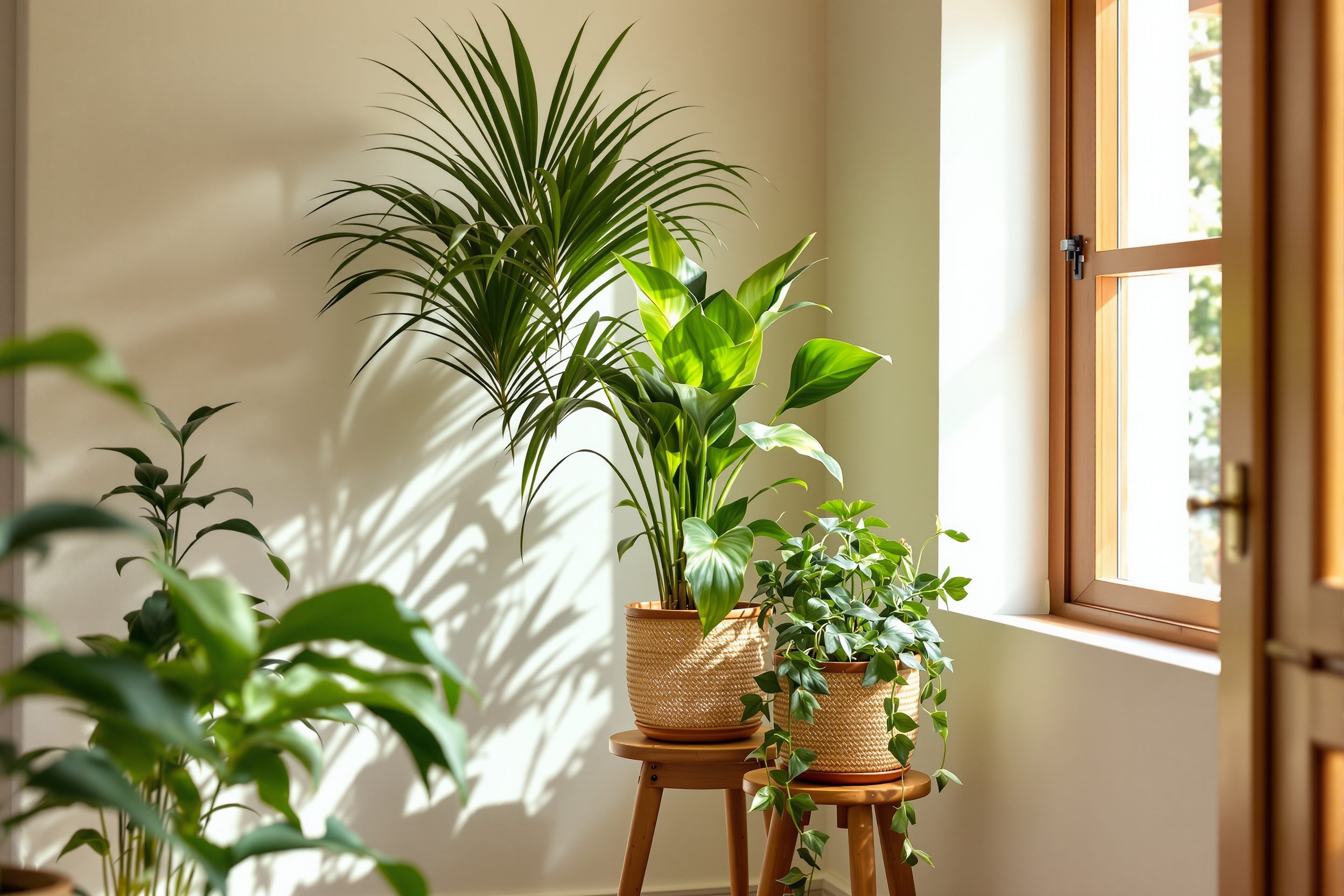
The trick is composition: cluster three plants of varying heights rather than dotting single pots around. Use a tall floor plant, a mid-height table plant and a trailer to create a "green corner." For our climate and busy lives, the reliable performers are the snake plant (sansevieria), money plant (pothos), areca palm, rubber plant, ZZ plant, philodendron and the ever-forgiving spider plant. For low-light flats, snake and ZZ plants thrive on neglect.
The planters matter as much as the plant. Terracotta (breathable and beautifully Indian), handmade ceramic, and cane or jute baskets all read warm and current; glossy plastic does not. A styled green corner — three plants in considered planters plus a plant stand or stool — comes together for ₹2,000–₹6,000. For a bigger statement, a vertical garden or a tiered plant stand turns a balcony wall into a feature. Best for: renters and small homes — greenery softens and personalises without a single nail in a load-bearing wall.
5. Japandi-inspired accessories
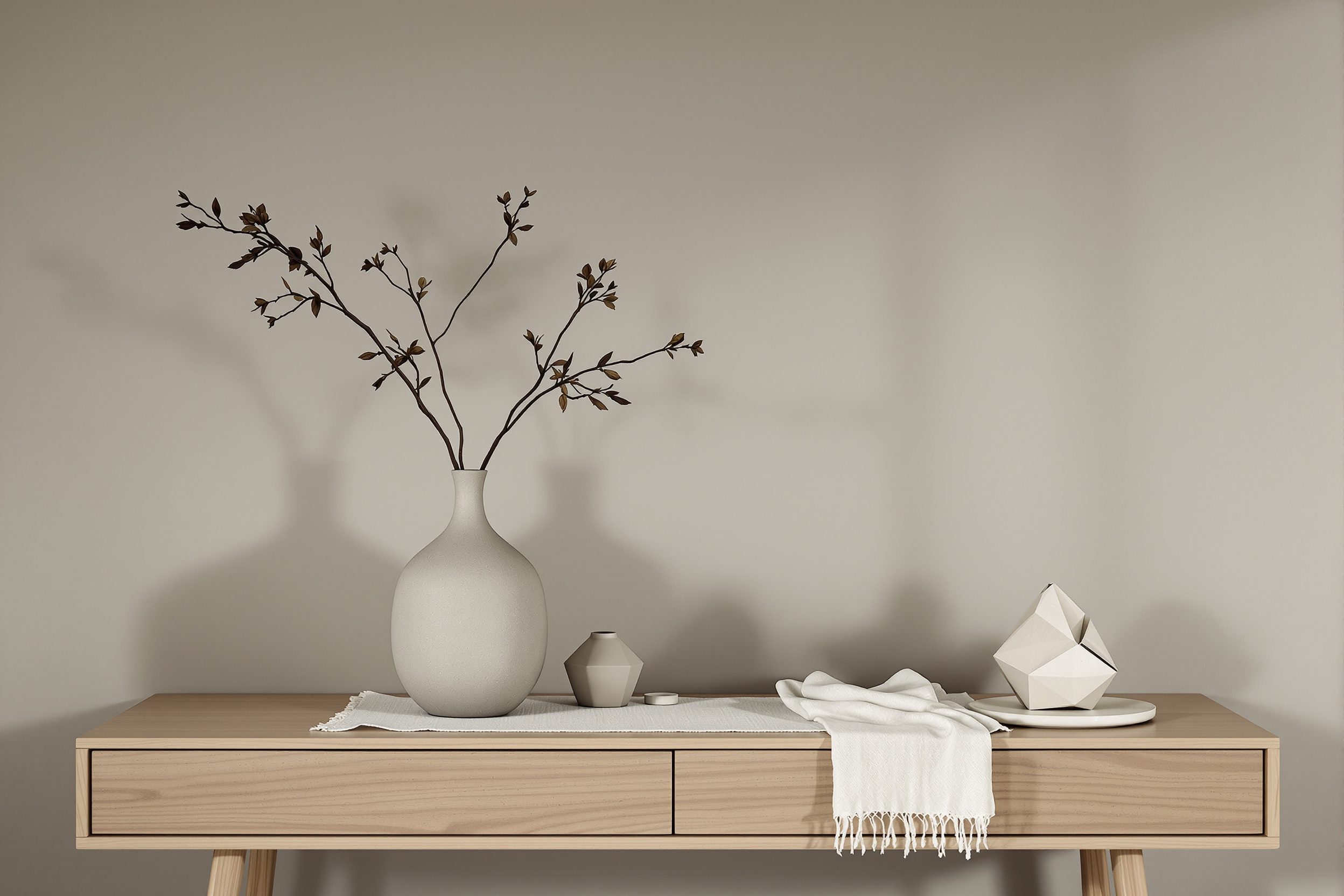
Japandi — the marriage of Japanese minimalism and Scandinavian warmth — has matured from a buzzword into a durable sensibility, and it suits the Indian appetite for calm amid chaos. Its language is muted colours (greige, clay, charcoal, oatmeal), natural materials (wood, linen, paper, stone), clean low forms, and ma — the beauty of empty space — softened by wabi-sabi, the embrace of the imperfect and weathered.
How to bring it home
You do not need to gut your house. Japandi lives in the accessories: a single dried branch in a stoneware vase, a low wooden tray, a paper lamp, a linen runner, an undyed cotton throw. The discipline is subtraction — for every new object, remove two. Keep the palette tight and let texture, not colour, do the work. Our own crafts fit beautifully here: an undyed khadi throw, a rough terracotta pot, an unlacquered wooden bowl are pure Japandi in spirit.
Styling a Japandi vignette costs little — ₹1,500–₹4,000 for a vase, a runner and a candle holder. The investment is restraint, not rupees. A muted, harmonious base makes this effortless; you can dial in a calm scheme with our colour palette generator. Best for: people who crave a quiet, uncluttered home and find maximalism exhausting.
6. Textured ceramics
Smooth, factory-perfect, glossy white ceramics are giving way to their opposite: handmade stoneware with matte glazes, visible throwing rings, organic lips and gently irregular forms. The appeal is tactile and honest — you can feel the maker's hand. Studio pottery is having a genuine moment, and India's ceramic studios, from Pondicherry to the Himalayas to the metros, are producing beautiful, characterful work.
How to use it
Group ceramics in odd numbers and varying heights — a tall bottle vase, a squat bowl, a small cup — in a tonal family (earthy browns, off-whites, slate blues). They look best against plain surfaces: a wooden sideboard, a marble ledge, an open shelf. A single matte-glazed urli or bowl as a table centrepiece, perhaps floating a few flowers or tealights, is quietly luxurious.
Studio ceramics run ₹800–₹2,500 for small pieces and ₹3,000–₹6,000 for statement vessels — more than mass-market, but each is one of a kind and built to last. Buy directly from ceramic studios, craft pop-ups and design markets. Mistake to avoid: mixing too many glaze finishes and colours — keep a vignette tonal. Best for: shelves, dining tables and anyone who loves objects you want to hold.
7. Sustainable decor
Sustainability has shifted from a virtue to a value — homeowners increasingly want decor with a clear conscience and a longer life. That means reclaimed and upcycled wood, natural fibres like jute, cane, seagrass and undyed cotton, vintage and second-hand finds, and low-VOC, water-based finishes that do not off-gas into the room.
The greenest object in your home is the one you already own — or the one a local artisan made to last a lifetime.
How to do it sensibly
Start with fibres: a jute or cotton dhurrie, a cane chair, a seagrass basket for storage — all gorgeous, affordable and biodegradable. A jute runner starts at ₹600; a handwoven cotton dhurrie ₹1,500–₹5,000. Then look at reclaimed wood — old teak from dismantled doors and beams reborn as a console or bench, often for less than new "designer" furniture and infinitely more characterful (₹8,000–₹20,000 for a reclaimed piece). Choose vintage and antique markets over fast decor; buy fewer, better things. When you do paint or finish, ask for low-VOC, water-based products.
The deeper win is buying from local artisans and cooperatives, which keeps money in craft communities and cuts transport footprint. Best for: the eco-minded, and anyone who finds mass-produced decor soulless. Mistake to avoid: "greenwashed" trendy buys you will discard next year — true sustainability is restraint and longevity.
8. Gallery walls
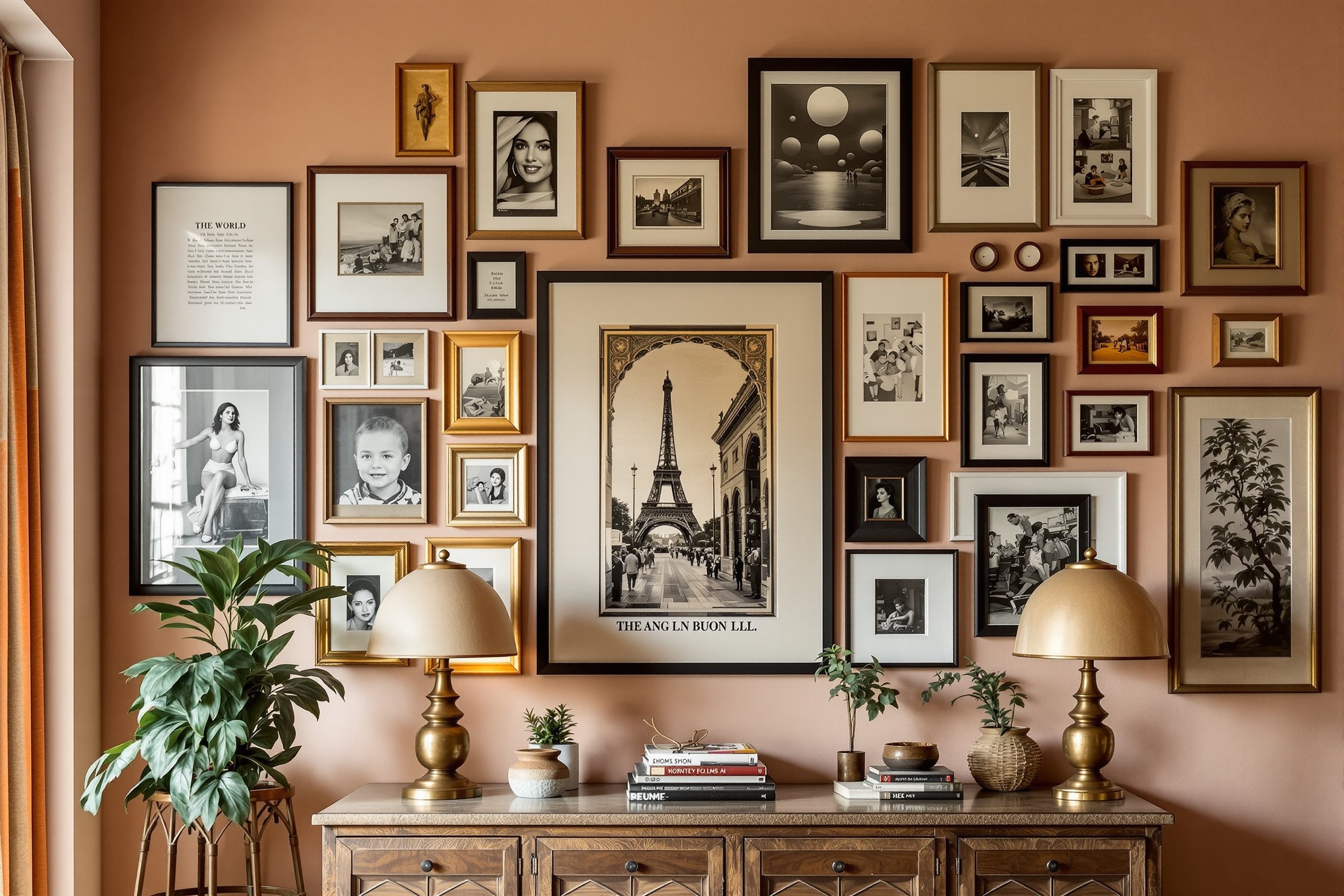
The gallery wall is back, but smarter — less random Pinterest chaos, more curated composition. Done well, it turns a dead wall, a staircase or a hallway into the most personal surface in the house: a mix of framed art, photographs, mirrors, plates, textiles and small objects, arranged with intent.
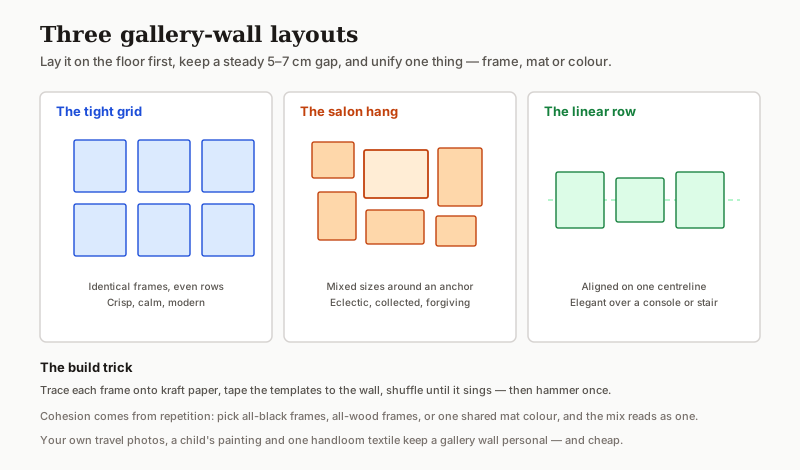
Three layouts that work
- The tight grid — identical frames in even rows and columns; crisp, calm, modern. Ideal for a series of prints or photographs.
- The salon hang — frames of varying sizes massed densely around a central anchor; eclectic, collected, forgiving. The classic.
- The linear row — frames aligned along a single baseline or centreline; elegant above a console or along a staircase.
How to actually build one
Lay everything on the floor first and arrange until it sings — then trace each frame onto kraft paper, tape the templates to the wall, and only then hammer. Keep a consistent 5–7 cm gap between frames so the group reads as one composition. For cohesion, unify something: all-black frames, all-wood frames, or a single mat colour. Mixing your own travel photographs, children's art, a small handloom textile and one or two bought prints keeps it personal and affordable — a full wall can come together for ₹2,000–₹8,000 if you frame thoughtfully. Browse arrangements in our living-room design ideas and pair a gallery wall with wall-panelling ideas for a richer backdrop. Best for: hallways, staircases and big blank walls; storytellers who own a lot of memories.
9. Stone and marble accessories
Quiet luxury speaks in stone. Rather than wrapping a whole floor in marble (expensive, and increasingly seen as overdone), 2026 brings stone in as accessories — a marble tray on the coffee table, a travertine bowl, a stone soap dish, marble coasters, a chunky onyx candle holder. Small, heavy, cool to the touch and effortlessly elevated.
Indian stone, used cleverly
India is a stone treasure-house, and using our own is both cheaper and more characterful than imports. Honey-toned Jaisalmer, the warm grey-green of Kota, classic Makrana white marble, dramatic black Kadappa — local stone yards and craftsmen will cut and finish small objects to order, often for a fraction of "designer" pricing. A marble or stone tray runs ₹1,500–₹4,000; coaster sets ₹800–₹2,000; a travertine or marble bowl ₹2,000–₹6,000.
Style stone against softer textures — a cool marble tray on a rough jute mat, a stone bowl beside a linen runner — so the contrast reads. Mistake to avoid: going all-marble-everything, which tips from luxurious into cold and showroom-like. One or two stone moments per room is plenty. Best for: coffee tables, bathrooms and bar carts; lovers of understated, tactile luxury.
10. Curated travel collections
The most personal trend of all: displaying the objects you have gathered from travels — but as a curated collection, not clutter. The brass bell from a hill temple, the ceramic tile from a coastal trip, the textile from a craft village, the carved box from a bazaar — these tell your story in a way nothing bought in a single shop ever can.
Curate, don't accumulate
The difference between a collection and clutter is editing and grouping. Corral related objects together — by material, colour, origin or theme — rather than scattering them across the house. A single shelf, a tray, a glass-front cabinet or a dedicated console becomes a "memory station." Give each object space to breathe; negative space is what separates a styled vignette from a dusty mantelpiece. Rotate the display seasonally so it stays alive, and let a few pieces be large enough to anchor.
This trend costs nothing but thought — you already own the objects. A small shelf or tray to stage them is ₹500–₹3,000. Mistake to avoid: displaying everything at once; a tightly edited group of five beats a crowded shelf of twenty. Best for: frequent travellers and anyone who wants a home that could belong to no one else.
Putting it together
Notice what unites all ten: restraint and curation. Not one of these trends is about buying more — they are about choosing fewer, better, more personal things and giving them room to be seen. The handmade bowl, the single large artwork, the one sculptural lamp, the edited travel shelf — each works because it is not competing with twenty other objects for attention.
Decorate like an editor, not a collector: the empty space around an object is what makes it look chosen.
This is why the accessory layer is so powerful, and why it pays to be disciplined about it. A useful rule of thumb is the classic decorating ratio — roughly 60% of a room in a dominant tone, 30% in a secondary, and just 10% in accent: your art, ceramics, cushions and metals. That final 10% is exactly where these ten trends live. Spend your effort and your individuality there, and read the 60-30-10 rule to keep the whole composition balanced. For more room-by-room inspiration, explore our Design Ideas library and the wider collection of our guides.
Decorating for a festival? Browse our Decoration Ideas gallery — Diwali, rangoli, festive pooja, Christmas and home-wedding scenes you can recolour across five festive themes in a single tap, then download the look you love.
The Indian home of 2026 is not the glossiest one on the street. It is the warmest, the most personal, the one that makes a guest pause and say, "tell me about this." That is the whole point.
References & further reading
- Indian craft councils and GI (Geographical Indication) registries documenting traditions such as Channapatna, Dhokra, blue pottery, Pattachitra and Madhubani, and the communities behind them.
- State handicraft and handloom emporia and cooperative networks, useful for authentic sourcing and fair-trade provenance.
- Established interior-design principle texts on scale, proportion, composition and the placement of art and accessories.
- Indian and international design and architecture publications and their annual trend forecasting on materials, colour and styling.
- Biophilic-design research and horticultural guidance on indoor plants suited to Indian light and climate conditions.
- Sustainable-design and slow-craft resources on natural fibres, reclaimed materials and low-VOC finishes.
Export this guide
Related Guides — Deep-dive reading
Earthy Interior Palette — A 2026 Style Guide for Indian Homes
Rooted · Regional · Biophilic · Indian craft-anchored
Design StylesLuxury & Statement Lighting: Drama, Sculpture & Scale (2026)
How to design lighting that actually feels luxurious in an Indian home — layered scenes, deep shadow-and-highlight contrast, hidden sources and premium materials — and how to place one sculptural statement fixture as the jewel of a room without over-lighting the whole thing.
LightingWarm Minimal Interiors — A 2026 Style Guide for Indian Homes
Restraint with warmth · Oat & oak & linen · Curated negative space
Design StylesRelated Tools — Try Free
False Ceiling Cost Estimator
Live ₹/sqft across 8 ceiling types — POP, gypsum, designer, metal, PVC, wooden — with cove and spot lighting for 20 Indian cities.
Cost CalculatorApartment Furniture Size Chart
Standard furniture dimensions for Indian apartments — sofas, beds, tables, dining, storage.
Reference ChartCross-Ventilation Analyzer
Estimate airflow and air changes per hour (ACH) from room size, window areas, layout, and local wind — with NBC 2016 Part 8 compliance check.
Ventilation Calculator