
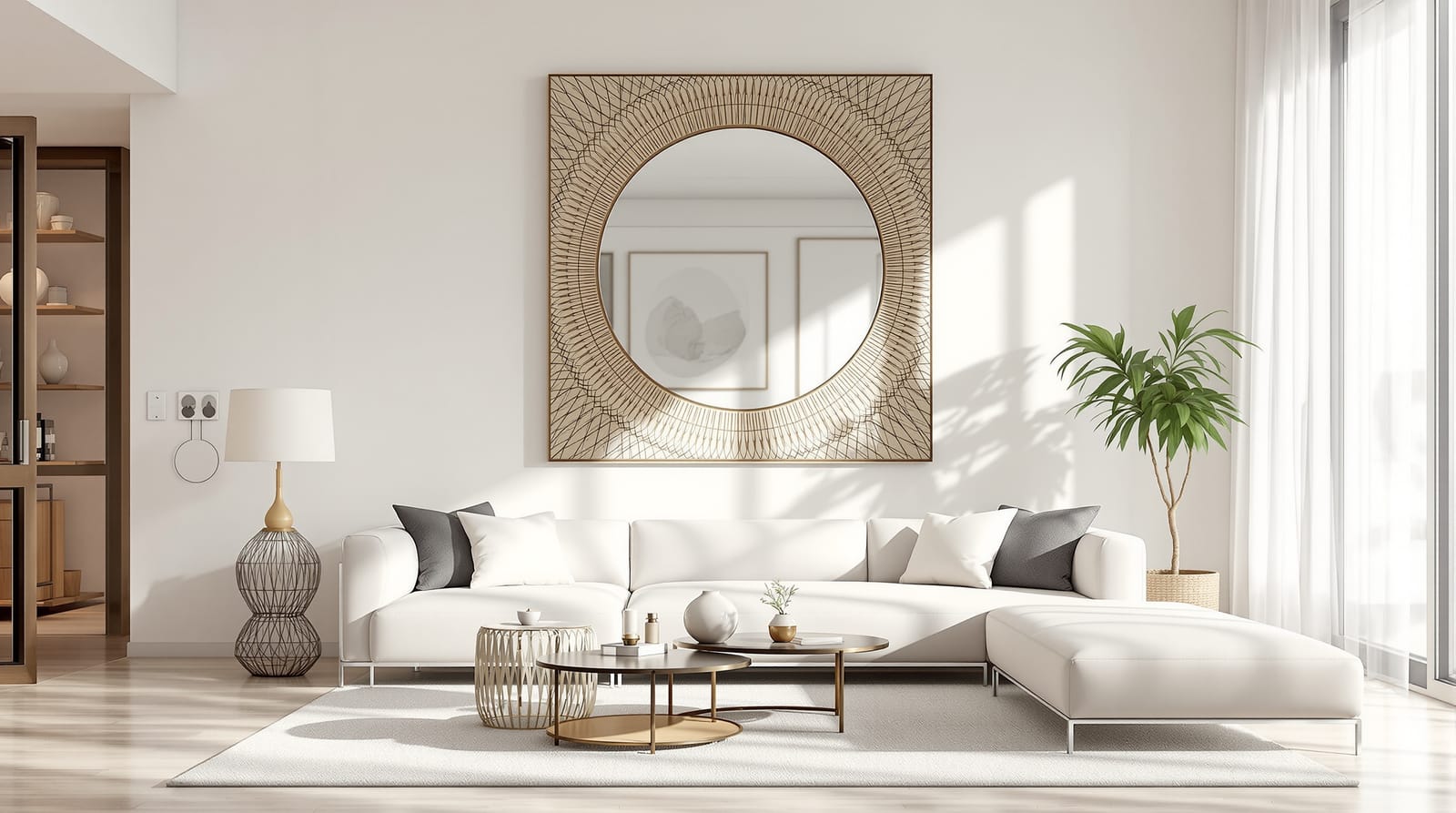
Decorative Mirrors — A 2026 Guide for Indian Homes
Space, light and a focal point in one move · Full-height to Venetian · Where to place them and why
A decorative mirror is the single highest-impact, best-value decor move you can make in an Indian home in 2026. For the price of one good cushion-and-throw refresh, the right mirror can make a 600 sq ft flat feel like 800, pull daylight into a north-facing room that never gets sun, and hand a bare wall an instant focal point. It needs no civil work, no electrician, and no wet-mess renovation — just a wall plug, a hook, and a good eye for placement. Few other objects do so much with so little.
In dense Indian cities — where the average new apartment keeps shrinking, where balconies get glazed in, and where one shared wall often blocks a room's only window — a mirror is not a vanity object. It is a spatial and lighting tool that happens to be beautiful. This guide covers the seven decorative mirror types worth knowing, exactly where to hang them, a non-dogmatic Vastu note, real Indian price bands, and where to buy. Pair it with Indoor Plants and Decorative Lighting and you have a complete, renovation-free room glow-up.
Why Mirrors Work — Three Superpowers
A mirror does three jobs at once, and understanding them is what separates a thoughtful placement from a mirror that just hangs there.
Increase perceived space
A mirror reads as a window your brain hasn't seen before — it implies depth and a room beyond the wall. In a compact 1BHK or 2BHK, a large mirror on the longest wall visually doubles the floor it reflects, so a tight living-cum-dining feels open rather than boxed in. The effect is strongest when the mirror reflects the room itself receding into distance (a corridor, a diagonal across the room) rather than a flat wall a metre away. For homes where every square foot is paid for at city rates, this is free area you can see but not lose.
Reflect and multiply natural light
India has harsh, abundant light outdoors and surprisingly dim interiors — deep balconies, sun-shading chajjas, and shared walls all cut daylight before it reaches the room. A mirror placed opposite or adjacent to a window catches that daylight and throws it back across the room, brightening corners that no lamp reaches at 4 pm. The same trick works after dark: position a mirror to catch a pendant or wall sconce and the room reads warmer and larger. This single move can drop your reliance on switching on lights during the day.
Create a focal point
Every well-designed room needs one thing the eye lands on first. A sunburst over a console, a tall arched mirror behind a sofa, or a carved teak frame above a sideboard gives a plain Indian living room — often dominated by a TV and a sofa set — a piece of intentional, sculptural drama. The mirror becomes the art, and unlike a painting it earns its place twice: as the object and as the reflection it frames.
The Seven Decorative Mirror Types
Full-height mirrors
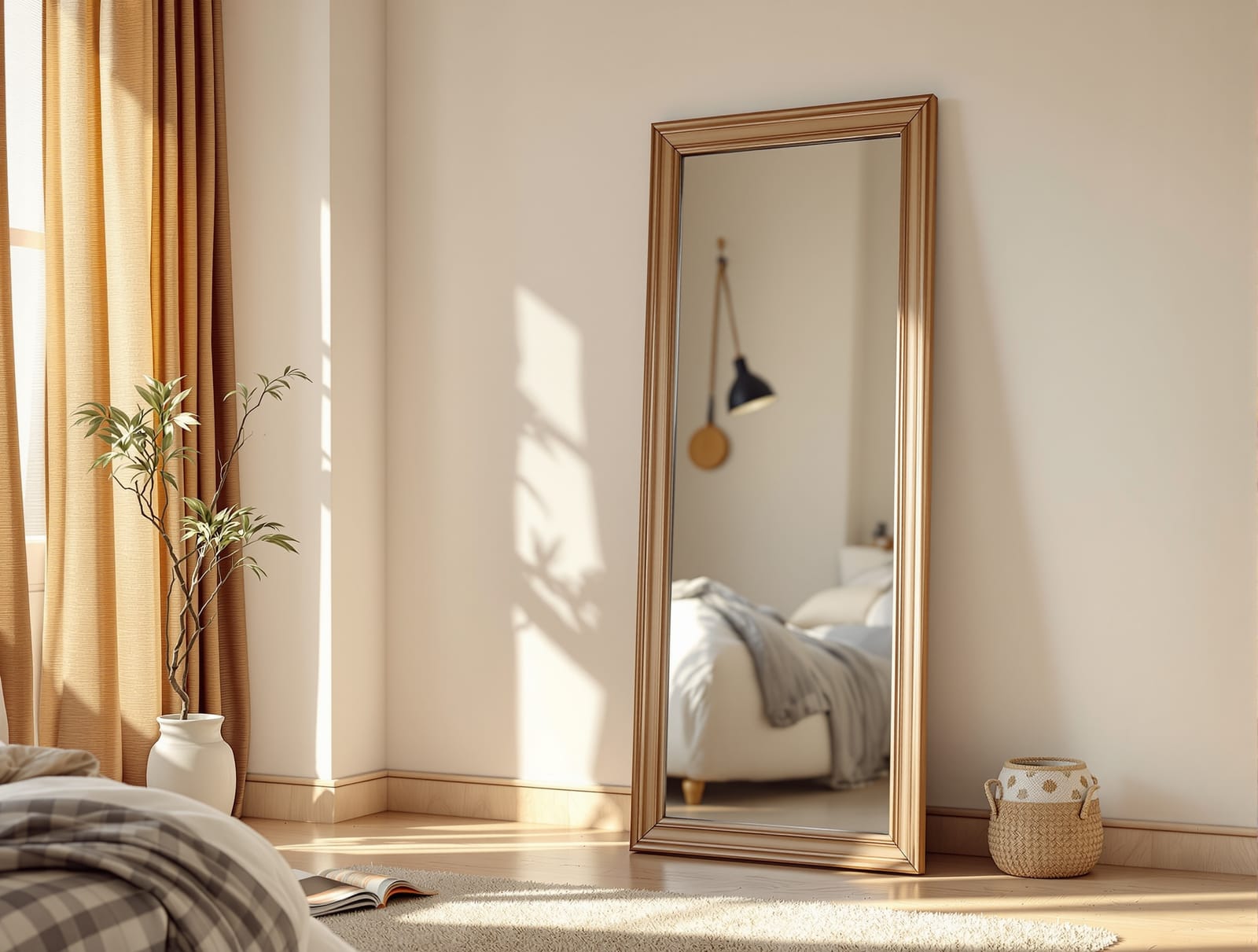
A full-height (floor or near-floor) mirror runs roughly 150–180 cm tall, either leaning against the wall or fixed flush. The look is clean and generous, and it is the most reliable space-expander of the lot because it reflects the floor — the surface that most signals openness.
Best room and placement: bedrooms (doubles as a dressing mirror), narrow hallways, and the dead corner beside a wardrobe. Lean it at a slight angle so it catches the ceiling and floor together. It suits almost every mood — a slim brass frame reads luxe, a black metal frame reads contemporary, a plain leaner reads minimal. India note: in compact bedrooms it removes the need for a separate dressing unit, saving both money and floor space; choose a fixed wall-mount in homes with small children rather than a free-leaning one.
Antique mirrors
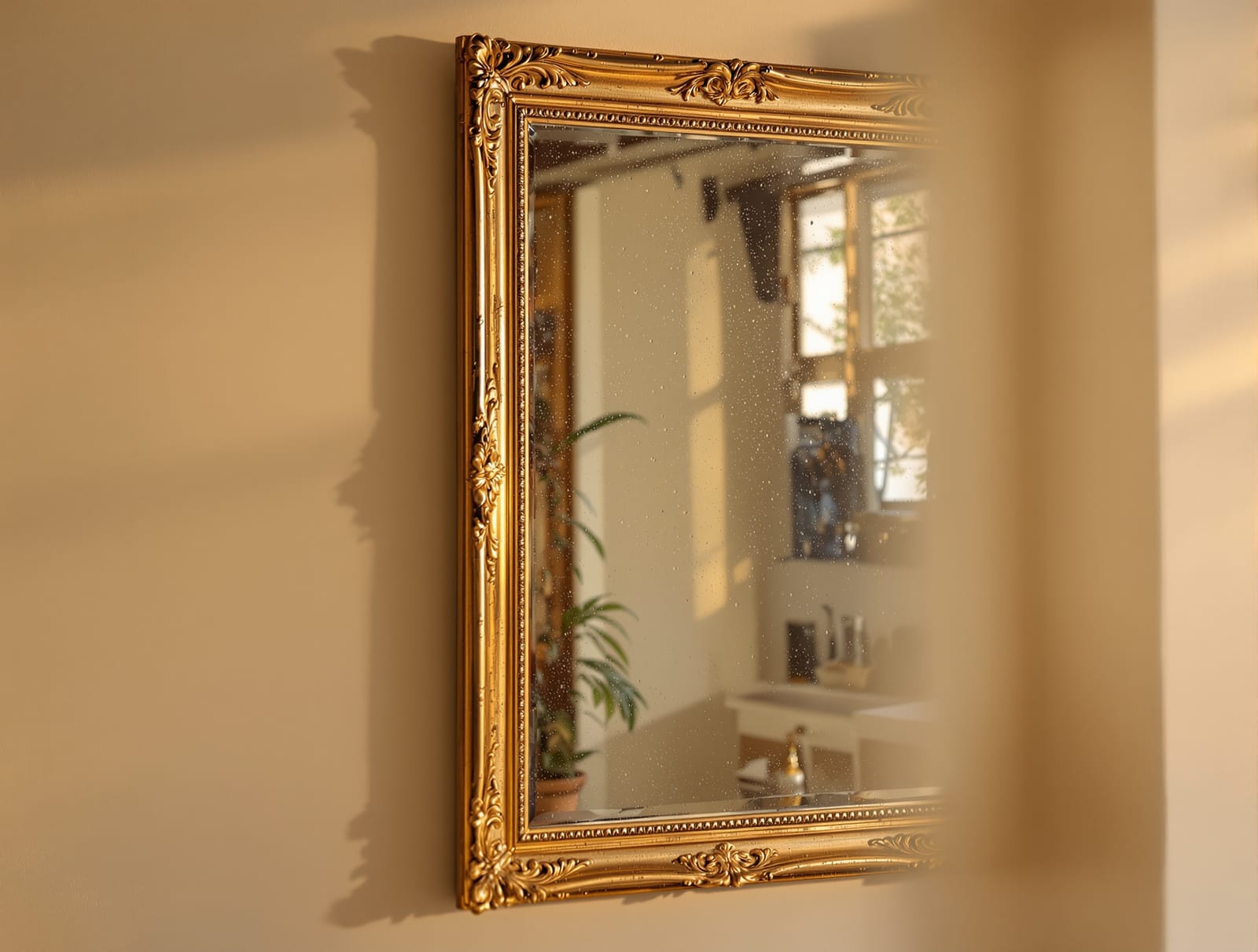
Antique and antiqued mirrors use foxed, mottled, or distressed glass — the silvering deliberately speckled — usually inside an aged gilt or weathered frame. The look is romantic and layered; the cloudy glass softens reflections into something painterly rather than sharp.
Best room and placement: above a console in an entryway, over a dressing table, or as part of a curated wall in a study. Because the reflection is muted, it adds atmosphere without the clinical clarity of a plain mirror. It suits eclectic, vintage, and old-Bombay-apartment moods beautifully. India note: genuine antique pieces turn up at dealers in Mumbai's Chor Bazaar, Delhi's Amar Colony, and Kolkata's old furniture lanes; antiqued reproductions are far cheaper and easier to source if you want the look without the provenance hunt.
Sunburst mirrors
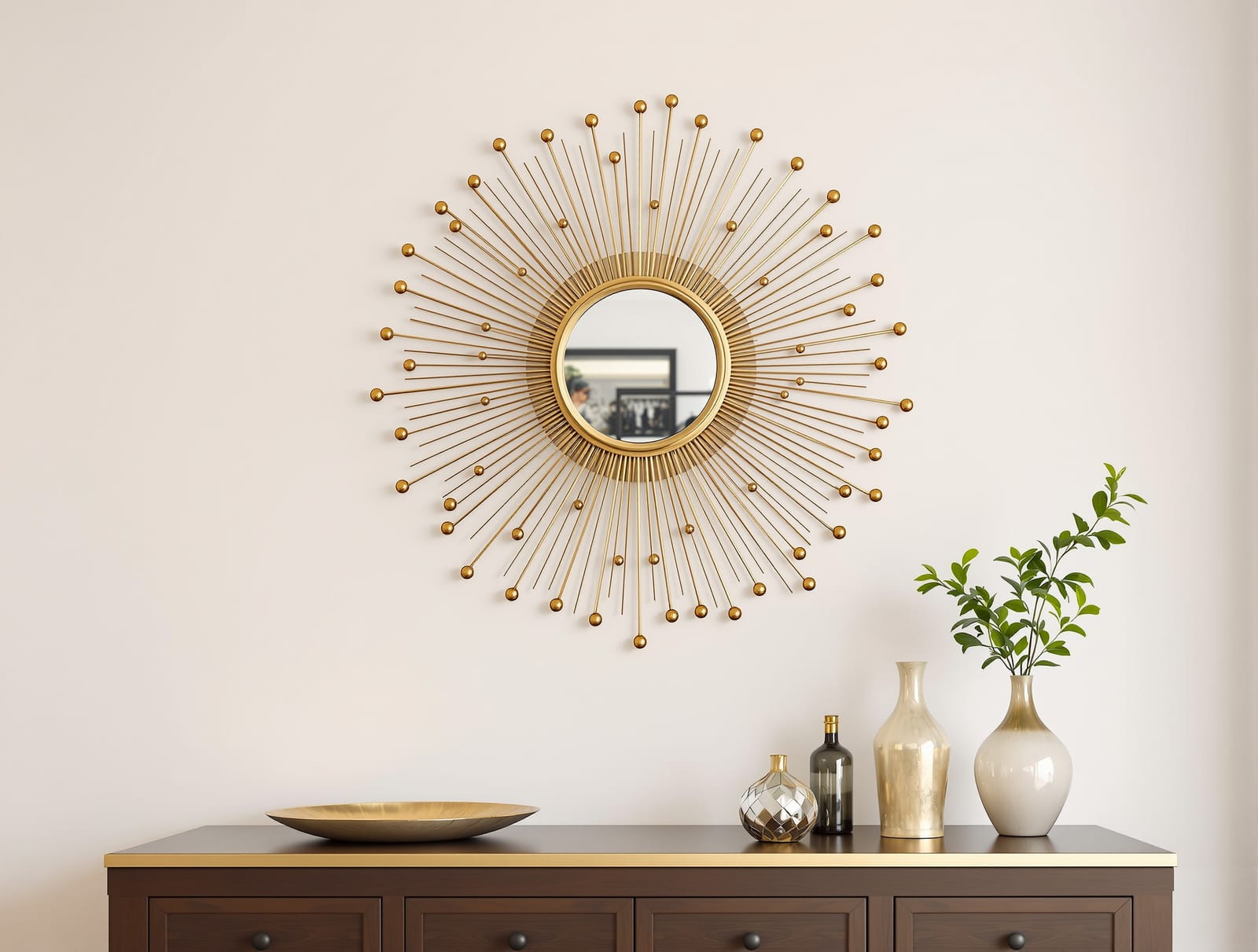
The sunburst (or starburst) is a small central mirror surrounded by radiating spokes — metal rods, reed, rattan, or capiz — that read as rays. It is decorative first and functional second; the mirror is the punctuation, the rays are the art.
Best room and placement: above a console, a sideboard, or a fireplace-style feature wall; brilliant in a hallway where you want personality but not a full reflection. Gold and brass spokes suit glam and luxe rooms; natural rattan or cane spokes suit boho and tropical Indian interiors. India note: cane and rattan sunbursts pair especially well with the warm-toned woods and indoor greenery common in Indian homes, and they are widely made by Indian craft brands, so you are not limited to imports.
Geometric mirrors
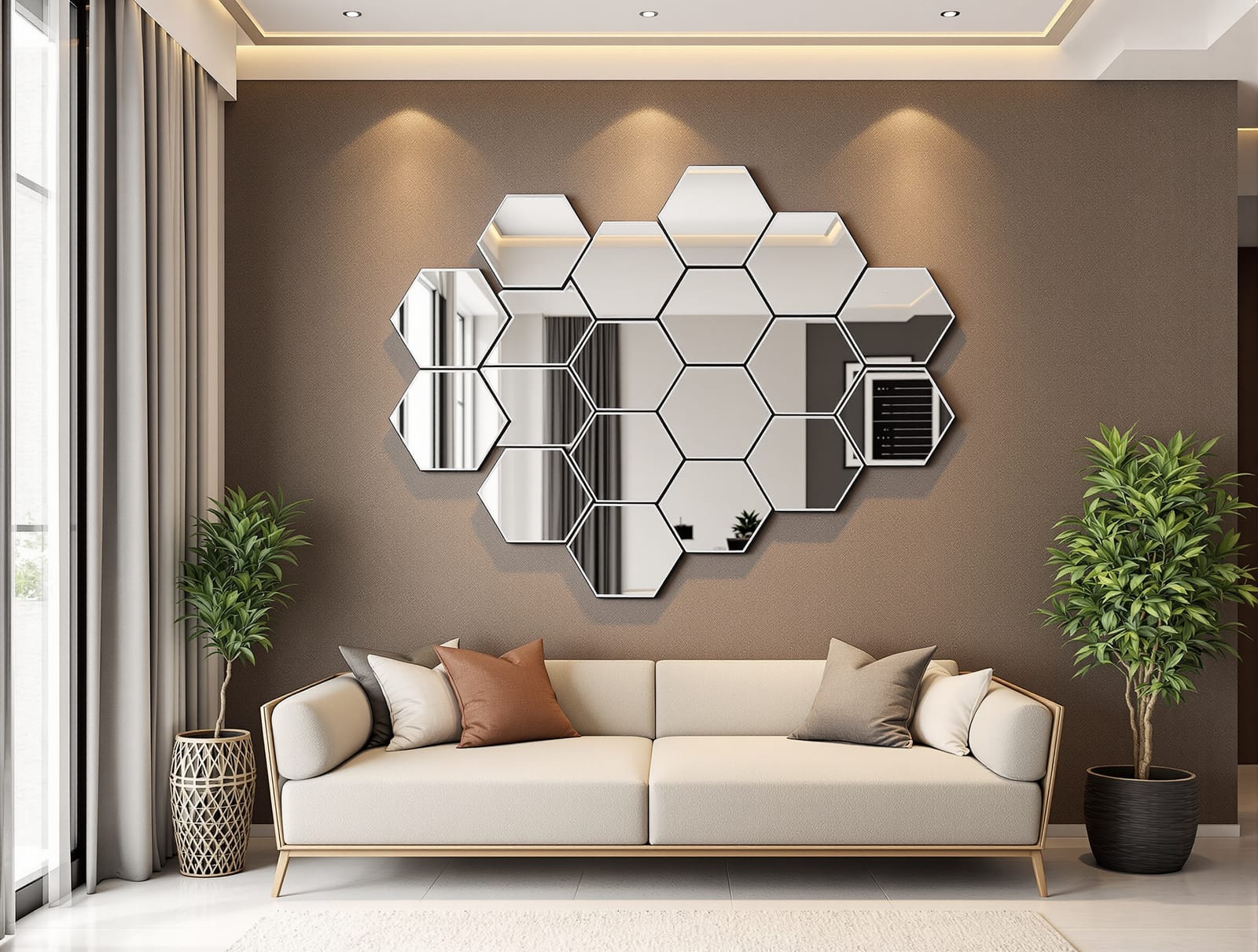
Geometric mirrors come as single shaped panes (hexagon, arch, octagon) or as clusters of small tiles — often hexagons — arranged like a honeycomb on the wall. The look is modern, graphic, and architectural.
Best room and placement: a feature wall behind a sofa, a stair landing, or a bedroom headboard zone. A cluster lets you scale the arrangement to your wall, and the faceted reflections scatter light attractively. It suits contemporary, minimal, and Scandi-influenced Indian flats. India note: hexagon clusters are forgiving on uneven plaster walls because each tile is fixed separately, and they ship flat-packed — useful given how often Indian deliveries involve a fourth-floor walk-up.
Frameless designer mirrors
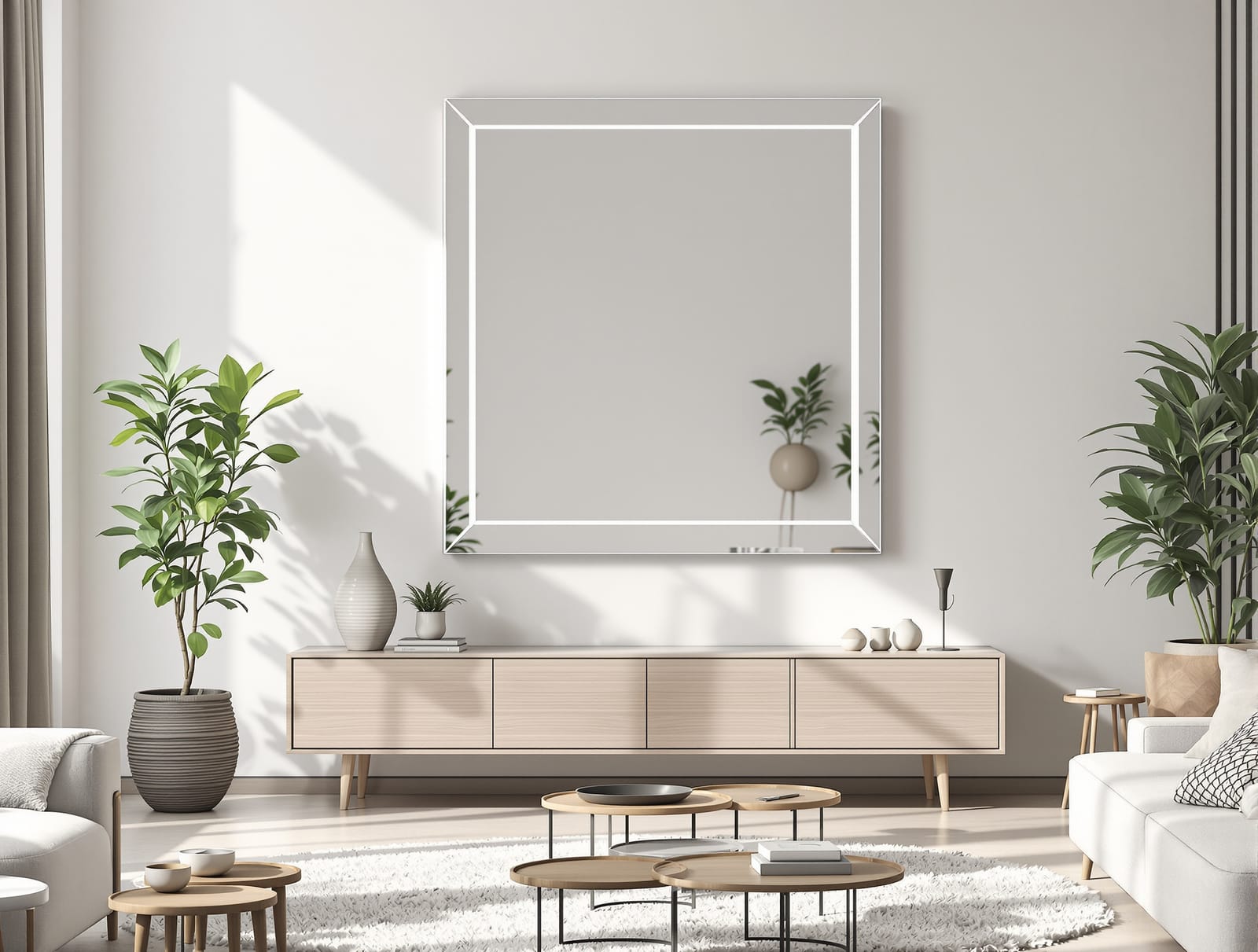
A frameless mirror is exactly that — a polished or bevelled edge with no surround. The bevel catches light along the rim and adds a faint prismatic line, which is the only ornament these need. The effect is barely-there and architectural.
Best room and placement: minimal living rooms, modern bathrooms, and small spaces where a frame would feel heavy. Without a frame the mirror almost disappears, so it maximises the space-and-light effect with zero visual weight. It suits minimal, contemporary, and luxe-restrained interiors. India note: insist on a proper polished safety edge and good-quality silvering — cheaper frameless mirrors in the Indian market can have rough edges or develop black spotting in humid coastal cities, so this is one type where you should not buy the bottom of the range.
Venetian mirrors
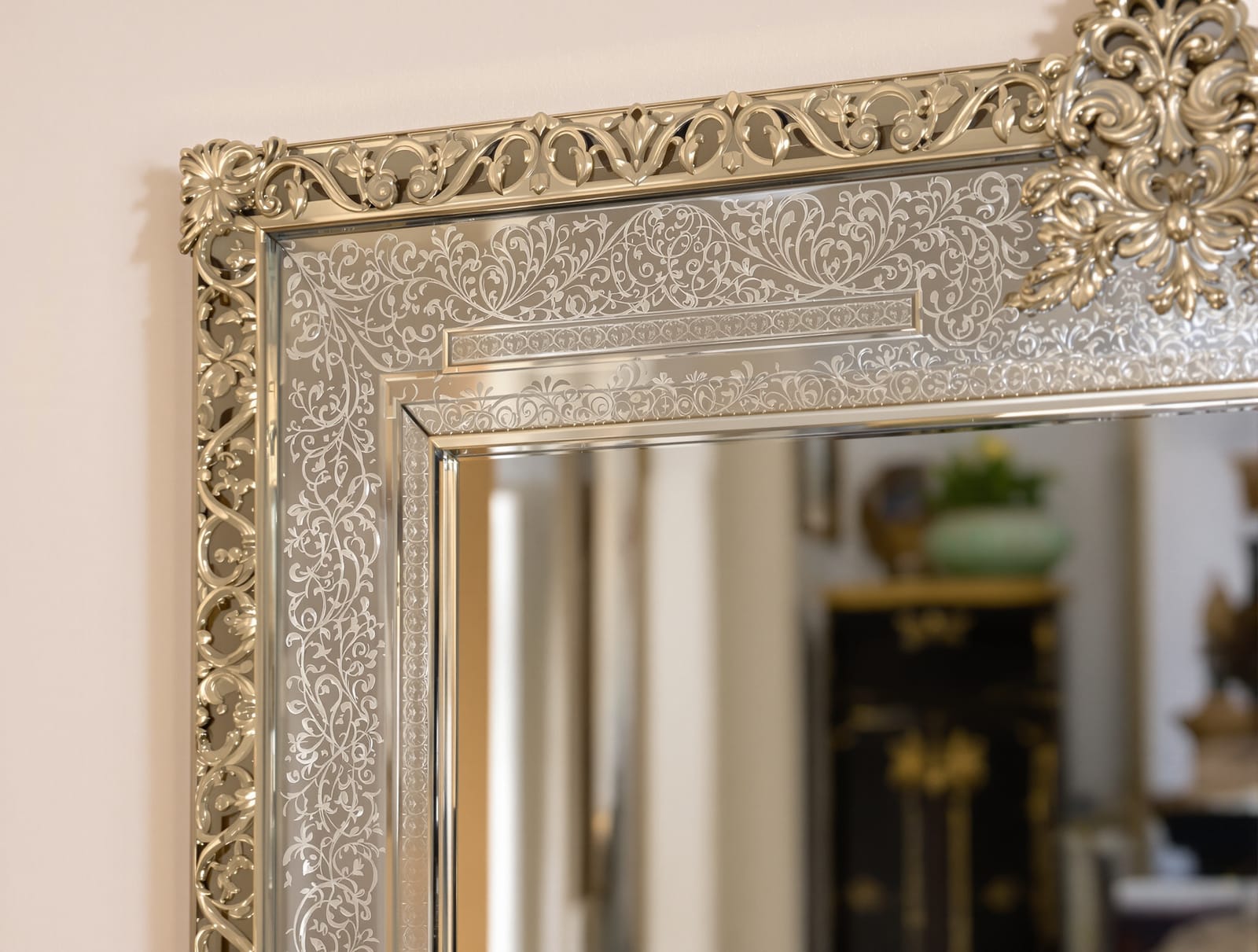
Venetian mirrors are the showpieces: the frame itself is made of mirror glass, hand-cut, etched with floral or scrollwork detail, and assembled with bevelled mirror borders. The whole object glitters. This is the most ornate and traditionally the most expensive type.
Best room and placement: above a mantel, in a formal living room, an entrance foyer, or a primary bedroom where you want unmistakable grandeur. Because the frame is also reflective, it amplifies light more than a solid frame would. It suits luxury, traditional, and classic interiors. India note: Venetian-style mirrors are popular in Indian wedding and festive decor, so true and reproduction pieces are both findable; handle and ship them carefully, as the etched mirror borders chip easily and are hard to repair.
Carved wooden frame mirrors
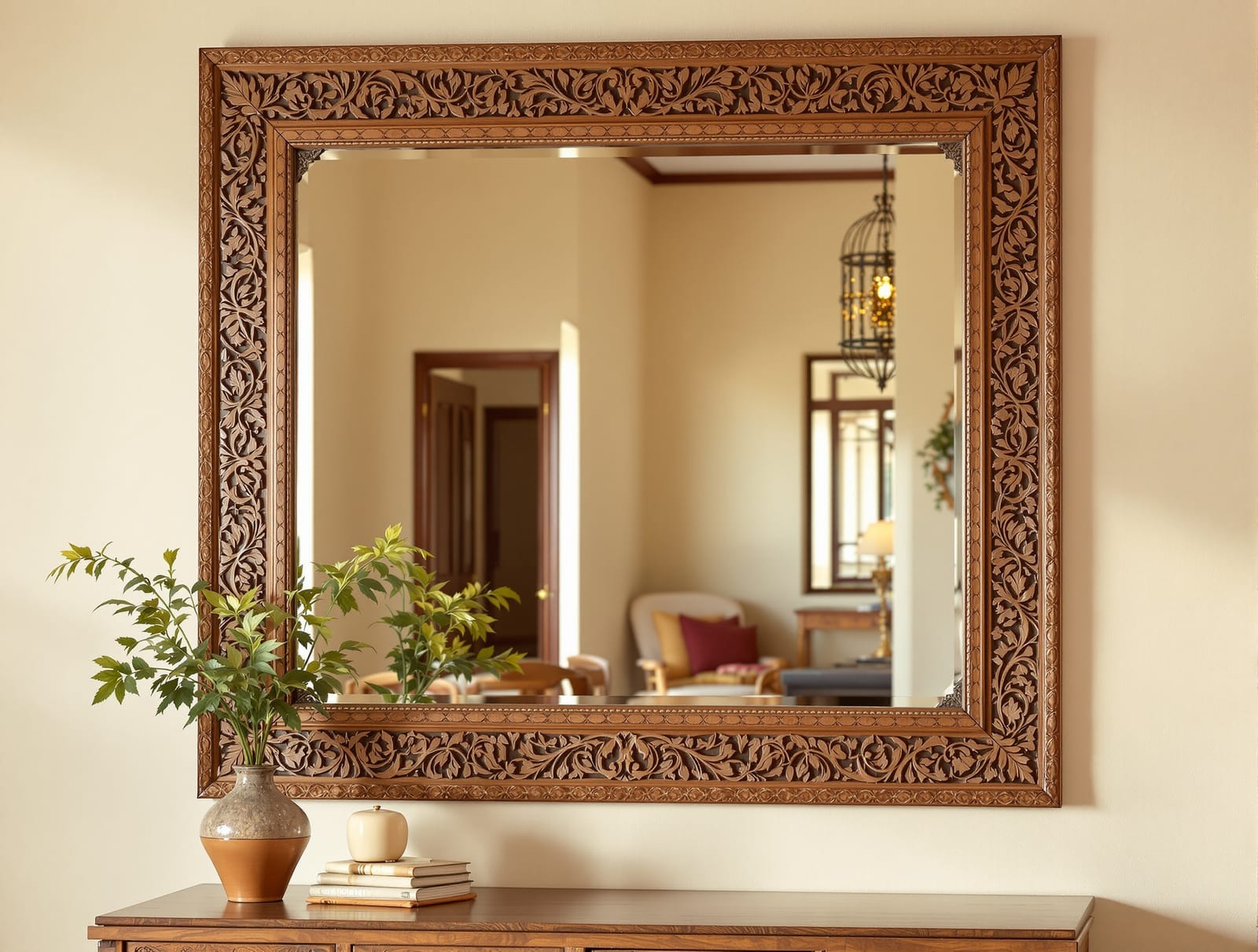
A mirror set in a hand-carved wooden frame — typically teak, sheesham, or mango wood with traditional jali, floral, or temple-arch motifs — is the most distinctly Indian option here. The frame is the craft; the mirror is its canvas.
Best room and placement: above a wooden console, in a pooja-adjacent niche, an entryway, or anywhere you want warmth and heritage. The arched temple-style frames in particular make a striking focal point. It suits traditional, Indian contemporary, and fusion interiors. India note: this is a living craft — Saharanpur (Uttar Pradesh) and Jodhpur (Rajasthan) workshops still hand-carve these, and you can often commission a custom size or motif, which is both more affordable and more personal than buying imported ornament.
Placement Rules That Actually Matter
A beautiful mirror in the wrong spot is just a wasted wall. A few rules do most of the work:
- Put it opposite or adjacent to a window. This is the single most important rule. A mirror facing a window bounces daylight deep into the room; one beside a window widens the bright zone. Walk the room at 4 pm and note where it goes dim — that dim wall, in line with the window, is your mirror wall.
- Reflect something beautiful, not clutter. A mirror frames whatever sits opposite it. Aim it at a plant, a feature wall, a chandelier, or the open room receding — never at a shoe rack, a cluttered shelf, the back of a door, or a blank patch of wall. Stand where you usually sit and check what the mirror will show.
- Hang at eye level — or above a console. The mirror's centre should sit around 145–155 cm from the floor for a standalone piece. Above a console or sideboard, leave roughly 15–20 cm between the furniture top and the mirror's bottom edge so the two read as a set, not two unrelated objects.
- A brief, non-dogmatic Vastu note. If Vastu matters to your household, the common guidance is to place mirrors on the north or east walls; avoid a mirror directly facing the bed (so you don't see yourself while resting), avoid one directly facing the main entrance door (it is said to reflect energy back out), and keep mirrors from reflecting the kitchen stove. Treat these as gentle defaults, not hard rules — most of them also happen to be sound design instincts.
Match the Mirror to Your Style
The fastest way to choose is to start from your room's existing style and work back to the mirror. Build a quick reference board first — our Moodboards tool lets you pin frame finishes against your wall colour before you spend a rupee, and DesignAI can visualise a mirror on your actual wall.
- Traditional and Luxury: carved wooden frame mirrors and Venetian mirrors. Both carry ornament and craft that hold their own against rich textiles, dark woods, and brass.
- Bohemian and eclectic: sunburst mirrors and antique mirrors. The rattan rays and foxed glass add the layered, collected-over-time feel these styles thrive on.
- Minimal and Contemporary: frameless designer mirrors and geometric mirrors. Clean edges and graphic shapes amplify space and light without adding visual noise.
- Any small room: a full-height mirror. Regardless of style, it is the most dependable way to make a tight bedroom, hallway, or studio flat breathe.
Size & Proportion
Most mirror mistakes are sizing mistakes. A few ratios keep you safe:
- Mirror to wall. A standalone statement mirror should fill roughly two-thirds of the wall's visual width or height — big enough to anchor it, with breathing room around the edges. A mirror smaller than half the available zone tends to look lost.
- Mirror to furniture. Above a console or sideboard, the mirror should span about 60–75% of the furniture's width. Wider than the furniture looks top-heavy; much narrower looks accidental.
- When to go full-height. Choose full-height when the goal is maximum space and light, in narrow or low-light rooms, or when you want the mirror to double as a dresser. A leaning full-height mirror also suits rooms where you cannot or do not want to drill.
- Grouping smaller mirrors. If you have several small mirrors, hang them as a deliberate gallery — odd numbers (3 or 5) read better, keep a consistent gap of about 5–8 cm, and treat the whole cluster as one large shape so it carries the wall the way a single big mirror would.
Budget — What It Costs in India
Indicative 2026 price bands. Antique, Venetian, and commissioned carved pieces vary widely with size and craft, so treat Premium as a floor, not a ceiling.
| Tier | Typical types | Indicative price (₹) |
|---|---|---|
| Starter | Small frameless, basic geometric, simple metal-frame round | ₹1,000 – ₹4,000 |
| Mid | Full-height leaner, rattan sunburst, hexagon cluster, mid carved frame | ₹4,000 – ₹15,000 |
| Premium | Large Venetian, genuine antique, custom carved teak, large bevelled designer | ₹15,000 – ₹60,000+ |
Where to Buy in India
- Fabindia and Gulmohar Lane for handcrafted and carved wooden-frame mirrors with an Indian sensibility.
- The White Teak Company for ornate, glam, and Venetian-leaning statement pieces.
- Urban Ladder, Pepperfry, and Home Centre for a broad mainstream range across full-height, geometric, and framed mirrors at accessible prices.
- IKEA for affordable, reliable frameless and simple-frame mirrors, including full-length options.
- Local antique dealers — Chor Bazaar (Mumbai), Amar Colony (Delhi), and old-furniture lanes in most metros — for genuine antiqued pieces.
- Saharanpur and Jodhpur carved-frame makers for hand-carved wooden frames, often available on a commission basis through craft exporters and design stores.
For frameless and large bevelled mirrors, a trusted local glass-and-mirror fabricator can also cut to your exact size, frequently at lower cost than a branded piece.
Ten Common Mistakes
1. Buying a mirror that is too small for the wall — it floats and looks like an afterthought.
2. Hanging it too high, so it reflects the ceiling instead of faces and the room.
3. Reflecting clutter — a messy shelf, an open kitchen, a shoe pile — doubling the mess.
4. Reflecting a blank wall, which wastes the mirror's whole reason to exist.
5. Ignoring what it reflects entirely — hanging first, checking later.
6. Choosing a cheap, warping frame that bows in humidity and distorts the reflection.
7. Overcrowding a wall with too many mirrors competing instead of one confident piece or a planned gallery.
8. Skimping on silvering quality, so the mirror develops black edge-spotting in a year or two — especially in coastal and high-humidity homes.
9. Forgetting the furniture relationship — leaving an awkward gap above a console.
10. Pointing a mirror straight at the bed or main door and then disliking the feel, having ignored both comfort and Vastu instinct.
FAQ
How do I make a small room look bigger with mirrors?
Use one large mirror — full-height or a big framed piece — rather than several small ones, and place it on the longest wall reflecting the room receding or a window. Reflecting the floor and a diagonal view of the room creates the strongest sense of added depth.
Where should I place a mirror to reflect light?
Directly opposite a window throws daylight across the room; adjacent to a window widens the bright zone. Walk the room in the afternoon, find the dimmest wall in line with the window, and place the mirror there.
What is the mirror placement as per Vastu?
Common Vastu guidance prefers mirrors on the north or east walls, advises against a mirror directly facing the bed or the main entrance door, and against reflecting the kitchen stove. Treat these as gentle defaults — many also align with good design sense.
What is the best decorative mirror for a living room in India?
For most Indian living rooms, a large carved wooden frame, a Venetian piece, or a generous frameless mirror above the console or behind the sofa works best. Choose carved or Venetian for traditional and luxe rooms, frameless or geometric for contemporary ones.
Are full-length mirrors good for small bedrooms?
Yes — they are among the best choices. A full-length mirror reflects the floor and adds visual depth, makes the room feel larger, and doubles as a dressing mirror, removing the need for a separate unit. Wall-mount it in homes with young children.
How do I stop my mirror from developing black spots?
Black edge-spotting comes from moisture reaching the silvering, common in coastal and humid Indian homes. Buy good-quality silvered glass with a properly sealed edge, avoid hanging mirrors in constantly damp spots, and wipe with a dry cloth rather than soaking the edges.
A good mirror is the rare decor piece that pays you back every single day — in light, in space, and in a room that finally has something to look at. Start with one wall, get the placement right, and let the reflection do the rest. Style it alongside Decorative Planters and Indoor Plants for a layered, light-filled finish.
Last verified: June 2026 · Next verify: June 2027.
Export this guide
Related Guides — Deep-dive reading
Bohemian Interiors — A 2026 Eclectic Style Guide for Indian Homes
Collected, layered, alive · Rust and jewel tones · Curated eclecticism, never clutter
Design StylesChandeliers Guide: Sizing, Placement & Care for Indian Homes (2026)
How to choose, size and hang a chandelier as the statement fixture of a room — the room length-plus-width sizing rule, the right height over a foyer void or a dining table, the styles that suit Indian homes, and why the fixing and wiring must go to a licensed electrician.
LightingPendant Lighting Guide: Sizing, Height & Placement for Indian Homes (2026)
The design guide to pendant lights for Indian homes — what pendants are and where they earn their place, the four types, and the two numbers that make or break the look: hanging height and size. Plus dimming, style, scale and the clean hand-off to your electrician.
LightingRelated Tools — Try Free
Cross-Ventilation Analyzer
Estimate airflow and air changes per hour (ACH) from room size, window areas, layout, and local wind — with NBC 2016 Part 8 compliance check.
Ventilation CalculatorFalse Ceiling Cost Estimator
Live ₹/sqft across 8 ceiling types — POP, gypsum, designer, metal, PVC, wooden — with cove and spot lighting for 20 Indian cities.
Cost CalculatorApartment Furniture Size Chart
Standard furniture dimensions for Indian apartments — sofas, beds, tables, dining, storage.
Reference Chart