
Sculptures & Art Objects: How to Choose, Place & Style Them at Home
A homeowner's guide to sculpture materials, scale, placement, lighting, budget and care - for Indian homes
If wall art draws the eye across a flat plane, sculpture pulls it into the room itself. A painting belongs to its wall; a sculpture belongs to the air around it, casting shadows that shift through the day, inviting a slow walk around its silhouette. It is the three-dimensional counterpart to the framed work above the sofa, and it does something a picture cannot: it occupies space, holds weight, and rewards touch. A single well-chosen bronze on a console, a carved stone figure in a niche, or an abstract resin form on a floating shelf can finish a room that otherwise feels almost-complete, the way a closing chord resolves a piece of music.
Sculpture is also, for the Indian home, the most movable and most collectible of the decorative arts. A figure bought in Swamimalai or Saharanpur travels with you from a Bengaluru flat to a Gurugram villa, gathering meaning rather than wear. It can be inherited, regifted at a wedding, lent to a child setting up a first home. It is tactile in a way screens and prints never are, and it carries the fingerprints of a maker working in a lineage that often runs a thousand years deep. This guide covers how to choose sculpture by material and meaning, how to scale and place it, how to light and group objects so they read as intention rather than clutter, what realistic 2026 budgets look like, where to source the genuine article in India, and how to care for each material through our heat, dust and monsoon.
A field guide to sculpture materials
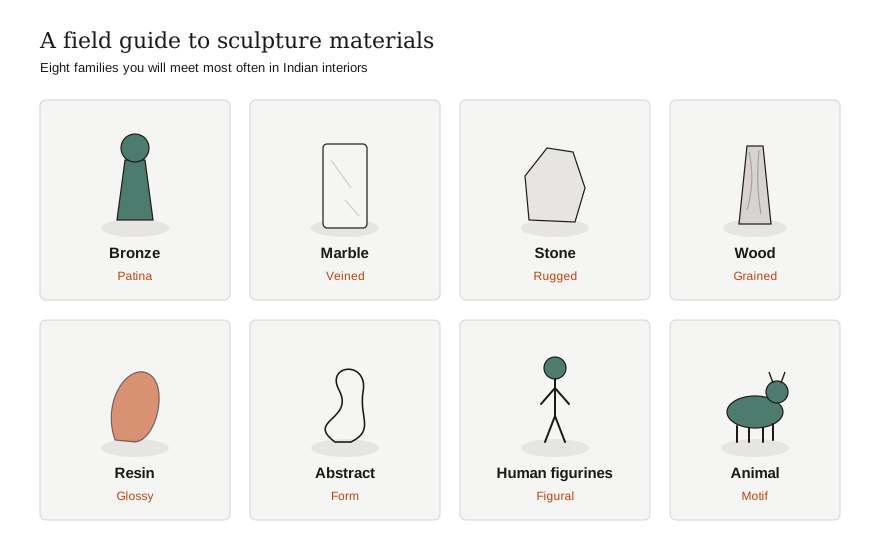
Every sculpture is a conversation between a form and the substance it is made from. The same dancing figure feels devotional in temple bronze, austere in white marble, earthy in mango wood, and coolly contemporary in matte resin. Start with the material, because it sets the price, the weight, the care regime and the mood long before subject does.
Bronze sculptures
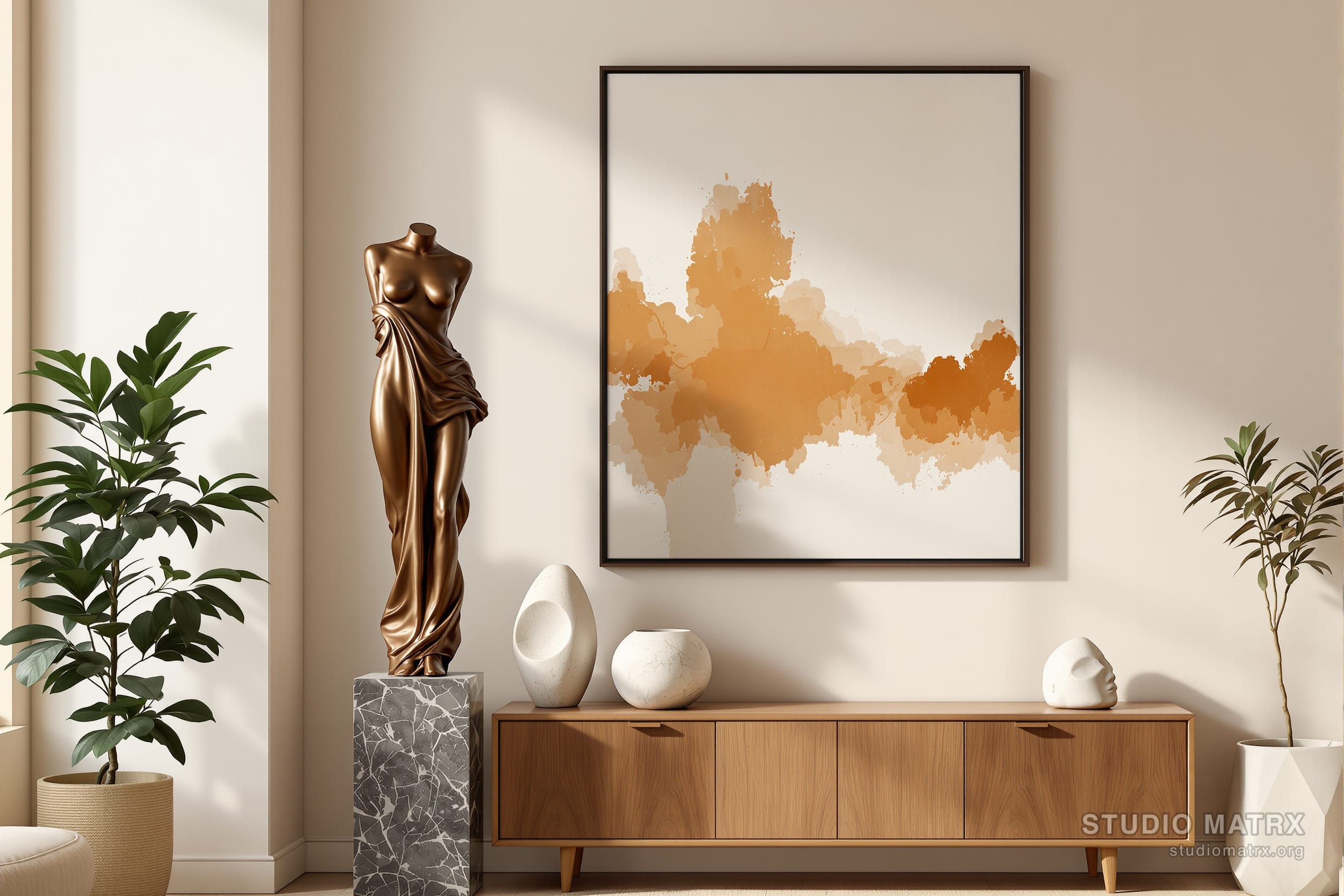
Bronze is the aristocrat of Indian sculpture, and we invented one of its great traditions. The Chola dynasty of Tamil Nadu perfected the lost-wax (cire-perdue) method between the 9th and 13th centuries, casting Nataraja and processional deities of a poise the world still studies. That craft survives today in Swamimalai near Thanjavur, where the icon-makers (sthapatis) cast bronzes the old way. A second, very different lineage is Dhokra: tribal brass cast by Ghadwa and other communities of Bastar (Chhattisgarh), Odisha and West Bengal, prized for its raw, web-like surface and folksy figures. Bronze suits living rooms, study consoles and pooja spaces, and it earns a graceful patina over decades. Realistic 2026 prices: small Dhokra pieces from ₹1,500; a quality Swamimalai bronze from ₹15,000 to several lakh. Care nuance: never over-polish away a true patina, which is part of the value.
Marble sculptures
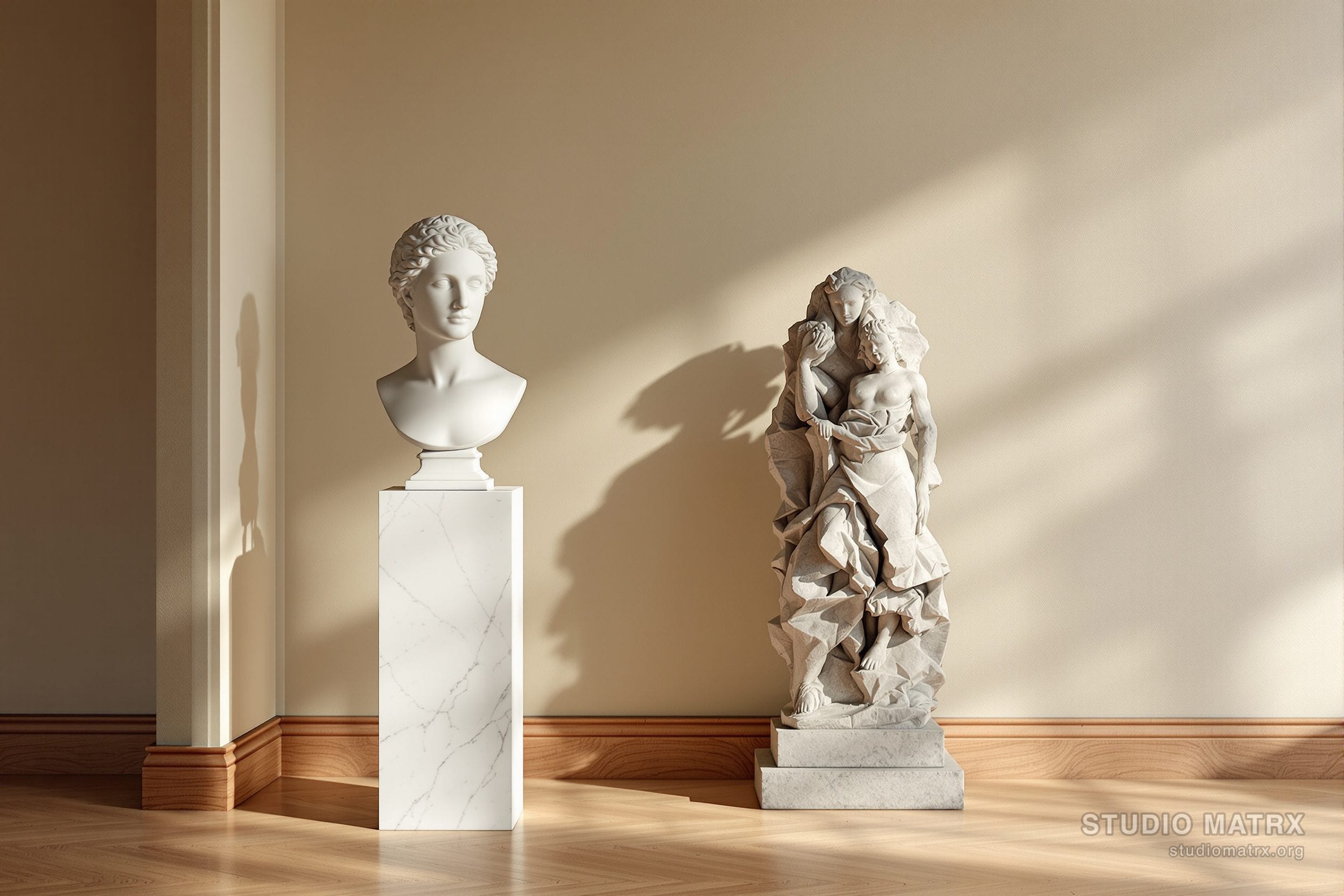
Marble reads as calm, light and permanence, which is why it has carried sacred and memorial sculpture for centuries. India's most famous stone is Makrana marble from Rajasthan, the same white stone that clads the Taj Mahal, still quarried and carved in ateliers around Jaipur and Makrana. Marble suits formal living rooms, foyers and any space where you want a cool, quiet anchor, and it photographs beautifully under soft light. A bust, a deity or an abstract polished form in white or coloured marble brings a hush to a room. Realistic 2026 prices: small carved pieces from ₹3,000; fine hand-carved Makrana figures ₹20,000 upward, with large or signed works running far higher. Care nuance: marble is alkaline and etches on contact with acids, so keep lemon, vinegar, perfume and hand sanitiser away, and blot spills immediately.
Stone carvings
Stone other than marble gives you weight, texture and an outdoor-capable durability that few materials match. India's temple towns are living workshops: Mahabalipuram in Tamil Nadu carves hard granite, Odisha (around Puri and the Konark belt) works warm sandstone, and soapstone (a soft, soapy-feeling stone) is carved across Karnataka and the east. Granite and sandstone figures suit garden corners, balconies, entrance lobbies and grounded interior niches; soapstone, being soft, is better for smaller indoor pieces. The look ranges from rough-hewn to highly detailed. Realistic 2026 prices: soapstone figurines from ₹800; substantial sandstone or granite carvings ₹8,000 to lakhs by size. Care nuance: stone is heavy, so confirm the floor or pedestal can bear it, and seal porous sandstone and soapstone so they resist staining and our monsoon damp.
Wood sculptures
Wood is the warmest, most touchable material, and India carves it everywhere. Saharanpur in Uttar Pradesh is the great sheesham (Indian rosewood) carving hub; Kerala works rosewood and the rare, fragrant sandalwood into devotional figures; and Channapatna in Karnataka turns soft ivory-wood into lacquered, child-safe toys and forms using natural lac colours. Wood suits bookshelves, study desks, bedrooms and any space wanting warmth rather than grandeur. Carved elephants, dancers and deities are the classic subjects. Realistic 2026 prices: Channapatna and small Saharanpur pieces from ₹500; fine rosewood or sandalwood carvings ₹5,000 to well over ₹50,000. Care nuance: dry, conditioned AC air and direct sun crack and fade wood, and India's borer beetles attack untreated timber, so wax occasionally and keep pieces out of harsh draughts and sunlight.
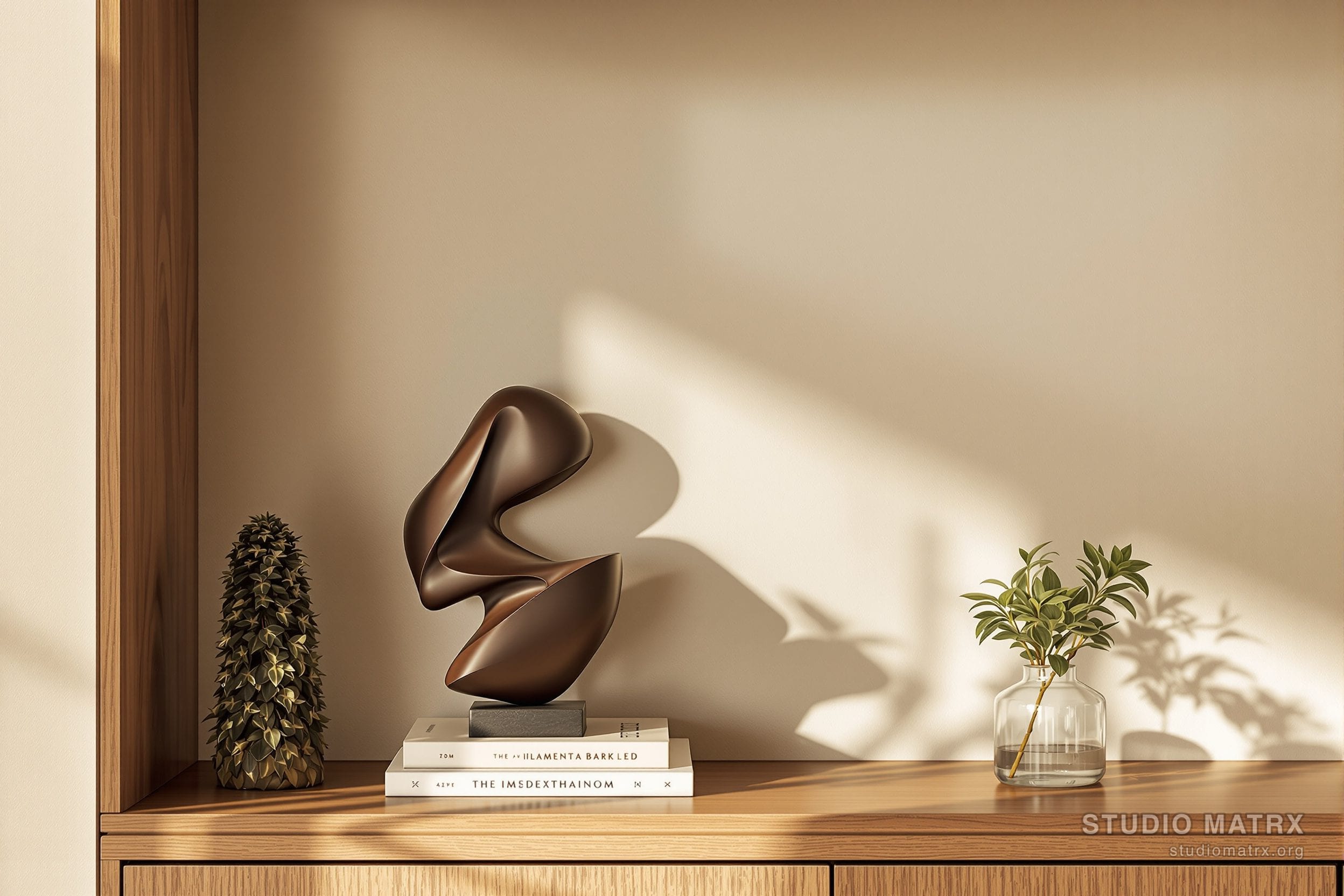
Resin sculptures
Resin (cast polyresin) is the democratiser of sculpture. It is poured into moulds, so it can take any form, any finish (a faux-bronze, a faux-marble, a high-gloss white) and any colour, at a fraction of the price and weight of the real material. That makes it ideal for renters, first homes, large statement pieces you could never afford in stone, and shelves that cannot bear real weight. The trade-off is honesty and longevity: it is a cast, not an original, and cheaper resin can yellow, become brittle or warp under heat and ultraviolet light. Realistic 2026 prices: ₹300 to ₹6,000 for most decor pieces. Care nuance: keep resin off hot, sunny windowsills and away from radiant heat, dust with a soft dry cloth, and accept that it is a stylish stand-in rather than an heirloom.
Abstract sculptures
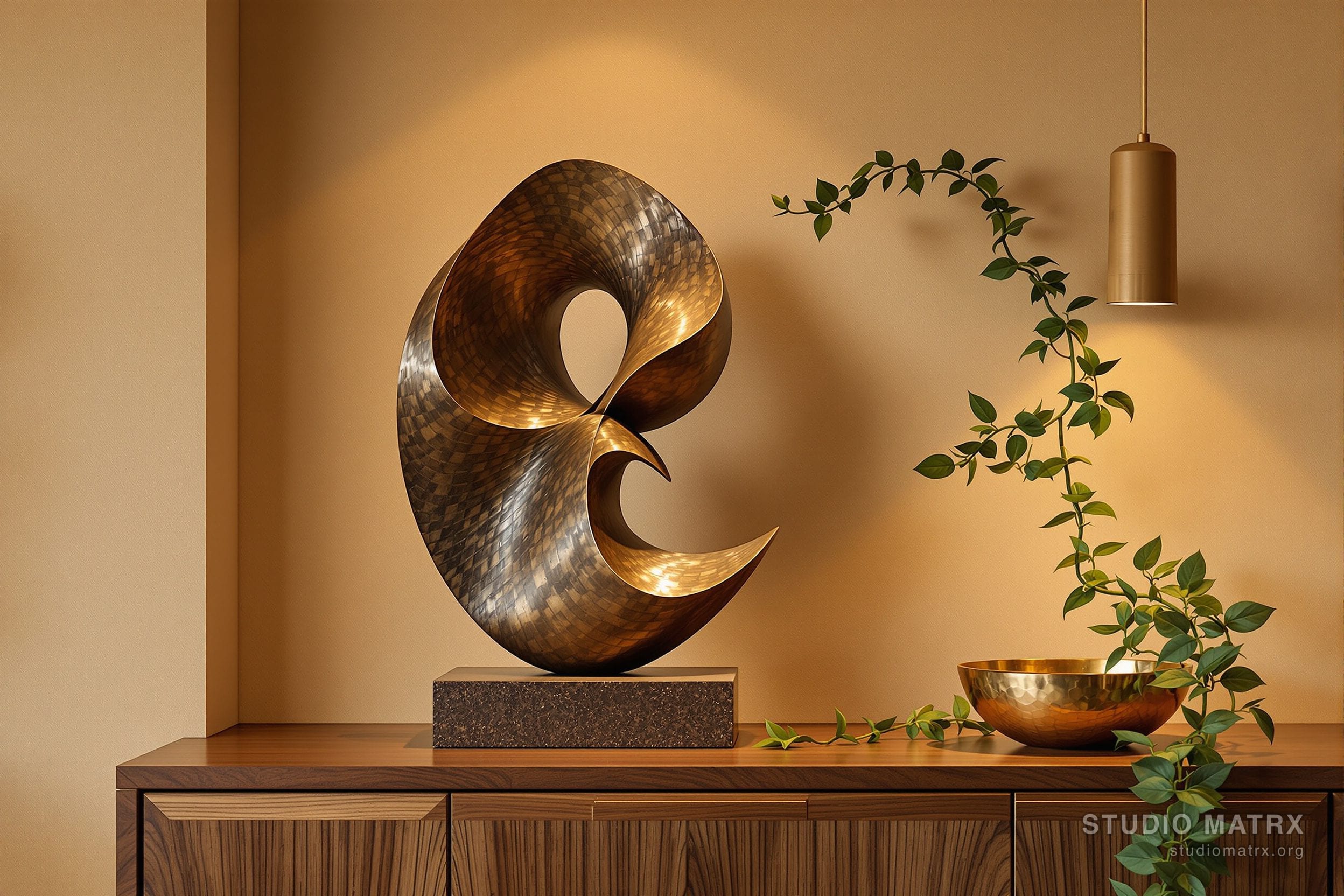
Abstract sculpture chooses form over subject: a twist of metal, a balanced stack of stone, a flowing organic curve that suggests motion or emotion without depicting anything literal. Because it is not tied to a recognisable figure, it slips into modern and minimalist rooms where a traditional deity might feel out of place, and it reads as art rather than artefact. Scale is everything here: a small abstract piece can look like a paperweight, while a generous one becomes the room's focal point. Use abstract forms to introduce a sculptural line that echoes your architecture or furniture curves. They come in every material above, so price tracks the substance. Care nuance: follow the rules for whatever the piece is actually made of, and keep glossy finishes fingerprint-free.
Human figurines
The human figure is sculpture's oldest subject, and India's repertoire is vast: the cosmic dance of Nataraja, the serene seated Buddha, classical dancers caught mid-mudra, and contemporary busts and figures that bring a portrait sensibility into the home. Smaller figurines work in clusters on shelves and consoles; a single larger figure can hold a niche or pedestal alone. For busts, the unwritten rule is to place the face near eye level so you meet the gaze rather than look down on it. Figurines carry meaning, so choose subjects you connect with. Prices span everything from ₹500 resin dancers to lakh-plus bronze and marble figures. Care nuance: dust the fine detail of faces and hands with a soft brush rather than a cloth that snags.
Animal sculptures
Animals carry symbolism in the Indian home, which is half their appeal. The elephant signifies wisdom, strength and good fortune (an upraised trunk is the lucky variant); the bull or Nandi denotes strength and devotion; peacocks, owls and horses each bring their own folklore. They come in every material, from Dhokra brass elephants and Saharanpur carved-wood herds to stone garden bulls. A pair or a graduated trio of elephants is a classic console vignette, and a single bold animal can anchor a child's room or an entryway. Prices run from ₹400 for small brass or wood pieces to ₹25,000 and beyond for fine stone or large bronze. Care nuance: dust the trunks, horns and detailed surfaces where grime collects, and match the cleaning method to the material.
How to choose a sculpture
Begin with the room, not the object. A formal, traditional living room can carry the gravity of bronze or marble; a light, modern flat is happier with abstract forms, pale stone or clean-finished wood; a study or bedroom wants warmth, so wood and smaller bronzes suit. Let the material echo something already in the space (the metal of your lighting, the grain of your furniture) so the piece looks chosen rather than dropped in.
Then weigh subject and meaning. Sculpture is personal in a way a colour or a cushion is not, so pick a figure, animal or form you actually respond to, and be mindful of context: a devotional icon belongs in a considered, respectful spot, not wedged between the TV remote and a coffee mug. Finish matters too: a high-polish surface reads contemporary and reflective, an antiqued or matte surface reads old-world and quiet.
Finally, apply simple budget logic. Decide whether you want one investment piece that anchors the room or several modest objects you will rotate over time. An original hand-carved or hand-cast work from a known craft hub holds and gains value; a mass-cast resin or factory brass piece is decor, priced and treated as such. Spend the most where the eye lands most: the console behind the sofa, the entry niche, the dining sideboard.
Scale and placement
The single most common sculpture mistake in Indian homes is scale: a piece too small for the surface it sits on, marooned in a sea of empty wood. As a rough rule, an object should occupy roughly one-third to two-thirds of the visual width of the surface or shelf it sits on, and should relate in height to its neighbours rather than disappearing among them. Give it breathing room: negative space around a sculpture is not wasted, it is the frame that lets the piece read.
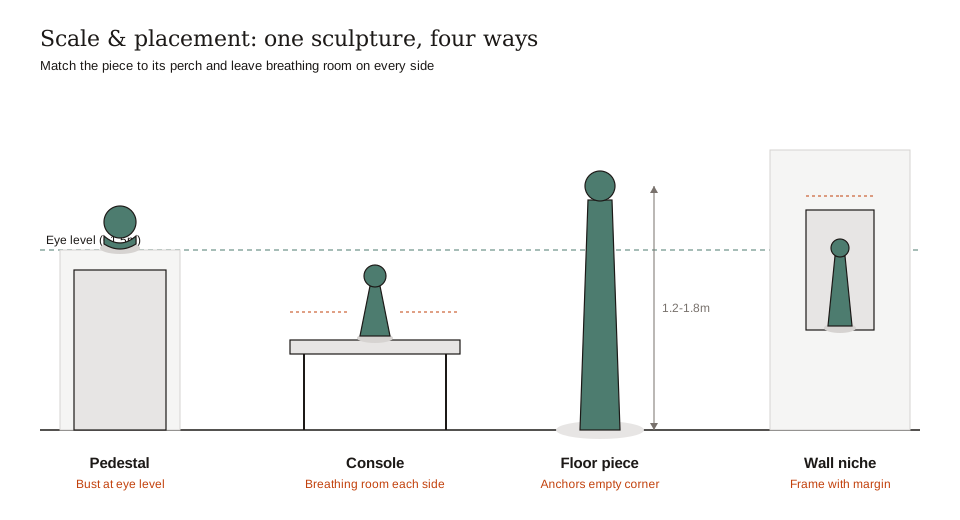
A pedestal or plinth lifts a single special piece to its own stage, and the convention is to bring the most important part of the sculpture (a bust's face, an abstract's apex) close to standing eye level, around 140 to 160 cm from the floor. A console or sideboard is the natural home for a vignette: one taller object with a couple of lower ones, never a straight regimented line. A floor sculpture, taller than knee height, works in an empty corner, beside a console leg or flanking a doorway, grounding the room. A wall niche frames a single figure like a painting and benefits enormously from its own light. A shelf hosts smaller objects, where the trick is to vary height and let some pieces overlap the books rather than sit in soldierly rows. Across all of these, busts read best at eye level so you meet their gaze, and odd numbers of objects almost always look more relaxed than even ones.
Lighting and grouping
Unlit sculpture is sculpture half-seen. Because the whole point of a three-dimensional object is its form and surface, light is what reveals it, and the direction of that light is as important as its brightness. A small accent or picture light, a recessed spotlight angled onto a niche, or a directional track head will all lift a piece off its background. The most flattering trick for textured work (Dhokra brass, carved stone, rough wood) is uplighting: a little floor or shelf light throwing light upward, which rakes across the surface and casts long, dramatic shadows that make every chisel mark visible.
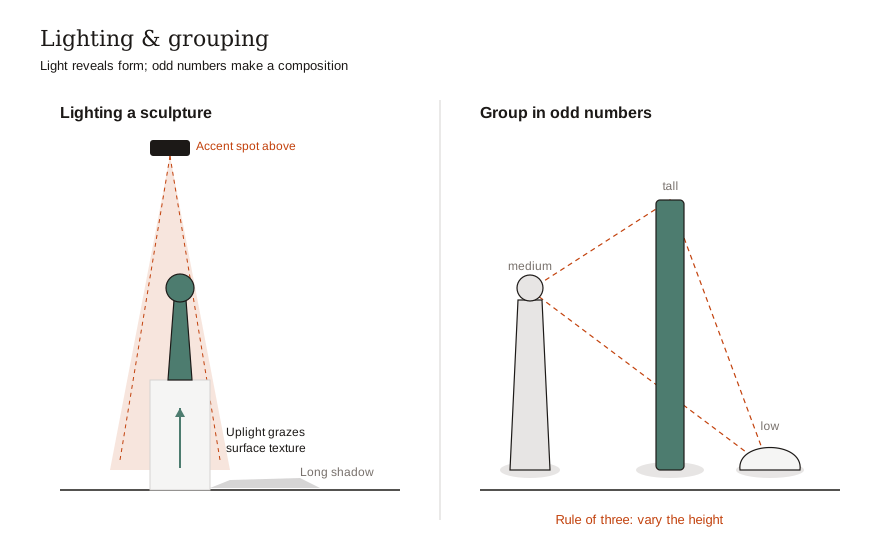
Grouping is where amateurs and stylists part ways. The governing principle is the rule of three (more broadly, odd numbers), because an odd-numbered cluster feels casual and dynamic while an even one feels static and matched. Vary the height deliberately: a tall piece, a medium one and a low one, arranged so your eye travels in a soft triangle (the styling triangle) rather than along a flat line. Cluster objects close enough that they read as a related family, with a little space between groups so the eye can rest. Repeat one element (a colour, a material, a finish) across the group to tie it together, and let one object be the clear hero while the others support it.
What sculpture costs in 2026
Prices below are realistic 2026 ranges for home-scale pieces; antique, signed or very large works run well beyond these bands. Originals from a known craft hub hold value; casts and reproductions are priced as decor.
| Material | Typical price band (₹) | Original vs cast/repro | Where to buy (Indian hubs) |
|---|---|---|---|
| Bronze (Swamimalai) | 15,000 to several lakh | Hand-cast original | Swamimalai (Tamil Nadu), GI-certified makers, Poompuhar emporiums |
| Brass / Dhokra | 1,500 to 40,000 | Hand-cast tribal original | Bastar (Chhattisgarh), Odisha, West Bengal; craft melas, Tribes India |
| Marble (Makrana) | 3,000 to 1 lakh+ | Hand-carved original | Jaipur and Makrana ateliers (Rajasthan) |
| Stone (granite / sandstone / soapstone) | 800 to lakhs | Hand-carved original | Mahabalipuram (TN), Odisha, Karnataka |
| Wood (sheesham / rosewood / sandalwood) | 500 to 50,000+ | Hand-carved original | Saharanpur (UP), Kerala, Channapatna (Karnataka) |
| Resin / polyresin | 300 to 6,000 | Mass-cast reproduction | Home-decor retail, online marketplaces, IKEA-style stores |
| Contemporary studio / gallery art | 25,000 to several lakh | Limited-edition or unique | Art galleries, design stores, artist studios |
| State emporiums (mixed) | 500 to 1 lakh+ | Authentic handmade | Cottage Emporium, Poompuhar, Cauvery, Lepakshi, Kairali |
Care by material
Sculpture is durable, but each material has one or two non-negotiable rules, and most damage in Indian homes comes from heat, dry AC air, monsoon humidity and over-enthusiastic cleaning.
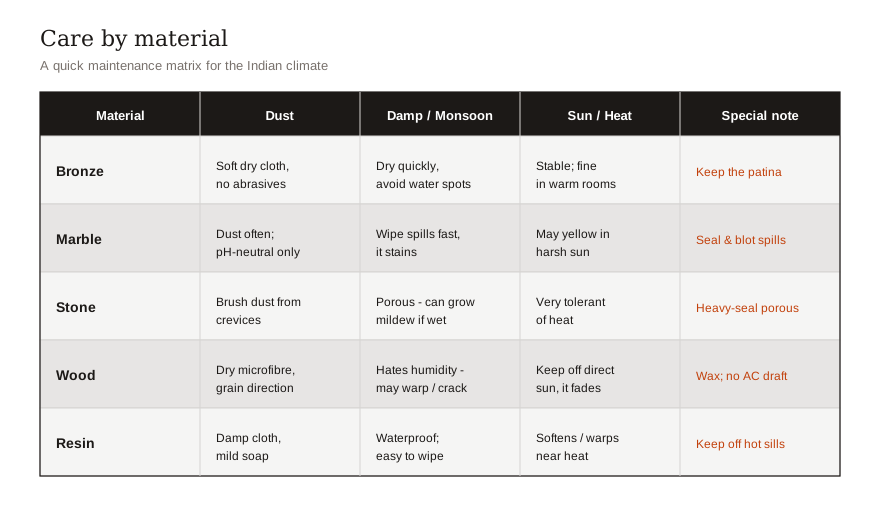
Bronze and brass want restraint. The patina that develops over years is part of a bronze's character and value, so dust it regularly and resist the urge to scrub it back to a raw shine; if you do clean, use a soft cloth and a gentle, non-abrasive method, and never use harsh metal polish on a true antique. Marble is the diva of the group: it is alkaline and etches permanently on contact with acids, so keep citrus, vinegar, perfume, alcohol and sanitiser well away, use coasters under anything that could spill, blot (never wipe) spills at once, and seal the stone periodically. Stone carvings need a sealant on porous sandstone and soapstone to resist staining and monsoon damp, plus a check that pedestals and shelves can take their real weight.
Wood needs the most attention in Indian conditions. Keep it out of direct sunlight, which fades and bleaches, and away from the direct draught of an AC vent, whose dry air shrinks and cracks timber; wax or oil it occasionally to feed the grain, and watch for the pinholes and fine sawdust that signal borer beetles, treating any infestation promptly. Resin asks only that you keep it off hot, sunny windowsills and away from radiant heat, since ultraviolet light and warmth yellow and warp it over time. For everything, dust is the daily enemy in India: a soft, dry microfibre cloth for smooth surfaces and a soft brush for carved detail, done little and often, beats an occasional aggressive clean. Through the monsoon, watch humidity, keep metal pieces dry to slow tarnish, and ensure timber and porous stone are not sitting damp.
Common mistakes
- Choosing a piece too small for its surface, so it floats lost on an oversized console instead of anchoring it.
- Crowding a shelf or sideboard until objects compete; clutter reads as accident, while edited groups read as intention.
- Leaving sculpture unlit, so its form and texture are invisible after dark and flat by day.
- Getting pedestal height wrong, displaying a bust well below eye level so you look down on it rather than meeting its gaze.
- Ignoring real weight, perching heavy stone or bronze on a flimsy floating shelf or thin glass that cannot bear it.
- Buying fakes sold as antique, especially mass-produced or artificially aged brass passed off as old Chola or temple bronze; buy from GI-certified makers, reputable emporiums or galleries with provenance.
Related reading
- Decorative Objects: Crystal, Glass, Ceramic & Collectibles for the Home
- Wall Art & Paintings: How to Choose, Place & Combine Art
- Architectural Decorative Elements
- The 60-30-10 Rule for Interiors
- Living Room Design (India)
- Colour Palette Generator
References
1. The Metropolitan Museum of Art (metmuseum.org) — Chola Dynasty bronzes and South Indian lost-wax casting in the museum collection and Heilbrunn Timeline of Art History.
2. Victoria and Albert Museum (vam.ac.uk) — South Asian and Chola bronze sculpture, including the iconography of Shiva Nataraja.
3. Government Museum, Chennai (Egmore) — the bronze gallery housing one of the finest collections of Chola and South Indian bronzes.
4. Geographical Indications Registry, India (ipindia.gov.in) — registered crafts including Dhokra (Bastar / Odisha / Bengal), Channapatna toys, Makrana marble and Swamimalai bronze icons.
5. Crafts Council of India (craftscouncilofindia.org) — documentation and promotion of India's traditional sculpture and craft clusters.
6. Archaeological Survey of India (asi.nic.in) — temple sculpture and stone-carving traditions at Mahabalipuram, Konark and other monuments.
7. Encyclopaedia Britannica (britannica.com) — entries on the lost-wax (cire-perdue) casting process and on Indian sculpture.
8. Development Commissioner (Handicrafts), Ministry of Textiles, Government of India — craft cluster and artisan documentation for Saharanpur woodcraft, Dhokra and allied traditions.
This guide refreshes every 12 months. Last verified: June 2026 · Next verify: June 2027.
Export this guide
Related Guides — Deep-dive reading
Decorative Mirrors — A 2026 Guide for Indian Homes
Space, light and a focal point in one move · Full-height to Venetian · Where to place them and why
Design Styles2026 Interior Decor Trends in Indian Homes — Ten Ideas Shaping the Year
From large statement artwork and handmade Indian crafts to sculptural lighting, indoor greenery and quiet, sustainable styling — the ten decoration trends defining how Indian homes look and feel in 2026, and how to bring each one home.
Design StylesDecorative Objects: Crystal, Glass, Ceramic & Collectible Art for the Home
Crystal, glass, handcrafted, ceramic, tribal and antique objects - styling, authenticity, budget and care for Indian homes.
Design StylesRelated Tools — Try Free
Apartment Furniture Size Chart
Standard furniture dimensions for Indian apartments — sofas, beds, tables, dining, storage.
Reference ChartCross-Ventilation Analyzer
Estimate airflow and air changes per hour (ACH) from room size, window areas, layout, and local wind — with NBC 2016 Part 8 compliance check.
Ventilation CalculatorWindow Cleaning Cost Calculator
Estimate professional window cleaning cost per visit and per year by access and frequency.
Window Calculator