

Commencement Certificate (CC) Explained: When You Can Legally Start Construction in India (2026)
A plain-language guide to the commencement certificate - the permission to START building after your plan is sanctioned. What it is, why building without it is a serious risk, when it is issued, the plinth-level check, its validity and revalidation, and how it differs from the completion certificate and occupancy certificate.
Getting your building plan sanctioned feels like the finish line, but it is really the starting gate. Between "the drawings are approved" and "the diggers can move" sits one more step in many Indian cities and states: the commencement certificate, usually shortened to CC. It is the local authority saying, in effect, "yes, you may now begin building - exactly as sanctioned." In some states and cities the sanctioned plan itself carries that permission, and no separate document is issued; in others a distinct CC or commencement permit must be applied for and granted before a single foundation trench is dug. This guide explains the idea generally so you know what to look for, whatever your local system calls it.
The confusion worth clearing up right away is that two very different documents both get abbreviated "CC" in everyday talk: the COMMENCEMENT certificate (permission to start) and the COMPLETION certificate (confirmation you finished as approved). They sit at opposite ends of the build. This guide keeps them apart and shows you where each one belongs in the sequence.
Scope and disclaimer. This is a plain-language explainer to help you understand the approval journey and brief the right people - it is not legal advice. Whether a separate commencement certificate is needed, when it is issued, what it costs, how long it stays valid and how it is revalidated are all STATE-DEPENDENT and CITY-DEPENDENT, and they change. Your architect, licensed engineer or licensed building surveyor should handle the actual filing and liaison, and every binding decision rests with the local authority - the municipal corporation, development or planning authority, or the gram panchayat for the plot. Confirm the exact rule for your location before you start.
Key takeaways
- The commencement certificate is the local authority permission to START construction after the building plan is sanctioned. Do not confuse it with the completion certificate, which comes at the end.
- In some states and cities the sanctioned plan itself authorises the start; in others a separate CC or commencement permit is required. Check which applies to your plot.
- Building without the required permission is a real risk: penalties or compounding fees, stop-work notices, treatment of the work as unauthorised, and in the worst case demolition - and it can block the occupancy certificate later.
- A CC is time-bound. It typically lapses if work does not begin within a set period, and it usually needs revalidation to stay live. Many authorities also run a plinth-level check before you build above the foundation.
- The clean sequence is: plan sanction, commencement, build, plinth and stage checks, completion certificate, occupancy certificate. Your professional files; the authority decides.
What a commencement certificate actually is
A commencement certificate is a written permission from the local authority allowing you to begin construction on a specific plot, strictly in line with the sanctioned building plan. It ties the go-ahead to the approved drawings: the footprint, the setbacks, the height, the number of floors and the permitted built-up area are all fixed by the sanction, and the CC lets you realise exactly that - no more.
Where a separate CC exists, it is normally issued after the plan is sanctioned and any pre-conditions are cleared - fees paid, security or labour cess deposited where applicable, and any no-objection certificates (NOCs) attached. In systems where no standalone document is issued, the sanctioned plan and its approval letter serve the same purpose: they are your authority to start. Either way, the underlying rule is the same everywhere in India - you may only build once the competent authority has approved and permitted the work.
For how the sanction that precedes all this actually happens, read the building plan sanction process step by step. For the NOCs and clearances that often must be in hand before or alongside commencement, see the list of approvals and NOCs before construction.
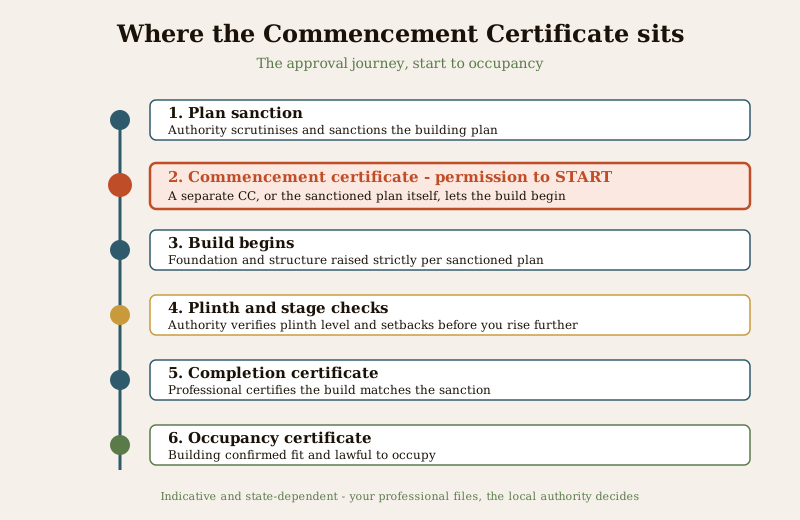
Where the CC sits in the approval timeline
Think of the approval journey as a relay, where each stage hands off to the next. The commencement certificate is the baton that lets the physical build begin. The table below places it in the wider sequence so you can see what comes before and after.
| Stage | What happens | Who acts |
|---|---|---|
| Plot and title in order | Ownership, land use and records confirmed before you design | Owner, with a lawyer |
| Design and NOCs | Drawings prepared; fire, environment, airport or other NOCs gathered where they apply | Architect or engineer |
| Plan sanction | Local authority scrutinises and sanctions the building plan | Local authority decides |
| Commencement | Permission to START is confirmed - a separate CC, or the sanctioned plan itself | Local authority issues; professional files |
| Build begins | Foundation and structure raised strictly per sanctioned plan | Builder and engineer |
| Plinth and stage checks | Authority verifies plinth level and setbacks before building rises further | Local authority inspects |
| Completion certificate | On finishing, the professional certifies the build matches the sanction | Professional applies; authority verifies |
| Occupancy certificate | Authority confirms the building is fit and lawful to occupy | Local authority issues |
Two stages in that list deserve their own reads because they are the end-of-build twins of the commencement stage. The completion certificate explained covers the "you finished as approved" document, and the occupancy certificate explained covers the permission to actually move in. All of these regulation concepts - setbacks, height, built-up area, the bye-laws they rest on - live in the building regulations and compliance hub, which this guide connects to rather than repeats.
When it is issued and the plinth-level check
Where a separate commencement certificate is issued, it usually comes after the plan is sanctioned and the pre-conditions are met. A common and important checkpoint that many authorities attach at the start of a build is the plinth-level inspection. The idea is simple: before you go up, the authority - or the licensed professional acting on its behalf - verifies that what has been built up to plinth level matches the sanctioned plan. That means the footprint is in the right place, the setbacks from every boundary are correct, and the plinth height is as approved.
The plinth check exists because deviations are cheapest to catch and fix at the foundation, not after three floors are cast. If your slab has crept into a setback, that is far easier to remedy when it is a plinth than when it is a finished structure that would have to be demolished. In practice your engineer will often submit a plinth-level intimation or certificate and pause above-plinth work until the position is confirmed. Treat this as a feature, not a hurdle - it protects you from building something the authority will later refuse to regularise.
Why building without it is a serious risk
It is tempting, when the plan is sanctioned and the site is ready, to start digging while the last paperwork catches up. Resist it where a commencement permission is required. Construction begun without the permission you need is unauthorised construction, and the consequences are real and layered.
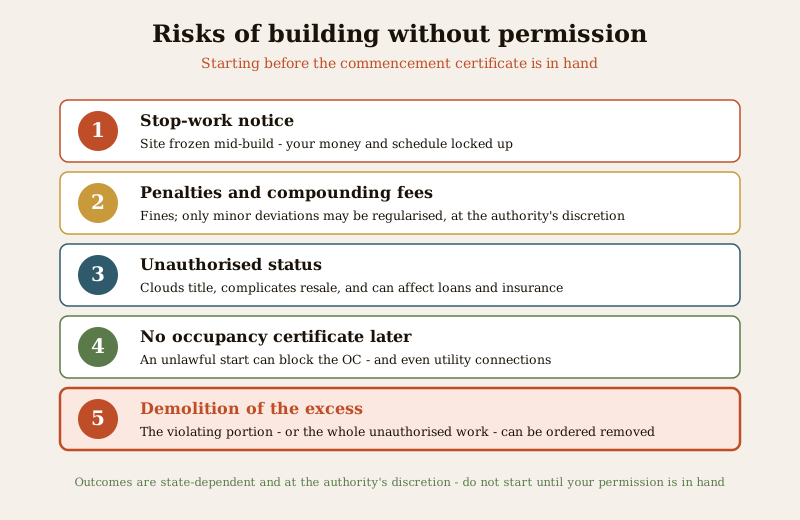
- Stop-work notice. The authority can order work halted, freezing your site and your money mid-build.
- Penalties and compounding fees. Many authorities levy fines, and some allow minor, compoundable deviations to be regularised on payment - but this is at the authority's discretion and only within limits.
- Unauthorised status. The structure may be recorded as unauthorised, which can cloud your title, complicate a future sale, and affect loans and insurance.
- No occupancy certificate later. An unlawful start can block the occupancy certificate at the end, leaving a building you cannot lawfully occupy and utilities you may struggle to get connected.
- Demolition of the excess. In serious cases the portion built in violation - or the whole unauthorised work - can be ordered demolished, which is the costliest outcome of all.
For the errors that most often derail an approval - and how to avoid them - the common building approval mistakes guide is a useful companion, and the understanding building bye-laws guide explains why these rules exist in the first place, alongside why building rules exist.
Validity and revalidation
A commencement certificate is not open-ended. It is time-bound in two ways that matter. First, it usually requires you to BEGIN work within a set period after issue - if you sit on it too long, the permission can lapse. Second, the sanction and commencement together are typically valid for a limited number of years, after which the permission must be revalidated to keep the build lawful.
The exact periods vary by state, city and the bye-laws in force, so treat any specific number you read elsewhere with caution and confirm yours locally. The practical rule for a homeowner is straightforward: know your validity date, do not let it slip, and if the build will run long or has stalled, ask your professional to apply for revalidation before the permission expires rather than after. Revalidating a live permission is routine; reviving a lapsed one can mean a fresh scrutiny against whatever bye-laws apply at that later date, which may have changed.
Commencement vs completion vs occupancy - clearing the confusion
Because "CC" is used loosely, and because all three documents are milestones in the same build, they get muddled. They are distinct, they come at different times, and they mean different things. The table and figure below set them side by side.
| Document | When it comes | What it means | Who issues or certifies |
|---|---|---|---|
| Commencement certificate (CC) | Start of the build, after plan sanction | Permission to BEGIN construction, strictly per the sanctioned plan | Local authority issues; professional files |
| Completion certificate | End of construction | Confirmation that the building was completed AS SANCTIONED, with any deviations disclosed | Professional certifies; authority verifies |
| Occupancy certificate (OC) | After completion is accepted | Permission that the building is safe and lawful to OCCUPY and use | Local authority issues |
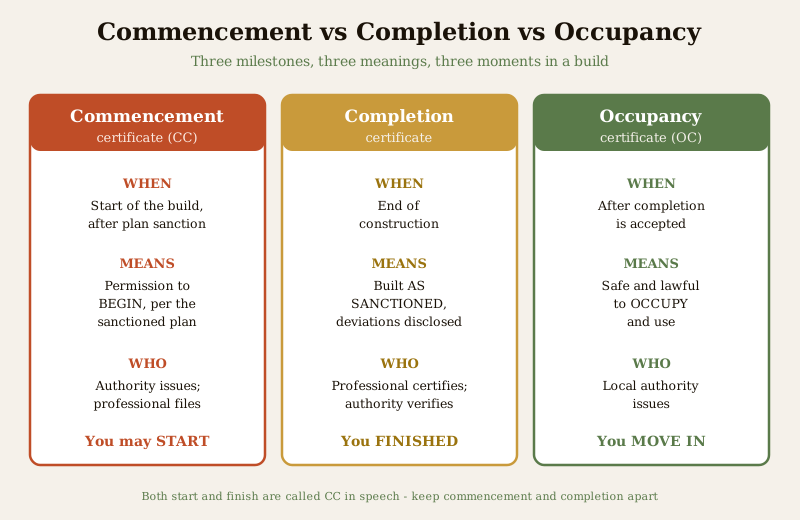
The one-line way to remember it: commencement lets you START, completion says you FINISHED as approved, and occupancy lets you MOVE IN. Read the two end-of-build documents in full in the completion certificate explained and occupancy certificate explained guides.
What a homeowner should do
You do not file any of this yourself, and you should not try to. Your job is to understand the sequence, ask the right questions, and keep the paperwork safe. Engage a competent professional early - the how to hire an architect guide helps you choose one - and ask them three plain questions: does our plot need a separate commencement certificate or does the sanctioned plan cover it; when is the plinth-level check and what must be ready for it; and what is the validity date, with a diary note to revalidate well before it lapses. Then hold copies of the sanction, the commencement permission and every inspection record together with your title papers. They are the spine of a clean occupancy certificate at the end.
References
- Local building bye-laws and the unified development or building rules of your state and city (municipal corporation, development or planning authority) - the binding source for whether a separate commencement certificate is required, its validity and revalidation, and the plinth-level check.
- The National Building Code of India framework, as adopted and modified by state bye-laws, for the general approval and inspection sequence.
- Your state or city single-window or online building-plan approval portal, for the current commencement and inspection procedure.
- Studio Matrx guides: building plan sanction process, list of approvals and NOCs before construction, completion certificate explained, occupancy certificate explained, and the building regulations and compliance hub.
Every process, timeline and rule above is indicative and STATE-DEPENDENT and CITY-DEPENDENT, and all of it changes. Let your architect or licensed engineer handle the filing and liaison, and confirm the binding position with your local authority before you break ground.
Export this guide
Related Guides — Deep-dive reading
Building Plan Sanction Process, Step by Step (India) (2026)
Before a single brick is laid, your house plan must be approved by the local authority. Here is who prepares it, what documents it needs, how it is submitted and scrutinised, and what a sanctioned plan actually buys you.
Building RegulationsUnderstanding Building Bye-Laws in India: A Homeowner's Guide
What municipal building bye-laws are, who makes them, and how to find and read the ones that actually govern your plot
Building Regulations & ComplianceCommon Approval Mistakes That Delay Projects in India
The avoidable errors that stall building-plan sanction and possession, and how first-time builders can sidestep each one
Building Regulations & ComplianceRelated Tools — Try Free
Construction Approval Checklist — 24-Stage Tracker
Track every approval, permit, and NOC from land title to occupancy certificate across 24 stages.
ApprovalsBuilding Plan Approval Roadmap
Step-by-step building plan approval process by city with documents, timelines, and fees.
ArchitectAIContract Studio
AI generates professional architecture service agreements with milestones and scope.
ArchitectAI