
Completion Certificates Explained: A Homeowner's Guide for India
What a Completion Certificate is, how it differs from the Occupancy Certificate, and how to verify it before you pay or move in
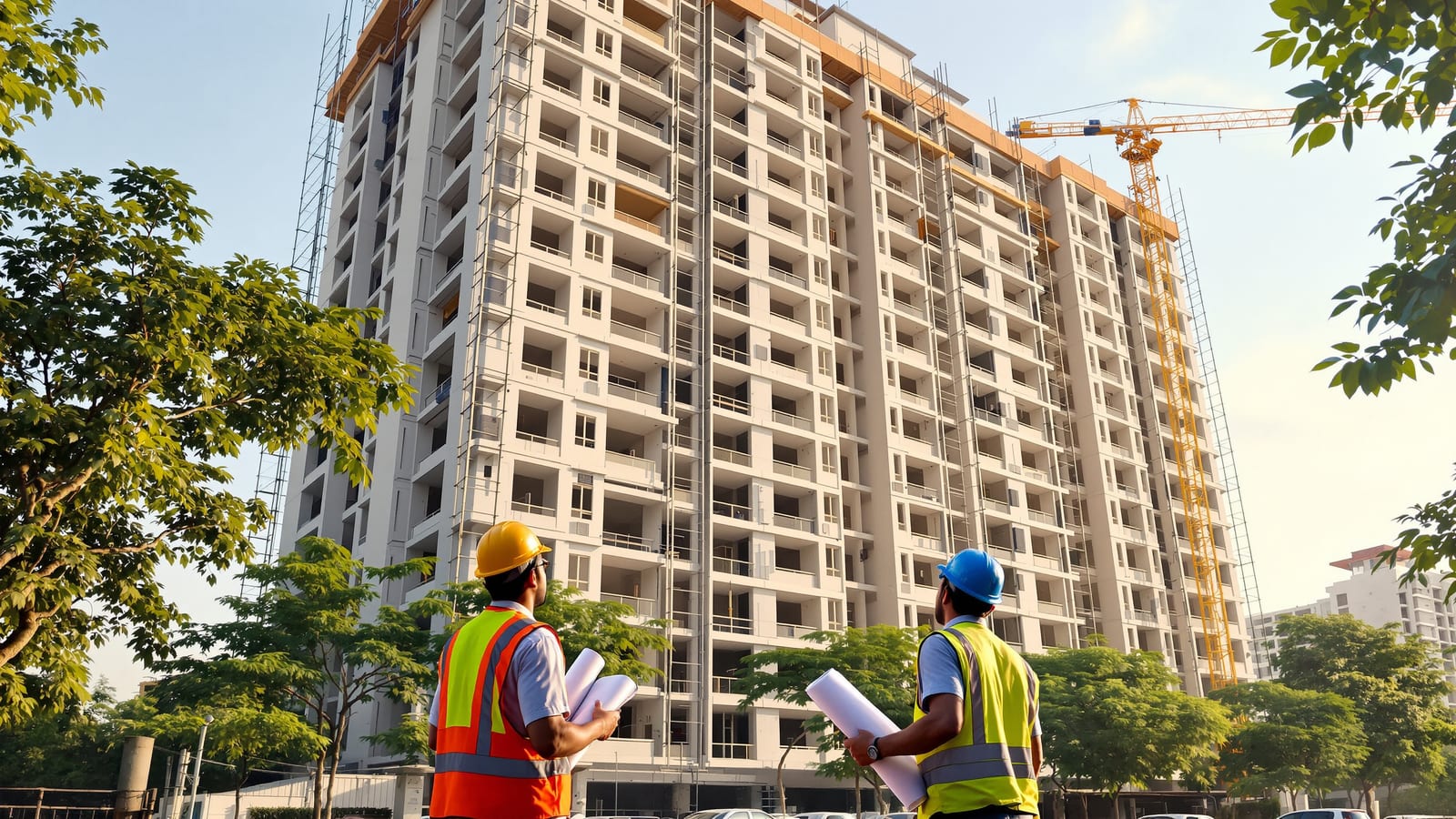
You have watched your home rise floor by floor. The scaffolding is down, the paint is dry, and the keys are in your hand. It feels finished. But in the eyes of the law, your building is not truly "complete" until one specific piece of paper says so: the Completion Certificate.
If you are buying a flat, building a house, or taking possession of a new home, the Completion Certificate (often shortened to CC) is one of the most important documents you will encounter. It is also one of the most misunderstood. Many buyers confuse it with the Occupancy Certificate, assume the builder has it when they do not, or move in without ever checking. Each of those mistakes can cost you money, peace of mind, and sometimes the property itself.
This guide explains, in plain language, what a Completion Certificate is, how it differs from the Occupancy Certificate, why it matters, how it is obtained, and what you should verify before you pay or move in. Because the names and rules change from one state and municipality to the next, treat this as the general picture and always confirm the specifics with your own local body.
1. What a Completion Certificate actually is
A Completion Certificate is a document issued by the local authority, usually the municipal corporation or the development authority, certifying that a building has been constructed in accordance with the sanctioned plan and the applicable building bye-laws and norms.
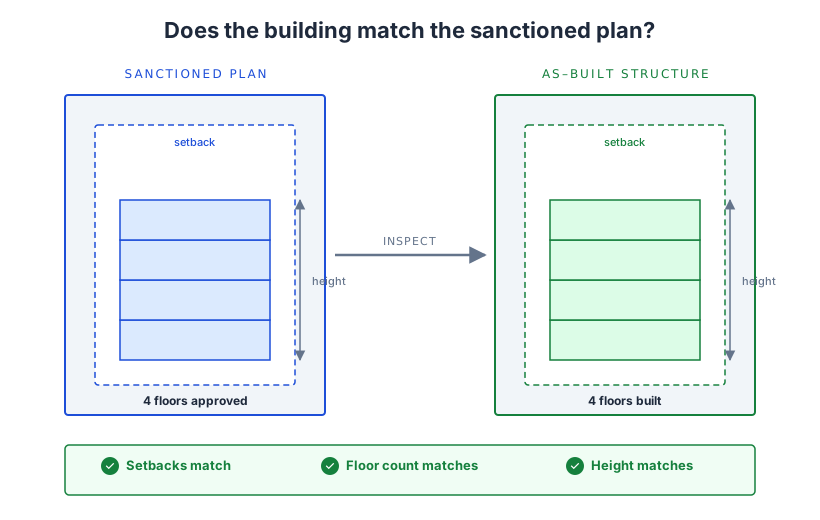
In simpler words: when your plan was approved, the authority sanctioned a specific design, with a specific number of floors, specific setbacks (the open space you must leave around the building), a specific height, and a specific built-up area. The Completion Certificate is the authority confirming, after an inspection, that what was actually built matches what was actually approved. It is the official answer to the question, "Did they build it the way they were allowed to?"
This is why the CC is sometimes described as a compliance certificate. It is not about whether the building looks nice or whether the lift works. It is strictly about plan compliance and structural conformity, things like height, layout, floor area, and setbacks.
Under the Real Estate (Regulation and Development) Act, 2016 (RERA), the completion certificate is even given a formal definition: a certificate from the competent authority certifying that the project has been developed according to the sanctioned plans, layout plans, and specifications approved under the applicable local laws.
2. CC versus OC: the difference that trips everyone up
The single most common confusion is between the Completion Certificate (CC) and the Occupancy Certificate (OC). They are two different documents, issued for two different reasons, and you generally need both.
Here is the cleanest way to remember it:
- The CC says: the building was built as approved. It confirms construction is finished strictly per the sanctioned plan and structural norms.
- The OC says: the building is cleared to occupy. It confirms that essential services, water supply, sewage and drainage, electricity, and fire-safety systems, are properly installed and functional, and that the building is safe and lawful to live in.
The sequence matters. In most municipal frameworks, the CC comes first and enables the OC. A valid Completion Certificate is typically a precondition before a developer can even apply for the Occupancy Certificate. Think of the CC as proving the structure is correct, and the OC as the final green light that lets people move in.
| Aspect | Completion Certificate (CC) | Occupancy Certificate (OC) |
|---|---|---|
| Core question answered | Was it built as approved? | Is it cleared to be occupied? |
| What it confirms | Construction matches the sanctioned plan; height, setbacks, floors, built-up area, structural norms | Water, sewage, drainage, electricity, fire-safety installed and working; building is safe and habitable |
| Typical sequence | Issued first | Issued after the CC |
| Who relies on it most | The authority, then the OC process | You, the occupant, plus banks and utilities |
| Without it | Building treated as not formally completed | Occupation is not legally recognised |
For a deeper, architect-side walkthrough of how these certificates and the earlier plinth check fit into a project timeline, see OC, CC and plinth verification — the architect workflow. For the OC in detail, read the sibling guide on occupancy certificates explained.
3. When CC and OC come as one: the combined CC-cum-OC
To complicate things, not every state keeps the two certificates strictly separate. In some states and union territories, the authority may issue a single combined certificate instead of two. This is sometimes called a CC-cum-OC or OC-cum-CC.
Delhi is one place where the municipal body has often issued a combined occupancy-cum-completion certificate. Some Maharashtra workflows pair the two documents closely as well, handling the full occupation certificate and the building completion certificate together.
The practical takeaway for you is this: do not assume your city issues two separate papers, and do not assume it issues one. There is genuine state variation here, and no clean national list of which states do what. When in doubt, ask your local municipal or development authority exactly which certificate or certificates apply to your building, and get the answer in writing.
4. The partial Completion Certificate for phased projects
Large projects, like a gated community with several towers, are rarely finished all at once. Tower A may be ready while Tower D is still being built. To handle this, authorities can issue a partial or "part" completion certificate (and the matching partial occupancy certificate) for the specific tower or wing that is fully complete, while construction continues elsewhere.
This lets buyers in the finished phase take legal possession without waiting for the entire project. A partial completion certificate exists as a formal instrument in several states; Punjab's development authority, for instance, has issued specific clarifications on partial completion certificates for larger projects.
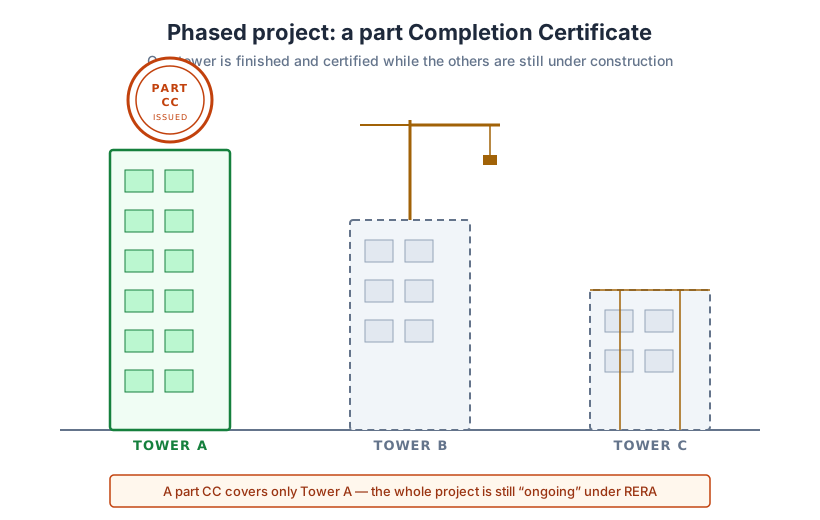
One important caution if you are buying into a phased project: a partial completion certificate covering only your tower does not mean the whole project is legally complete. Under RERA, a project that does not yet have a full completion certificate is generally treated as "ongoing" and must remain registered with the regulator. So a part CC is reassuring for your specific unit, but it is not the same as the project being fully closed out.
5. Why the Completion Certificate matters so much
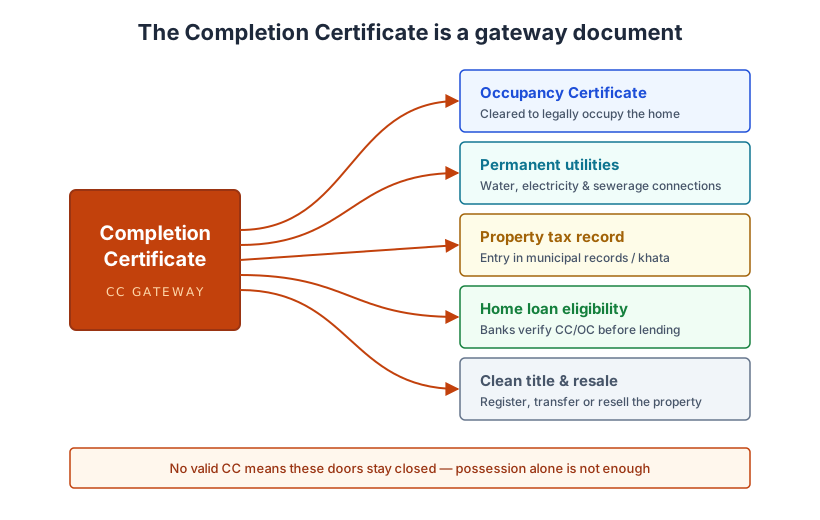
It is tempting to treat the CC as just more paperwork. It is far more than that. The Completion Certificate is a gateway document, and several important things hang off it.
- It is the gateway to the Occupancy Certificate. As explained above, you usually cannot get the OC, the document that makes occupation legal, without the CC first.
- It supports legal occupation. Courts and RERA authorities have repeatedly held that taking possession of a building without valid completion and occupancy approvals does not create proper legal possession. A possession letter alone is not enough.
- It feeds property tax and property records. Accurate property tax assessment and entry of the property in municipal records, the khata or its local equivalent, generally depend on having these certificates. In Karnataka, for example, the difference between an A-Khata and a B-Khata property in Bengaluru turns heavily on having valid occupancy approval; a B-Khata property faces real limits on tax records, modifications, and resale. That specific A and B Khata mechanic is a Karnataka feature, but every state has some version of "no proper certificate, no clean record."
- It enables permanent utility connections. Permanent water, electricity, and sewerage connections are normally granted only against the CC or OC.
- It protects clean title and resale value. Without the CC and OC, registering, transferring, or reselling the property becomes difficult, and a future buyer's bank may simply refuse a home loan against it.
In a landmark December 2024 judgment on unauthorised construction, the Supreme Court of India issued directions that make these links harder to ignore: possession may be handed over only after obtaining the completion or occupation certificate; service connections like electricity, water, and sewerage are to be given only on production of the CC or OC; and banks must verify the CC or OC before sanctioning loans. The Court also made clear that long occupancy or heavy investment cannot, by themselves, regularise an illegal construction.
6. How a Completion Certificate is obtained
You will rarely handle this process yourself; your architect or licensed engineer drives it. But understanding the steps helps you ask the right questions and spot delays.
1. Construction is finished and a completion notice is filed. Once building work is complete, the owner, acting through the licensed architect or engineer who supervised the construction, gives a completion notice to the authority and applies for the certificate.
2. Completion drawings and documents are submitted. These typically include the as-built or completion plans, the sanctioned building plan and earlier approval letters, the architect's completion certificate or report, and a structural engineer's certificate on the soundness and stability of the structure. Depending on the building and the city, you may also need NOCs from departments such as fire and pollution control, a plumber's certificate, a lift safety certificate, and photographs of the finished structure. Some municipalities still require physical sets of plans, including a cloth-mounted copy, while many now accept online applications.
3. The authority inspects the site against the sanction. An officer physically inspects the completed building and checks the as-built structure against the sanctioned plan, looking at footprint, number of floors, height, setbacks, and the permitted floor area ratio.
4. The certificate is issued, or deviations are flagged. If everything matches, the CC is issued. If there are deviations, minor ones may attract a penalty or compounding fee, while major rule violations can lead to a refusal and, in serious cases, demolition. The tolerance for "minor" deviations varies by state and city; there is no single national threshold, so do not rely on figures you may have heard quoted.
Timelines for issue differ widely by municipality. Some explainer sources mention a few weeks after a complete application, but treat any such number as illustrative only, not a guaranteed statutory deadline, and confirm with your local body.
7. What happens if there is no Completion Certificate
Skipping or never obtaining the CC is not a harmless shortcut. The consequences are real and, after the 2024 Supreme Court directions, sharper than before:
- The building can be treated as unauthorised or illegal.
- The authority can levy penalties and, in serious cases of violation, issue demolition orders.
- Permanent water, electricity, and sewerage connections can be denied or disconnected.
- Selling, leasing, or registering the property in a buyer's name becomes difficult, and in some states registration can be blocked.
- Banks may refuse a home loan or withhold the final disbursement.
For builders and developers, RERA adds another layer of accountability. Under the Act, the promoter is responsible for obtaining the completion or occupancy certificate, or both as applicable, from the competent authority and making it available to the buyers or to the association of allottees. A builder who hands over flats without these certificates can face continuing liability.
8. RERA, NBC, and Model Bye-Laws: the framework behind the CC
A few national frameworks shape how the CC works, even though the actual certificate is issued locally.
- RERA 2016 defines the completion and occupancy certificates and places a clear duty on developers to obtain them and pass them to buyers. If you are buying in a registered project, you can often see the certificate status on your state's RERA portal.
- The National Building Code of India (NBC) 2016, published by the Bureau of Indian Standards, sets the model technical standards for construction, fire safety, structural safety, and services. It becomes binding only when a state or local body adopts it into its own bye-laws.
- The Model Building Bye-Laws (MBBL) 2016, issued by the Town and Country Planning Organisation under the Ministry of Housing and Urban Affairs, are a model template that states and urban local bodies adapt. They set the parameters, setbacks, height, floor area ratio, fire and structural safety, against which completion is assessed.
The recurring theme is the same one running through this guide: these national documents provide the template, but the rule that actually binds your building is whatever your state and local authority have adopted.
9. Your buyer and owner verification checklist
Whether you are buying a new flat or finishing your own home, here is a practical checklist to verify the Completion Certificate properly.
| What to check | Why it matters | How to verify |
|---|---|---|
| Ask for the CC by name, in writing | Builders sometimes show other documents instead | Request a copy of the actual Completion Certificate, not just a possession letter |
| Confirm whether your city uses CC, OC, or a combined CC-cum-OC | Avoids assuming the wrong document exists | Ask the local municipal or development authority directly |
| Match the CC to the sanctioned plan | Confirms it was built as approved | Compare floors, height, and setbacks against the approved plan |
| Check for full versus partial CC | A part CC covers only one tower or phase | For phased projects, confirm whether yours is full or partial |
| Cross-check on the state RERA portal | RERA projects must publish certificate status | Search the project on your state RERA website |
| Verify before paying or moving in | Possession without certificates is legally weak | Make CC and OC a condition of final payment |
| Confirm before taking a home loan | Banks now verify CC or OC before lending | Ask your bank what it requires for that property |
You can also run through the broader approval picture with the construction approval checklist tool, which walks you through the sequence of approvals from sanction to completion. To understand the related failure points, read why building plans get rejected and common approval mistakes that delay projects. For a state-by-state view of building regulation, the India Regulatory Atlas is a useful starting point.
What this means for you
The Completion Certificate is your proof that the building you are paying for was built the way it was allowed to be built. It is the document that unlocks the Occupancy Certificate, your permanent utilities, your property tax record, your clean title, and your ability to resell or borrow against the home. Do not treat it as the builder's problem alone.
Three things to carry away. First, do not confuse the CC with the OC; you generally need both, and the CC usually comes first. Second, never take final possession, make your last payment, or move in until you have seen the actual certificate, and confirmed whether your city issues it separately or as a combined CC-cum-OC. Third, because every state and municipality runs this differently, always verify the exact requirement with your own local body and, for a registered project, on your state's RERA portal. A few hours spent verifying now can save you years of trouble later.
Sources
- Real Estate (Regulation and Development) Act, 2016, Section 2(q) definition of completion certificate and Section 11(4)(b) promoter duties — IBC Laws, https://ibclaw.in/section-11-of-real-estate-regulation-and-development-act-2016-rera-functions-and-duties-of-promoter/
- Supreme Court directions on unauthorised construction and CC/OC, December 2024 — SCC Online, https://www.scconline.com/blog/post/2024/12/18/unauthorised-construction-building-plans-directions-issued-sc-legal-news/
- Supreme Court directions, no loans or service connections for illegal buildings — LiveLaw, https://www.livelaw.in/supreme-court/no-trade-license-or-loans-for-illegal-buildings-officers-liable-for-wrong-completion-certificates-supreme-court-issues-directions-278738
- Completion Certificate and Occupancy Certificate, definitions and difference — RERA Consultants, https://reraconsultants.in/completion-certificate-and-occupancy-certificate-in-real-estate/
- Occupancy Certificate and Completion Certificate explained — NoBrokerHood, https://www.nobrokerhood.com/blog/occupancy-certificate-and-completion-certificate/
- Completion Certificate process and documents — NoBroker, https://www.nobroker.in/blog/completion-certificate/
- Completion Certificate, provisional versus final and process — Sobha, https://www.sobha.com/blog/completion-certificate-cc/
- Building Completion Certificate document list — Nashik Municipal Corporation, https://nmc.gov.in/assets/admin/upload/download/dpdc_classa.pdf
- Building Proposal completion and occupancy process, RTI Manual — MCGM (BMC), https://portal.mcgm.gov.in/irj/go/km/docs/documents/MCGM%20Department%20List/Deputy%20Chief%20Engineer%20(Building%20Proposal)/RTI%20Manuals/Dy_Ch_Eng_Building_Proposal_city_RTI_E09.pdf
- Clarification on completion and partial completion certificates — PUDA, Punjab, https://puda.punjab.gov.in/?q=clarification-regarding-completions-partial-completion-certificate-papra-and-mega-projects-or
- Occupancy and completion certificates, A-Khata versus B-Khata in Bengaluru — PKP Advocates, https://www.pkpadvocates.in/blog/occupancy-certificate-completion-certificate-bangalore
- National Building Code of India 2016 — Bureau of Indian Standards, https://www.bis.gov.in/standards/technical-department/national-building-code/
- Model Building Bye-Laws and building bye-laws overview — NoBroker, https://www.nobroker.in/blog/building-bye-laws/
- Building certificates under RERA, commencement, completion, occupancy, possession — ReLakhs, https://www.relakhs.com/building-certificates-rera-commencement-completion-occupancy-possession/
Export this guide
Related Guides — Deep-dive reading
Common Approval Mistakes That Delay Projects in India
The avoidable errors that stall building-plan sanction and possession, and how first-time builders can sidestep each one
Building Regulations & ComplianceOccupancy Certificates Explained: A Home Buyer's Guide (India)
What an Occupancy Certificate is, why no Indian buyer should move in without one, and exactly how to verify it before you pay
Building Regulations & ComplianceRERA Buyer Rights: A Homeowner's Guide (2026)
What RERA actually gives you as a home buyer -- registered projects, sale on carpet area, an escrow rule that curbs fund diversion, defined possession dates with delay compensation, a defects-liability period, and a real complaint route -- plus how to check a project on your state RERA portal before you pay a rupee.
Building RegulationsRelated Tools — Try Free
Pre-Possession Inspection Checklist
Inspect your flat before registration — 10 categories, 70+ checkpoints across legal, carpet area, structure, finishes, and deviations.
Homebuyer ChecklistConstruction Approval Checklist — 24-Stage Tracker
Track every approval, permit, and NOC from land title to occupancy certificate across 24 stages.
ApprovalsStructural Modification Approval Checklist
41 items across structural assessment, society approval, municipal compliance, and safety.
Approval Checklist