
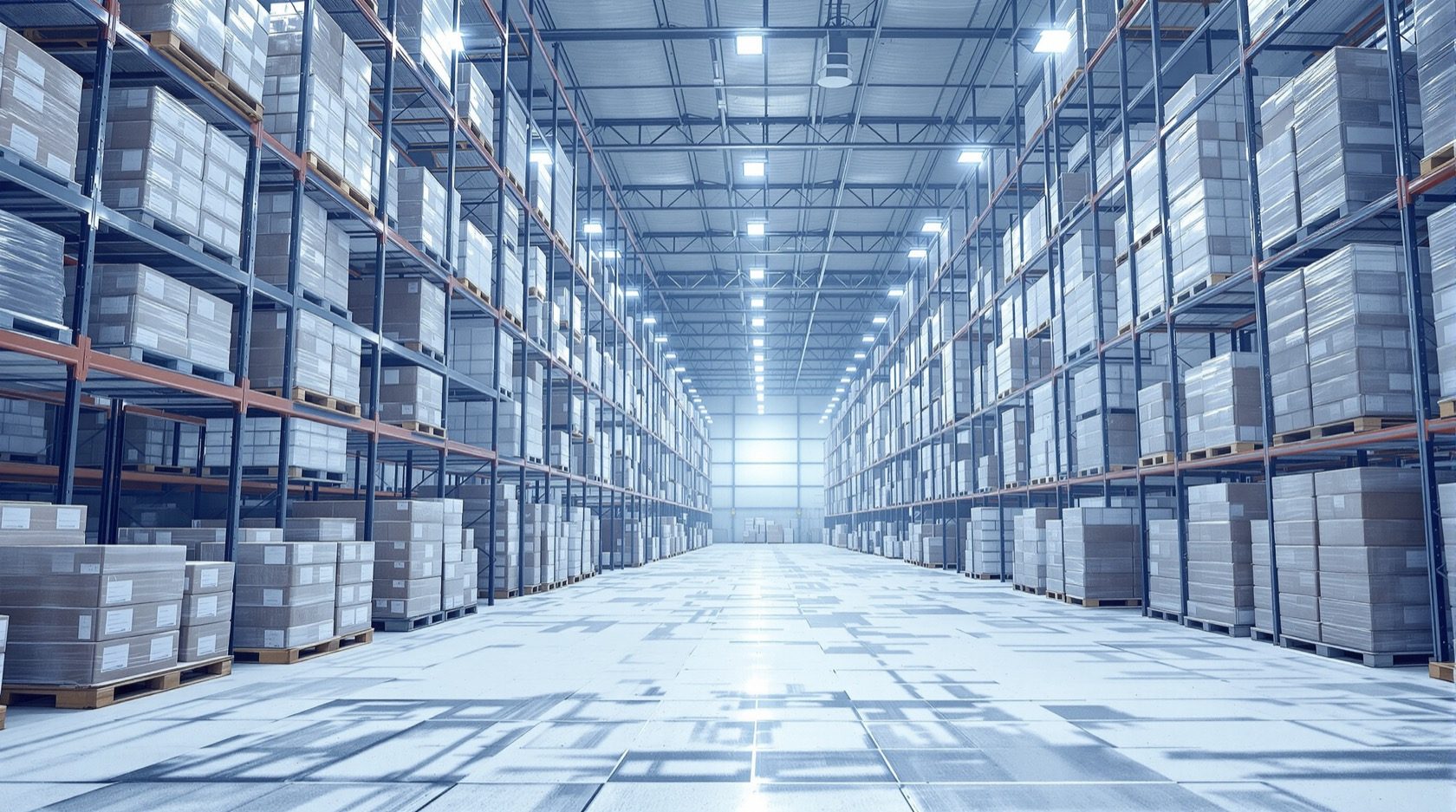
Cold Storage & the Cold Chain: Refrigeration That Preserves
From farm produce to vaccines, huge quantities depend on staying cold — how cold-storage refrigeration, insulation and temperature zones preserve perishables, why India's cold chain matters so much, and what separates a cold room from ordinary air conditioning.
An enormous amount of what we eat and the medicines that keep us well depend on one thing: staying cold, continuously, from source to use. A break in that chain spoils food and destroys vaccines. Cold storage — refrigerated warehouses and rooms that hold perishables at tight low temperatures — is the backbone of that cold chain, and India, which loses a large share of its produce to inadequate cold storage, has a vast and growing need for it. Cold-storage refrigeration is related to air conditioning but built to a different brief: not comfort, but preservation. This guide explains how it works and why it matters.
It builds on the Special Buildings HVAC Guide, part of the HVAC Knowledge Hub.
Scope. This explains cold-storage concepts to inform understanding. Cold-storage refrigeration design and installation is specialist engineering — sizing, refrigerant systems and controls are qualified professional work.
What a cold store does — and why it's different
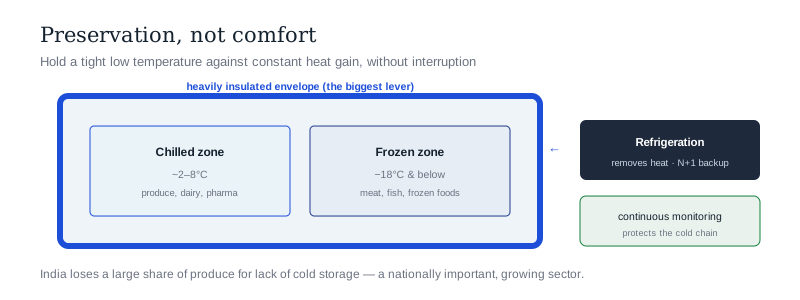
A cold store is not just "a very cold AC room" — its brief changes the whole design:
- The goal is preservation, not comfort — hold a precise low temperature (and often humidity) continuously to slow spoilage, kill nothing but stop microbial and enzymatic decay, and never let it drift.
- Continuous, reliable operation — a failure means spoiled stock, so reliability, backup power and monitoring are essential.
- Big, constant heat removal — the refrigeration must remove heat leaking through the envelope, from the goods themselves (especially freshly loaded warm produce), from people, doors and equipment.
- Very low temperatures — from chilled (~2–8°C) down to frozen (−18°C or lower), well below comfort cooling, needing purpose-built refrigeration.
The design problem is holding a tight, low setpoint against constant heat gain, without interruption, for the life of the goods.
The building blocks
- A heavily insulated envelope — thick insulated panels (walls, roof, floor) drastically cut heat gain; insulation is the single biggest lever, because every watt kept out is a watt the refrigeration needn't remove (the same envelope-first logic, taken to an extreme).
- The refrigeration system — compressors, condensers and evaporators sized for the load, often using refrigerants like ammonia (large industrial plants), CO₂, or HFCs/naturals, with the same refrigeration cycle as an AC but built for low temperatures and big loads.
- Air circulation — evaporator fans distribute cold air evenly so there are no warm spots; airflow and stacking are designed together.
- Vapour barriers & sealed doors — to stop humidity ingress, condensation, frost and ice build-up; door discipline (air curtains, rapid-close doors) limits warm-air infiltration.
Temperature zones and the cold chain
- Chilled storage (~0–8°C) — fruit, vegetables, dairy, pharmaceuticals; each product has its ideal range.
- Frozen storage (−18°C and below) — meat, fish, frozen foods; blast freezers rapidly freeze fresh product before long-term storage.
- Controlled-atmosphere & humidity — advanced stores manage oxygen/CO₂ and humidity to extend produce life further.
- The cold chain — cold storage is one link; the goods must stay cold through transport (reefer trucks), distribution and retail too. A break anywhere spoils the product — which is why continuous monitoring (and, for vaccines, strict cold-chain logging) is essential.
- India's stakes — a large fraction of Indian produce is lost post-harvest for lack of cold storage and cold-chain infrastructure, making this a nationally important, fast-growing sector for food security and pharma.
The one-line answer
Cold storage is refrigeration built for preservation, not comfort — holding perishables at a precise, continuous low temperature (and humidity) to slow spoilage, from chilled (~2–8°C) to frozen (−18°C and below) — and it's the backbone of the cold chain that keeps food and vaccines usable from source to use. It differs from air conditioning in brief and build: the goal is a tight low setpoint held without interruption (failure spoils stock), against constant heat gain from the envelope, the goods, doors and people. The building blocks are a heavily insulated envelope (the biggest lever — every watt kept out needn't be removed), a refrigeration system sized for low temperatures and big loads (often ammonia, CO₂ or naturals), even air circulation, and vapour barriers and door discipline to stop humidity, frost and warm-air infiltration. Stores are organised into temperature zones (with blast freezers to rapidly freeze fresh product), and because the chain must hold through transport and retail too, continuous monitoring is essential. Given that India loses a large share of its produce for lack of it, cold storage is a nationally important, fast-growing specialism — and specialist engineering throughout.
Where to go next
- The overview: Special Buildings HVAC Guide.
- The refrigeration basics: Air Conditioning Basics · HVAC Refrigerants Guide.
- Why insulation dominates: Heat Transfer in Buildings.
- The plant it uses: Chiller Guide.
References
- ASHRAE Handbook — Refrigeration (cold storage, food refrigeration, cold-chain practice); ISHRAE refrigeration guidance.
- National Centre for Cold-chain Development (NCCD) & Ministry of Food Processing Industries (MoFPI), India — cold-chain standards & schemes.
- WHO cold-chain guidance for vaccines; Bureau of Energy Efficiency (BEE) — refrigerated-warehouse energy efficiency: https://beeindia.gov.in/
This guide informs understanding. Cold-storage refrigeration design and installation is specialist engineering, sized and built by qualified professionals. Verify any standard's current status before relying on it.
Export this guide
Related Guides — Deep-dive reading
HVAC for Special Buildings: When Comfort Isn't the Point
Hospitals, data centres, cleanrooms, kitchens and cold stores need HVAC that does far more than keep people comfortable — it controls infection, protects equipment, ensures sterility or preserves goods. An overview of what makes special-building HVAC different, and why.
HVAC & CoolingSmoke Barriers in India (2026): Holding Back the Smoke That Kills First
Smoke, not flame, disables and kills most fire victims and travels far faster and further - this guide explains the walls, doors and curtains that hold smoke back and keep escape routes tenable.
SecurityWarehouse Security in India (2026): Protecting Stock, Docks and Dispatch
How a godown, distribution centre, 3PL facility or cold-store secures a large-footprint building full of high-value stock with constant vehicle and goods movement — layering perimeter, gate-and-dock control, inventory discipline, after-hours monitoring and fire safety without ever blocking worker egress.
SecurityRelated Tools — Try Free
Curtain Thermal Calculator
Estimate the solar heat-gain a curtain or blind cuts by orientation, glass and treatment — and the cooling saving.
Thermal ToolCross-Ventilation Analyzer
Estimate airflow and air changes per hour (ACH) from room size, window areas, layout, and local wind — with NBC 2016 Part 8 compliance check.
Ventilation CalculatorClient Brief Generator
8-section questionnaire that produces a professional design brief PDF with signature lines.
Brief Generator