
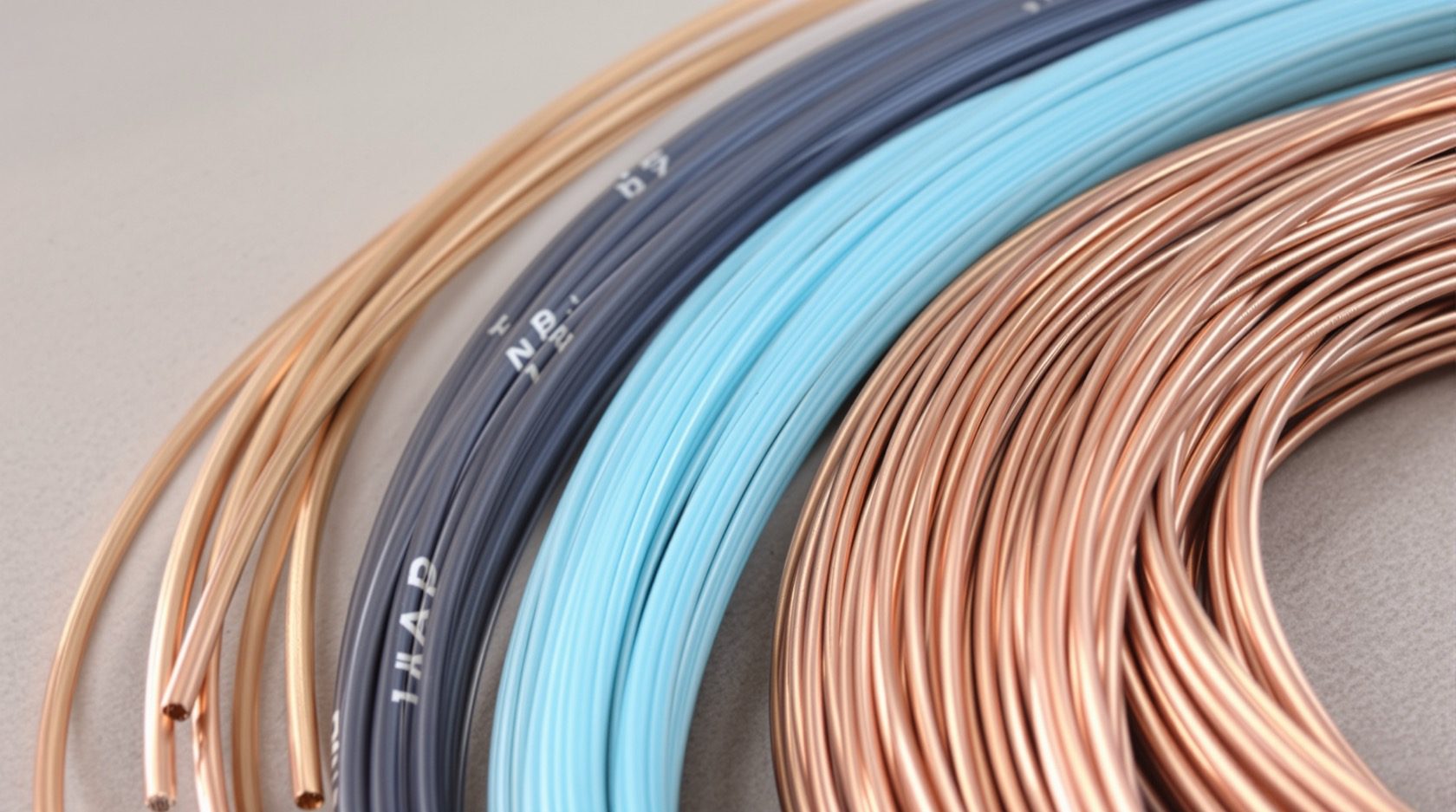
Cable Size Selection: Which Wire Gauge for Lights, Sockets, AC & Geyser
Why the wrong wire size is a fire risk — how house-wiring cable is sized in square millimetres, which common size suits lights, sockets, ACs and geysers, and the three factors (current, length, grouping) an electrician balances so cables never overheat.
A cable that's too small for its load is a slow-burning fire risk — it overheats every time the circuit runs near capacity. That's why cable sizing is one of the most important (and least visible) electrical decisions in a home. House-wiring cable is sized by its cross-section in square millimetres (sq mm), and each circuit needs a size matched to the current it carries. This guide explains how cable sizing works, which common size suits which circuit, and what an electrician balances — so you can specify and sanity-check, and understand why it's not a place to save money.
It is a cables deep-dive in the Electrical Knowledge Hub, pairing with the copper vs aluminium guide and the wire size calculator.
The safety line. This guide helps you understand and specify cable sizes. The actual sizing and installation to IS 732 is a licensed electrician's job — undersized cable is a genuine fire hazard, so this is not a place for guesswork or DIY.
How cable is sized
House wiring cable is rated by its conductor cross-section, in square millimetres:
- Common home sizes: 0.75, 1.0, 1.5, 2.5, 4.0 and 6.0 sq mm (and larger for mains).
- Bigger cross-section = more current capacity (ampacity) and lower resistance/heating.
- The rule: the cable must safely carry the circuit's current without overheating, and be protected by a correctly-rated MCB that trips before the cable is overloaded.
- Copper is standard for home circuits (more current per sq mm than aluminium).
Common sizes by circuit (typical)
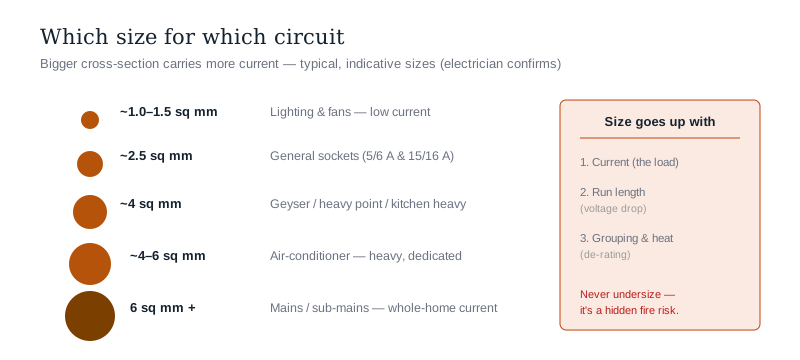
As a general guide to how sizes map to circuits in Indian homes — your electrician confirms the exact sizes to IS 732:
| Circuit | Typical size | Why |
|---|---|---|
| Lighting | ~1.0–1.5 sq mm | Low current (LEDs, fans) |
| General sockets (5/6 A & 15/16 A) | ~2.5 sq mm | Everyday appliances |
| Geyser / heavy point | ~4 sq mm | High, steady load |
| Air-conditioner | ~4–6 sq mm | Heavy load, dedicated circuit |
| Kitchen heavy appliances | ~4 sq mm | Hob, oven on dedicated circuits |
| Mains / sub-mains | 6 sq mm and up | Whole-home current |
These are typical, indicative figures — the correct size depends on the actual current, and the factors below.
The three factors an electrician balances
Cable sizing isn't just "look up the load" — three things push the size up:
1. Current (the load) — the biggest factor: more amps needs a bigger cable. From the appliance's watts (amps = watts ÷ 230).
2. Run length — long cable runs have more resistance and voltage drop, so a longer run may need a bigger size to keep voltage drop acceptable (the same idea as the wire size calculator).
3. Grouping and conditions — cables bunched together in a conduit, or in hot locations, can't shed heat as well, so they're de-rated (need to be larger) — a reason concealed, bunched wiring is sized carefully.
A competent electrician balances all three to IS 732, then protects the cable with the right MCB.
Why you should never undersize
- Undersized cable overheats under load — the leading path to an electrical fire, hidden inside the walls.
- It's the worst place to save money — cable is buried for decades; getting it right once is far cheaper than a fault later (see buying materials).
- Insist on ISI-marked cable to IS 694, correctly sized, from reputable brands — and beware under-gauged cheap cable that carries less copper than its stated size.
- The MCB must match the cable — a bigger MCB on a small cable removes the protection (see choosing MCB rating).
The one-line answer
House-wiring cable is sized by its cross-section in square millimetres, matched to the current each circuit carries so it never overheats: as a typical guide, ~1.0–1.5 sq mm for lighting, ~2.5 sq mm for general sockets, ~4 sq mm for a geyser or heavy point, and ~4–6 sq mm for an AC — with the exact size confirmed by an electrician to IS 732. Three factors push the size up: the current (the load), the run length (voltage drop on long runs), and grouping/heat (bunched or hot cables de-rate). Never undersize — an undersized cable is a hidden fire risk and the worst place to cut cost — so specify ISI-marked copper cable to IS 694, correctly sized, protected by a matching MCB, and installed by a licensed electrician.
Where to go next
- Size a specific run: Wire Size Calculator.
- Copper or aluminium: Copper vs Aluminium Wiring Guide.
- Protect the cable: Choosing MCB Rating Guide.
- Buy quality cable: Buying Electrical Materials Guide.
References
- IS 732 : 2019, Code of Practice for Electrical Wiring Installations (cable sizing, current-carrying capacity, de-rating), Bureau of Indian Standards.
- IS 694 : 2010, PVC Insulated Cables for Working Voltages up to 1100 V, BIS.
- National Electrical Code of India, SP 30 : 2023, BIS: https://www.bis.gov.in/
Cable sizes here are typical and indicative; the correct size for a circuit depends on its current, length and conditions and must be determined by a licensed electrician to IS 732. Verify any standard's status via the BIS catalogue before relying on it.
Export this guide
Related Guides — Deep-dive reading
Choosing the Right MCB Rating for Each Circuit
How the correct MCB is chosen — sized to protect the cable, above the circuit's normal load, with the right trip curve for the appliance. The common ratings for lighting, sockets, geysers, ACs and kitchens, and the golden rule that ties the breaker to the wire.
Electrical & WiringElectrical Fire Safety in India (2026): Overloads, Wiring and the Right Protection
Why electrical faults cause so many Indian building fires, and the fix: correct cable sizing and a properly designed board by a licensed electrician, MCB plus RCCB protection, no overloading, and never water on a live fire.
SecurityElectrical Safety for Security Systems in India (2026): Powering It Without Peril
A homeowner's guide to the power side of home and RWA security systems, CCTV, alarms, gates, access control and NVRs, done so it protects you instead of quietly becoming a shock or fire hazard. What makes a supply safe, what to insist on, and why the mains work belongs to a licensed electrician.
SecurityRelated Tools — Try Free
Electrical Safety & Load Audit
Home electrical audit — 10 categories, 65+ checkpoints across earthing, RCCB, MCB, wiring, switchboards, appliance circuits, DG/inverter backup.
Safety AuditWire Size Calculator
Find the minimum copper or aluminium cable size for a circuit that satisfies both current-carrying capacity and voltage drop over the run length.
ElectricalRoom Lighting Calculator
Estimate the target lux, total lumens and number of LED fixtures a room needs, from its type and size — a general-illumination planning guide.
Lighting