
Bullet-Resistant Doors in India: A Specifier's Guide (India 2026)
How ballistic doors are built, where they belong, and how to specify the right UL 752 or EN 1522 threat level for Indian banks, vaults and VIP rooms.
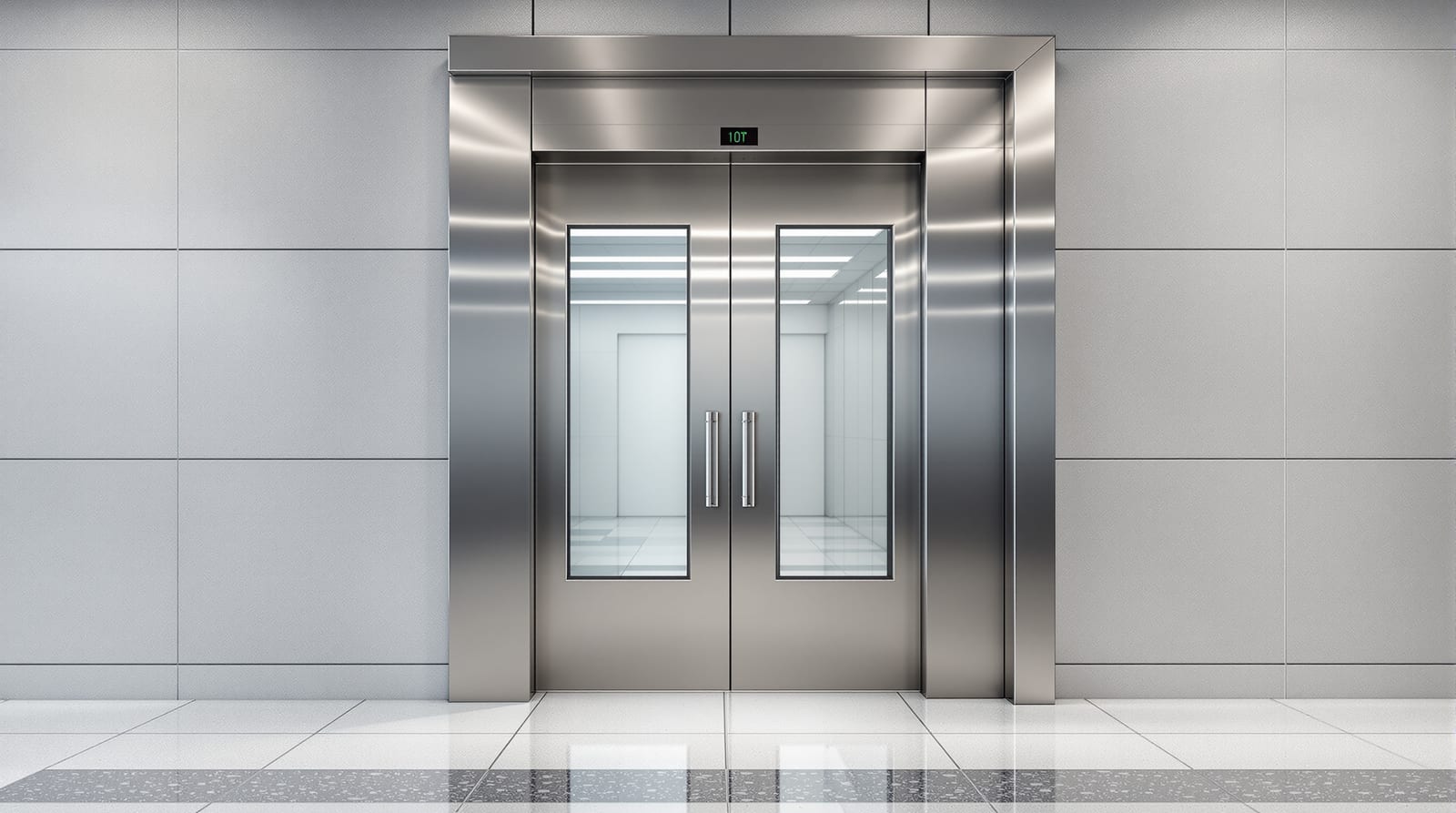
Bullet-resistant doors are project-engineered protective assemblies, not catalogue products: a door leaf, frame, vision panel and hardware all certified together to stop a defined cartridge at a defined velocity. For Indian banks, cash-handling rooms, armouries, jewellery showrooms and VIP safe rooms, the single most important decision is not the brand but the threat level — the ammunition the door is rated to defeat. Get that wrong and you have either an under-protected door or a hugely over-priced one. This guide explains how bullet-resistant doors are constructed, where they belong, how to read the UL 752 and EN 1522 rating tables (covered in depth in ballistic door standards), and what they realistically cost in 2026.
Because every leaf is built to a specified cartridge, vision area and locking arrangement, treat all numbers here as bands and get a final spec and price from a vendor against your assessed threat. These doors sit within the broader family covered in our specialty doors overview and the cluster complete door guide.
How a bullet-resistant door is built
A ballistic door defeats a projectile by combining mass, hardness and energy-absorbing layers so the round is deformed, fragmented and stopped within the leaf. Two construction families dominate the Indian market.
Steel-cored leaves
The workhorse is a heavy-gauge steel leaf — typically two outer steel skins sandwiching a ballistic core of hardened/armour steel plate, sometimes with an aramid (Kevlar-type) or UHMWPE composite backing to catch spall (the fragments knocked off the rear face). Steel handles rifle-class threats far more economically than glass, so opaque banking and armoury doors are usually all-steel. Leaves are heavy — a higher-rated leaf can exceed 150-300 kg — which drives the frame, hinge and operator selection.
Ballistic glass and aramid composites
Where vision is required, a multi-laminate ballistic glass (alternating glass and polycarbonate, 20-60+ mm thick depending on level) or polycarbonate panel is set into the leaf. Aramid and polyethylene composite panels are used to keep weight down in transportable or retrofit doors. The vision panel, glazing bead and surrounding leaf must all carry the same rating — a high-level door with an under-rated window is only as strong as that window.
Frame, anchoring and hardware
The rating is a property of the complete assembly. A certified ballistic door uses a matched steel frame anchored into a structural reveal (RCC or grouted masonry, never a thin partition), continuous or heavy butt hinges, multi-point or rotary deadlocks, and overlapping leaf-to-frame interfaces so there is no straight-line gap for a round to pass. Mixing a rated leaf with an unrated frame or lock voids the protection exactly as it voids a fire rating — a discipline shared with fire-rated doors.
Specifying the threat level
The threat level is everything. Two international standards dominate Indian specifications, and the full tables are in ballistic door standards — this is the working summary.
- UL 752 (American) defines Levels 1-8, from handgun rounds (Level 1: 9 mm) up to rifle and armour-piercing threats (Levels 5-8).
- EN 1522 (European) defines FB (Field of Fire, Bullet) classes FB1-FB7 plus a shotgun class SG, with a matching test method in EN 1523.
Match the level to the realistic threat, not the worst imaginable one. A retail bank counter facing handgun risk needs Level 3 / FB4; a cash-in-transit vault lobby or armoury facing rifle threat needs Level 5+ / FB6. Indian security assessments for sensitive sites often reference the threat posture used by forces such as the NSG, but the door itself is still certified to UL 752 or EN 1522.
| UL 752 level | Typical test round | EN 1522 equivalent (approx.) | Typical Indian use |
|---|---|---|---|
| Level 1 | 9 mm handgun | FB1-FB3 | Reception screens, low-risk teller |
| Level 3 | .44 Magnum handgun | FB4 | Bank cash counters, jewellery |
| Level 4 | 7.62 mm rifle (soft) | FB5 | Cash rooms, currency chests |
| Level 5-6 | 7.62 / .30-06 rifle | FB6 | Armouries, vault lobbies |
| Level 7-8 | 5.56 / 7.62 AP | FB7 | Defence, high-threat VIP rooms |
Cross-walk is approximate — UL and EN use different cartridges, shot counts and acceptance criteria. Never substitute one rating for the other without the vendor's test certificate.
Where bullet-resistant doors are used
Banks and cash-handling
Bank strong-room lobbies, cash-counting rooms and after-hours cash counters are the largest Indian market. These pair with vault and strong-room doors and burglar-resistant doors; a vault door resists drilling and torch attack, while the ballistic door defeats gunfire — different threats, often specified together.
Armouries and police/defence
Weapon stores and magazine rooms require higher levels (rifle-class) and frequently combine ballistic protection with the heavy locking and forced-entry resistance of security shutter doors.
Jewellery, bullion and high-value retail
Showrooms and back-of-house bullion rooms typically use Level 3 / FB4 vision doors so staff can see and transact while protected.
VIP rooms, control rooms and safe rooms
Executive safe rooms, embassy interview rooms and critical control rooms (sometimes co-located with a data centre door) use ballistic doors as part of a layered envelope.
Vision panels and gun-ports
Most banking doors need a vision panel so staff can identify visitors before opening. The panel is a ballistic-glass or polycarbonate laminate certified to the same level as the leaf; thicker glass (and therefore heavier, greener-tinted panels) is needed at higher levels. Keep the vision area as small as the function allows — glass is the most expensive and heaviest part per square foot.
A gun-port (firing aperture) is an optional sealed, sliding-shutter opening that lets a defender return fire without exposing the body. Gun-ports are specialised, regulated features appropriate to armouries and high-threat posts; for ordinary commercial premises they are rarely needed and may carry licensing implications. A deal tray / pass-box is the civilian equivalent for exchanging cash or documents through a closed ballistic door.
Cost in India (2026)
Bullet-resistant doors are custom-fabricated, so prices vary widely with level, size, vision area and finish. The bands below are indicative supply-and-install figures; GST at 18% applies. Always confirm whether a quote is supply-only or installed, and budget lead time of several weeks for fabrication and certification.
| Configuration | Typical threat | Indicative cost (installed) |
|---|---|---|
| Opaque steel door, single leaf | Level 1-3 / FB1-FB4 | ₹1,20,000 - ₹3,50,000 |
| Door with ballistic vision panel | Level 3 / FB4 | ₹2,50,000 - ₹5,50,000 |
| Rifle-rated steel leaf | Level 4-6 / FB5-FB6 | ₹4,50,000 - ₹9,00,000+ |
| High-level / AP-rated, double leaf | Level 7-8 / FB7 | ₹9,00,000 - ₹20,00,000+ |
| Add-on gun-port or deal tray | any | ₹40,000 - ₹1,50,000 |
For a structured estimate, the specialty door cost estimator and the specialty door selector help frame budgets and shortlist a configuration before you brief a vendor. For broader specialty pricing logic, see specialty door cost.
Procurement and installation discipline
As a rule of thumb, treat ballistic doors like fire doors: buy the certified assembly, never assemble parts. Require the vendor's UL 752 or EN 1522/1523 test certificate for the exact leaf-frame-glass-hardware combination, confirm the anchoring detail suits your structural reveal, and ensure installation is by the manufacturer's trained crew. Indian and global suppliers active in this segment include firms such as ASSA ABLOY, Shakti Hörmann and specialist security-door fabricators — frame them as starting points, not endorsements, and verify each one's certification for your level. Like all specialty doors, the final spec and price must come from the vendor against your assessed threat and a qualified security consultant.
Frequently asked questions
Is a 'bulletproof' door really bulletproof?
No door is truly bulletproof. It is bullet-resistant to a specified threat — it defeats a defined cartridge, fired a defined number of times, at a defined velocity, per UL 752 or EN 1522. A round above the certified level can defeat it, which is why selecting the correct level is the central decision.
Which is better for India, UL 752 or EN 1522?
Neither is superior; they use different test cartridges and acceptance criteria. Indian specifiers accept both. Pick whichever your security consultant and vendor can certify to, and never cross-substitute levels without the matching test certificate.
Can the vision panel and frame be lower-rated than the leaf?
No. The rating belongs to the complete assembly. The vision glass, frame, anchoring and locks must all carry the same level as the leaf, or the weakest element sets the real protection — exactly as a mismatched fire door is void.
How heavy are these doors and does it affect the structure?
Leaves range from roughly 80 kg at handgun levels to 150-300 kg+ at rifle levels. They need heavy hinges, a robust matched frame and anchoring into RCC or grouted masonry — never a lightweight partition. Confirm the reveal can take the load before ordering.
Do I need a gun-port?
Rarely. Gun-ports suit armouries and defence posts where returning fire is part of the security plan and may carry licensing implications. Most banks and showrooms use a small ballistic vision panel and a deal tray instead.
How long do they take to supply?
Because each door is fabricated and certified to your spec, expect several weeks of lead time. Plan procurement early, finalise the threat level and opening sizes up front, and confirm whether the quote is supply-only or installed.
Export this guide
Related Guides — Deep-dive reading
Burglar-Resistant Doors India 2026: RC1-RC6 Security Guide
How EN 1627 resistance classes RC1 to RC6 work, what each grade actually resists, and how to spec a tested anti-burglary door set for Indian homes and shops.
Home Doors & EntrancesBlast-Resistant Doors: Overpressure Ratings & Cost India 2026
How blast-proof doors are rated by peak reflected overpressure, impulse and rebound — plus where they are used and what they cost in India.
Home Doors & EntrancesBurglar-Proof Doors in India: What Actually Stops a Break-In (2026)
A burglar-resistant main door is a system — solid leaf, anchored frame, multipoint lock, anti-saw bolts and visibility — not just an expensive lock. Here is how each layer works and what it costs to upgrade.
Home Doors & EntrancesRelated Tools — Try Free
Window Hardware Cost Calculator
Estimate window hardware cost — hinges, handles, locks, rollers and multipoint gears.
Window CalculatorInterior Budget Planner
Live room-wise and component-wise cost breakdown in ₹ with contingency, GST, and PDF summary.
Budget CalculatorWindow Cost Calculator
Estimate window price plus installation by type, frame material, size, glass and quantity.
Window Calculator