
Ballistic Door Standards in India: UL 752 & EN 1522 (2026)
A specifier's reference to ballistic door ratings — UL 752 levels 1-8 and EN 1522 FB1-FB7, the calibres each stops, and how to map an Indian threat to a class.
Choosing a bullet-resistant door without understanding ballistic door standards is how projects end up paying for armour that does not stop the local threat — or paying twice over for protection nobody needed. In India there is no single domestic ballistic door code; specifiers borrow two international families, UL 752 (American, an 8-level scale) and EN 1522 (European, the FB1-FB7 classes). Both define exactly which firearm, calibre, bullet mass and impact velocity a tested specimen must stop, and how many hits. This reference unpacks both scales, shows the calibre-to-class mapping, explains how glass and opaque ratings are certified, and gives a method for translating a real Indian threat into a defensible specification. For product selection and pricing, read the sibling bullet-resistant doors guide; this page is the ratings reference behind it.
Why two standards, and which one India uses
Because no Bureau of Indian Standards ballistic-door specification exists, Indian banks, armouries, currency chests, defence establishments and high-risk control rooms specify against UL 752 or EN 1522. Reserve Bank of India and bank-security guidance, defence works specifications and most private-security consultants reference these by name. A vendor will quote a door as, for example, "UL 752 Level 3" or "EN 1522 FB4" and supply a third-party test certificate against that standard.
The two scales are not interchangeable and there is no exact one-to-one conversion — they use different weapons, distances and pass criteria. As a working rule of thumb, mid-tier UL levels (3) and mid-tier FB classes (FB4) both target high-power handgun/.44 Magnum-type threats, while the rifle tiers diverge (UL 752 splits rifle threats across levels 4-8; EN 1522 covers them in FB5-FB7). Specify in ONE standard and keep the whole assembly — leaf, frame, vision glass and hardware — certified to that same level.
UL 752 levels 1-8 explained
UL 752 (Standard for Bullet-Resisting Equipment) tests a fixed number of shots from a defined firearm at a set distance, requiring no complete penetration of the witness behind the specimen. Levels 1-3 are handgun threats, levels 4-8 step up through rifle and high-power rifle. Most Indian commercial work (bank cash counters, teller lines, reception screens) lands at Level 1-3; armouries, sensitive defence and counter-terror hardpoints reach Level 4 and above.
| UL 752 level | Representative threat | Calibre / bullet | Nominal velocity | Typical Indian use |
|---|---|---|---|---|
| 1 | Handgun, light | 9 mm FMJ ~8 g | ~358 m/s | Reception, low-risk teller |
| 2 | Handgun, magnum | .357 Magnum JSP ~10.2 g | ~381 m/s | Bank counters |
| 3 | Handgun, high power | .44 Magnum LSWC ~15.6 g | ~411 m/s | Cash chests, jewellery |
| 4 | Rifle | .30-06 (7.62) lead core ~11 g | ~768 m/s | Armoury, sensitive control room |
| 5 | Rifle | 7.62 mm military FMJ ~9.7 g | ~838 m/s | Defence, perimeter hardpoint |
| 6 | Submachine gun | 9 mm FMJ, multiple ~8 g | ~426 m/s | High-volume auto-fire scenario |
| 7 | Rifle | 5.56 mm (.223) FMJ ~3.6 g | ~939 m/s | Counter-terror, military |
| 8 | Rifle, repeated | 7.62 mm FMJ, 5 shots ~9.7 g | ~838 m/s | Highest-spec defence |
Note that Level 6 sits out of strict velocity order — it specifically addresses sustained submachine-gun fire rather than a single high-velocity round, which matters when the threat is volume of fire, not penetration of one bullet.
EN 1522 FB1-FB7 classes
EN 1522 classifies windows, doors and shutters by resistance class FB1-FB7 (FB = Field of Bullet, "field" of firearm; the related EN 1523 defines the test method). A suffix qualifies behaviour: NS means no splinter (no spall ejected from the protected face) and S means splinter (spall permitted). For an occupied space behind the door, specify the NS variant so fragments do not injure occupants. FB1-FB4 are handgun classes; FB5-FB7 are rifle/high-power rifle.
| EN 1522 class | Weapon type | Calibre / bullet | Nominal velocity | Spall option |
|---|---|---|---|---|
| FB1 | Rifle, rimfire | .22 LR L/RN ~2.6 g | ~360 m/s | NS / S |
| FB2 | Handgun | 9 mm Luger FJ ~8 g | ~400 m/s | NS / S |
| FB3 | Handgun | .357 Magnum FJ ~10.2 g | ~430 m/s | NS / S |
| FB4 | Handgun | .44 Rem Magnum FN ~15.6 g | ~440 m/s | NS / S |
| FB5 | Rifle | 5.56 mm x 45 (SS109) ~4 g | ~950 m/s | NS / S |
| FB6 | Rifle | 7.62 mm x 51 FMJ ~9.5 g | ~830 m/s | NS / S |
| FB7 | Rifle, hard core | 7.62 mm x 51 (P80, hard core) ~9.8 g | ~820 m/s | NS / S |
A frequent India query is the FB equivalence to the police/SG class — FSG (shotgun) is a separate single sub-class in EN 1522 for 12-gauge slug, often relevant for retail and ATM lobbies where shotguns are a more plausible threat than rifles.
Mapping an Indian threat to a class
The specification should follow a threat assessment, not a catalogue. Work from the realistic weapon, then the standard, then NS/S and glass-to-opaque matching.
For most Indian banking, retail-cash and jewellery contexts, the realistic threat is a handgun, placing the requirement at UL 752 Level 1-3 or EN 1522 FB2-FB4 (NS). Armouries, currency chests with rifle exposure, and defence and counter-terror applications justify the rifle tiers — UL 752 Level 4-8 or EN 1522 FB5-FB7. Over-specifying a teller screen to rifle class adds weight, cost and operator friction (heavier leaf, larger frame anchoring, thicker glass with more optical distortion) for a threat that will not appear. Always engage a qualified security consultant and document the threat basis.
Glass versus opaque ratings, and why the assembly must match
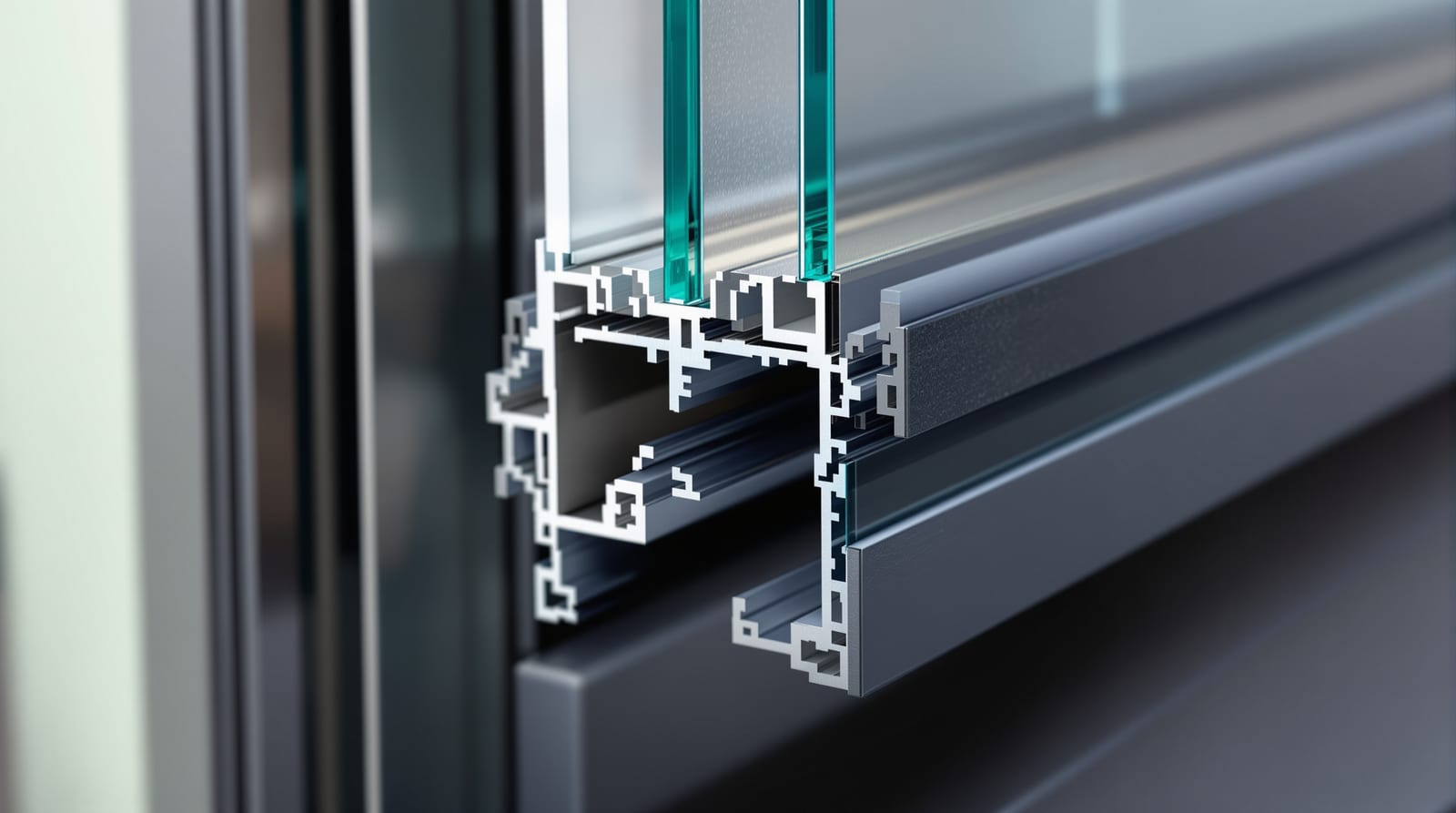
A ballistic door is a system: an opaque leaf (steel plate, or aramid/UHMWPE composite panels), a ballistic vision panel (laminated glass-clad polycarbonate), and a frame anchored to a rated wall. The single most common specification failure is mismatched components — for example an FB4 leaf with FB2 glass, or a rated leaf in a frame anchored to ordinary block. The whole assembly is only as strong as its weakest tested element.
| Component | What carries the rating | India note |
|---|---|---|
| Opaque leaf | Steel plate (~4-12 mm by level) or aramid/UHMWPE composite | Composite lighter but pricier; verify panel certificate |
| Vision panel | Multi-ply glass-clad polycarbonate, thicker at higher class | NS face must point at occupants; thickness 20-60 mm+ |
| Frame & anchors | Steel frame, through-bolted to RCC/masonry per test | Anchoring detail is part of the certificate |
| Hardware | Rated lock, hinges, deadbolts; pass-through tray if needed | Don't substitute hardware after testing |
Insist the vendor supplies a third-party ballistic test report (from a recognised laboratory) for the offered configuration, not a generic brochure claim. The certificate should state the standard, level/class, NS or S, the tested glass and leaf build-up, and the frame/anchoring. Because each project's wall, opening and threat differ, ballistic doors are project-engineered — final spec and price come from a vendor against your consultant's threat assessment.
Indicative cost bands by class
Ballistic doors are custom, long-lead products; prices below are indicative bands, supply-only unless noted, exclusive of 18% GST, and rise steeply with vision-panel area and rifle-class build.
| Class | Threat | Indicative band (supply) | Lead time |
|---|---|---|---|
| UL 752 L1-L3 / FB2-FB4 | Handgun | ₹1,50,000 - 4,50,000 per door | 4-8 weeks |
| UL 752 L4-L5 / FB5-FB6 | Rifle | ₹4,50,000 - 9,00,000+ per door | 8-12 weeks |
| UL 752 L6-L8 / FB7 | High-power / sustained | ₹9,00,000 - 18,00,000+ per door | 10-16 weeks |
Installed cost adds frame anchoring, rated wall make-good and certified hardware. Estimate early with the specialty door cost estimator and screen the class against your threat with the specialty door selector, then confirm with a vendor quotation.
For the broader product picture, see bullet-resistant doors, the blast-resistant doors guide for overpressure-rated assemblies, vault and strongroom doors, and the burglar-resistant doors reference for forced-entry (not ballistic) ratings. Ballistic doors sit within the wider specialty doors family covered by the complete door guide.
Frequently asked questions
Is there a Bureau of Indian Standards code for ballistic doors?
No dedicated BIS ballistic-door standard exists in 2026. Indian specifiers use UL 752 (levels 1-8) or EN 1522 (FB1-FB7), and vendors supply third-party test certificates against the chosen standard. Specify in one standard and keep the whole assembly certified to that level.
How do UL 752 levels compare to EN 1522 FB classes?
There is no exact conversion, but as a rule of thumb mid-tier handgun threats align — UL 752 Level 3 and EN 1522 FB4 both target .44 Magnum-class rounds. The rifle tiers diverge: UL 752 spreads them across Levels 4-8 while EN 1522 uses FB5-FB7. Never mix standards within one assembly.
What does NS mean in an EN 1522 rating?
NS means "no splinter" — the protected (occupied) face ejects no spall when struck; S permits spall. For any door behind which people stand, specify the NS variant so fragments do not injure occupants.
What ballistic class do Indian bank counters usually need?
Most Indian banking, jewellery and retail-cash contexts face a handgun threat, which places the requirement at UL 752 Level 1-3 or EN 1522 FB2-FB4 (NS). Rifle classes are reserved for armouries, defence and counter-terror applications and should follow a documented threat assessment.
Can I fit ballistic glass into a standard door frame?
No. The rating belongs to the complete tested assembly — leaf, glass, frame and anchoring together. Ballistic glass in an unrated frame, or a rated leaf with a lower-class vision panel, voids the protection. Use the vendor's certified configuration and anchoring detail.
How long do ballistic doors take to procure in India?
They are custom-engineered: typically 4-8 weeks for handgun-class doors and 8-16 weeks for rifle-class, depending on glass area, finish and certification. Build this lead time into the project programme and obtain the test certificate before installation.
Export this guide
Related Guides — Deep-dive reading
Bullet-Resistant Doors in India: A Specifier's Guide (India 2026)
How ballistic doors are built, where they belong, and how to specify the right UL 752 or EN 1522 threat level for Indian banks, vaults and VIP rooms.
Home Doors & EntrancesBurglar-Resistant Doors India 2026: RC1-RC6 Security Guide
How EN 1627 resistance classes RC1 to RC6 work, what each grade actually resists, and how to spec a tested anti-burglary door set for Indian homes and shops.
Home Doors & EntrancesDoor Frame Security in India (2026): Anchoring the Chowkhat Break-Ins Actually Exploit
A homeowner's guide to the real weak point behind most forced entries: the frame, not the leaf or the lock, and how to anchor, pack and reinforce a chowkhat so a strong door genuinely stays in the wall.
SecurityRelated Tools — Try Free
Door Security Rating Calculator
Score your main door out of 100 across leaf, frame, lock and hardware — and see the top upgrades.
Security ToolWindow Hardware Cost Calculator
Estimate window hardware cost — hinges, handles, locks, rollers and multipoint gears.
Window CalculatorBurglar Alarm System Selector
Answer a few questions about your property, cabling, coverage, monitoring and power and get the right burglar alarm — wired / wireless / hybrid, self or professionally monitored — with the design non-negotiables.
Alarm Selector