
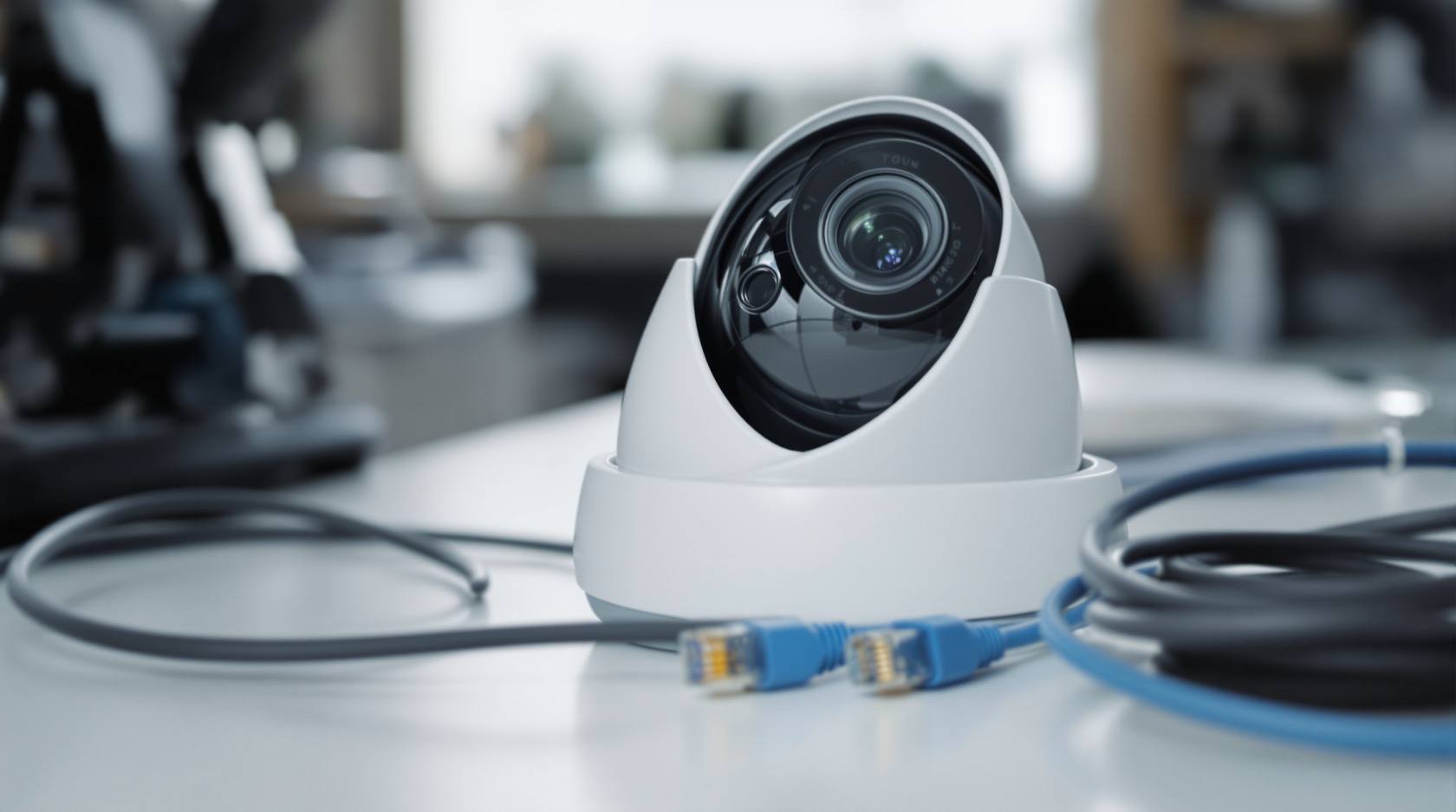
Analog CCTV vs IP CCTV in India (2026): The Honest Head-to-Head
The most common CCTV decision in an Indian home: modern HD-over-coax analog with a DVR, or network IP cameras with an NVR and PoE. What each really is, how they compare on cost, image quality, cabling, distance, analytics and scalability, and which one suits your home.
The most common CCTV question in an Indian home is not "which brand" — it is analog or IP. It sits underneath every quote you will read: the cameras, the recorder, the cabling and the price all flow from this one choice. Analog here means the modern HD-over-coax family (AHD, HDCVI, TVI) feeding a DVR; IP means network cameras feeding an NVR, usually powered over the same Ethernet cable by PoE. Both are sold on every high street, both work, and both are the right answer for someone.
So which is right for you? The honest one-line answer is: it depends on your budget, your wiring, how much detail you need, and how far you want to grow. Analog is generally cheaper and brilliant when you already have coax in the walls; IP scales to higher resolution, longer runs and real smart analytics, and is the direction the whole industry is travelling. This guide is the even-handed head-to-head — what each is, where each wins, and which suits your home.
Scope and how to read this. This is a neutral decision guide, not a sales pitch and not a price list. Both options are legitimate — modern HD analog is far better than the grainy analog of a decade ago and is perfectly good for many homes, while IP is the higher-ceiling, future-facing path. We give light "generally cheaper / dearer" framing only; for real numbers see the cost guides linked below. Whichever you pick, CCTV footage is personal data under the Digital Personal Data Protection Act, 2023 — secure it, limit access, and keep cameras to your own property. Have a licensed installer do the cabling and mains work.
What each one actually is
Both systems have the same three parts — cameras, a cable to each camera, and a recorder — but they speak different languages.
Analog (HD-over-coax). A modern analog camera sends its picture as an analog signal down a coax cable to a DVR (Digital Video Recorder), which digitises and stores it. Each camera also needs a separate low-voltage power wire. The important thing to know in 2026 is that "analog" no longer means the fuzzy 1MP images people remember. AHD, HDCVI and TVI are HD-over-coax standards that carry sharp 2MP, 5MP and even higher pictures over ordinary coax — a huge leap over old analog, at a budget-friendly price. This is the workhorse of value-focused Indian installs and the natural choice when a house already has coax run through its walls.
IP (network). An IP camera is a tiny networked computer. It captures video, compresses it digitally inside the camera, and sends a stream over an Ethernet (Cat5e/Cat6) cable to an NVR (Network Video Recorder). With a PoE NVR or PoE switch, that same single cable also carries the camera's power — one wire per camera does video, control and power together. Because the intelligence lives in the camera, IP is where higher resolutions (4K and beyond), digital zoom detail, and on-camera analytics live. It is the modern, higher-ceiling family, and where most brand-new homes should land.
If you have not yet settled the recorder side of this, the two go together: analog uses a DVR, IP uses an NVR, and the CCTV NVR vs DVR guide walks that half of the decision. The choice you make here decides the recorder, not the other way round.
The head-to-head, dimension by dimension
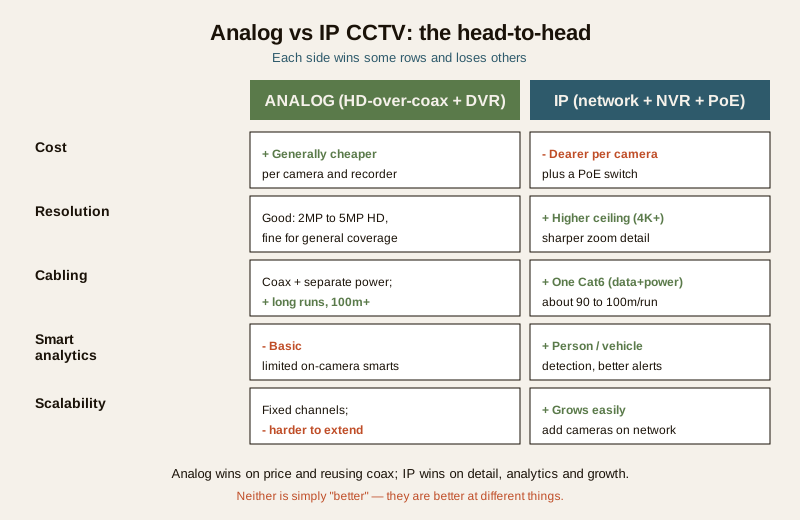
Here is the honest scorecard across the factors that actually decide it for a home.
| Dimension | Analog (HD-over-coax + DVR) | IP (network camera + NVR/PoE) |
|---|---|---|
| Upfront cost | Generally cheaper per camera and recorder | Dearer per camera, plus a PoE switch |
| Retrofit cost | Very cheap if coax already exists — reuse it | New Cat6 cabling if none present |
| Resolution ceiling | Good (2MP–5MP, some higher) | Higher (4K and beyond); better detail and zoom |
| Image detail / digital zoom | Fine for general coverage | Sharper crops — read a face or plate further off |
| Cabling | Coax + a separate power wire per camera | One Cat6 per camera (data + PoE power) |
| Cable distance | Coax runs long (100m+) without help | ~90–100m per Ethernet run; extend with a switch |
| Smart analytics | Basic; limited on-camera intelligence | Strong: person / vehicle detection, line-cross, better alerts |
| Remote viewing | Works, generally simpler streams | Higher-quality app streams, richer features |
| Scalability | Fixed channel count; harder to extend | Add cameras across the network far more easily |
| Reuse existing wiring | Reuses old coax beautifully | Rarely reuses coax (needs adapters); prefers new Cat6 |
| Future-proofing | Mature, stable, but a lower ceiling | The industry's direction of travel |
A fair reading of that table: neither column is all green. Analog wins decisively on price and on reusing coax you already own, and its HD picture is genuinely good. IP wins on the resolution ceiling, on clean single-cable wiring, on real analytics, and on how easily it grows. The right answer is simply wherever your priorities land on those rows — which is what the next section maps out.
The honest caveat both installers and blogs skip. Modern HD analog is far better than its reputation, and for a small home that mainly wants clear, reliable coverage on a tight budget, it is not a compromise — it is a sensible fit. Equally, IP is not "overkill marketing"; the moment you want to reliably identify a face or a number plate, run a long cable, or lean on person-versus-animal alerts to cut false triggers, IP earns its extra cost. Do not let anyone tell you one is simply "better". They are better at different things.
Cabling — the difference you will actually feel
The single most practical divide between the two is what runs through your walls, so it is worth seeing plainly.
Analog needs two things per camera: a coax cable for the video, and a separate cable for power (or a nearby power point). That is a little more to pull and dress, but coax is cheap, tolerant, and runs a long way — well over 100 metres — without any help, which is why analog is comfortable on big plots, long boundary walls and farmhouse-style runs.
IP needs one thing per camera: a single Cat6 cable that carries both the video and, via PoE, the power. That is cleaner and quicker to wire, with no separate power runs — but a standard Ethernet run tops out around 90–100 metres, after which you need a switch or extender to go further. For a compact home this single-cable neatness is a real advantage; for very long runs, analog's distance tolerance still counts.
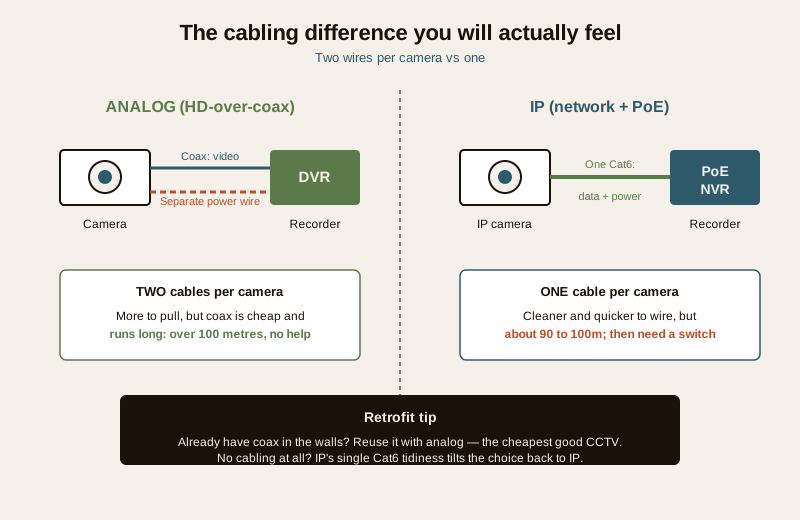
This is also where the retrofit question is won or lost. If a builder already ran coax through the walls, an analog DVR system lets you reuse that wiring and simply hang new HD cameras — often the cheapest good CCTV you can buy. If there is no cabling at all, you are pulling new wire either way, and the single-cable tidiness of IP Cat6 tilts the maths back toward IP.
Which suits whom
There is no universal winner — only a best fit for your situation. Here is the verdict by scenario.
Lean analog when you have:
- A small home or shop that mainly needs clear, dependable coverage of a gate, a door and a couple of approaches.
- A tight budget, where the lower per-camera and recorder cost frees money for more cameras or better lighting.
- Existing coax in the walls — reusing it is the single biggest cost saving available, and modern HD cameras make that old cable look sharp again.
- Long cable runs across a large plot or boundary, where coax's easy 100m-plus reach avoids extra switches.
Lean IP when you want:
- The highest resolution and detail — 4K cameras and the ability to zoom into a recorded frame and actually read a face or a number plate.
- Long-term growth and many cameras — adding cameras across a network, mixing locations, and expanding in stages is far easier on IP.
- Real smart analytics — reliable person and vehicle detection, line-crossing and intrusion zones that cut the false alerts a plain motion trigger throws all night.
- Clean single-cable wiring in a new build, and a future-proof system as the whole market moves to IP.
- Apartments and commercial units, where higher camera counts, network integration and analytics usually pay for themselves.
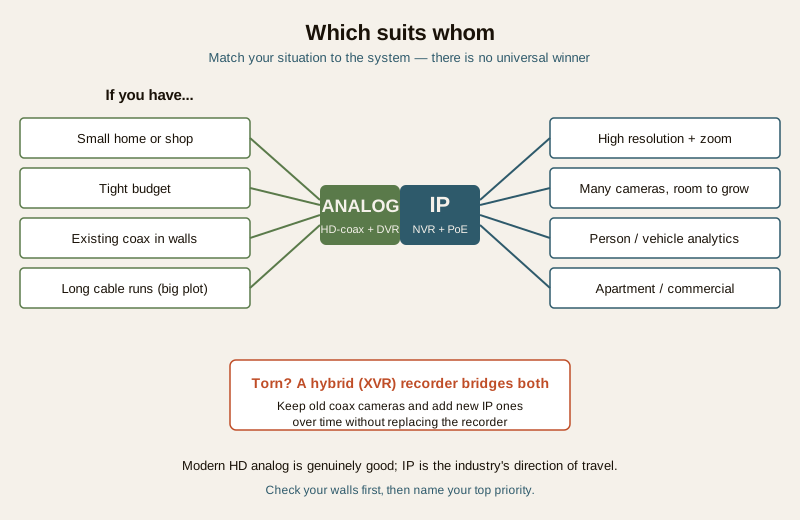
And if you are genuinely torn — say you have some old coax you would like to keep but want to add a couple of high-resolution IP cameras — remember there is a hybrid middle path: a hybrid (XVR) recorder accepts both analog and IP cameras, so you can keep what you have and grow toward IP without throwing the recorder away.
How to decide — the framework
Work through these in order and the answer usually reveals itself.
1. Check your walls first. Is there existing coax? If yes, analog (or hybrid) reuses it and is almost certainly your cheapest good option. If there is no cabling, the field is open — go to step 2.
2. Name your top priority. Lowest cost and simple reliable coverage → analog. Highest detail, analytics and room to grow → IP. Be honest about which matters more; both are valid.
3. Count the cameras and the years. A handful of cameras you will never really expand suits analog; a system you expect to grow, mix and add to over time suits IP.
4. Measure the longest run. A very long cable run (big plot, far boundary) favours coax's distance; compact homes favour IP's single-cable neatness.
5. Weigh the detail you truly need. If reliably identifying faces or number plates matters, lean IP. If general "who was at the gate" coverage is enough, analog is fine.
6. Settle the money separately. Once the type is chosen, the analog CCTV cost guide and the IP CCTV cost guide put real numbers on it — do not let a headline price alone drive a decision you will live with for years.
For the camera itself — resolution, lens, night vision and weatherproofing — the how to choose a CCTV camera guide picks up where this leaves off. And this analog-vs-IP choice is one of a family of CCTV decisions: whether to go wired vs wireless is the next big fork, and the security comparison hub and its comparison pillar tie all these "X vs Y" choices together.
Key takeaways
- Analog vs IP is the foundational CCTV choice — it decides your cameras, recorder, cabling and cost. Analog = HD-over-coax (AHD/HDCVI/TVI) + DVR; IP = network cameras + NVR + PoE.
- Analog is generally cheaper, especially when you can reuse existing coax, and modern HD analog looks genuinely good — a fair fit for a small home, a shop, or a tight budget.
- IP scales higher — better resolution and zoom detail, single-cable PoE wiring, real person and vehicle analytics, and far easier growth to many cameras; it is the direction of travel.
- Cabling is the practical divide — coax plus a separate power wire (long runs) versus one Cat6 carrying data and power (about 90–100m per run).
- There is no universal winner — check your walls, name your top priority, count cameras, measure your longest run, and decide the money with the cost guides.
- A hybrid recorder bridges both if you want to keep old coax and add IP over time.
Where to go next
- Analog CCTV cost and IP CCTV cost — real numbers once you have picked a type.
- CCTV NVR vs DVR — the recorder half of this decision.
- How to choose a CCTV camera and wired vs wireless CCTV — the next choices after the system type.
- The security comparison hub and its comparison pillar, the CCTV hub, and the main security hub.
References
- Digital Personal Data Protection Act, 2023 — CCTV footage is personal data whether analog or IP; store it securely, limit who can view it, and keep cameras to a legitimate purpose on your own property and shared areas.
- Manufacturer specification sheets — verify each camera's resolution, the recorder's supported resolutions and channel count, PoE port count, and cable-distance ratings before ordering; analog and IP boxes are not interchangeable.
- National Building Code of India (SP 7), Bureau of Indian Standards, and local municipal bye-laws for any structural, electrical or life-safety aspect of an install; verify the current edition via the BIS catalogue: https://www.services.bis.gov.in/
This is an educational, even-handed overview to help you choose between analog and IP CCTV — not a price list, brand recommendation or installation manual. Structured cabling, coax and Ethernet runs, PoE, earthing and any mains-electrical work are qualified professional tasks; engage a licensed installer and verify any standard's current status via the BIS catalogue before relying on it.
Export this guide
Related Guides — Deep-dive reading
PoE vs Wi-Fi CCTV: Which Home Security Cameras Are Better?
One camera type runs power and video down a single Cat6 cable to an NVR and almost never drops out; the other clips to a wall in minutes and streams over your home Wi-Fi. This guide settles PoE vs Wi-Fi CCTV for Indian homes — reliability, video quality and bandwidth, cabling and power, retrofit versus new-build effort, NVR versus SD and cloud storage, hacking risk, real rupee costs, scalability and outdoor use — and gives a clear verdict for each kind of home.
Smart HomeHow to Choose a CCTV Camera (2026): The Homeowner's Decision Guide for India
Cut through the spec-sheet noise and choose the right CCTV camera for each spot around an Indian home. What actually matters — sensor and low-light performance, lens and field of view, form factor, IP and IK ratings, honest smart features — and the marketing claims to ignore.
SecurityPoE vs Wi-Fi Cameras in India (2026): One Cable or Wireless?
A PoE camera carries data and power down a single Ethernet cable to a switch or NVR; a Wi-Fi camera sends video over the air but still needs its own power source. An even-handed, India-grounded head-to-head that ends in a clear which-suits-whom verdict.
SecurityRelated Tools — Try Free
Security Cabling & PoE Planner
Estimate cable length, drops, PoE power budget, the right switch, conduit and cost for a CCTV/security cabling plan.
Cabling PlannerCCTV Camera Coverage & Count Calculator
Estimate how many CCTV cameras you need, the NVR channels, storage in TB for your retention period, and an indicative all-in cost with GST.
CCTV CalculatorCCTV System Type Selector
Answer five questions and get the right CCTV setup — analog / IP / hybrid, wired / wireless, local / cloud — with reasons.
CCTV Selector