
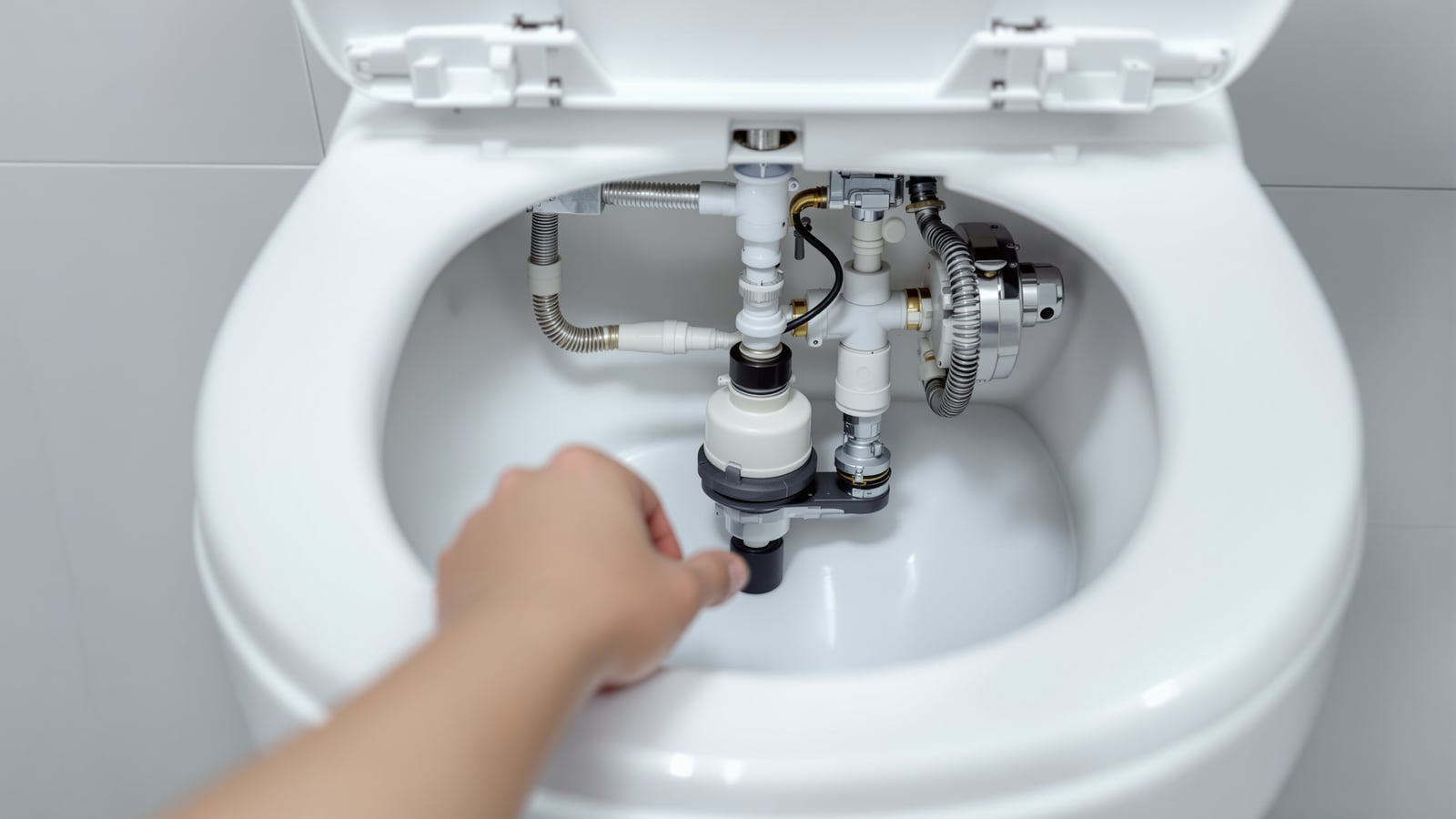
Toilet Maintenance India: Clean the Bowl, Fix a Running or Weak-Flush WC (2026)
The WC is the hardest-working fitting in an Indian bathroom and the quietest money-waster when it fails. This is the practical, do-it-yourself guide to keeping a toilet clean and working: scrubbing the bowl and under the rim, killing the hard-water limescale ring, and fixing the four things that actually go wrong — a running cistern, a weak flush, a leak, and a blockage.
The toilet is the fitting your household uses more than any other, and the one people notice only when it goes wrong — a bowl that never quite looks clean, a hiss that runs all night, a flush too weak to clear the pan. None of these needs a plumber on speed-dial. Most toilet care is fifteen minutes with a brush and a bottle of vinegar, and the common faults hiding inside the cistern are cheap parts and a Sunday-morning fix. This guide covers both halves: keeping the WC clean, and keeping it working.
It sits under the maintenance pillar, the bathroom cleaning guide for India, and pairs with the component guide, the bathroom toilet guide for India, if you are choosing or replacing a WC rather than maintaining one. For blockages that go past the pan into the pipework, read it alongside the drain cleaning guide for India; to catch a silent running cistern before the bill does, see bathroom water monitoring for India.
A running toilet is the single biggest silent water-waster in an Indian home — a worn flush valve can pass 50 to 200 litres a day straight into the pan, unseen and unheard, until the tanker empties too fast or the bill jumps. Fixing it is a ₹150 washer and ten minutes.
Cleaning the bowl and under the rim
Daily cleaning is less work than a monthly rescue. The trick most people miss is the rim — the hollow lip around the top of the pan where the flush water enters through small holes (the rim jets). Grime and hard-water scale build up there unseen, breeding smell and slowly choking the flush.
1. Squirt cleaner under the rim first. Angle the nozzle up into the lip all the way around, then down the sides of the bowl. Leave it to sit while you do the rest — cleaners need contact time to work, not just a wipe.
2. Brush the whole bowl, paying attention up under the rim where the brush does not naturally reach. Push the water level down first (a quick half-flush or a mug of water poured in) so you can scrub the waterline where the ring forms.
3. Do the seat, lid, hinges and flush button separately with a general bathroom spray or a vinegar cloth — never the toilet-bowl acid, which can pit plastic and metal.
4. Flush, and rinse the brush in the clean flush water, then stand it in its holder to drain.
For products, a bowl cleaner such as Harpic or Domex handles routine grime; for a natural weekly option, white vinegar poured around the rim and left overnight cuts scale and smell for a few rupees. NEVER mix a bleach cleaner (Domex, Clorox) with an acid cleaner (Harpic) or with vinegar — the combination releases toxic chlorine gas. Use one or the other, flush between, and ventilate.
Killing the hard-water limescale ring
Most of India runs on hard water, and the toilet shows it first: a stubborn brown-white ring at the waterline and pale crusty scale under the rim and around the jets. This is calcium and mineral deposit, not dirt, so scrubbing harder rarely wins — you have to dissolve it.
- Vinegar soak (mild ring). Lower the water level, pour 300–500 ml of white vinegar around the rim and onto the ring, and leave overnight. Scrub in the morning; the softened scale lifts off.
- Vinegar-soaked tissue (stubborn ring). Press vinegar-wet toilet paper against the ring so the acid stays in contact for hours instead of running off. Peel away and brush.
- A pumice stone rated for ceramic (heavy scale). Keep it and the surface wet at all times and rub gently — used dry or hard it will scratch the glaze. Test a hidden patch first.
- Toilet-bowl acid cleaner (Harpic-type) works fastest on scale, but use it sparingly and never leave it on glaze for hours, and never on chrome or plastic parts.
Prevent the ring coming back by cleaning weekly before it hardens, and if your area's water is very hard, a whole-house water softener is the real long-term fix — it protects the geyser, taps and tiles too. Wiping the fitting after use never hurts, but for a toilet the practical defence is simply not letting a week go by.
Fix 1 — the running toilet (wastes water and money)
A toilet that keeps hissing or trickling after the flush is refilling continuously because water is escaping the cistern. There are only two usual culprits, both cheap.
The flush valve / flapper seal has worn. This rubber seal at the bottom of the tank should drop and seal after each flush. When it hardens or warps, water seeps past it into the bowl (this is what the dye test catches), so the tank never reaches "full" and the fill valve runs on. Fix: turn off the angle stop (the small valve on the wall below the cistern), flush to empty, unclip the old seal or flush-valve washer and fit a matching replacement (₹80–300). On a dual-flush unit the whole drop-valve cartridge lifts out and a like-for-like cartridge (₹250–700) goes back in.
The fill valve / float is set too high or is stuck. If water is running into the overflow tube (the open pipe in the middle of the tank), the float is letting the fill valve keep running past the safe level. Fix: bend or slide the float down so the valve shuts off about 20–25 mm below the top of the overflow tube. If the fill valve itself hisses and never fully closes, replace it (₹200–500).
Fix 2 — the weak flush (usually clogged rim jets)
If the flush no longer clears the pan in one go, before blaming the cistern check the rim jets — the ring of small holes under the lip. Hard-water scale blocks them one by one, so the water that should sheet powerfully around the bowl dribbles out. Fix: with a hooked bit of wire or a descaling gel, clear each hole, then do a vinegar soak up under the rim overnight to dissolve the rest. Also confirm the cistern is filling fully (float not set too low) and the flush valve is opening fully — a dual-flush button that only half-presses can short the flush. A genuinely weak flush after all that, on an older WC, may simply be a low-efficiency pan design.
Fix 3 — leaks from the cistern or the base
Water on the floor around a toilet has a short list of sources, and finding which one saves guesswork.
- Between cistern and pan (coupled WC). The rubber doughnut gasket and the two tank bolts can perish or loosen, dripping at each flush. Tighten the bolts gently and evenly by hand; if it still weeps, fit a new gasket-and-bolt kit (₹200–500).
- At the angle stop or supply hose. The braided hose or the wall valve feeding the cistern can drip at its nut. Snug the connection; replace a corroded hose (₹100–250).
- At the base / floor. A little water at the foot after a flush usually means the wax or rubber floor seal (or the outlet connector to the soil pipe) has failed. On an Indian floor-mounted WC this may also be a cracked or badly set outlet. This is a reseat job — lift the pan, renew the seal, reset on fresh sealant. It is doable but fiddly; if you are unsure, or if sewage smell or repeated seepage appears, get a plumber, because a bad base seal leaks foul water under the floor.
- A cracked cistern or pan. A hairline crack weeps constantly and only gets worse — the fitting needs replacing. See the bathroom toilet guide for India for choosing a replacement.
Fix 4 — unclogging a blocked WC
When the bowl fills and drains slowly, or backs up, resist the urge to flush again — a second flush just overflows. Instead:
1. Plunger. Use a flange plunger (the kind with the extra rubber sleeve that seats into the pan outlet), not a flat sink cup. Ensure enough water in the bowl to cover the plunger head, seal over the outlet, and pump firmly a dozen times. The push-pull, not a single shove, breaks most blockages.
2. Toilet auger (closet auger). If plunging fails, a toilet auger — a flexible cable in a sheath (₹400–1,200) — cranks down through the trap to hook or break the obstruction without scratching the glaze. Feed gently; do not force.
3. A bucket of warm (not boiling) water poured in fast from waist height can add a helpful surge. Boiling water can crack ceramic, so keep it hot-tap warm.
4. Never tip acid drain cleaner into a WC to clear a paper or object blockage — it sits in the trap, does little, and is dangerous if you then plunge and splash. For blockages beyond the pan, in the branch or floor drain, follow the drain cleaning guide for India.
Replacing a slow-close seat and cistern parts
Two easy upgrades keep an older WC feeling new. A slow-close (soft-close) seat ends the slam and is a five-minute swap: undo the two hinge fittings at the back, lift the old seat off, clip the new one on — the key is matching the shape and mounting spacing to your pan (measure hole-to-hole and bowl length before buying). Expect ₹500–2,000 for a decent seat.
Inside the cistern, keep it simple: when a part fails, replace the whole mechanism like-for-like rather than nursing an old washer. A full cistern refit kit (fill valve, flush valve, seals) runs ₹400–1,200 — often less hassle than diagnosing one worn washer at a time. Always match your flush type: a single-flush siphon, a drop-valve, or a dual-flush button each take different parts.
Problem to fix, at a glance
| Symptom | Likely cause | DIY fix | Call a plumber if |
|---|---|---|---|
| Hissing / trickling after flush | Worn flush-valve seal or high float | Swap seal/cartridge; lower float below overflow | Valve body itself is cracked |
| Water in overflow tube | Fill valve not shutting off | Lower float; replace fill valve | New valve still overflows |
| Weak / incomplete flush | Scaled rim jets, tank not filling | Descale jets; check float and cartridge | Pan itself is a low-flow old design |
| Drip between tank and pan | Perished doughnut gasket, loose bolts | Tighten evenly; fit new gasket-bolt kit | Cistern is cracked |
| Water at the base | Failed floor seal or outlet connector | Reseat pan on new seal | Sewage smell / repeated seepage |
| Slow drain / backup | Blockage in trap | Flange plunger, then closet auger | Blockage is past the pan, in the branch |
| Brown-white waterline ring | Hard-water limescale | Vinegar soak; pumice on ceramic | (DIY — not a plumber job) |
| Seat slams / cracked | Worn seat and hinges | Fit a slow-close seat, matched to pan | (DIY — not a plumber job) |
When to DIY and when to call a plumber
Cleaning, descaling, seat swaps, float adjustment, cistern washers and cartridges, plunging and augering are all firmly DIY — the parts are cheap, the tools basic, and the worst case is you call for help anyway. Call a plumber when the pan or cistern is cracked, when the base seal keeps leaking or there is a sewage smell, when a blockage will not clear and has moved into the soil pipe, or when a wall-hung WC's concealed cistern needs servicing through the access panel — see how the frame and panel work in the bathroom toilet guide for India. And if you keep finding the cistern silently running, a bathroom water monitor will alert you the same day instead of on the quarterly bill.
Good toilet maintenance is mostly rhythm: a weekly clean before the ring hardens, a quarterly dye test, and the confidence to open the cistern and swap a ₹150 part instead of living with a hiss. Do that, and the hardest-working fitting in the house quietly stays clean, full-flushing and leak-free for years — see the wider bathroom cleaning guide for India to fold it into a whole-room routine.
References
- IS 2556 (Bureau of Indian Standards) — Vitreous sanitary appliances (ceramic ware): specification for water closets, flushing cisterns and their performance.
- IS 774 / IS 775 — Flushing cisterns for water closets and urinals; cast-iron and pressed-steel cistern requirements, referenced for flush-volume and fittings.
- IS 1172 — Code of basic requirements for water supply, drainage and sanitation, used for fixture flush volumes and trap/soil-pipe interpretation.
- National Building Code of India (NBC) 2016, Part 9 (Plumbing Services) — installation, traps, soil and waste connections behind the WC.
- Manufacturer care and maintenance guidance — Jaquar, Cera, Hindware, Parryware, Kohler and Roca published toilet cleaning, descaling and cistern-part replacement instructions (follow the sheet for your specific model and flush type).
Export this guide
Related Guides — Deep-dive reading
Bathroom Leak Repair in India: Find & Fix Common Leaks (2026)
A practical, India-first guide to finding and fixing the everyday bathroom leaks — dripping taps, weeping traps and angle valves, a running cistern, failed silicone seals — plus how to tell a simple fixture leak from a waterproofing failure that needs a professional.
BathroomsTap Maintenance India: How to Descale, Clean & Fix Bathroom Faucets (2026)
A practical upkeep guide for CP fittings and faucets in Indian bathrooms — descaling the aerator and spout when hard water weakens the flow, cleaning chrome, PVD and matte-black finishes safely, fixing a dripping tap, sealing a leaky base, freeing a stiff lever, and knowing when to swap the cartridge.
BathroomsBlocked Drains in India: Clearing & Prevention (Drain Cleaning Guide)
A homeowner's India-first guide to blocked drains — why kitchen sinks, bathroom floor traps, WCs and external chambers clog, how to clear them safely (plunger, hot water and baking soda, drain snake, hydro-jetting), why chemical drain cleaners are risky, and how to stop blockages coming back.
PlumbingRelated Tools — Try Free
Bathroom Drainage Pipe Calculator
Recommended drain and waste pipe sizes, slopes and stack size for a bathroom's fixtures — indicative IS 1172 / NBC plumbing practice.
Bathroom CalculatorMonsoon-Readiness Checklist
Pre-rain home audit across 9 categories — terrace, drains, waterproofing, electrical, HVAC, pest, vehicles, documents.
Seasonal AuditWater Softener Size Calculator
Size a water softener from your hardness, daily water use and days between regeneration, with the grain capacity needed.
Plumbing Calculator