
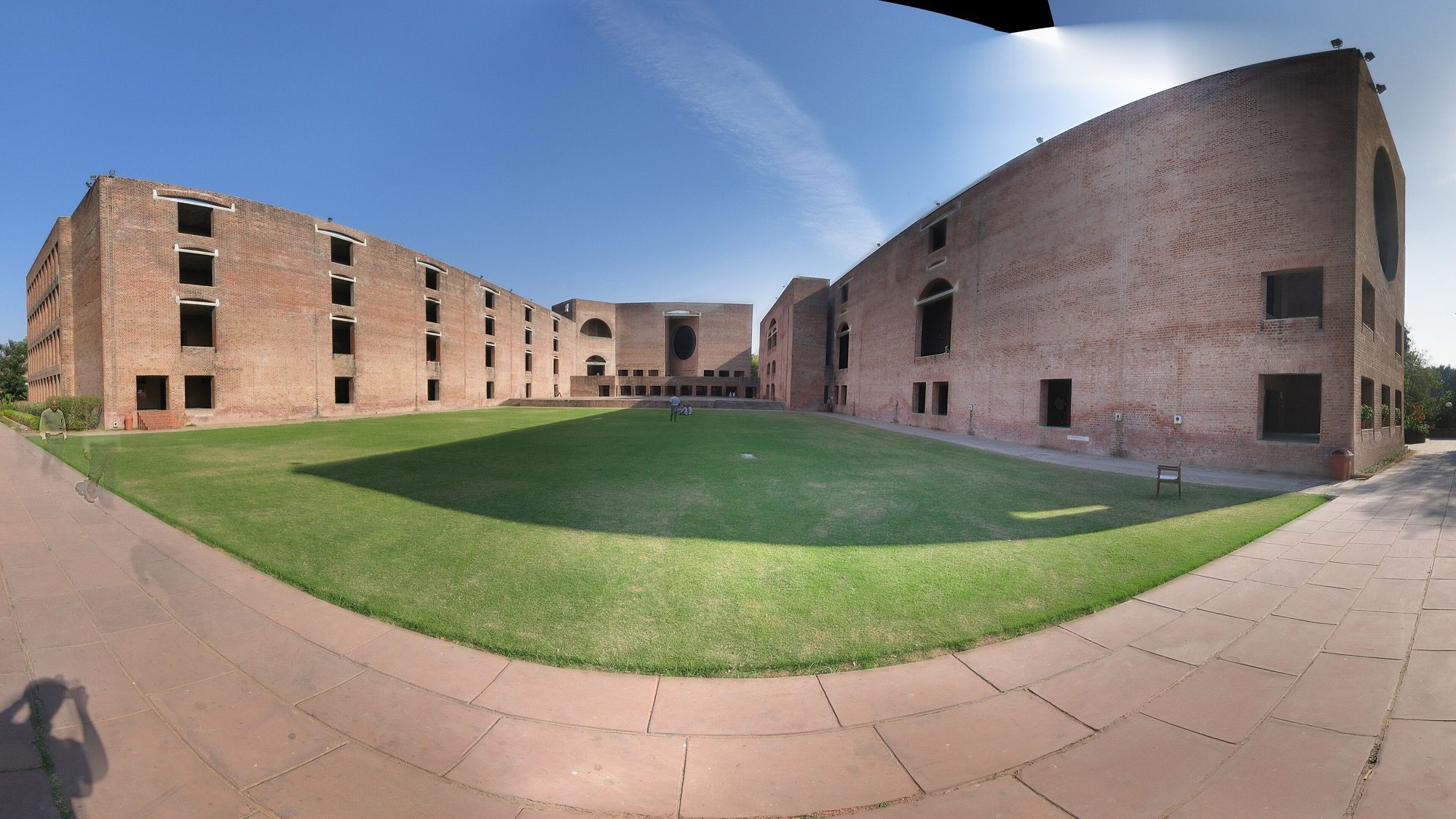
Modern Architecture in India
Doshi, Correa and a generation who made modernism speak in an Indian climate and culture.
Once Corbusier and Kahn had shown the way, a first generation of Indian architects built a modernism of their own — climate-rooted, vernacular-aware, socially engaged. B.V. Doshi and Charles Correa led it, with Raj Rewal, Achyut Kanvinde, Uttam Jain, Laurie Baker and Anant Raje around them — the line of critical regionalism.
Learning objectives
By the end of this lesson, you will be able to — mapped to the course outcomes for Contemporary Architecture:
Explain the design philosophies of B.V. Doshi and Charles Correa and identify their signature works.
Describe the contributions of Raj Rewal, Achyut Kanvinde and Uttam Jain to Indian institutional and housing architecture.
Explain Laurie Baker's cost-effective architecture — rat-trap bond, jali and filler slabs — and its Gandhian basis.
Relate this Indian modernism to wider currents — critical regionalism and climate-responsive design.
Doshi & Correa
Doshi fused modernism with Indian dwelling — half-sunken Sangath, the incremental Aranya housing; Correa made climate the generator of form (“form follows climate”) through the open-to-sky space and the self-ventilating tube house.[1, 2] Doshi was the first Indian to win the Pritzker Prize (2018); Correa held the RIBA Royal Gold Medal (1984).
Modernism rooted in India
Balkrishna V. Doshi (1927–2023) absorbed European modernism working under Le Corbusier in Paris (1951–54) and with Louis Kahn, then fused it with Indian climate, vernacular form and ways of dwelling. His architecture is low-key, humane and socially engaged — mass low-cost housing treated as a serious architectural problem. A foundational educator, he founded CEPT and the Vastu Shilpa Foundation, and in 2018 became the first Indian to win the Pritzker Prize.[1, 5]
The wider generation
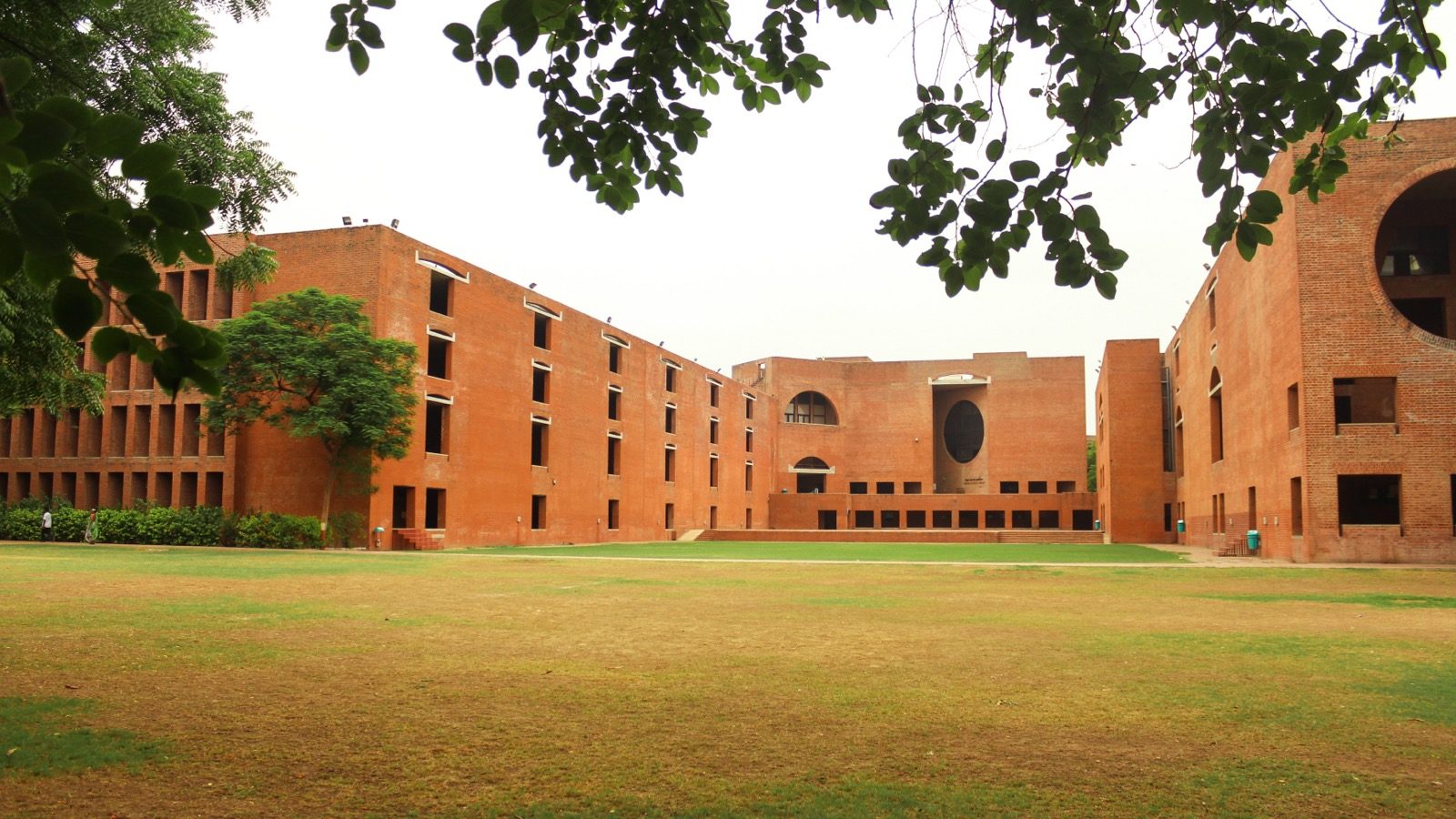
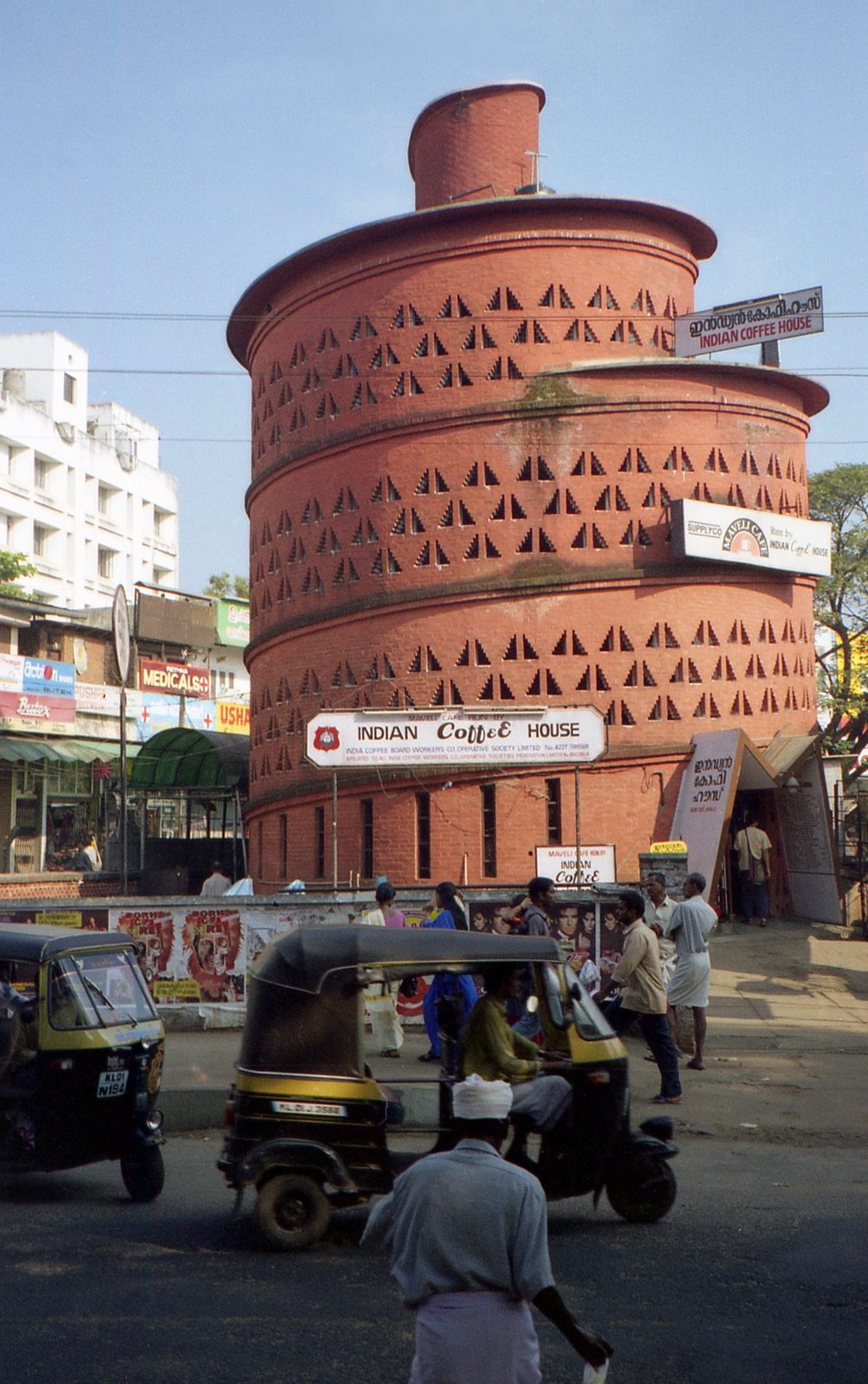
Around the two leaders stood Raj Rewal's engineered span (the Hall of Nations, demolished 2017), Kanvinde's Bauhaus campuses, Uttam Jain's Rajasthani stone, Laurie Baker's cost-effective Gandhian brick, and Anant Raje, who — not Doshi — completed Kahn's IIM Ahmedabad.[3, 4, 7]
Density and the engineered span
Raj Rewal (b. 1934) reinterprets the dense, shaded streets of Rajasthani towns in bold modern structure. His Hall of Nations at Pragati Maidan (Delhi, 1972) — the world's first large-span space-frame in reinforced concrete, engineered with Mahendra Raj — was controversially demolished overnight on 23–24 April 2017 despite preservation petitions. His Asian Games Village (1982) and sandstone Parliament Library (2002) reinterpret the traditional cluster.[3, 7]
Two leaders, one generation
| Aspect | One | The other |
|---|---|---|
| Generator of form | Correa: climate ('form follows climate'), open-to-sky | Doshi: dwelling, vernacular fabric, social housing |
| Signature material/system | Rewal: engineered concrete span; Kanvinde: Bauhaus concrete | Baker: cost-effective brick; Uttam Jain: Rajasthani stone |
| Housing model | Incremental sites-and-services (Aranya, Belapur) | Dense low-rise cluster (Asian Games Village) |
| Top honour | Doshi — Pritzker 2018 (first Indian) | Correa — RIBA Royal Gold Medal 1984 |
| Link to the masters | Doshi worked with Corbusier AND Kahn | Raje completed Kahn's IIM Ahmedabad |
Key terms
Modern architecture mediated by place, climate and culture — resisting placeless universal style (Frampton).
Correa's device: usable outdoor rooms — terraces, courts — suited to a warm climate.
Correa's low-income section that draws warm air out at the top, self-ventilating without machinery.
Laurie Baker's cavity brick bond — bricks on edge — saving ~25% of bricks and improving insulation.
A perforated screen wall (here in brick) giving shade, privacy and ventilated light — a Baker signature.
Sites-and-services that residents extend over time — Doshi's Aranya, Correa's Belapur.
A three-dimensional truss of struts; Rewal's Hall of Nations did it in reinforced concrete.
Doshi's studio and research foundation in Ahmedabad; also the traditional Indian science of building.
Study task
Choose one work each by Doshi and Correa. In a sketch and a short paragraph each, show how climate and Indian ways of living shape the form — the open-to-sky terrace, the self-ventilating section, the courtyard — rather than a borrowed international style.
Self-assessment
1. Whose credo is 'form follows climate'?
2. Laurie Baker's 'rat-trap bond' is —
3. Who completed Louis Kahn's IIM Ahmedabad after his death in 1974?
Recap
References & further reading
- [1]William J.R. Curtis, Balkrishna Doshi: An Architecture for India. Ahmedabad/New York: Mapin/Rizzoli, 1988.
- [2]Charles Correa, A Place in the Shade: The New Landscape & Other Essays. Penguin/Hatje Cantz, 2010.
- [3]Jon Lang, A Concise History of Modern Architecture in India. New Delhi: Permanent Black, 2002.
- [4]Gautam Bhatia, Laurie Baker: Life, Work & Writings. Penguin India, 1991.
- [5]The Pritzker Architecture Prize — Balkrishna Doshi (2018 Laureate). https://www.pritzkerprize.com/laureates/balkrishna-doshi
- [6]RIBA — Charles Correa, Royal Gold Medal 1984; and Aga Khan Award for Architecture documentation (Aranya 1995; Vidhan Bhavan 1998).
- [7]Vikram Bhatt & Peter Scriver, After the Masters: Contemporary Indian Architecture. Ahmedabad: Mapin, 1990.
Further reading
- William J.R. Curtis, Balkrishna Doshi: An Architecture for India. Mapin/Rizzoli.
- Charles Correa, The New Landscape / A Place in the Shade — his own essays.
- Gautam Bhatia, Laurie Baker: Life, Work & Writings. Penguin.
Sources gathered and fact-checked June 2026. Published values vary by source, sample and method — treat as indicative and confirm against the cited standard before structural use.
The author
Amogh N P
Architect, interior designer, and creative polymath. Studio Matrx began in his notebooks — his vision of design made honest, useful, and open to everyone. Its Academy is written and taught in his memory, and free, forever.
More about Amogh →