
High-Tech Architecture
When structure, services and technology became the architecture itself.
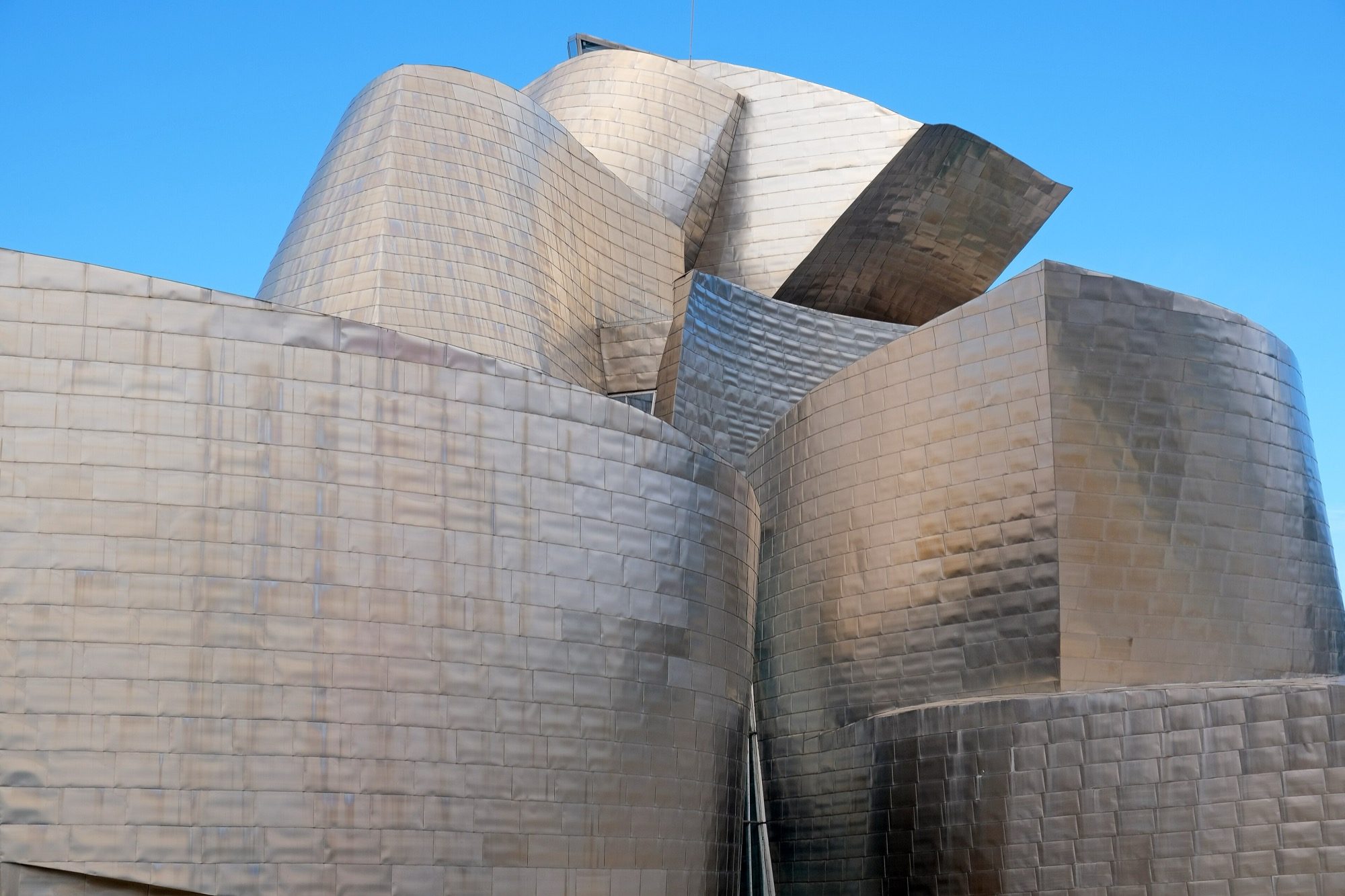
Two late-20th-century currents close the modern story. First the “last phase” of modern architecture — Meier's white rationalism, Moore's playful turn, and the deconstruction of Tschumi and Frank Gehry, whose titanium Bilbao coined the “Bilbao effect”. Then High-Tech, born in 1970s Britain: Norman Foster, Richard Rogers and Michael Hopkins made structure, services and technology the architecture itself.
Learning objectives
By the end of this lesson, you will be able to — mapped to the course outcomes for Contemporary Architecture:
Describe the 'last phase' of modern architecture through Meier, Moore, Tschumi and Gehry.
Define High-Tech architecture and its principle of expressing structure, services and technology.
Explain the work of Norman Foster, Richard Rogers and Michael Hopkins and the 'served and servant' idea applied to a whole building.
Distinguish High-Tech from Deconstructivism and from Post-Modernism.
The last phase of modern architecture
Richard Meier extended Le Corbusier into pristine white rationalism; Charles Moore turned to memory and play; Bernard Tschumi and Frank Gehry fragmented and warped form into sculpture — Deconstructivism, distinct from High-Tech.[1, 7]
White rationalism
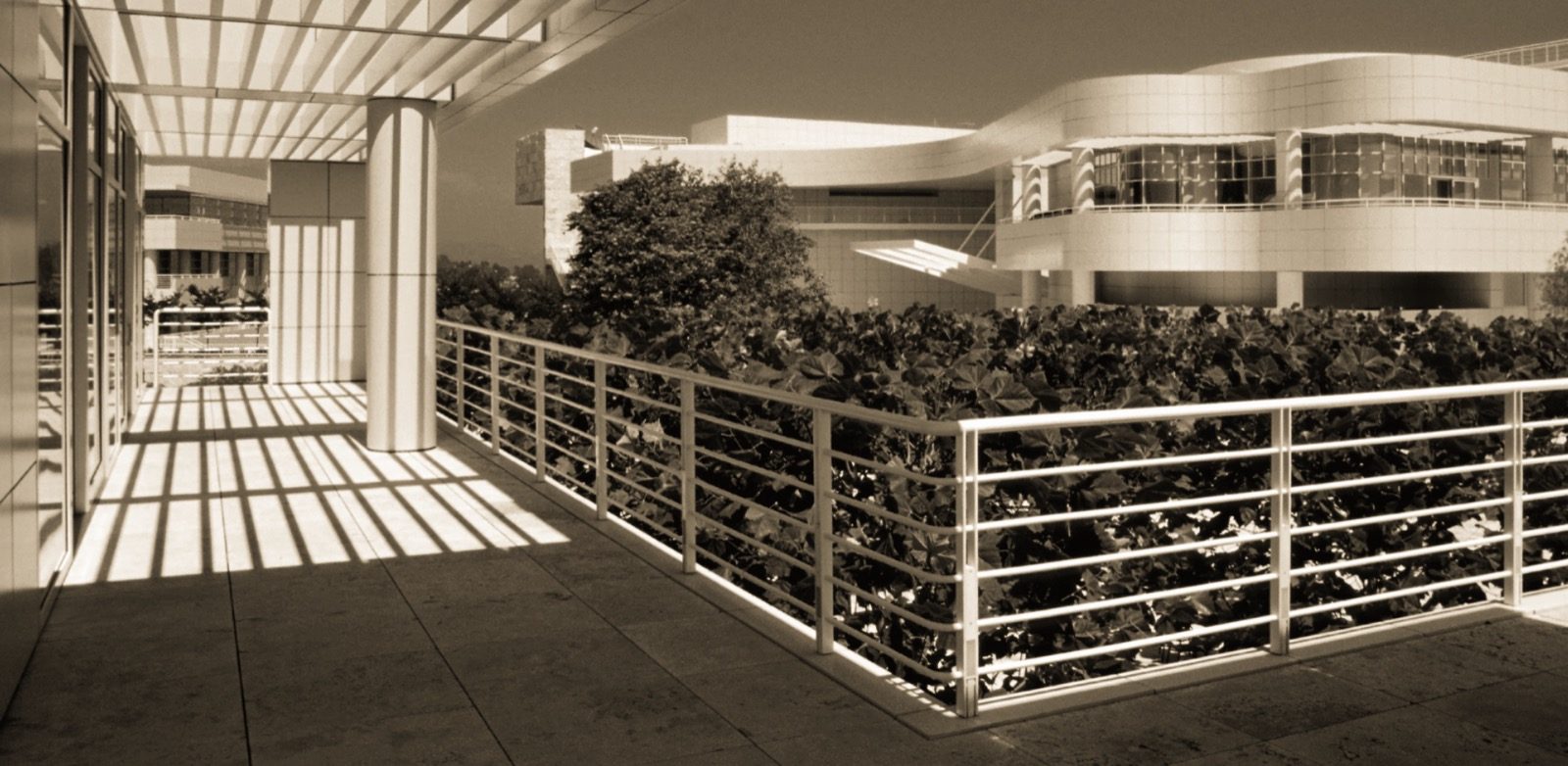
Richard Meier (1934–2023), one of the 'New York Five' / 'the Whites', extended 1920s Le Corbusier into a pristine, light-filled white rationalism. From the Smith House (1967) and the Atheneum at New Harmony (1979) to the High Museum Atlanta (1983), the travertine Getty Center Los Angeles (1997) and the sail-shelled Jubilee Church Rome (2003) — whiteness, he held, intensifies the perception of light and form. Pritzker 1984.[5, 1]
High-Tech — the machine made visible
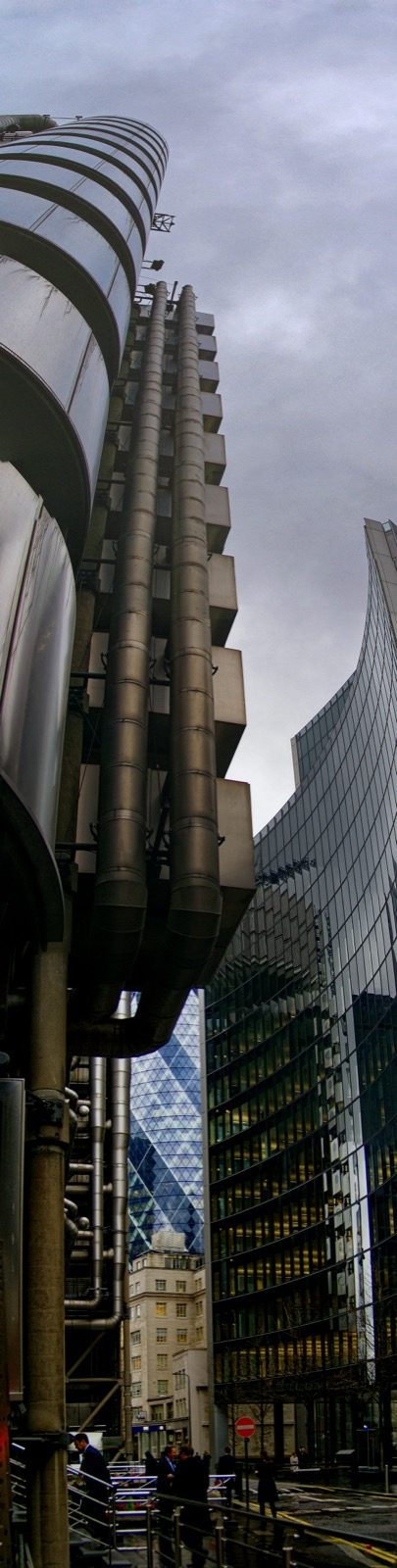
High-Tech celebrates structure, services and technology as the aesthetic, extending Kahn's served and servant idea by pushing ducts, lifts and stairs outside the envelope. Foster prized lightness and clarity; Rogers went “inside-out” (the Pompidou, with Renzo Piano; Lloyd's of London); Hopkins fused High-Tech with context and craft.[2, 3]
The machine made visible
High-Tech (Structural Expressionism / Late Modernism) emerged in 1970s Britain and celebrates the building's structure, services and technology as its primary aesthetic: exposed steel frames and trusses, large glazed envelopes, prefabricated 'kit-of-parts' assembly, column-free flexible spans, and — crucially — the externalisation of structure and services. It extends Louis Kahn's 'served and servant spaces' by pushing ducts, lifts and stairs outside the envelope. It embraces the machine aesthetic, where Post-Modernism ornaments it and Deconstructivism fragments it.[2, 3]
High-Tech vs Deconstruction
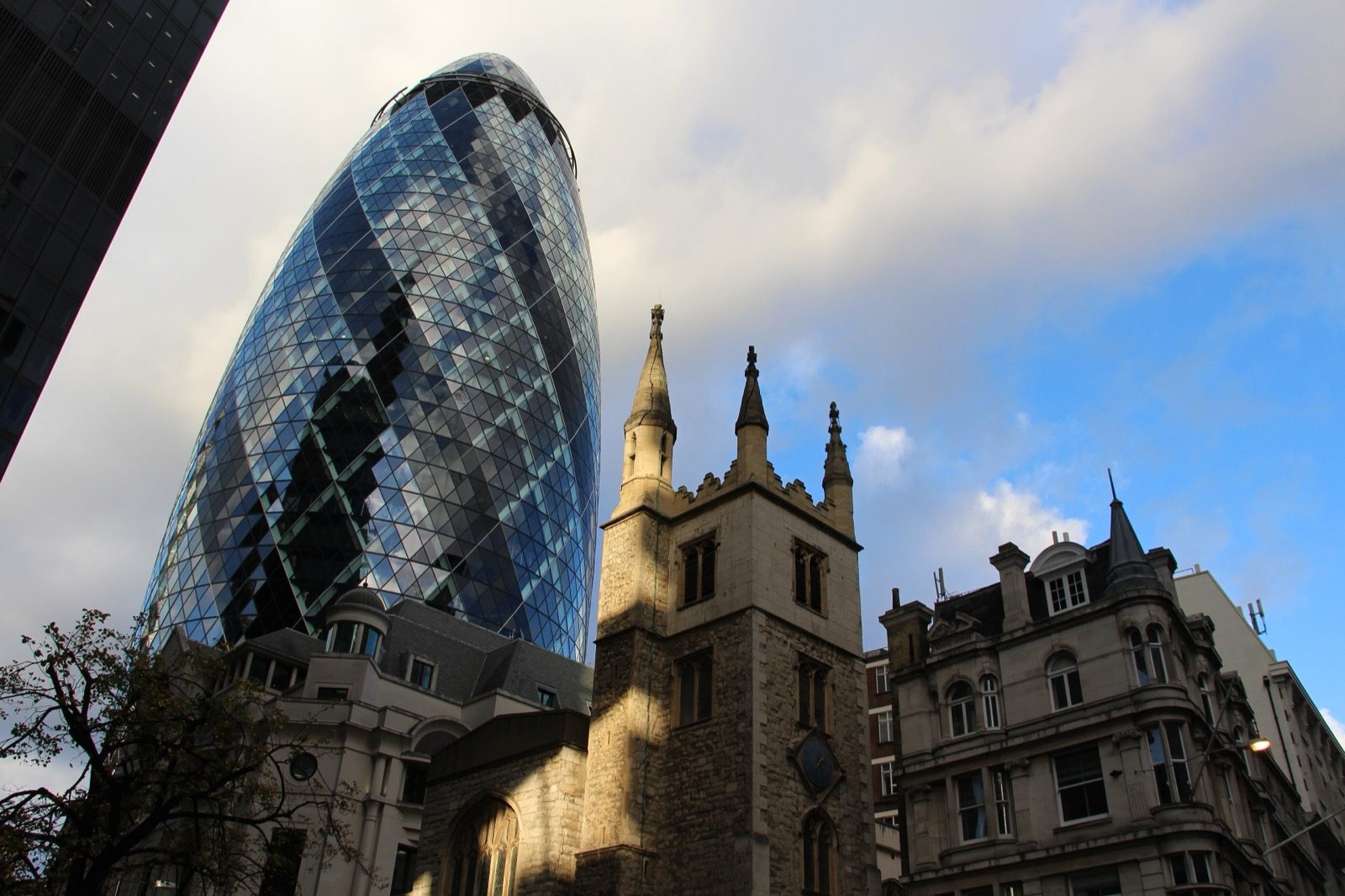
| Aspect | High-Tech | Deconstruction |
|---|---|---|
| Attitude to the machine | High-Tech: celebrates and exposes it | Deconstructivism: warps it into sculpture |
| Where the services go | Outside, expressed and colour-coded (Rogers) | Subsumed in flexible sculptural form (Gehry) |
| Geometry | High-Tech: orthogonal, modular, engineered | Deconstruction: fragmented, non-rectilinear |
| Icon | Pompidou, Lloyd's, the Gherkin | Guggenheim Bilbao, Parc de la Villette |
| Lineage | Extends Kahn's served/servant + modern engineering | Reacts against the rational modern grid |
Key terms
A 1970s British strand celebrating exposed structure, services and technology as the aesthetic.
Louis Kahn's idea (used rooms vs service zones) that High-Tech externalises onto the building skin.
Rogers's principle: structure and services expressed and colour-coded outside, freeing the interior (Pompidou, Lloyd's).
Prefabricated, interchangeable industrial components assembled on site — the High-Tech method.
Fragmented, non-rectilinear, sculptural architecture (Gehry, Tschumi) — distinct from High-Tech and PoMo.
A single iconic building (Gehry's Guggenheim, 1997) regenerating a whole city's economy and image.
Eisenman, Graves, Gwathmey, Hejduk and Meier — 1970s neo-Corbusian rationalists.
Tschumi's bright-red point-grid pavilions at Parc de la Villette — event-markers without fixed function.
Study task
Sketch the Lloyd's of London elevation from memory and label what has been pushed to the outside — lifts, stairs, ducts. Then in two lines explain how this “inside-out” move is really Louis Kahn's served-and-servant idea taken to its limit.
Self-assessment
1. High-Tech architecture is best defined as a style that —
2. The Centre Pompidou in Paris was designed by —
3. Gehry's titanium Guggenheim Bilbao (1997) gave its name to —
Recap
References & further reading
- [1]Kenneth Frampton, Modern Architecture: A Critical History (5th ed.). London: Thames & Hudson, 2020.
- [2]William J.R. Curtis, Modern Architecture Since 1900 (3rd ed.). Oxford: Phaidon, 1996.
- [3]Colin Davies, High Tech Architecture. London: Thames & Hudson, 1988.
- [4]The Pritzker Architecture Prize — Laureate citations (Meier 1984, Gehry 1989, Foster 1999, Rogers 2007). https://www.pritzkerprize.com/laureates
- [5]Richard Meier, Building the Getty. University of California Press, 1997.
- [6]Diane Ghirardo, Architecture After Modernism. London: Thames & Hudson, 1996.
- [7]Bernard Tschumi, Architecture and Disjunction. Cambridge, MA: MIT Press, 1994.
Further reading
- Colin Davies, High Tech Architecture. Thames & Hudson.
- Kenneth Frampton, Modern Architecture: A Critical History. Thames & Hudson.
- Philip Jodidio, monographs on Foster, Rogers and Gehry. Taschen.
Sources gathered and fact-checked June 2026. Published values vary by source, sample and method — treat as indicative and confirm against the cited standard before structural use.
The author
Amogh N P
Architect, interior designer, and creative polymath. Studio Matrx began in his notebooks — his vision of design made honest, useful, and open to everyone. Its Academy is written and taught in his memory, and free, forever.
More about Amogh →