
Pre- & Post-Independence Architecture
From the Raj's Indo-Saracenic palaces to the raw concrete of Chandigarh and the brick of Ahmedabad.
Modern Indian architecture has two beginnings. Before 1947 the British built the Indo-Saracenic — an invented colonial style that dressed thoroughly European buildings in Mughal domes and Hindu motifs. After 1947, Nehru's India turned to the Modern Movement: Le Corbusier was called to plan Chandigarh, and Ahmedabad's textile-mill families brought both Corbusier and Louis Kahn to India — with the young B.V. Doshi connecting them all. (This follows the European story of History of Architecture III.)
Learning objectives
By the end of this lesson, you will be able to — mapped to the course outcomes for Contemporary Architecture:
Define Indo-Saracenic architecture and explain why it is a British colonial invention rather than an indigenous Indian style.
Identify the princely-state and colonial landmarks of Jaipur, Calcutta, Chennai and Mysore and their architects.
Trace the planning of Chandigarh from the Mayer–Nowicki master plan to Le Corbusier's sector grid and Capitol Complex.
Distinguish Le Corbusier's Ahmedabad works from Louis Kahn's IIM Ahmedabad, and explain Doshi's connecting role.
The princely states & the Indo-Saracenic
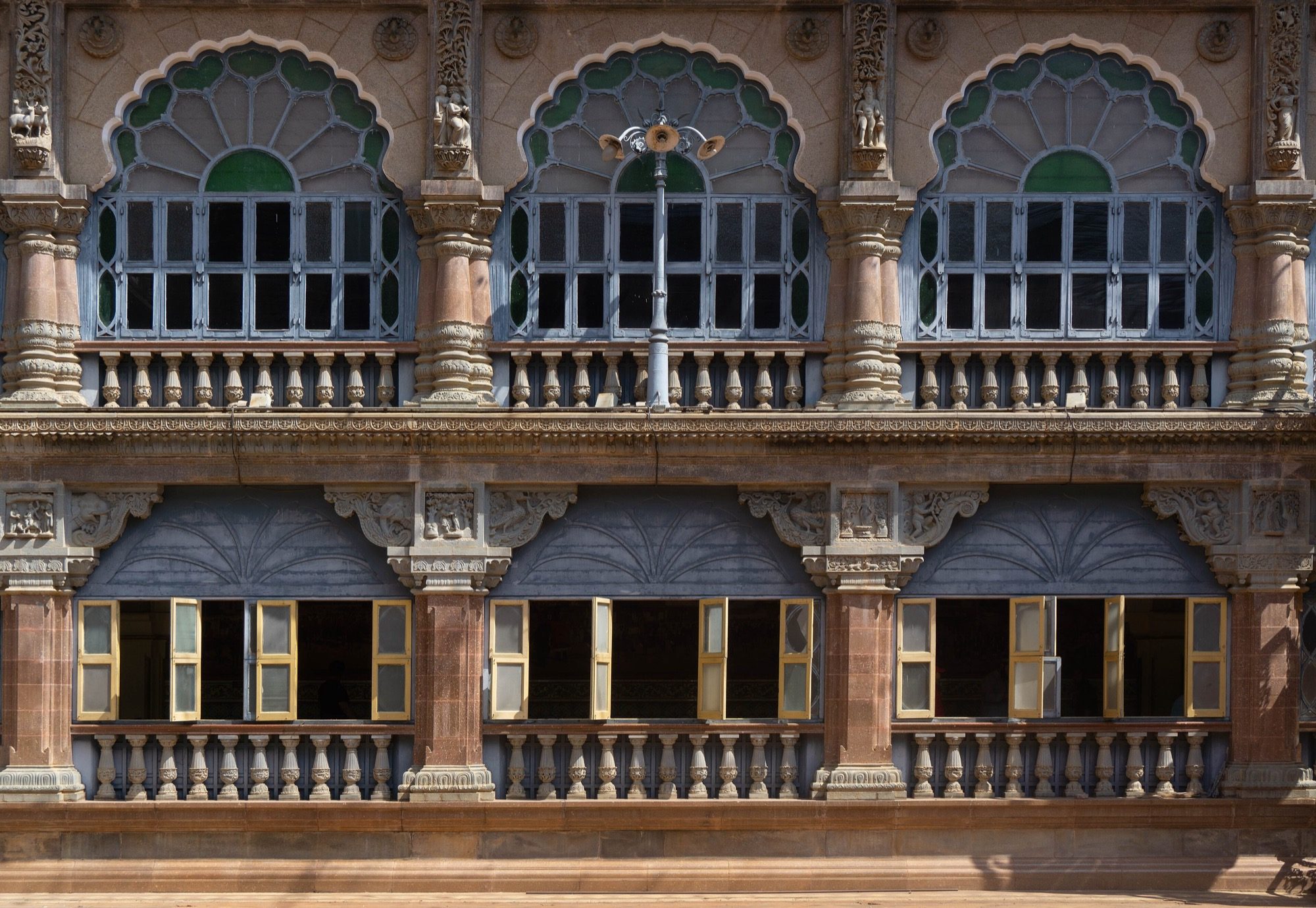
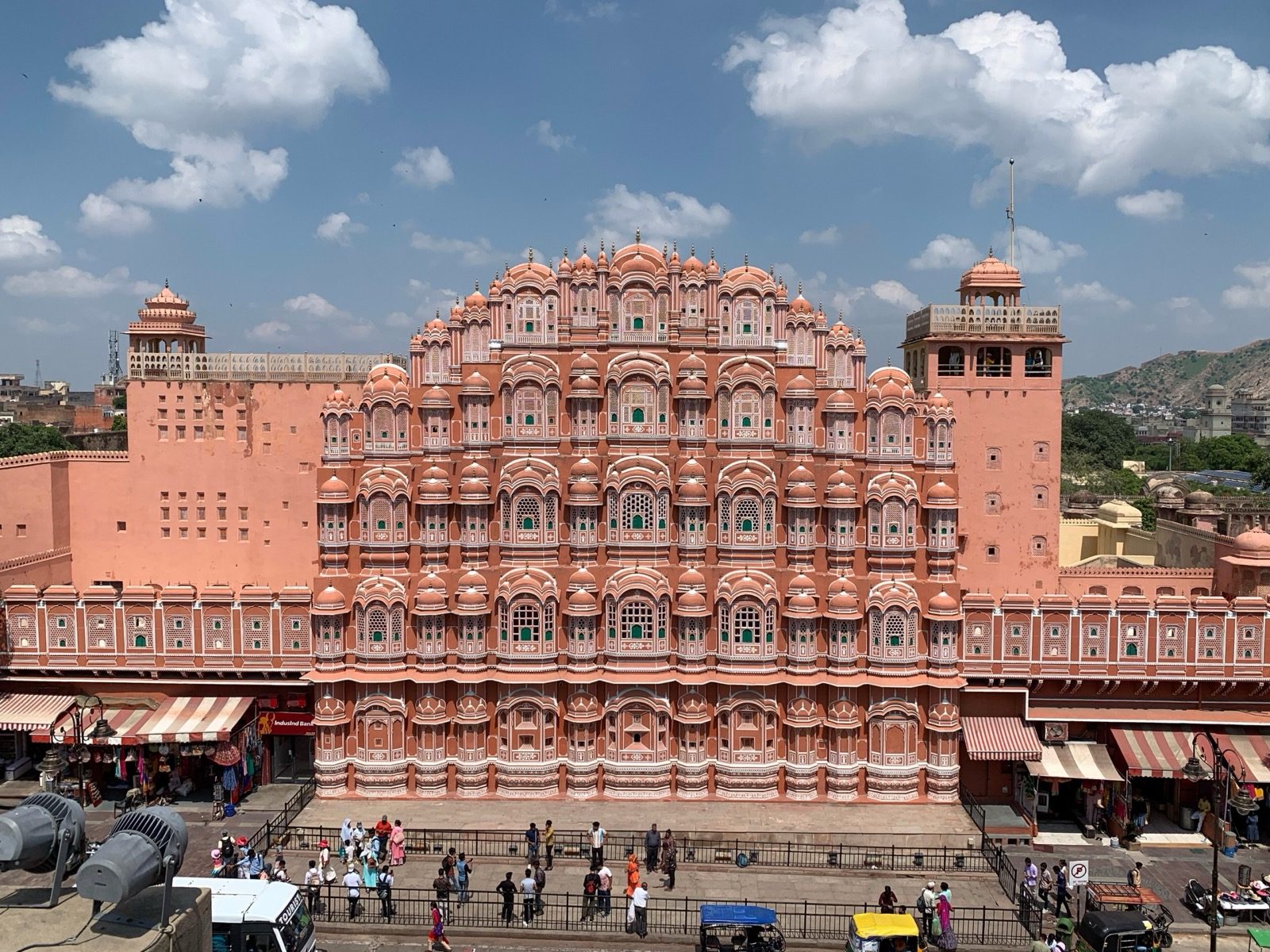
From the 1860s, British architects grafted an Indian decorative skin — domes, cusped arches, chhatris and jaalis — onto European-planned, European-engineered buildings.[1, 2] Read it as a colonial invention, not a native tradition: the same Raj buildings “looked Indian but stayed European”.
A colonial invention, not a native style
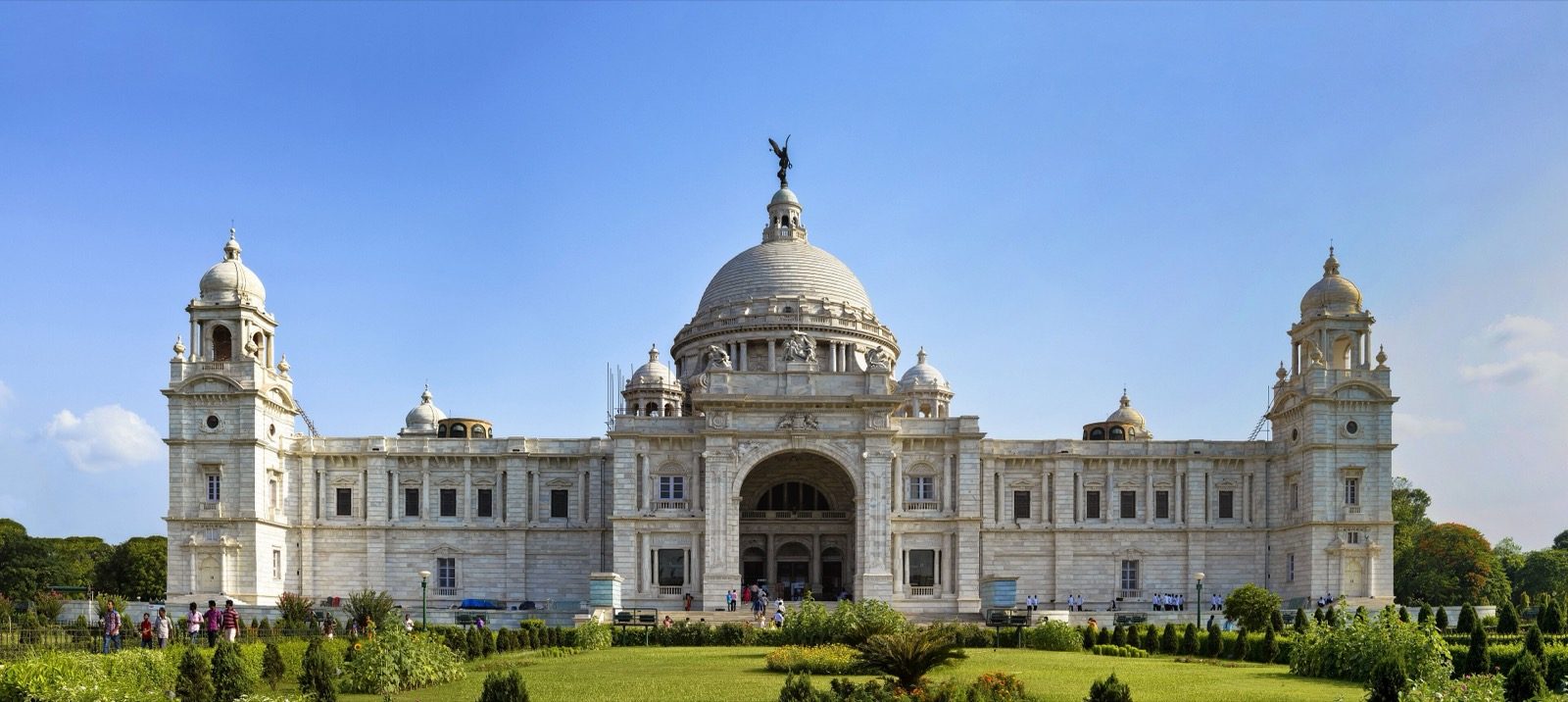
From the 1860s, British architects designed Raj public buildings and princely palaces by grafting an Indian decorative skin — Mughal and Islamic ('Saracenic') domes, cusped arches, minarets, chhatris and jaalis, plus Hindu shikhara motifs — onto buildings that stayed thoroughly European in plan, composition and engineering (Gothic Revival or Neo-Classical structure, often with modern iron). FLAG THE MYTH: Indo-Saracenic is NOT an indigenous Indian style. It is a colonial hybrid — a British framing of 'Indian-ness'. Key architects: Robert Chisholm, Henry Irwin, Samuel Swinton Jacob, William Emerson.[1, 2]
Chandigarh & Ahmedabad
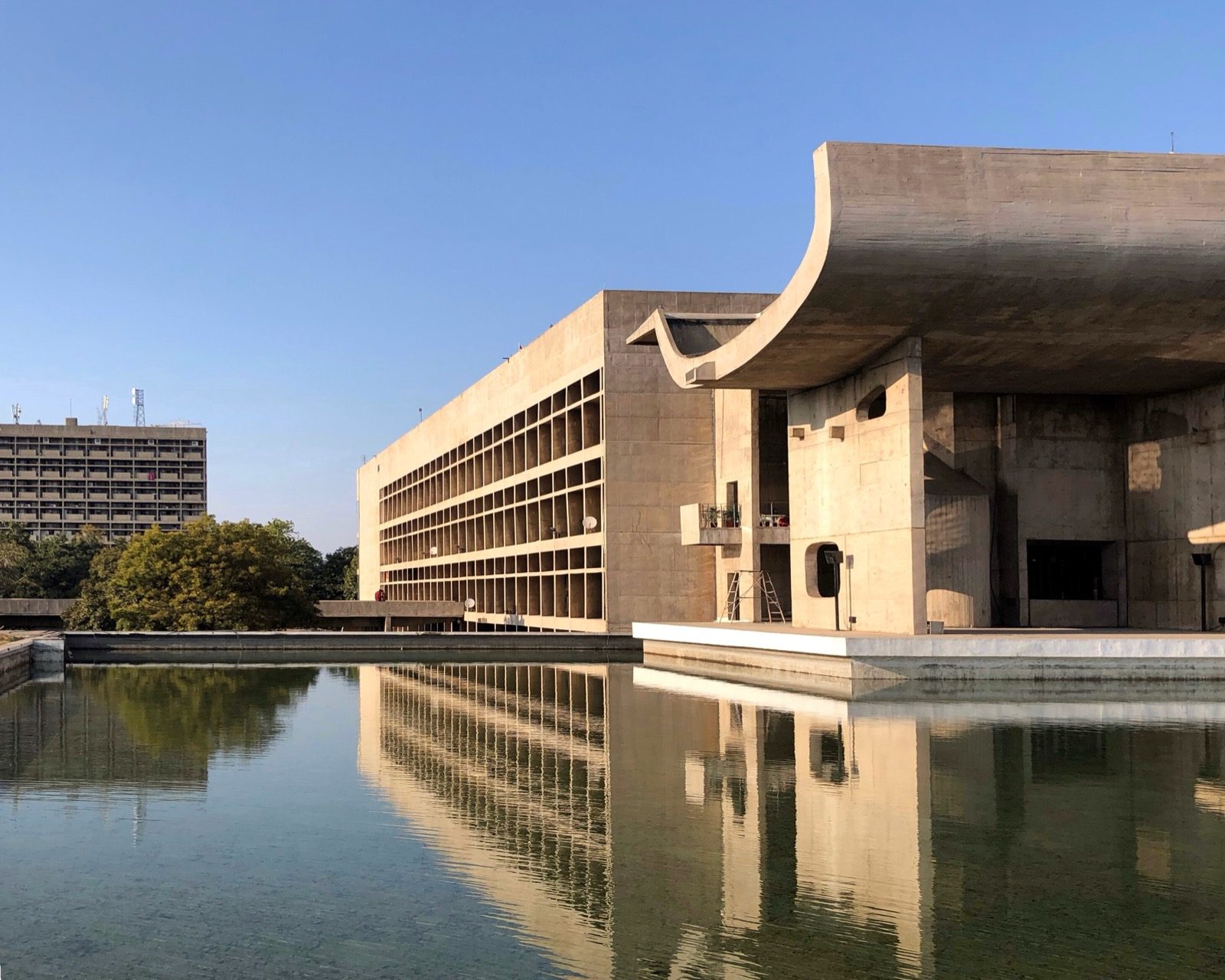
Post-independence India turned to modernism. Le Corbusier planned Chandigarh — but only after the Mayer–Nowicki master plan came first — and built its raw-concrete Capitol; Ahmedabad's mill families brought him and Louis Kahn to India.[5, 7] Remember: IIM Ahmedabad is Kahn's, not Corbusier's.
Mayer and Nowicki first, then Corbusier
When Punjab lost Lahore to Pakistan in 1947, Nehru wanted a new capital 'unfettered by the traditions of the past'. FLAG THE MYTH: Chandigarh was NOT Le Corbusier's from scratch. The American planner Albert Mayer and architect Matthew Nowicki designed the first, fan-shaped master plan (1949–50); after Nowicki died in a plane crash in 1950, Le Corbusier was brought in with Pierre Jeanneret, Maxwell Fry and Jane Drew. They reworked Mayer's fan into a rectilinear grid of self-contained 'sectors' (each ½ × ¾ mile). Note: Le Corbusier is the pseudonym of Charles-Édouard Jeanneret; Pierre Jeanneret was his cousin and partner — two different people.[5, 6]
Before vs after 1947
| Aspect | Pre-independence | Post-independence |
|---|---|---|
| Era & authorship | Pre-1947: British architects, princely/Raj patrons | Post-1947: imported modern masters, Nehruvian state patrons |
| Style | Indo-Saracenic — borrowed Indian skin on European bones | Modern Movement — béton brut and load-bearing brick |
| Attitude to the past | Romantic revival — quoting Mughal & Hindu forms | 'Unfettered by the traditions of the past' (Nehru) |
| Exemplar | Mysore Palace, Victoria Memorial, Albert Hall | Chandigarh Capitol, IIM Ahmedabad, the Ahmedabad villas |
| Who is the bridge | Colonial PWD architects (Chisholm, Irwin, Jacob) | B.V. Doshi — links Corbusier, Kahn and a young Indian profession |
Key terms
A British colonial revival style grafting Mughal/Hindu decorative motifs onto European-planned buildings.
A nominally autonomous Indian kingdom under the Raj — Jaipur, Mysore etc. — and a major architectural patron.
'Raw concrete' — exposed, board-marked concrete left unfinished; the surface of Corbusier's Chandigarh.
A 'sun-breaker' — a projecting concrete screen that shades the façade from the tropical sun (ATMA, Chandigarh).
Chandigarh's self-contained neighbourhood unit, ~½ × ¾ mile, with its own services — Corbusier's planning module.
Chandigarh's government ensemble — Secretariat, Assembly, High Court and the Open Hand — a UNESCO World Heritage Site (2016).
Le Corbusier's 1959 manifesto asking citizens to safeguard the city's planning principles.
An elevated domed kiosk (chhatri) and a perforated stone screen (jaali) — Indo-Saracenic decorative borrowings.
Study task
Pick one Indo-Saracenic building and one Chandigarh building. In two sketches and four lines, show how the first borrows a decorative “Indian” skin while the second is “unfettered by the traditions of the past” — and say which you find the more honestly Indian, and why.
Self-assessment
1. Indo-Saracenic architecture is best described as —
2. Chandigarh's first master plan was made by —
3. The Indian Institute of Management, Ahmedabad, in exposed brick, was designed by —
Recap
References & further reading
- [1]Thomas R. Metcalf, An Imperial Vision: Indian Architecture and Britain's Raj. University of California Press, 1989.
- [2]Jon Lang, A Concise History of Modern Architecture in India. New Delhi: Permanent Black, 2002.
- [3]Samuel Swinton Jacob, Jeypore Portfolio of Architectural Details (1890) — the codification of Indo-Saracenic detailing.
- [4]Peter Scriver & Vikramaditya Prakash (eds.), Colonial Modernities: Building, Dwelling and Architecture in British India and Ceylon. Routledge, 2007.
- [5]Vikramaditya Prakash, Chandigarh's Le Corbusier: The Struggle for Modernity in Postcolonial India. University of Washington Press, 2002.
- [6]UNESCO World Heritage Centre — The Architectural Work of Le Corbusier (Ref. 1321, inscribed 2016). https://whc.unesco.org/en/list/1321/
- [7]William J.R. Curtis, Modern Architecture Since 1900 (3rd ed.). London: Phaidon, 1996.
- [8]The Pritzker Architecture Prize — Balkrishna Doshi (2018 Laureate). https://www.pritzkerprize.com/laureates/balkrishna-doshi
Further reading
- Jon Lang, A Concise History of Modern Architecture in India — the standard survey.
- Vikram Bhatt & Peter Scriver, After the Masters: Contemporary Indian Architecture. Mapin, 1990.
- William J.R. Curtis, Le Corbusier: Ideas and Forms. Phaidon.
Sources gathered and fact-checked June 2026. Published values vary by source, sample and method — treat as indicative and confirm against the cited standard before structural use.
The author
Amogh N P
Architect, interior designer, and creative polymath. Studio Matrx began in his notebooks — his vision of design made honest, useful, and open to everyone. Its Academy is written and taught in his memory, and free, forever.
More about Amogh →