
Computational & Parametric DesignVolume 1 · Issue 5 · October 2026
Computational & Parametric Design
Design the rules that generate form — Rhino and Grasshopper, data trees, attractors, parametric facades, form-finding, optimization and digital fabrication, from first definition to a portfolio-grade body of work.
A free Studio Matrx Academy deep dive into computational and parametric design — designing the rules that generate form. Rhino and NURBS; the Grasshopper visual language; data trees and list logic; attractors, fields and patterns; parametric facades and panelization; form-finding with Kangaroo; optimization with Galapagos and Wallacei; environmental analysis with Ladybug and Honeybee; and digital fabrication. Principle-grounded so it survives tool churn, hands-on so it builds portfolio skill — for architects, interior designers and students, worldwide.
Course byAmogh N P· Architect & interior designer11 modules · 44 lessons · ~14 hrs · 44 of 44 lessons live
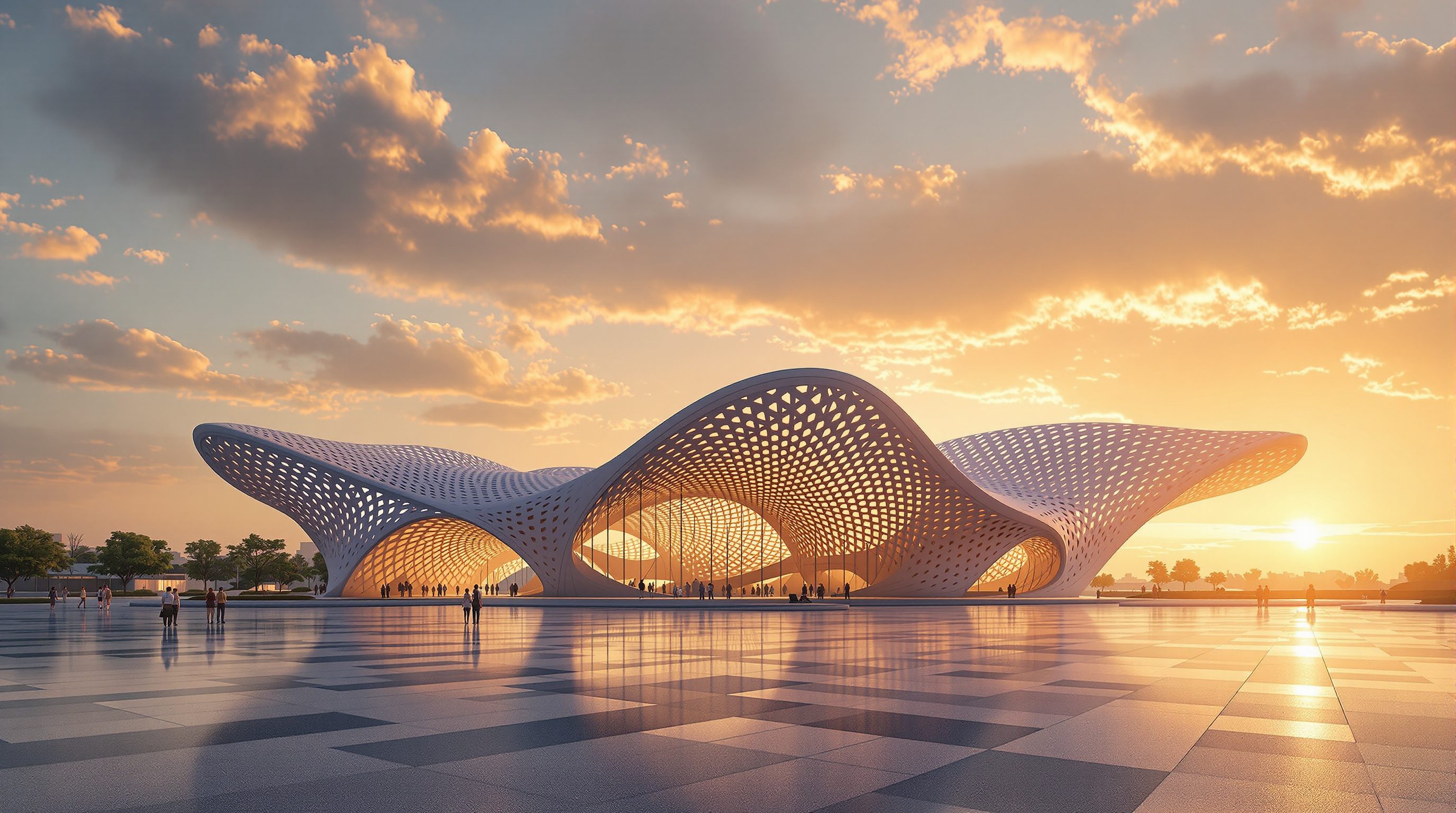
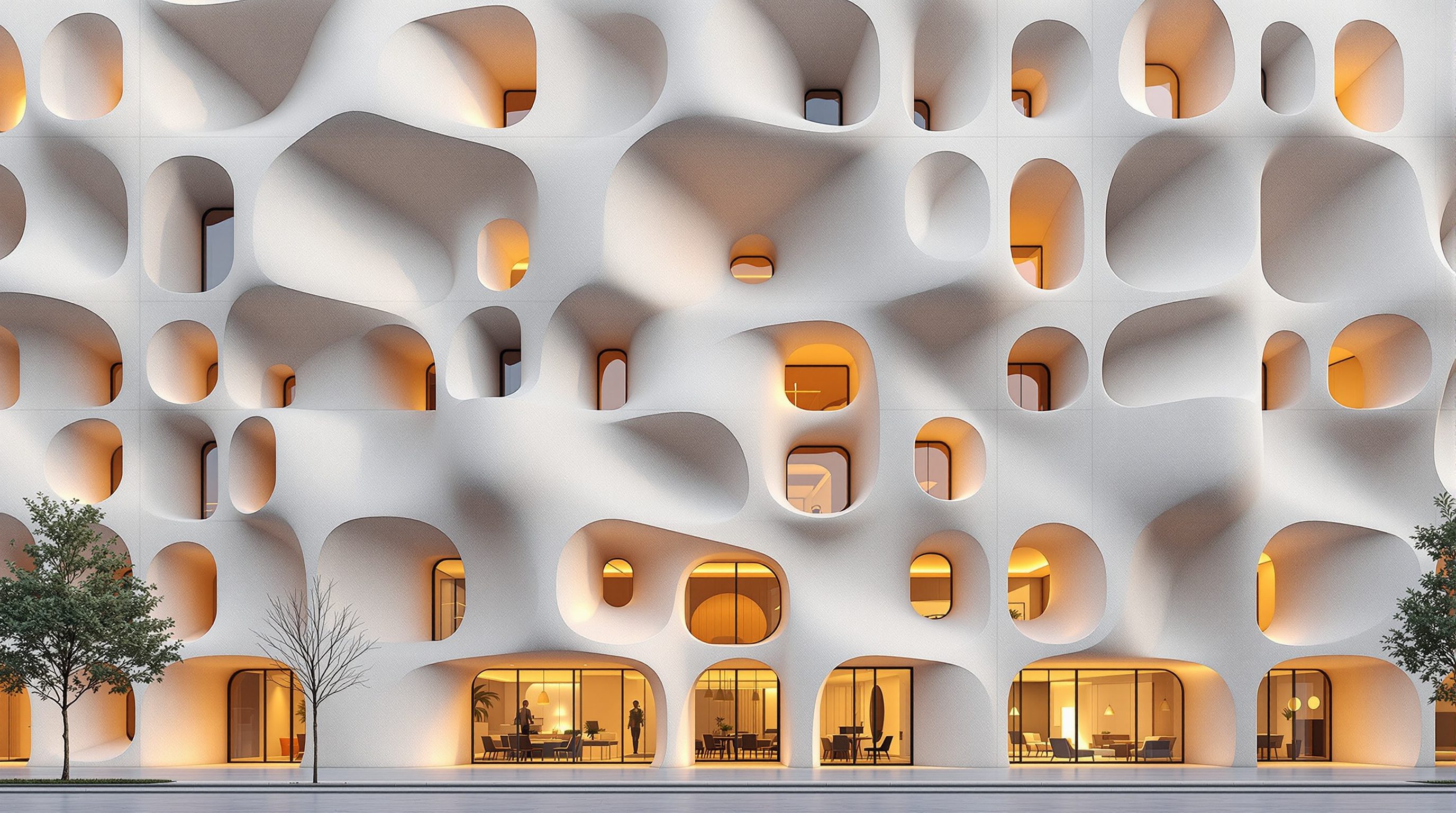 Module 0 · Foundations of Computational Design
0.1 · What Computational Design Is
Computational design isn't drawing a shape - it's designing the logic that generates it. You define parameters and relationships, and the geometry follows. This lesson sets the mindset the whole course builds on: rules over shapes, a definition as a reusable design engine.
Read itStart with Module 0 — Foundations of Computational Design
Free · open0.1 · What Computational Design Is
Open0.2 · Parametric Thinking
Open0.3 · The Computational Toolkit Landscape
Open0.4 · Anatomy of a Parametric Definition
Open0.✓ · Mastery check: Foundations of Computational Design
OpenWhat you'll be able to do
Outcomes- 1Think parametrically — decompose any design intent into parameters, relationships and rules you can build.
- 2Work fluently in Rhino and Grasshopper: definitions, data trees, geometry, attractors, fields and patterns.
- 3Design parametric facades and panelization, find form with Kangaroo, and optimize with Galapagos and Wallacei.
- 4Analyse with Ladybug and Honeybee, prepare file-to-factory fabrication, and build a portfolio-grade body of work.
The full course ahead
11 modules · 44 lessonsThe course opens with the foundations — what computational and parametric design really are — then builds through Rhino and NURBS, the Grasshopper visual language, data trees, geometry and transformations, attractors, fields and patterns, parametric facades and panelization, form-finding, optimization and environmental analysis — closing with digital fabrication, the end-to-end workflow and a portfolio-ready body of work.
0Module 0 · Foundations of Computational Design
LiveBefore any software: what computational and parametric design really are, why designers work with rules instead of shapes, the tool landscape, and how to read a definition.
Module 0 · Foundations of Computational Design
LiveBefore any software: what computational and parametric design really are, why designers work with rules instead of shapes, the tool landscape, and how to read a definition.
1Module 1 · Rhino & NURBS Fundamentals
LiveThe modelling substrate — what NURBS curves and surfaces really are, precise modelling in Rhino, transforms and construction planes, and the bridge into Grasshopper.
Module 1 · Rhino & NURBS Fundamentals
LiveThe modelling substrate — what NURBS curves and surfaces really are, precise modelling in Rhino, transforms and construction planes, and the bridge into Grasshopper.
2Module 2 · Grasshopper Basics
LiveThe visual language — the canvas and how it computes, components and parameters, wiring data and flow, and building your first working definition.
Module 2 · Grasshopper Basics
LiveThe visual language — the canvas and how it computes, components and parameters, wiring data and flow, and building your first working definition.
3Module 3 · Data Trees & List Management
LiveThe concept that makes or breaks a definition — lists and indices, the data tree explained plainly, matching and grafting, and taming complexity.
Module 3 · Data Trees & List Management
LiveThe concept that makes or breaks a definition — lists and indices, the data tree explained plainly, matching and grafting, and taming complexity.
4Module 4 · Geometry & Transformations
LiveThe geometric toolkit — points, vectors and planes, curves and surfaces in Grasshopper, transformations and arrays, and working with meshes and Breps.
Module 4 · Geometry & Transformations
LiveThe geometric toolkit — points, vectors and planes, curves and surfaces in Grasshopper, transformations and arrays, and working with meshes and Breps.
5Module 5 · Attractors, Fields & Patterns
LiveWhere parametric design gets expressive — attractor logic, fields and gradients, tiling and pattern systems, and controlled randomness and noise.
Module 5 · Attractors, Fields & Patterns
LiveWhere parametric design gets expressive — attractor logic, fields and gradients, tiling and pattern systems, and controlled randomness and noise.
6Module 6 · Parametric Facades & Panelization
LiveThe classic application — panelization strategies, facades that respond to their site, brise-soleil and shading systems, and rationalizing for fabrication.
Module 6 · Parametric Facades & Panelization
LiveThe classic application — panelization strategies, facades that respond to their site, brise-soleil and shading systems, and rationalizing for fabrication.
7Module 7 · Form-Finding & Structural Logic
LiveLetting forces shape geometry — form-finding principles, physics simulation with Kangaroo, diagrids and structural patterns, and shells and gridshells.
Module 7 · Form-Finding & Structural Logic
LiveLetting forces shape geometry — form-finding principles, physics simulation with Kangaroo, diagrids and structural patterns, and shells and gridshells.
8Module 8 · Optimization & Design-Space Exploration
LiveLetting the computer search — optimization fundamentals, single-objective search with Galapagos, multi-objective search with Wallacei, and exploring the design space.
Module 8 · Optimization & Design-Space Exploration
LiveLetting the computer search — optimization fundamentals, single-objective search with Galapagos, multi-objective search with Wallacei, and exploring the design space.
9Module 9 · Environmental Analysis & Fabrication
LiveClosing the loop with the real world — environmental analysis with Ladybug, daylight and energy with Honeybee, file-to-factory digital fabrication, and robotic and additive making.
Module 9 · Environmental Analysis & Fabrication
LiveClosing the loop with the real world — environmental analysis with Ladybug, daylight and energy with Honeybee, file-to-factory digital fabrication, and robotic and additive making.
10Module 10 · Workflow, Portfolio & Career
LiveBecoming a computational designer — the end-to-end workflow, documentation and collaboration, building a computational portfolio, and the career itself.
Module 10 · Workflow, Portfolio & Career
LiveBecoming a computational designer — the end-to-end workflow, documentation and collaboration, building a computational portfolio, and the career itself.
The author
Amogh N P
Architect, interior designer, and creative polymath. Studio Matrx began in his notebooks — his vision of design made honest, useful, and open to everyone. Its Academy is written and taught in his memory, and free, forever.
More about Amogh →