
Windows for Courtyard Houses (India): The Inward Light-and-Air Well
How to window an aangan or nalukettu — inward court-facing openings for daylight, stack ventilation and privacy, balanced against street windows.
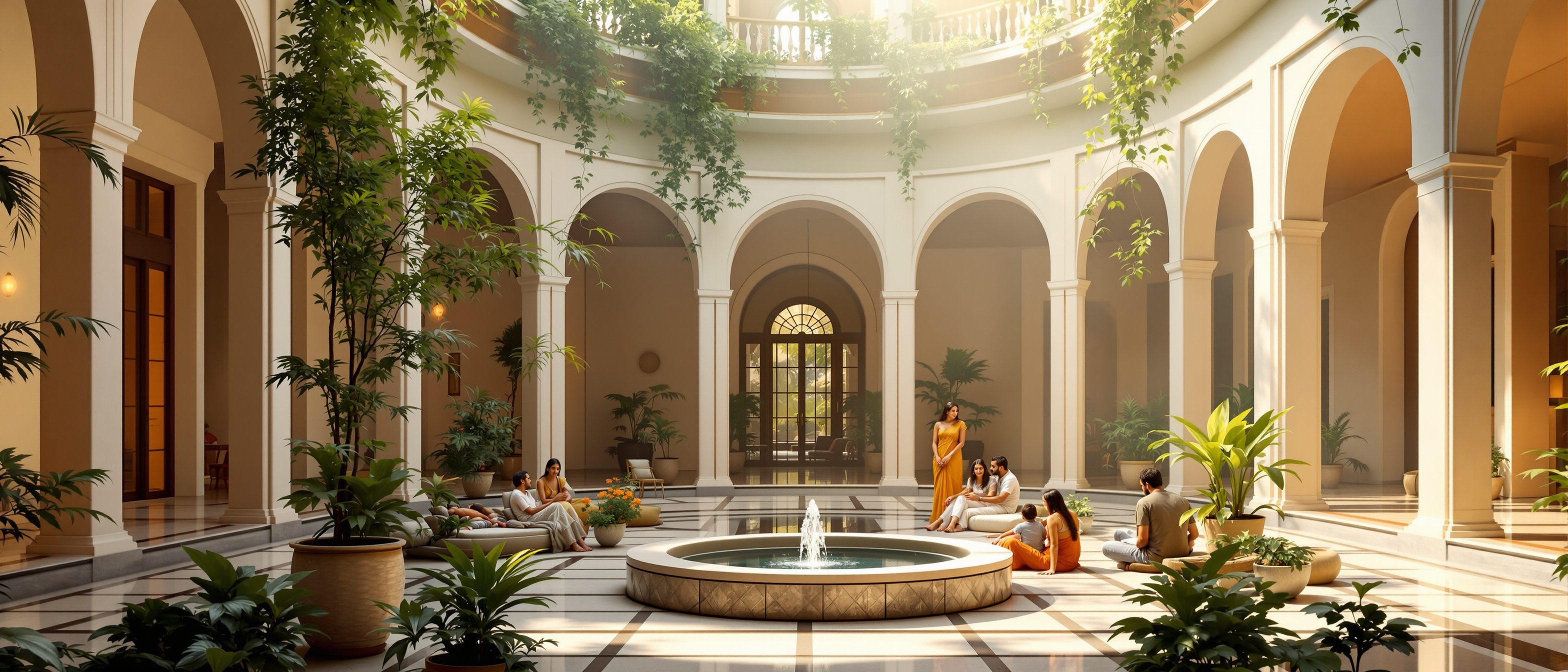
The courtyard house is one of India's oldest and smartest answers to heat, privacy and light. Instead of throwing windows at the street, it turns the house inward around an open-to-sky court — the aangan of north India, the nalukettu and ettukettu of Kerala, the rajwada havelis of Rajasthan and the deori of the Deccan. The court is the engine; the windows are how the rooms tap into it. This guide is the window-and-opening angle: where to put the openings on the court walls, how big, and how to balance inward court glazing against outward street windows.
The courtyard is not a leftover gap. It is a vertical light-and-air well that every room around it borrows from.
For the full climate logic of building a courtyard home — orientation, court proportions, thermal mass, roof — read the companion guide Courtyard homes in India: climate-responsive design. This guide assumes that house exists and asks: how do you window it?
Why the court works as an inward well
A central court does three things at once, and each one is a window opportunity:
- Daylight from above. The open sky drops even, glare-free top-light into the heart of a deep plan — exactly where street windows cannot reach. Rooms one room deep off the court get daylight from the court side.
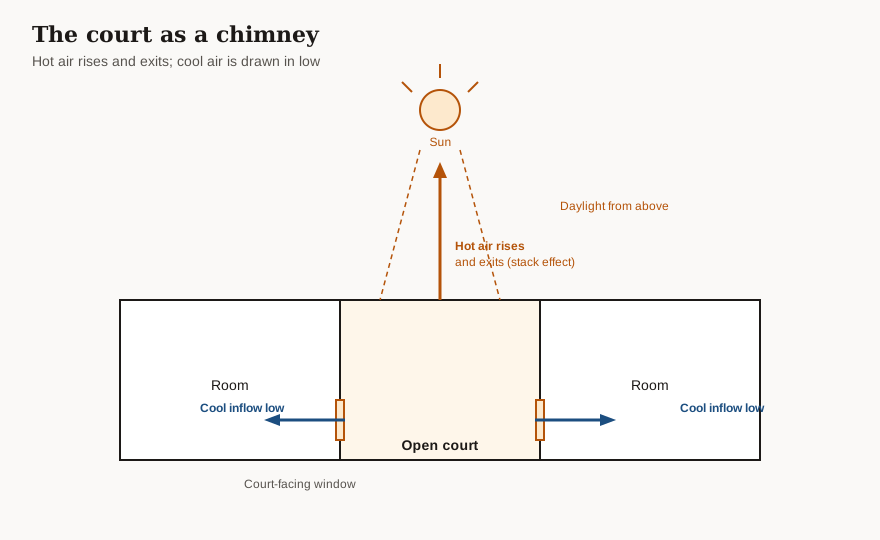
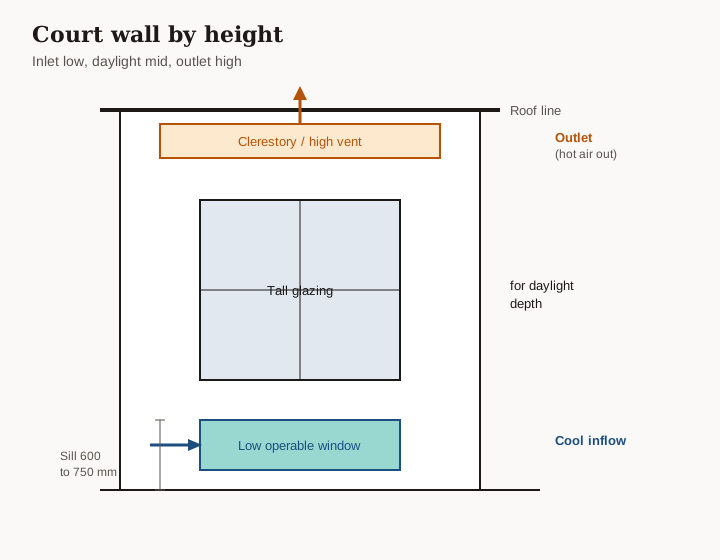
- Stack ventilation. Through the day the court air heats, rises and escapes upward, pulling cooler air from the rooms behind it. This stack (chimney) effect runs even when there is no breeze — a second engine alongside cross ventilation. Hot air leaves high; cool air is drawn in low.
- Privacy without blank walls. Because the windows face in, you can use large, low, open glazing onto the court without anyone on the street seeing in. Privacy and openness stop fighting.
This is why a courtyard also rescues a deep narrow plot, where only the front and rear walls are free and the middle goes dark. A court (or light-well) inserted in that dark middle gives the buried rooms their own light and air source. That deep-plot logic is covered in Window design for narrow plots in India — courtyards are one of the tools it points to; here we detail the court-facing windows themselves.
The inward-facing window plan
Around the court, treat the court walls as your primary glazed faces and the outer (street/boundary) walls as secondary. The classic move: big, generous openings onto the court; smaller, higher, controlled openings to the outside.
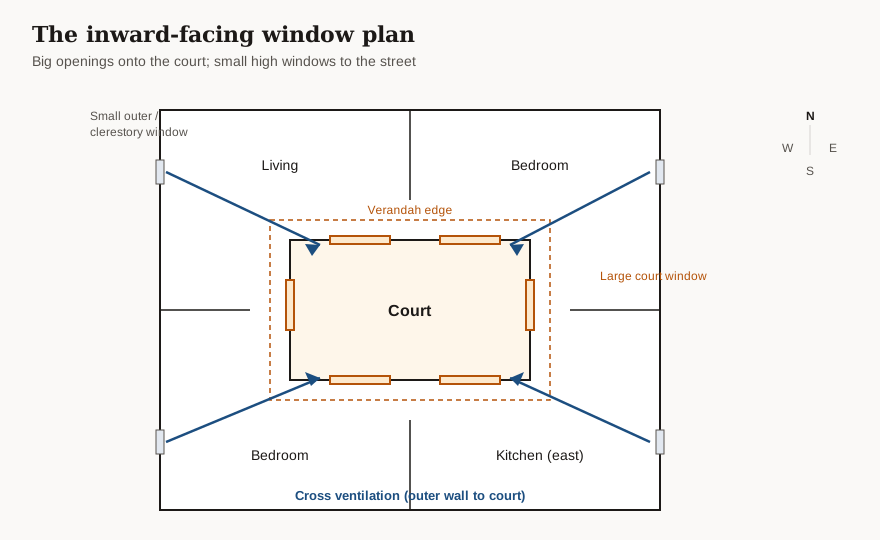
A simple court-window discipline:
| Wall | Window role | Size and sill |
|---|---|---|
| Court-facing (inner) | Primary light + air, view onto greenery | Large; living/bedroom sill 600 to 750 mm, full doors where possible |
| Street / boundary (outer) | Secondary, privacy + a second vent path | Smaller; or clerestory high on the wall |
| Kitchen on court | Light + exhaust, east wall ideal | Sill 1050 to 1200 mm above counter |
| Bath / utility | Privacy vent, often onto a service court | Sill ~1500 mm; awning or louvre |
Pairing a court window with an outer window on the opposite wall of the same room gives you cross ventilation through the room — court (or breeze) in one side, out the other. The rule of thumb: an inlet and outlet on different walls, with the outlet at least as large as the inlet to pull air through. Keep the path between them clear of tall furniture.
Design every court-side room to breathe both ways: cross ventilation when there is a breeze, stack ventilation through the court when there is not.
Sizes, sills and the NBC floor
Court windows follow the same Indian standards as any other window. Aim for openable area of at least 10 per cent of the room's carpet area (the NBC 2016 light-and-ventilation rule of thumb; some local bye-laws ask for window area around one-seventh to one-eighth of floor area for light and ventilation combined — verify locally). Indicative standard sizes still apply:
| Room | Indicative size | Court-side note |
|---|---|---|
| Bedroom | 4 ft x 4 ft | Low sill for a seated court view |
| Living | 5 ft x 4 ft to 6 ft x 4 ft | Largest opening; doors onto the court |
| Kitchen | 4 ft x 3 ft | East court wall, add exhaust |
| Bathroom | 2 ft x 1.5 ft | High awning/louvre onto service court |
Because the court walls are short (one room's width), tall windows beat wide ones for getting daylight deep — daylight reaches roughly 2 to 2.5 times the window head height into a room. A taller court window pushes light to the back wall of a room that has no other opening. Where a room is deep and single-aspect off the court, add a clerestory high on its inner wall: it lights the depth and doubles as the stack-ventilation outlet.
Court-facing glazing versus the energy code
Because so much glass faces the court, your window-to-wall ratio (WWR) on the inner faces runs high. The court protects that glazing — it is self-shaded, north-and-shade-cool, and never hit by harsh low west sun — so high inner WWR is far safer here than on a west street wall. But the Eco-Niwas Samhita still sets a minimum visible-light transmittance by WWR band and asks for RETV not greater than 15 W per m squared:
| WWR band | Minimum VLT |
|---|---|
| 0 to 0.30 | 0.27 |
| 0.31 to 0.40 | 0.20 |
| 0.41 to 0.50 | 0.16 |
| 0.51 to 0.60 | 0.13 |
A practical split: keep the court-facing glass generous (it is shaded and gives the most useful light and air), and keep the outer street/boundary glazing modest with low-SHGC glass so the envelope stays within RETV. For the orientation-by-wall logic in detail, see Window placement: the complete India guide, our planning pillar.
Shading the court and handling the monsoon
The court is a microclimate maker, but only if you manage two things — sun and rain.
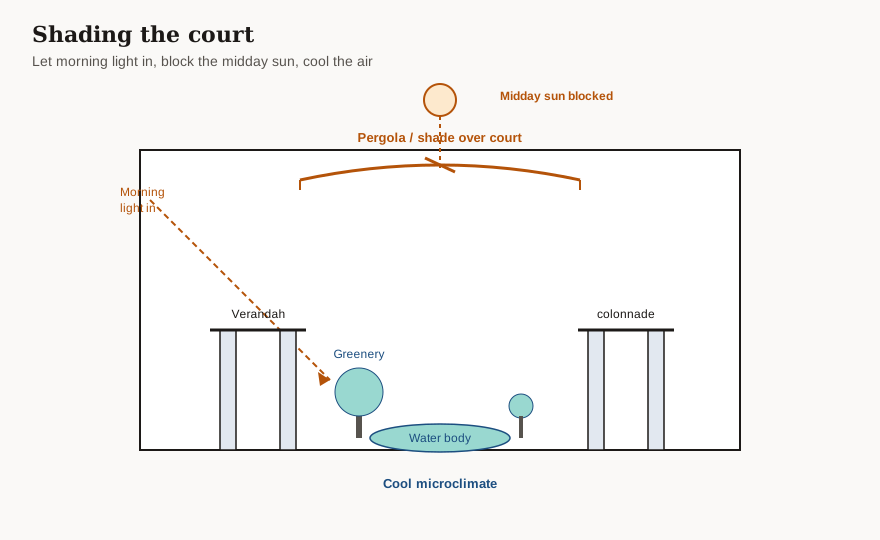
- Shade the court, not just the windows. A verandah or colonnade (the traditional pillared edge) wraps the court, shades the inner windows, and lets you keep them open in rain. A light pergola, retractable sail or jali roof over the court itself tempers the midday sun while still letting the stack effect breathe.
- Cool the air. Greenery, a small water body or fountain, and pale court paving turn the court into a cool microclimate the surrounding windows draw from — air entering the rooms is already cooler than the street.
- Rain handling. Indian courts traditionally slope to a central drain and ring the court with the verandah so the inner windows sit under cover. For openings that catch rain, use awning windows (they shed water and stay open in a light shower) or louvred / jali windows — the classic monsoon-and-coastal choice that ventilates even while it rains and accelerates incoming air for a cooling venturi effect. See Window types for Indian homes for the full operation comparison.
Court windows, vastu and the sun
Courtyard logic and vastu largely agree, because the Brahmasthan (the centre) was traditionally kept open as the court. For the windows around it, vastu favours larger openings to the north, east and northeast and smaller ones to the west and south, avoiding the southwest — which also happens to match the climate truth that north and east light is the coolest and west sun is the harshest. Put the kitchen window on the east court wall, with an exhaust. Treat this as guidance harmonised with the sun-path rather than rigid rule; the deeper reconciliation is in Vastu for modern homes.
Do and avoid
| Do | Avoid |
|---|---|
| Make court-facing windows the primary, generous openings | Big unshaded windows on a hot west street wall |
| Pair a court window with an opposite opening for cross flow | A single-side room with no outlet (no through-air) |
| Add a clerestory or high vent as the stack outlet | Sealing the court top so hot air cannot escape |
| Ring the court with a verandah so windows stay open in rain | Court windows that catch monsoon rain with no cover |
| Use awning or louvre where rain reaches the opening | Relying on fixed picture glass alone onto the court |
A courtyard house lets you have it both ways: street-facing privacy and light-filled, well-aired rooms. The windows are simply how each room plugs into the well at the centre.
References
- BIS Guide for Using NBC 2016: https://www.bis.gov.in/wp-content/uploads/2022/08/Booklet-Guide-for-Using-NBC-2016.pdf
- IS 3362 (natural ventilation of residential buildings): https://law.resource.org/pub/in/bis/S03/is.3362.1977.pdf
- Eco-Niwas Samhita 2018 (BEE/ECBC): https://ecbc.in/econiwas.html
- Standard window size by room (CiviConcepts): https://civiconcepts.com/blog/standard-window-size
- Vastu for doors and windows (Livspace): https://www.livspace.com/in/magazine/vastu-for-house-doors-windows
Export this guide
Related Guides — Deep-dive reading
Window Placement Guide for Indian Homes (2026): Where Windows Should Go
The planning pillar for where windows go: orientation, the inlet-outlet pair, daylight reach, sill heights, WWR balance and a room-by-room checklist for Indian homes.
Windows & GlazingAwning Windows Guide (India): Rain-Proof Ventilation for Kitchens and Baths
Top-hinged, outward-opening windows that shed rain and breathe high on the wall — the monsoon-smart choice for baths, kitchens and over picture windows.
Windows & GlazingNorth-Facing Window Design (India): The Best Light With the Least Heat
Why the north wall gives soft, even, glare-free daylight with almost no heat, and how to design large, high-VLT windows that make the most of it.
Windows & GlazingRelated Tools — Try Free
Cross-Ventilation Analyzer
Estimate airflow and air changes per hour (ACH) from room size, window areas, layout, and local wind — with NBC 2016 Part 8 compliance check.
Ventilation CalculatorBrise-Soleil Visualizer
Interactive horizontal-louvre cut-off angle calculator — sun altitude, louvre depth, and spacing inputs with a live shadow preview. Computes θ = arctan(spacing/depth) for façade shading, ECBC envelope compliance, hospital daylight design, and tropical sun-control detailing.
Sun Shading ToolWindow Orientation Planner
Pick the best window type, glass and shading by wall direction — north, east, south and west.
Window Tool