
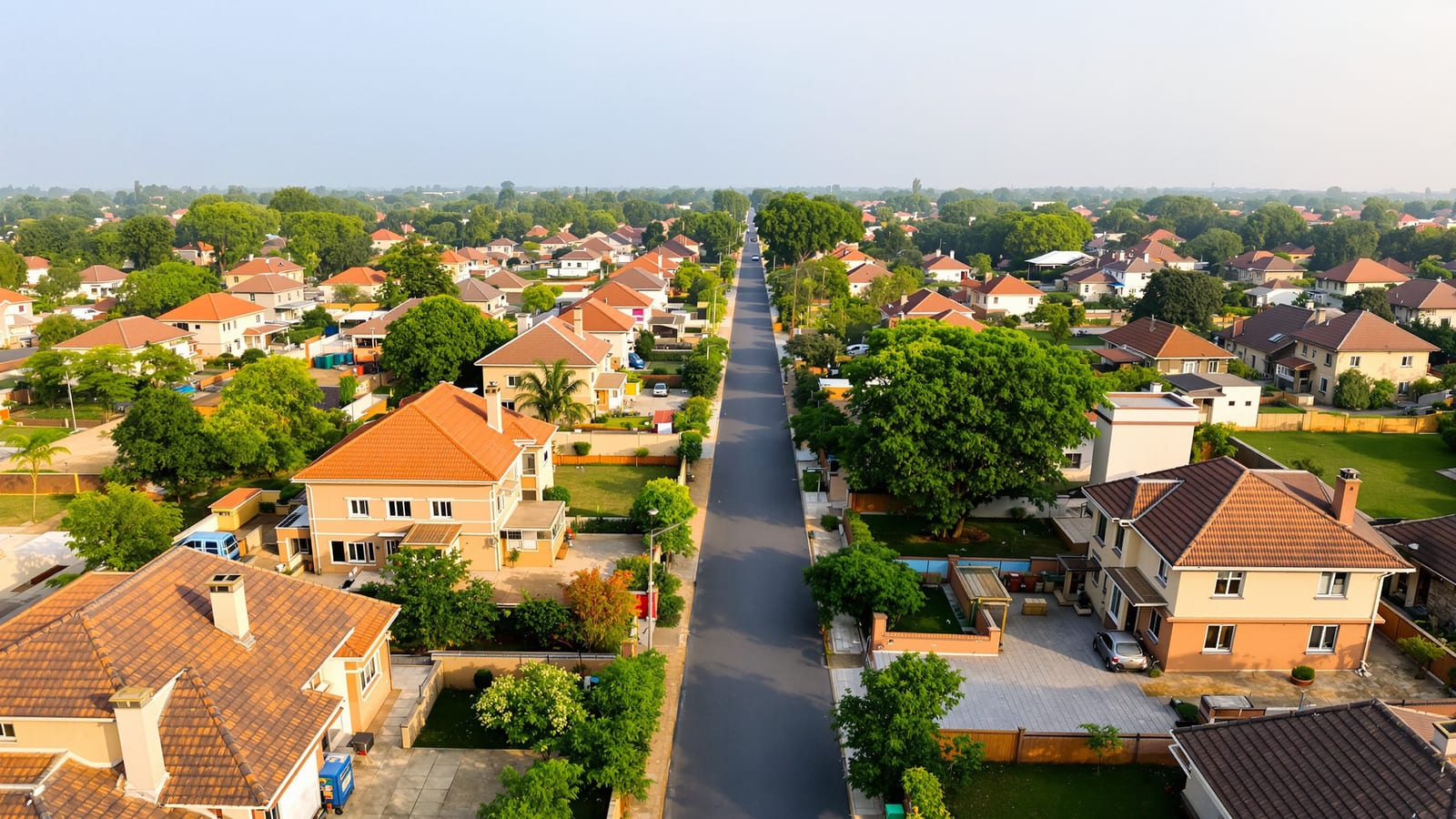
Why Setbacks Matter: A Homeowner's Guide to the Open Space Around Your House
What setbacks are, the daylight, air, fire-access and privacy jobs they do, how they scale with plot and height, and why eating them up costs you your occupancy certificate and resale value
When you buy a plot or get a house designed in India, one of the first things the drawings will show is a band of empty ground running all the way around your building. That gap is the setback. It can feel like wasted land, especially when every square foot costs you money and you would rather build a bigger house. But that empty strip is doing several quiet, important jobs at once, and the rules that govern it are not optional. Eat into your setbacks and you can end up with dark rooms, a furious neighbour, no occupancy certificate, and in the worst cases a demolition notice.
This guide explains, in plain language, what setbacks are, why they exist, how the required distances change with your plot and your building, and what goes wrong when people ignore them. One thing to keep front of mind throughout: the exact numbers vary a lot by city, plot size and building height, so every figure here is a typical range, and you must verify the actual requirement against your own local municipal bye-law or Development Control Regulations (DCR). For the city-by-city detail, see the companion guide on building setbacks across India (the city-by-city detail).
1. What a setback actually is
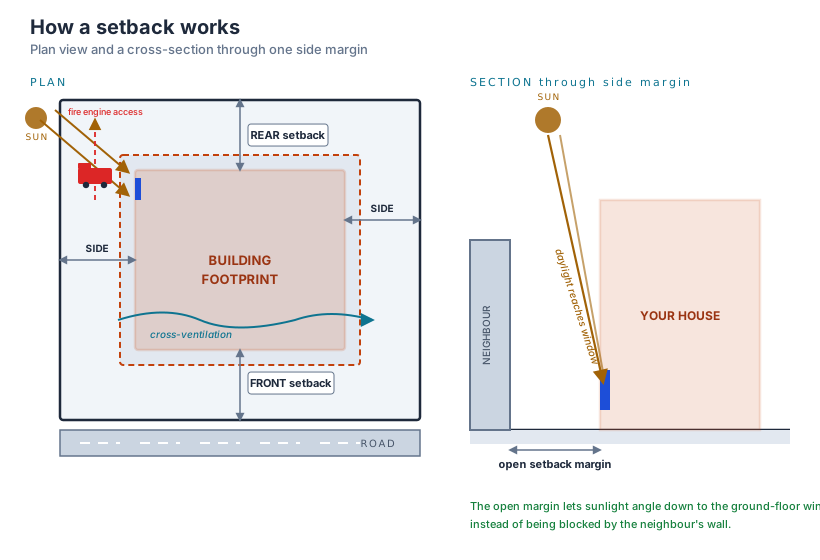
A setback is the minimum open distance you must leave between your building wall and the edge of your plot. Picture your plot as a rectangle. The legally required building can only sit inside a smaller rectangle drawn within it. The leftover ring of land between the two rectangles is the setback, and it must stay open to the sky with no permanent structure on it.
There are normally four of them, named by direction:
- Front setback: the gap between your building and the road-side boundary. It is usually the largest, because it relates to the road and to emergency access.
- Rear setback: the gap at the back boundary, away from the road.
- Side setbacks: the two gaps along the left and right boundaries. On small plots one side is often allowed to be nil, meaning the wall can sit on the boundary line.
"Open to the sky" is the key phrase. A setback is not a place to put a permanent room, a covered garage with a slab, or an extension. Some bye-laws permit limited, lightweight intrusions such as a thin compound wall, a small gate post, an open uncovered parking space or a step, but the broad principle is that the setback stays as breathing space. Treating it as buildable area is the single most common cause of compliance trouble.
2. The first job: daylight into your rooms
A house packed wall to wall with its neighbours is a dark house. Light reaches your rooms at an angle through the windows, and that angle only works if there is open ground outside the window for the light to travel across. Pull your wall right up to the boundary and your window now stares straight at the neighbour's wall a hand's width away. The room behind it becomes gloomy and needs the lights on all day.
Setbacks guarantee that every habitable room can have a window that opens onto open space rather than onto a brick wall. The side and rear gaps in particular protect the rooms in the middle and back of your house, which are otherwise the easiest to starve of light. This is why the bye-laws often insist that habitable rooms (bedrooms, living rooms, kitchens) open onto a setback or an internal open court, not onto an enclosed shaft. The pay-off is lower electricity bills, better mood and a house that feels alive rather than cave-like.
3. The second job: cross-ventilation and air
Daylight's twin is air movement. For a breeze to pass through your home, air has to enter on one side and leave on another, which means you need open space on more than one face of the building. If your house is sealed against the boundary on three sides, there is no path for air to cross, and rooms become stuffy and damp. In India's hot and humid climates, cross-ventilation is not a luxury; it is what keeps a house liveable without running the air conditioner around the clock.
Setbacks create the corridors of open air that let wind reach your windows from different directions. They also let hot air, cooking smells and bathroom moisture escape instead of pooling. A well-set-back house breathes; a house that has swallowed its setbacks does not.
4. The third job: emergency and fire-engine access
This is the reason that turns setbacks from "nice to have" into "non-negotiable." When there is a fire, a medical emergency or a collapse, help has to physically reach your building. A fire tender is a large vehicle that needs room to approach, turn and extend its ladder. An ambulance crew needs a clear path to carry a stretcher. If buildings are jammed against each other with no margin, the fire brigade simply cannot get close enough to fight a blaze or rescue people, and fire spreads from building to building across the shared walls.
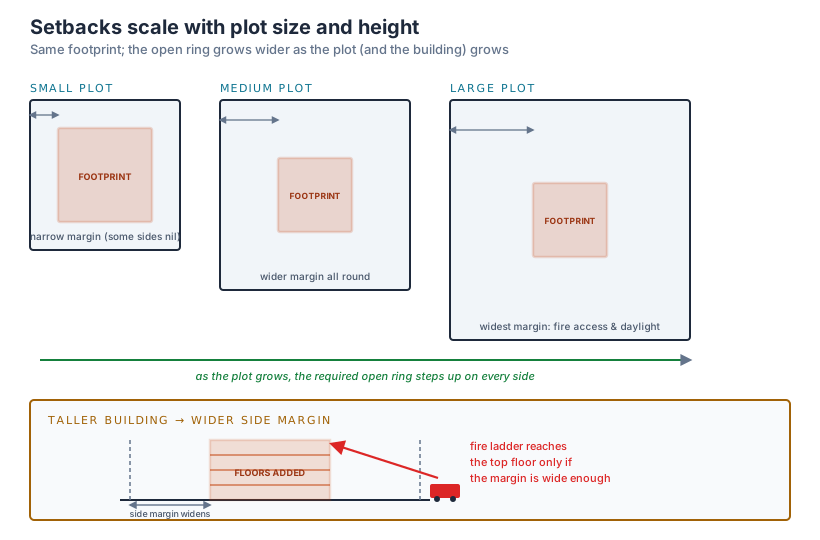
This is exactly why the rules tie larger setbacks to taller buildings. A tall building needs the fire engine to stand further back to aim water and ladders at the upper floors, so the open margin around it has to grow with its height. Fire-safety provisions in the National Building Code typically require generous side and rear clearances once a building rises past a certain height, and these get wider still for high-rise buildings. When you give up your setback, you are quietly removing the route by which someone might one day save your home or your family.
5. The fourth job: privacy, structure and the ground itself
A few more jobs round out the picture.
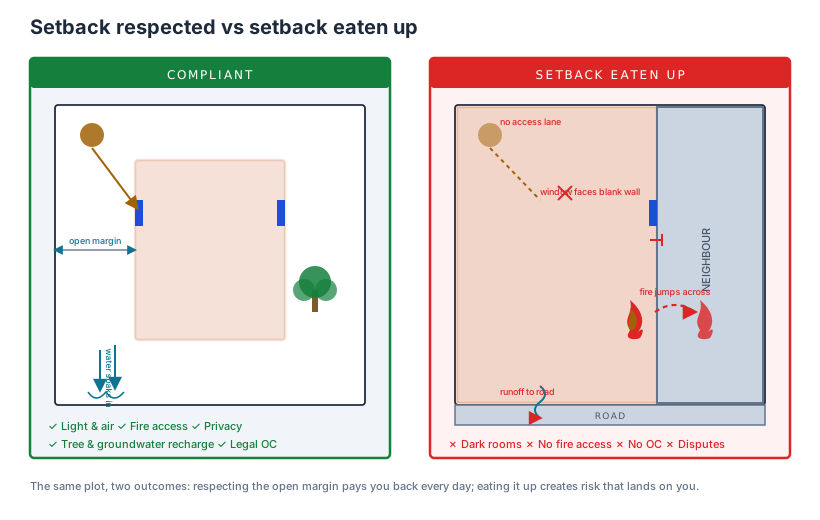
Privacy from neighbours: an open margin keeps your windows and your neighbour's windows at a polite distance, so you are not looking straight into each other's bedrooms. Squeeze the gap to nothing and every household loses privacy, which is one of the most common triggers for neighbour disputes.
Structural breathing space: your foundation, your wall footings and your future repairs all need a little room. Building exactly on the line means you cannot maintain or waterproof your own outer wall without trespassing, your foundation may interfere with your neighbour's, and any future settlement or crack becomes a shared problem. The setback gives your structure somewhere to exist without leaning on the property next door.
Rainwater and soak ground: open earth in your setback lets rain soak into the ground instead of sheeting straight onto the road or your neighbour's plot. This recharges groundwater, reduces local flooding and gives you space for rainwater harvesting, planting and trees, all of which also cool the area and soften the heat-island effect of dense construction.
6. How setbacks scale: plot size, road width and height
Setbacks are not one fixed number. They grow and shrink based on three things, and understanding this helps you make sense of why your neighbour with a bigger plot has to leave more open space than you do.
Plot size: this is the biggest driver. Small plots are allowed small or even nil setbacks so that modest homes remain buildable; large plots must leave proportionally larger margins. As your plot grows, the front, rear and side requirements all step up.
Road width: the width of the road your plot faces affects both your front setback and how tall you are allowed to build. A common principle ties maximum building height to road width (for example, height limited to around 1.5 times the road width in some bye-laws), so a plot on a narrow lane may hit a height ceiling well before it runs out of floor-area allowance. See building height restrictions explained for how this interacts.
Building height: the taller you build, the larger your side and rear setbacks must become, mainly for fire access and to stop tall buildings from overshadowing each other. National guidance typically adds extra margin for each additional increment of height above a threshold.
The table below shows illustrative, typical ranges drawn from the National Building Code 2016 framework that many state codes use as a starting point. Treat these as a sense of scale only. Your actual figures will come from your local DCR or municipal bye-law, which often tightens these numbers.
| Plot / situation | Setback this protects | Typical front | Typical rear | Typical side (each) |
|---|---|---|---|---|
| Small plot (up to ~100 sqm) | Basic light and access | ~1.5 m | ~1.5 m | 0 to ~1.0 m (one side may be nil) |
| Medium plot (~100 to 200 sqm) | Light, air, privacy | ~3.0 m | ~2.0 m | ~1.5 m |
| Larger plot (~200 to 500 sqm) | All functions, fire access | ~3.0 m | ~3.0 m | ~3.0 m |
| Big plot (above ~500 sqm) | Fire access, daylight, spacing | ~4.5 to 6.0 m | ~3.0 to 4.5 m | ~3.0 to 4.5 m |
| Taller buildings (above ~15 m) | Fire-tender reach, overshadowing | grows with height | grows with height | extra margin added per height step |
Notice the overall span: front setbacks commonly run from about 1.5 m up to 6 m, and side and rear setbacks from under a metre on tiny plots up to 4 m or more on large ones. The same plot in two different cities can carry quite different numbers. Verify against your own local municipal bye-law or DCR before you trust any single figure.
7. Corner plots, small plots and the squeeze
Two situations create real-world tension, and it helps to know them before you buy.
Corner plots face two roads, so they usually have to keep a front-type setback on both road sides. That sounds like a penalty, but it often comes with a small ground-coverage relaxation, and the double frontage is genuinely better for light, air and access. The flip side is that the buildable rectangle in the middle is smaller, so a corner plot may give you less floor space than its area suggests. Factor this in before paying a premium for the corner.
Small plots are the everyday Indian reality: a 30x40 or 20x30 site where every metre of setback feels painful. Bye-laws recognise this and allow reduced or nil setbacks on small plots so that homes stay buildable, sometimes letting one side wall sit right on the boundary. Several cities have recently relaxed small-plot setback norms further. This is genuine help, but it does not mean zero rules. You still have a front setback and usually one side and a rear margin, and you still cannot legally build to the very edge on every side. The temptation to "just take the extra two feet" is strongest exactly here, and so is the risk.
8. Setbacks, ground coverage and FAR work together
Three controls together decide how big a house you can build, and setbacks are the first of them.
Setbacks fix where on the plot you may build by carving out the buildable rectangle. Ground coverage then caps what fraction of the plot your footprint may occupy (commonly somewhere between 50% and 90% depending on plot size and zone). Floor Area Ratio, often written FAR or FSI, caps the total floor area across all storeys as a multiple of your plot area.
In practice the setbacks usually decide the question first: once the open margins are removed, the rectangle that is left is your real building envelope, and your ground coverage and FAR are calculated within it. You cannot trade one against the other on your own, building extra floors does not buy back a setback, and a generous FAR is useless if your setbacks shrink the footprint. To understand the floor-area side, read FAR vs FSI: development rights, and for the bigger picture of how all these controls fit together, see understanding building bye-laws.
9. What goes wrong when setbacks are eaten up
It is worth being blunt about the downside, because the costs are real and they land on you, not the builder who talked you into it.
Dark, airless rooms: the everyday penalty. Lights on all day, an AC running constantly, damp walls and a home that never quite feels healthy.
Fire and safety risk: no margin means no fire-engine access and an easy path for fire to jump between buildings. This is the danger that does not show up until the day it matters most.
Neighbour disputes: building over the line, blocking a neighbour's light or air, or draining water onto their plot is one of the most common reasons Indian neighbours end up in front of the municipal office or in court. These disputes can drag on for years.
No occupancy certificate (OC): the municipal authority issues an OC only when the building matches its sanctioned, compliant plan. A setback violation can mean the OC is withheld, which makes the building legally not fit for occupation, complicates loans and registration, and hangs over you indefinitely.
Penalty, regularisation or demolition: depending on the city and the severity, authorities can issue a stop-work order, impose fines, demand that you demolish the offending portion, or in some cases allow paid regularisation. None of these is cheap, and demolition of finished construction is the most painful outcome of all.
Resale problems: a buyer's lawyer and bank will check whether the building matches its sanctioned plan and has an OC. A setback violation surfaces during this due diligence, frightens off serious buyers, drags down your price and can sink the sale entirely.
10. How to check your required setback
You do not have to guess. Here is the practical sequence.
First, identify your local authority. This is your city's municipal corporation, urban development authority or town panchayat, the body that sanctions building plans where you live.
Second, find the rule for your plot. Look up the building bye-laws or Development Control Regulations of that authority and locate the setback table for your plot-size bracket, your zone (residential, mixed and so on) and your road width. Many authorities publish these online.
Third, note the modifiers. Check the height-based increases, corner-plot rules and any small-plot relaxations that apply to you.
Fourth, get it confirmed by a licensed professional. A licensed architect or engineer who works in your city knows the current bye-law, any recent amendments and how the local sanctioning office interprets grey areas. They will draw your buildable envelope correctly the first time.
To get an intuitive feel for how the margins shape your buildable area before you commit, try the interactive setback visualizer tool, which lets you see the open rings around a footprint. And to see how rules differ across the country, the India Regulatory Atlas and the city-by-city building setbacks across India (the city-by-city detail) are good next stops.
What this means for you
The empty land around your future house is not wasted; it is what makes the house light, breathable, safe to live in, and legal to own. Setbacks pay you back every day in lower bills and a healthier home, and they pay you back on the worst days by letting help reach you. The numbers are genuinely flexible across plot size, road width and height, and they differ from city to city, so do not anchor on any single figure you read, including the ranges in this guide. Before you finalise a plot or a plan, confirm your exact front, side and rear setbacks against your own local municipal bye-law or DCR, and have a licensed local architect draw your buildable envelope. Respecting the setback is the cheapest insurance you will ever buy on your home.
Sources
- Bureau of Indian Standards, National Building Code of India 2016, Part 3 (Development Control Rules and General Building Requirements) and Part 4 (Fire and Life Safety) — the national framework most state codes adapt.
- InfraLens, "NBC 2016 Part 3 — Setbacks, FAR, Building Heights" — https://infralens.in/knowledge/nbc-2016-part-3-development-control
- InfraLens, "Setback Rules in India — HMDA, BBMP, MCGM, DDA Comparison" — https://infralens.in/knowledge/setback-rules-india-hmda-bbmp-mcgm-dda-comparison
- Inframantra, "Setback in Residential Buildings: Significance, Rules, Compliance" — https://inframantra.com/blog/setback-in-residential-buildings
- Sobha, "National Building Code of India (NBC) for Residential Apartments" — https://www.sobha.com/blog/national-building-code-of-india-residential-apartments/
- Note: all figures in this guide are illustrative typical ranges; binding setback values are set by your state DCR and local municipal bye-laws, which you must verify directly.
Export this guide
Related Guides — Deep-dive reading
Understanding Building Height Restrictions in India
Why your city caps how tall you can build, how road width, fire-ladder reach and airport zones decide your real height limit, and how to find your plot's number before you design
Building Regulations & ComplianceUnderstanding Building Bye-Laws in India: A Homeowner's Guide
What municipal building bye-laws are, who makes them, and how to find and read the ones that actually govern your plot
Building Regulations & ComplianceCompound Wall Regulations in India: Height Limits, Setbacks and Bye-Laws (2026)
A regulatory-literacy guide to the rules that govern a boundary wall in India — the things municipal bye-laws and development-control regulations typically cover, from maximum height and the open-grille front-wall rule to setbacks, corner-plot sight lines, gate swing, fire-tender access and neighbour law — and, most importantly, a plain method for finding and confirming the rule that actually applies to YOUR plot.
Compound WallsRelated Tools — Try Free
Cross-Ventilation Analyzer
Estimate airflow and air changes per hour (ACH) from room size, window areas, layout, and local wind — with NBC 2016 Part 8 compliance check.
Ventilation CalculatorFull-Room BOQ — Living, Bedroom, Kitchen, Bath
Room-wise BOQ across living, bedrooms, kitchen, utility, and bathrooms with line-item pricing.
Full-Room BOQRainwater Tank Sizer
How big should your rainwater tank be? Computes annual harvest, recommended tank capacity in litres, water-bill savings, and payback — for 10 Indian cities.
RWH Calculator