
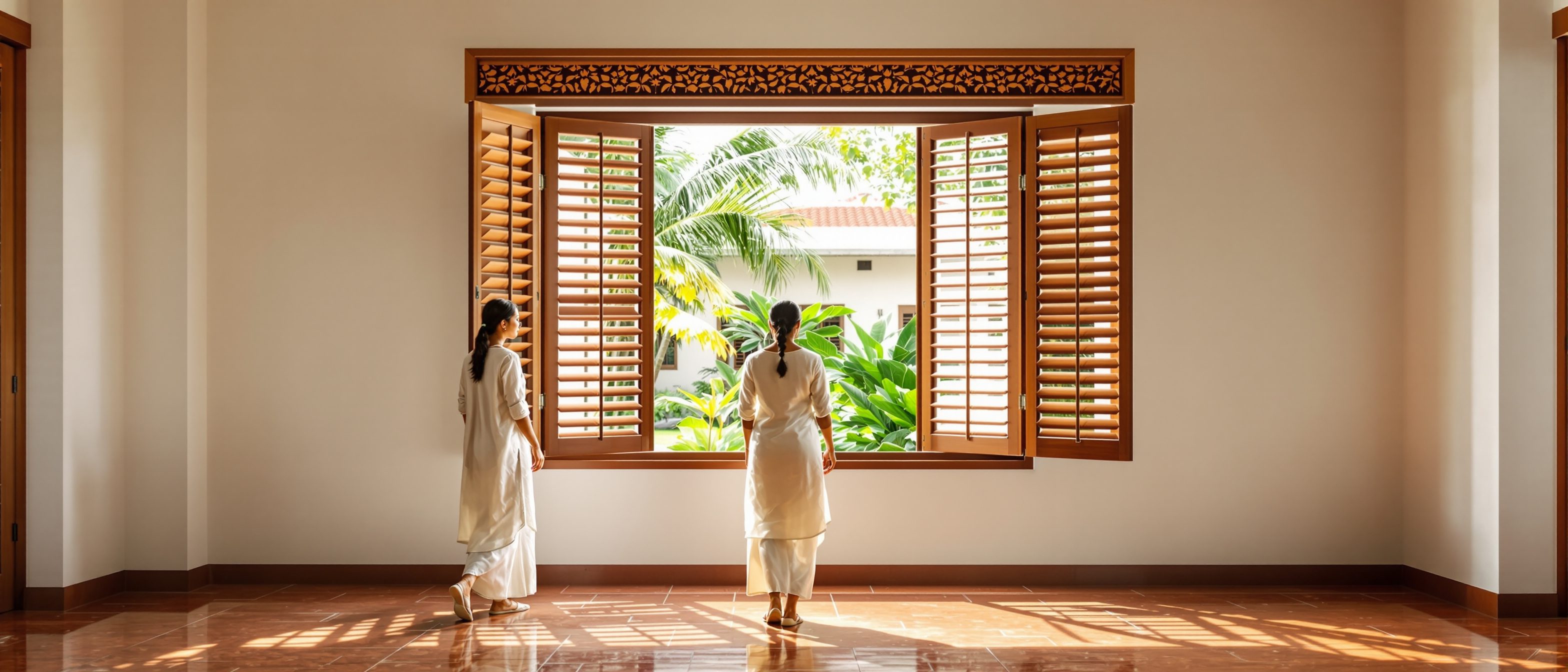
Traditional Kerala Window Designs
Carved teak and anjili shutters, monsoon louvers and nadumuttam light, and how to reinterpret them in a modern Kerala home
The traditional Kerala window is one of the most quietly intelligent design objects in Indian architecture. Born of monsoon, heat and craft, it is a deep timber frame, a set of carved multi-panel shutters and a bank of fixed or adjustable louvers that together do something a single sheet of glass cannot: pull cool air through a house while keeping glare, rain and prying eyes out. This guide is about that window as a look and a styling vocabulary, and how to reinterpret it in a Kerala home today, not the whole tharavadu it sits in. For the building-wide story, see vernacular architecture of Kerala. For modern window aesthetics generally, our pillar is Modern Window Design Ideas.
The Kerala window is not decoration added to a wall. It is the wall learning to breathe.
What makes a window read as "Kerala"
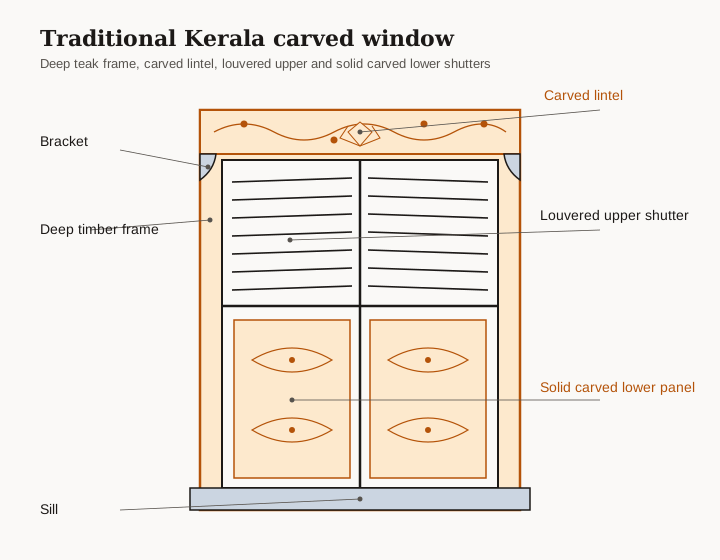
A window speaks Kerala through a small, recognisable set of signals. Get these proportions and details right and the style reads instantly, whether the frame is 150-year-old anjili or new reclaimed teak.
| Trait | What it looks like | Why it exists |
|---|---|---|
| Deep timber frame | Thick, often 100-150 mm, set into a laterite or mud wall | Shades the opening; supports heavy carved shutters |
| Vertical proportion | Tall and narrow, often paired in twos or threes | Catches breeze at body height; suits sloping roofs |
| Carved lintel and brackets | Lotus, vine, geometric or temple motifs above the opening | Craft pride; once denoted family status |
| Louvered shutters | Horizontal angled slats in a frame | Air and shade together, even when "closed" |
| Solid carved panels | Lower half a solid panelled shutter, upper half louvered | Privacy below, ventilation above |
| Painted or oiled trim | Deep oxblood red, indigo, ochre, or oiled bare wood | Protects wood; the colour signals the idiom |
The single most important detail is the louver. Unlike a flat shutter, a louvered shutter ventilates while shut, which in a humid, monsoon-soaked climate is the whole point. For how this and other operable types work mechanically and what they cost, see Types of Home Windows in India.
The woods, honestly
Kerala's window craft is inseparable from three timbers. One of them you can no longer responsibly buy new, and it is important to say so plainly.
| Wood | Local name | Character | Use today |
|---|---|---|---|
| Teak | Thekku | Dense, oily, golden-brown, rot and termite resistant | The gold standard, still legal and available; expensive |
| Jackfruit | Anjili / Aanjili | Warm reddish-yellow, workable, very common in old homes | Sustainable, locally grown; excellent for shutters |
| Rosewood | Eetti | Dark, dense, richly grained, historically prized | Restricted under CITES; do not buy new. Use reclaimed only |
Indian rosewood (Dalbergia) is listed under CITES, so new rosewood for joinery is restricted and ethically off the table. The honest, beautiful answers today are teak, locally grown anjili (jackfruit), and reclaimed old timber salvaged from demolished tharavadus. Reclaimed wood carries patina you cannot fake and keeps a century-old tree out of landfill. For a full material comparison and durability data, see Wooden Windows in India, the material guide this styling article sits beside.
If a dealer offers you "fresh rosewood" windows, walk away. The only honest rosewood today is reclaimed.
The louver, the nadumuttam and the full-height window
Two architectural moves give the Kerala window its drama. The first is the louver itself, in section.
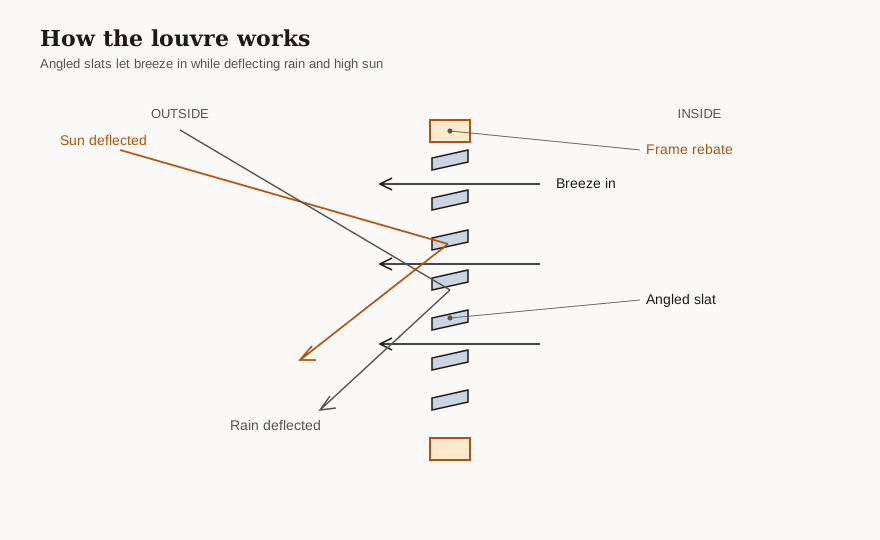
Angled slats throw monsoon rain and high sun outward and downward while letting horizontal breeze slip between them. Fixed louvers ventilate constantly; adjustable louvers let you dial light and air, the ancestor of the modern operable louver window.
The second move is the nadumuttam, the central courtyard open to the sky around which the traditional nalukettu is planned. Rooms wrap this court, and the windows facing inward onto it are taller, lighter and often full-height or French-window style, because the courtyard is a protected, private light-well. Outer windows stay smaller and more defended; inner windows open up.
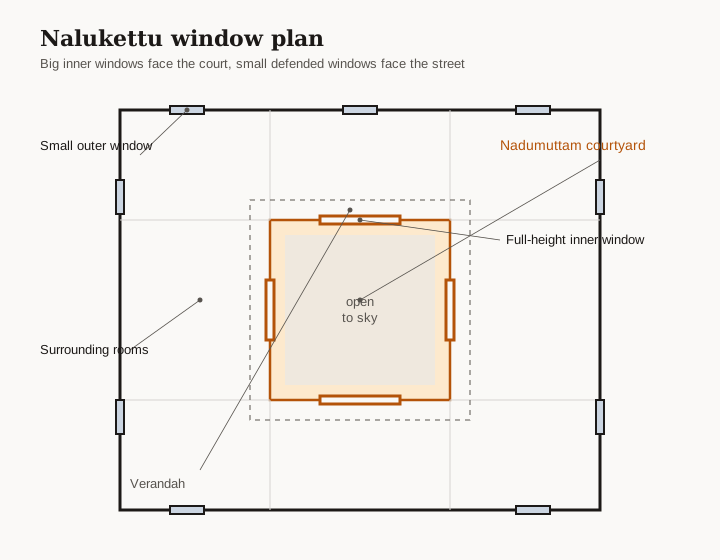
This inner-versus-outer logic is the most useful idea to steal for a modern Kerala home: glaze generously toward a private, shaded court or garden, and stay restrained and louvered toward the harsh outer wall.
Reinterpreting it in a modern Kerala home
You do not need a 200-year-old house to speak this language. The trick is to take the signals, deep frames, louvers, warm timber, vertical proportion, and pair them with modern glazing and a lighter hand.
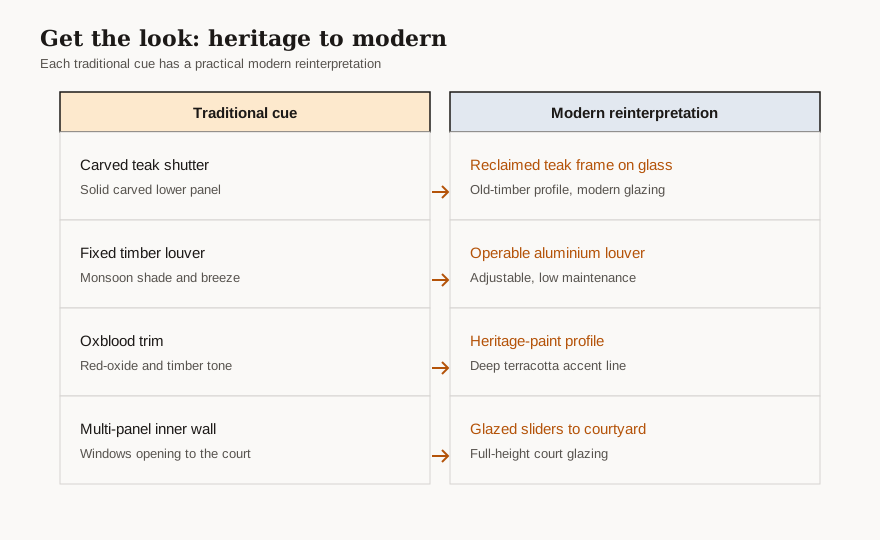
| Traditional element | Modern reinterpretation |
|---|---|
| Carved teak shutter | Slim reclaimed-teak frame around a large fixed glass pane, carving reduced to one crisp band |
| Solid louvered shutter | Aluminium or engineered-wood operable louver window over Low-E glass |
| Oxblood painted trim | Deep heritage colour kept only on the frame profile against white walls |
| Heavy multi-panel timber wall | Floor-to-ceiling glazed sliders onto a re-created internal courtyard |
| Hand-carved lintel | A single carved or fluted timber lintel band as an accent over a modern opening |
| Fixed jali above shutter | Laser-cut screen or jali panel as a fixed ventilation transom |
Get-the-look checklist
- Choose reclaimed teak or anjili for at least the frames; let new glass do the sealing.
- Keep openings tall and vertical, paired in twos, not one wide landscape window.
- Add a louvered band, fixed or operable, somewhere on every facade for the monsoon.
- Glaze big only toward a courtyard or garden, stay louvered and modest toward road and west sun.
- Restrict carving to one or two honest details (a lintel band, a bracket) rather than covering everything.
- Use deep heritage paint on the frame profile against pale walls so the timber reads as a graphic line.
- Pair glass with shading and Low-E so the tropical light stays soft, not hot.
Do and avoid
| Do | Avoid |
|---|---|
| Use reclaimed or certified teak and anjili | Buying new rosewood (CITES-restricted) |
| Keep louvers for genuine cross-ventilation | Sealing every opening with fixed glass only |
| Let timber show, oiled or in one rich colour | Glossy PU finishes that look plasticky |
| Reduce carving to a few crisp motifs | Machine-routed "ethnic" carving everywhere |
| Orient big glazing to a private court | West-facing walls of unshaded glass in Kerala heat |
How this differs from the whole-building story
It is worth being precise about scope. The Kerala house, its sloping tiled roof, laterite walls, verandahs and the nadumuttam itself, is covered in vernacular architecture of Kerala. This guide is only the window element: its proportion, shutters, louvers, woods and how to restyle it. For the contemporary fusion of timber screens with slim modern frames more broadly, see Contemporary Indian Window Designs, an in-cluster sibling. And for the operating mechanics and price of each window type, return to Types of Home Windows in India.
A modern Kerala window done well costs more than a plain aluminium unit, timber runs roughly Rs 500-1500 per square foot before carving and glass, but it is the rare detail that earns its keep daily: it cools the room, frames the green, and carries a craft lineage forward honestly.
References
- https://en.wikipedia.org/wiki/Nalukettu
- https://en.wikipedia.org/wiki/Architecture_of_Kerala
- https://en.wikipedia.org/wiki/Tectona (teak)
- https://en.wikipedia.org/wiki/Dalbergia_latifolia (Indian rosewood, CITES)
- https://en.wikipedia.org/wiki/Artocarpus_hirsutus (anjili / wild jackfruit)
Export this guide
Related Guides — Deep-dive reading
The Kerala Traditional Roof: Steep Timber-and-Tile Roofs for the Monsoon Coast
Kerala and the Malabar coast answered one of India's heaviest monsoons with a steep, sloping, deeply-overhanging roof: an elaborate timber frame carrying clay tiles, wide eaves that shade the wall and throw rain clear, and the pitched roofs of the nalukettu sloping in around a central open courtyard. This guide tells the story, the craft and how to live with or restore one today.
RoofingNeo-Traditional Indian Architecture
Where traditional aesthetics meet modern planning and contemporary construction
Design StylesWooden Door Designs for Indian Homes (2026): Styles, Patterns, Finishes & Costs
A design gallery of wooden door styles for Indian homes — traditional carved and panelled, classic 4/6-panel, modern flush wood, vertical-plank and slat, fluted, framed-glass, grooved CNC and minimalist — with grain-showing finishes, proportion tips and rough cost bands.
Home Doors & EntrancesRelated Tools — Try Free
Cross-Ventilation Analyzer
Estimate airflow and air changes per hour (ACH) from room size, window areas, layout, and local wind — with NBC 2016 Part 8 compliance check.
Ventilation CalculatorBrise-Soleil Visualizer
Interactive horizontal-louvre cut-off angle calculator — sun altitude, louvre depth, and spacing inputs with a live shadow preview. Computes θ = arctan(spacing/depth) for façade shading, ECBC envelope compliance, hospital daylight design, and tropical sun-control detailing.
Sun Shading ToolWindow Material Comparison Tool
Compare uPVC, aluminium, wood, steel and composite windows on cost, life, upkeep and insulation.
Compare