
Sustainable Window Materials in India: The Embodied-Carbon and Lifecycle Lens
Wood, uPVC and aluminium frames ranked by cradle-to-gate carbon, recyclability and lifetime footprint — and why a durable low-SHGC window beats a greener material that leaks heat.
When people call a window "sustainable", they usually mean one of two very different things — the carbon it took to make (embodied carbon), or the carbon it saves over its life by keeping heat out (operational carbon). Get these two confused and you will pay a premium for the wrong virtue. This guide takes the embodied-carbon and lifecycle lens specifically: what each frame and glazing material costs the planet to produce, what happens at end-of-life, and why — in hot India — a durable, low-SHGC window almost always beats a "greener" material that leaks heat.
The most sustainable window is not the one with the lowest factory footprint. It is the one that keeps your air conditioner off — for thirty years.
This is the sustainability spoke of our energy cluster. If you want the durability-and-cost decision between frame materials, read Window Frame Materials Compared; for climate performance in heat, read Best Window Material for Hot Climates. This guide is neither — it is the embodied-carbon and lifecycle view those two deliberately leave out.
Embodied carbon, cradle-to-gate
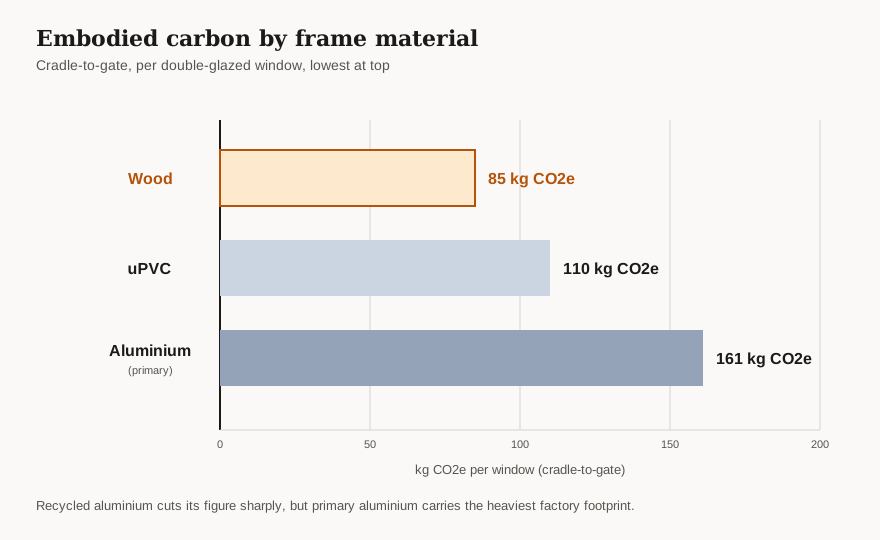
Embodied carbon is the greenhouse gas emitted to extract, refine, manufacture and assemble a product — measured in kilograms of CO2-equivalent (CO2e). "Cradle-to-gate" counts everything up to the factory gate, before transport and installation. For a like-for-like double-glazed window, the frame material is the biggest single swing.
| Frame material | Embodied carbon per window | Per square metre | Why |
|---|---|---|---|
| Wood (FSC timber) | ~85 kg CO2e | ~40 kg/m2 | Low-energy to process; tree already sequestered carbon |
| uPVC | ~110 kg CO2e | ~52 kg/m2 | Petrochemical feedstock plus steel reinforcement |
| Aluminium (primary) | ~161 kg CO2e | ~76 kg/m2 | Bauxite smelting is extremely electricity-intensive |
Figures are indicative for a standard double-glazed unit and shift with grade, profile and recycled content.
Wood wins the factory round. A timber frame carries the least embodied carbon because the tree did the energy-intensive work for free, locking atmospheric carbon into the wood. Aluminium loses it — primary aluminium is made by smelting alumina from bauxite in an electric process so power-hungry that the metal is sometimes called "solid electricity". uPVC sits in the middle: a petrochemical product, multi-chamber and steel-reinforced.
The recycling twist nobody mentions in the showroom
The cradle-to-gate numbers above assume primary material. Recycling rewrites them completely.
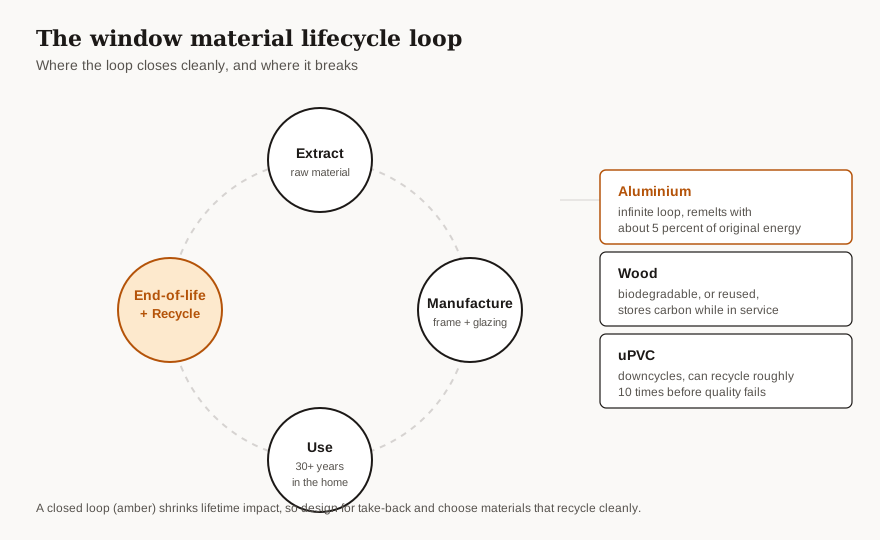
- Recycled aluminium uses roughly 5 per cent of the energy of primary aluminium — and aluminium is infinitely recyclable with no loss of quality. A frame made from recycled content can undercut even wood on embodied carbon. Always ask the fabricator for recycled-content percentage.
- uPVC is recyclable about ten times, but each pass downcycles the material into lower-grade products (drainage profiles, fencing) rather than new window-grade profile. Europe's VinylPlus scheme proves the loop works; in India the collection infrastructure is still thin.
- Wood is renewable and sequesters carbon — but only if it is FSC-certified (or equivalent), so it came from a responsibly managed forest and not illegal logging, and only if it is maintained. A teak frame that lasts three generations spreads its small footprint across a century; a neglected frame that rots in ten monsoons wastes it.
| Material | End-of-life | Recyclability | Honest verdict |
|---|---|---|---|
| Wood (FSC) | Reusable, biodegradable, can be burned for energy | Renewable if responsibly sourced | Lowest embodied carbon; demands maintenance |
| uPVC | Mechanically recyclable ~10x, then landfill | Downcycles each loop | Mid footprint; weak Indian take-back today |
| Aluminium | Endlessly recyclable, high scrap value | Recycled = ~5 per cent primary energy | Worst as primary, best as recycled |
| Steel (galvanised) | Recyclable, magnetic-easy to sort | High, well-established loop | Very long life amortises its footprint |
| Composite / FRP | Hard to separate, mostly landfill | Poor (bonded materials) | Long life is its only green argument |
Why operational carbon usually dwarfs embodied
Here is the honest, counter-intuitive core of this guide. Over a window's 25-to-50-year life in hot India, the heat it lets in — driving years of air-conditioning — typically emits far more CO2 than its manufacture ever did. That is the operational carbon, and it is governed not by frame material but by the glass: principally the SHGC (Solar Heat Gain Coefficient) and to a lesser extent the U-value.
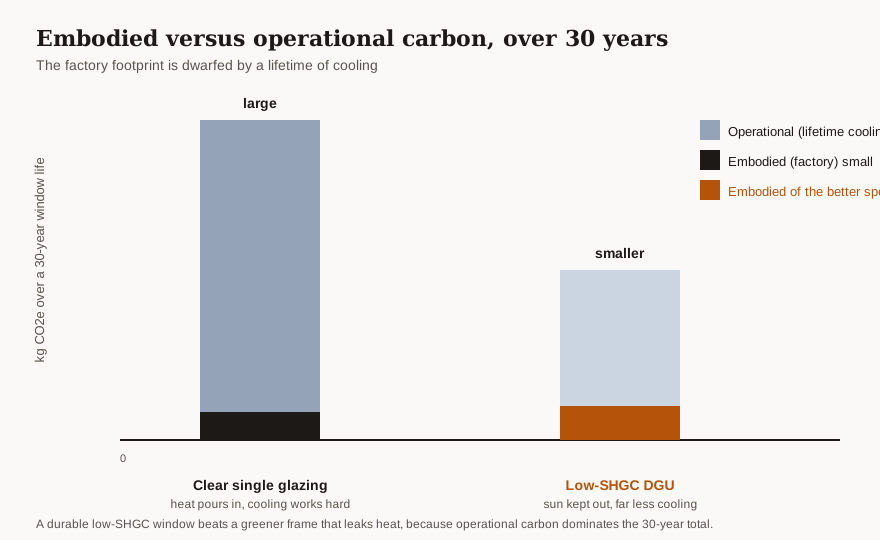
A wooden frame with cheap single glazing can have a lower factory footprint and a far higher lifetime footprint than an aluminium frame with low-SHGC double glazing. The greenest spec is the one that wins over decades.
For the deep reasoning on solar gain, see the pillar Energy-Efficient Windows Explained. The practical takeaway for sustainability:
- Pick low-SHGC glazing first. A solar-control or Low-E double-glazed unit (SHGC ~0.25 to 0.40, versus ~0.70 for clear DGU and ~0.82 for clear single) cuts cooling load dramatically. That choice saves more lifetime carbon than any frame material decision.
- Shade externally. A concrete chajja or overhang has tiny embodied carbon and near-zero running cost, and stops heat before it reaches the glass.
- Then optimise the frame. Among durable, low-SHGC windows, choose the lower-embodied-carbon or higher-recycled-content frame.
Durability is sustainability
A window you replace twice has roughly double the embodied carbon of one that lasts. Longevity is a green metric.
| Material | Typical life | Maintenance | Lifecycle note |
|---|---|---|---|
| uPVC | 20 to 30 yr | Low | Shorter in extreme heat or harsh coast |
| Aluminium | 30 to 50 yr | Low | Recyclable; coat in coastal salt |
| Wood (teak, FSC) | Decades if maintained | High (seal every 2 to 4 yr) | Outlasts generations when cared for |
| Steel (galvanised) | 60 to 100 yr | Low to medium | Footprint amortised over a century |
| Composite / FRP | 40+ yr | Low | Long life is its main green case |
Specify the material that will actually survive your climate. In coastal salt, corrosion-proof uPVC or marine-grade aluminium will outlive bare aluminium or un-galvanised steel — so the "greenest" pick is the corrosion-resistant one, even if its factory footprint is higher.
Glass: low-iron versus recycled
The frame is half the story. The glass has lifecycle choices too:
- Low-iron glass is clearer (higher VLT) but slightly more energy-intensive to refine; justify it where daylight and clarity earn their keep, not as a default.
- Recycled-cullet glass lowers melt energy — ask whether the float glass carries recycled content.
- Glass is endlessly recyclable in principle, but laminated and coated units are hard to separate at end-of-life. For the glass layer, our pillar Types of Glass for Windows covers the menu.
Local sourcing and certification
- Source locally. Transport adds carbon and cost; an Indian-made profile beats an imported equivalent on footprint. Prefer fabricators near you.
- FSC for timber. Insist on FSC or equivalent chain-of-custody so your "renewable" frame is genuinely from managed forest.
- Recycled-content disclosure for metal and uPVC. Ask the percentage in writing.
- Tie to green ratings. Sustainable fenestration earns credits under IGBC Green Homes and GRIHA; for the windows-only scorecard see Green Building Window Design.
Do and avoid
- Do prioritise low SHGC and durability before agonising over frame embodied carbon.
- Do demand FSC timber and recycled-content figures.
- Do buy the material that survives your climate — replacement is the biggest carbon waste.
- Avoid primary aluminium with no recycled content if a recycled-content or alternative frame performs the same.
- Avoid treating a low-factory-footprint frame as "green" if it pairs with heat-leaking single glazing.
References
- Eco-Niwas Samhita 2018, residential envelope code (BEE / ECBC): https://ecbc.in/econiwas.html
- IGBC Green Homes, Indian Green Building Council: https://igbc.in/igbc/
- GRIHA (Green Rating for Integrated Habitat Assessment): https://www.grihaindia.org/
- Wood vs uPVC vs aluminium frame comparison (PlyPrice): https://www.plyprice.com/blog/window-frame-material-comparison
- Types of wood for windows in India (GreenFortune): https://thegreenfortune.com/types-of-wood-for-windows/
Export this guide
Related Guides — Deep-dive reading
Window Frame Materials in India (2026): uPVC vs Aluminium vs Wood vs Steel vs Composite
The buyer's decision guide for choosing a window frame material by budget, climate, thermal priority, look, maintenance and lifespan.
Windows & GlazingWindow Material Durability Comparison (India): Which Frame Lasts Longest?
Lifespan, maintenance and 20-year total cost of ownership across uPVC, aluminium, wood, steel and composite frames.
Windows & GlazingEmbodied Carbon in Construction: Cutting the Carbon Locked Into Your Indian Home
The CO2 baked into your cement, steel and bricks is paid up front and can never be undone. Here is where it hides in an Indian home, and the low-cost choices that cut it by roughly a quarter.
SustainabilityRelated Tools — Try Free
Window Material Comparison Tool
Compare uPVC, aluminium, wood, steel and composite windows on cost, life, upkeep and insulation.
CompareCross-Ventilation Analyzer
Estimate airflow and air changes per hour (ACH) from room size, window areas, layout, and local wind — with NBC 2016 Part 8 compliance check.
Ventilation CalculatorBrise-Soleil Visualizer
Interactive horizontal-louvre cut-off angle calculator — sun altitude, louvre depth, and spacing inputs with a live shadow preview. Computes θ = arctan(spacing/depth) for façade shading, ECBC envelope compliance, hospital daylight design, and tropical sun-control detailing.
Sun Shading Tool