
Green Building Window Design for India
The fenestration scorecard — exactly which window decision earns which IGBC, GRIHA or LEED credit, and the numeric thresholds to hit
If your home is chasing a green-building rating — IGBC Green Homes, GRIHA, or LEED — the windows are quietly one of the busiest line items on the scorecard. A single well-designed window can earn points across several different credits at once: daylight, low solar gain, thermal comfort, quality views, natural ventilation, and glare control. Get the glass and shading wrong and the same windows can cost you points in every one of those categories. This guide is the fenestration scorecard — exactly which window decision earns which green-building credit, and the numeric thresholds you must hit.
This is the windows-only credit guide. For the bigger picture of how the three rating systems compare, what they cost and how to register a project, read our companion green-building certifications in India. That guide is the certs OVERVIEW; THIS one drills into the fenestration line items alone.
First, the floor nobody mentions: the envelope code
Before any voluntary green rating, there is a mandatory baseline most homeowners do not realise applies to them: the Eco-Niwas Samhita 2018 (ENS), India's residential envelope code (ECBC 2017 is its commercial sibling). ENS caps the Residential Envelope Transmittance Value (RETV) at 15 W/m2 for most climate zones and sets a minimum visible light transmittance (VLT) tied to your window-to-wall ratio (WWR). As WWR rises, the allowed VLT floor drops — roughly 0.27 at low WWR down to about 0.11 as WWR approaches 0.6 — so a glassier facade is allowed only if the glass is clearer for daylight and the SHGC is controlled.
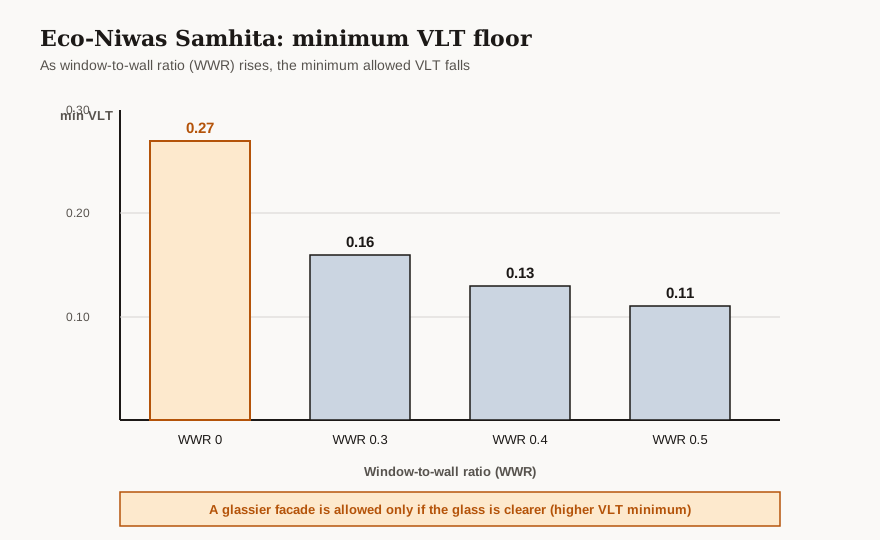
Green ratings sit ON TOP of this floor. ENS is the compliance baseline; IGBC, GRIHA and LEED are the voluntary points you earn for going beyond it. Keep your WWR sensible (covered in window-to-wall ratio for Indian homes) and the rest of the scorecard gets far easier.
The credit-mapping matrix
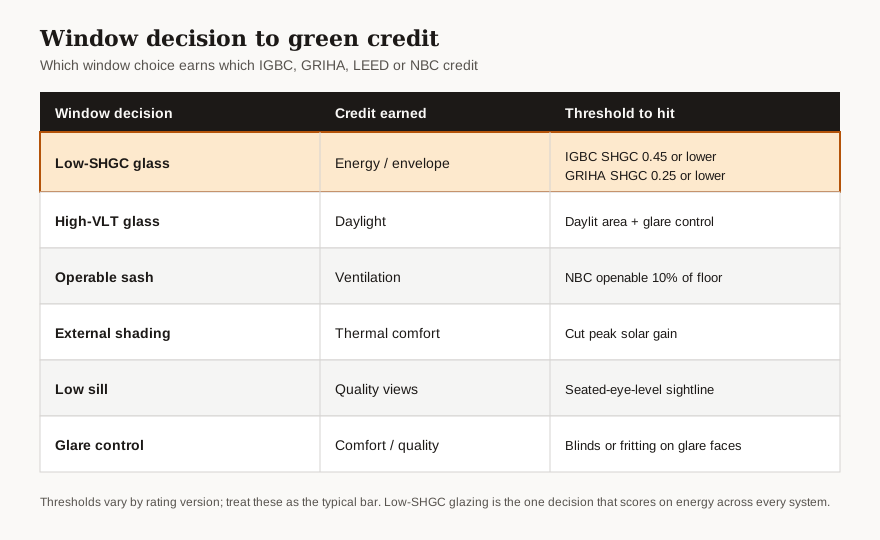
Here is the heart of the guide: each window decision, the credit category it feeds, and the threshold to aim for across the three systems.
| Window decision | Credit it earns | Threshold to hit |
|---|---|---|
| Low-SHGC glass | Energy / cooling-load reduction | IGBC SHGC less than or equal to 0.45; GRIHA SHGC less than or equal to 0.25 |
| High-VLT spectrally-selective glass | Daylight credit | Daylit area, typically VLT greater than 0.4 with controlled SHGC |
| Generous, well-placed glazing | Daylight credit | Often 75 per cent of regularly-occupied area daylit |
| Operable sash area | Natural ventilation | NBC 2016: openable area at least 10 per cent of floor area |
| External shading (chajja / fins) | Thermal comfort and energy | Cuts SHGC effect before the glass; supports RETV less than or equal to 15 |
| View glass at seated eye level | Quality views | Direct line of sight to outdoors from occupied spaces |
| Glare control (blinds, low SHGC, shading) | Daylight and comfort quality | Manage direct-sun glare without killing daylight |
The rest of this guide walks each row.
Daylight credit: VLT and WWR working together
Daylight is the credit windows were born to earn — and the one most often fumbled. The systems reward a high percentage of the regularly-occupied floor area receiving useful daylight (IGBC and LEED commonly look for around 75 per cent of occupied area daylit; GRIHA rewards a strong daylight factor across living spaces). The lever is VLT multiplied by WWR: enough glass area, with glass clear enough to transmit light.
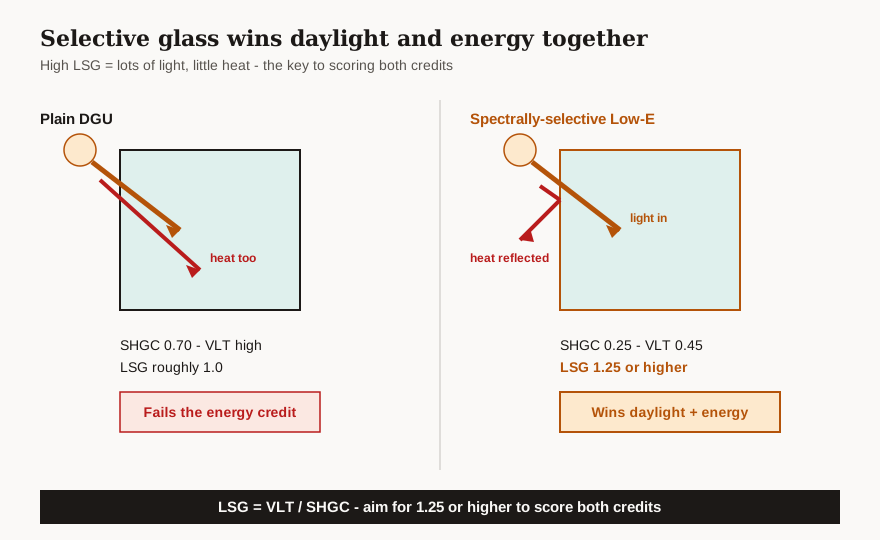
The trap is that the same big window that wins daylight can lose the SHGC/energy credit if the glass is plain. The answer is spectrally-selective glass — high VLT, low SHGC — measured by the light-to-solar-gain ratio (LSG = VLT divided by SHGC). A good selective Low-E hits LSG greater than or equal to 1.25, meaning it lets daylight in while keeping solar heat out. That single glass choice can satisfy the daylight credit AND the energy credit at once.
The daylight design itself — orientation, depth of room, glare — is a craft of its own; see daylighting design with windows for getting the light deep and even. Here we care only that the VLT number on the spec sheet is high enough to claim the credit.
Energy credit: the SHGC thresholds are the hard line
This is where the systems diverge sharply, and where most projects either pass easily or fail outright:
- GRIHA: SHGC less than or equal to 0.25. Strict. This effectively forces solar-control or selective Low-E double glazing on sun-exposed facades — plain clear DGU at SHGC around 0.70 will not pass.
- IGBC Green Homes v3: SHGC less than or equal to 0.45. More forgiving; a decent solar-control glass clears it comfortably.
- LEED: rewards beating an ASHRAE 90.1 baseline rather than a single SHGC cap — modelled, so low-SHGC glass plus shading both count toward the percentage improvement.
In hot India, SHGC matters far more than U-value — solar heat pouring through the glass dwarfs conduction. Chasing a cold-climate sub-1.0 U-value wins almost no credit here, while dropping SHGC from 0.70 to 0.25 transforms the cooling load. For the full glass-selection logic behind these numbers, see energy-efficient glass for India.
Spend the certification budget on low SHGC and external shading, not on heroic triple-glazed U-values. In hot India the SHGC threshold is what passes or fails the energy credit.
Thermal comfort, shading and the SHGC multiplier
External shading is the cheapest credit-earner on the board. A horizontal chajja or overhang on south windows, and vertical fins or movable louvers on east and west, cut the effective solar gain BEFORE it reaches the glass — 5 to 10 times more effective than internal blinds. This supports the thermal comfort credit (predicted comfortable hours) and helps the envelope hit RETV less than or equal to 15 with cheaper glass than you would otherwise need.
| Orientation | Shading device that earns comfort points | Why |
|---|---|---|
| South | Horizontal chajja / deep overhang | High summer sun blocked; low winter sun admitted |
| East and West | Vertical fins, movable louvers, deep reveals | Low, intense morning/evening sun needs vertical interception |
| North | Minimal | Little direct sun in most of India |
External shading is near-zero running cost — one-time concrete or steel — making it the best rupees-per-credit move on most projects.
Natural ventilation and quality views
Two quieter credits both depend on the window:
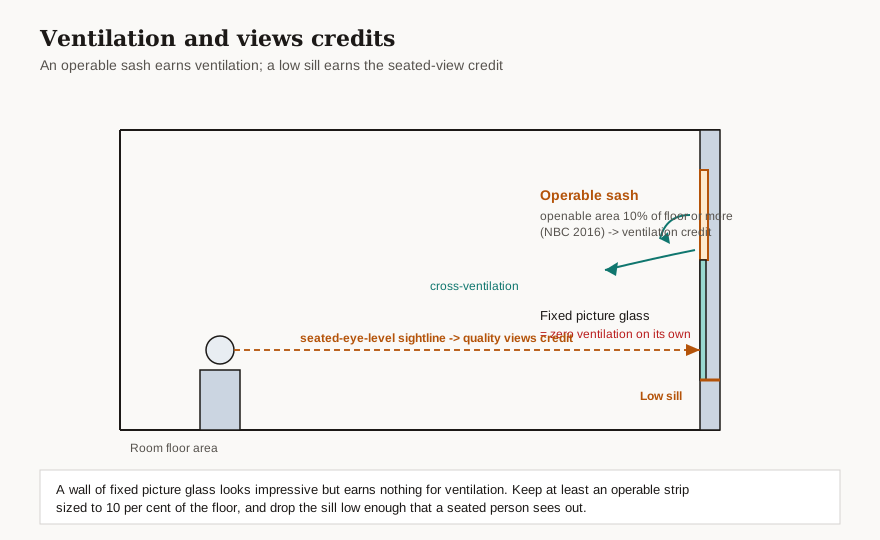
- Natural ventilation / operable area. Green systems reward designed cross-ventilation, and the baseline anchor is NBC 2016, which expects openable area of at least 10 per cent of the floor area of habitable rooms. Fixed picture glass earns daylight and views but ZERO ventilation credit — so balance fixed and operable sashes deliberately.
- Quality views. IGBC and LEED award points for a direct line of sight to the outdoors from regularly-occupied spaces, at seated eye level. This nudges sill heights down and discourages glass so dark (very low VLT) that the view dulls — another reason high-LSG glass wins twice.
Glare control: the credit you can lose by over-glazing
Daylight credit has a sting: too much direct sun causes glare, and the systems penalise discomfort glare even while rewarding daylight. The fix is the same toolkit — low-SHGC selective glass, external shading, and operable internal blinds — managed so you keep the daylight while cutting the harsh beam. A west window with no shading and clear glass can simultaneously WIN the view credit and LOSE the glare and energy credits. Design glare control in from the start.
The honest summary
For an Indian home pursuing a green rating, the window scorecard rewards one coherent strategy, not gold-plating:
1. Low-SHGC, high-VLT (high-LSG) glass — wins daylight AND energy credits together; clears GRIHA 0.25 or IGBC 0.45.
2. External shading by orientation — cheap thermal-comfort and energy points.
3. A deliberate mix of operable and fixed sashes — meets the NBC 10 per cent ventilation anchor.
4. Sensible WWR and low sills — daylight and view credits without blowing RETV.
That is the whole fenestration scorecard. For the system-level view of the window as an energy device, start at the pillar: energy-efficient windows explained.
Related guides
- Energy-efficient windows explained — the pillar tying frame, glass, seals and shading together.
- Green-building certifications in India — the certs OVERVIEW; this guide is the windows-only scorecard within it.
- Window-to-wall ratio for Indian homes — the WWR and ENS VLT-floor logic behind the daylight credit.
- Daylighting design with windows — getting the light deep and even to claim the daylight credit.
- Energy-efficient glass for India — choosing the low-SHGC, high-LSG glass the thresholds demand.
References
- Eco-Niwas Samhita 2018 (BEE / ECBC residential envelope code): https://ecbc.in/econiwas.html
- IGBC Green Homes rating system (Indian Green Building Council): https://igbc.in/igbc/redirectHtml.htm?redVal=showGreenHomesnosign
- GRIHA rating system (Green Rating for Integrated Habitat Assessment): https://www.grihaindia.org/griha-rating
- LEED rating system (US Green Building Council): https://www.usgbc.org/leed
- Glass and window solutions for homes (Saint-Gobain India): https://in.saint-gobain-glass.com/knowledge-center/glass-and-windows
Export this guide
Related Guides — Deep-dive reading
Energy-Efficient Facades in India: How the Building Skin Cuts Your Cooling, Heating & Lighting Bills
How a building facade drives cooling, heating and lighting energy in India, the three levers of solar-heat-gain control, insulation and daylighting, U-value, SHGC, VLT and WWR in plain terms, ECBC and Eco-Niwas expectations, and real Indian green buildings.
Building FacadesFloor-to-Ceiling Windows (India): Maximum Light, and the Heat Trade-Off
Full-height glazing for Indian homes — how to win the daylight and view without losing the energy code, comfort or safety.
Windows & GlazingEnergy Efficient Windows Explained: The Whole-System Guide for Indian Homes
Treat the window as an energy device — frame, glass, seals, shading, install and rating — and learn why low SHGC and shading beat chasing a cold-climate U-value in hot India.
Windows & GlazingRelated Tools — Try Free
Brise-Soleil Visualizer
Interactive horizontal-louvre cut-off angle calculator — sun altitude, louvre depth, and spacing inputs with a live shadow preview. Computes θ = arctan(spacing/depth) for façade shading, ECBC envelope compliance, hospital daylight design, and tropical sun-control detailing.
Sun Shading ToolCross-Ventilation Analyzer
Estimate airflow and air changes per hour (ACH) from room size, window areas, layout, and local wind — with NBC 2016 Part 8 compliance check.
Ventilation CalculatorGreen Building Window Compliance Tool
Check your window design against Eco-Niwas Samhita — WWR, VLT, SHGC and U-value pass or fail.
ENS Pre-check