
Security System Maintenance Guide (2026): Keeping a Home Security System Working the Night It Matters
The master framework for maintaining a home or building security system in India — the layers to keep working, a daily-to-annual master schedule, the DIY-safe versus professional-only split, when an AMC earns its keep, statutory life-safety servicing, and the discipline of records that ties the whole maintenance library together.
Almost every security failure people actually live through is not a clever defeat by a skilled intruder. It is a system that had quietly stopped working. The camera whose lens had filmed a spider-web and a film of dust for a year, so the one clip that mattered is a grey smear. The alarm whose backup battery died eighteen months ago and nobody knew, so it went silent the moment the power was cut. The smoke detector chirping in an empty corridor until someone pulled its battery to stop the noise. The AMC that lapsed after the first free year and was never renewed. A security system is only ever as good as its upkeep, and the single most common cause of a system letting a household down is neglect discovered the night it was needed.
That is the whole reason this guide exists. Buying and installing a system is a one-time act; keeping it working is a forever one. The good news is that most of the upkeep is genuinely simple, cheap and safe for an ordinary resident or facility person to do — a torch, a cloth, a test button and a habit. The rest is a short list of things that must be left to a qualified technician, and a smaller list of life-safety items that the law and common sense say must be serviced on a schedule by competent people. This master guide sets that whole framework: what to maintain, how often, who does what, when an annual maintenance contract earns its money, and the quiet discipline of writing it all down.
Scope and safety. This is an upkeep and framework guide for homeowners, residents and facility managers — not an installation manual and not a repair manual. Its central principle is a clear split between simple tasks you can safely do yourself (visual checks, cleaning a lens with the right cloth, pressing a test button, reading indicator lights, swapping user-accessible batteries, keeping a log) and tasks strictly for a qualified professional (mains electrical work, working at height, opening sealed or pressurised equipment, fire-pump and sprinkler servicing, gate-motor internals, and statutory testing). Never attempt an unsafe DIY procedure — when in doubt, call a qualified technician or your AMC provider. Life-safety maintenance (fire alarm, smoke detectors, extinguishers, sprinklers, fire pump, emergency lighting) is often statutory and must be tested and serviced on a schedule by competent persons under the National Building Code (NBC = SP 7:2026) and local fire rules — it is not optional and not a corner to cut. This is not a price guide or a buying guide; for those, see the security costs library. Handling CCTV footage during maintenance is still personal-data handling under the DPDP Act 2023.
Why maintenance is the whole game
Prevention is the point of a security system, and prevention only works if the system is ready in the instant it is called on. Unlike most things you own, a security system spends almost all of its life doing nothing visible. You cannot tell by glancing at it whether the recorder is still writing to disk, whether the alarm's battery still holds charge, whether the camera at the back gate still sees anything but a blur. The failure is silent until the exact moment it is expensive — and by then it is too late to fix.
Maintenance converts that hidden risk into something you can see and correct in advance. A five-minute weekly walk-round catches the dead indicator light before the burglary, the fogged lens before the incident, the beeping detector before someone disables it. The value-honest truth worth repeating to anyone deciding where to spend is this: a modest, well-maintained system beats an expensive, neglected one every time. The costliest camera on the market is worthless the night its lens is filthy or its recorder is full. Upkeep, not hardware, is what decides whether the system works when it matters.
The layers you are keeping working
A home or building security system is not one thing but a stack of cooperating layers, and each has its own upkeep rhythm. Naming them makes maintenance a checklist rather than a vague worry.
- Cameras and recording — lenses, housings, mounts, cabling, the recorder (NVR or DVR), its hard disk, and whether footage is actually being written and retained. This is the layer people most often assume is fine and most often is not.
- Entry and access — door locks, smart locks, video door phones, gate access, keypads and readers. Batteries, moving parts, and clean contacts.
- Alarms and sensors — the alarm panel, motion sensors, door and window contacts, the siren, and the backup battery that keeps it alive when the power is cut.
- Fire and life-safety — smoke and heat detectors, the fire-alarm panel, extinguishers, sprinklers, the fire pump and emergency lighting. The statutory, non-negotiable layer.
- Lighting — security and motion lighting around the perimeter and approaches, which both cameras and people depend on after dark.
- Perimeter and gates — the wall, fence, gate, boom barrier and gate motor, and any perimeter detection.
- Power and UPS — the mains supply, backup batteries, UPS and inverter that keep everything alive through the power cut that so often accompanies a real incident.
- Software and firmware — recorder and camera firmware, app access, passwords, and remote-view settings; the layer that quietly ages and opens security holes if left unpatched.
- Records — the calendar of what is due, and the logbook of what was done. Not hardware, but the layer that makes all the others reliable.
The master schedule
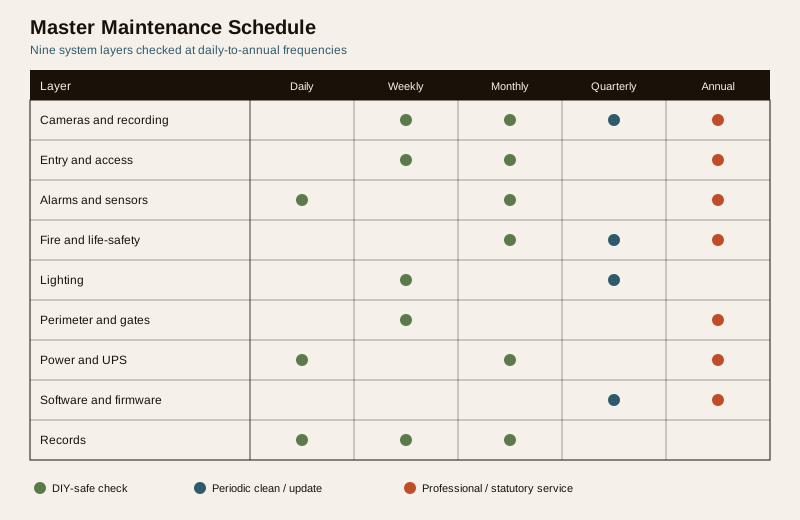
The heart of maintenance is a rhythm: a small set of things done often, a larger set done occasionally, and the heavy servicing done once or twice a year by a professional. The point of a schedule is that nothing waits until it fails. The table below is the overview; the detailed, printable versions live in the dedicated security maintenance calendar and, for the statutory fire side, the fire-safety maintenance calendar.
| Frequency | What to check | Who |
|---|---|---|
| Daily / at a glance | Recorder and alarm panel power lights on; camera app shows live view; no fault beeps | You |
| Weekly | Walk-round: every camera image clear and aimed right; footage is recording and dated; gate and door hardware working; motion lights trigger | You |
| Monthly | Press the alarm test; test smoke detectors with the test button; check sensor and lock battery indicators; confirm recorder retention and free disk; check UPS holds a short outage | You |
| Quarterly | Clean camera lenses and housings; clear cobwebs and dust from sensors and detectors; inspect cabling and mounts; review and change any weak passwords; update app | You (safe tasks) + technician for anything at height or hardwired |
| Annually | Full professional service: recorder health and disk, alarm and sensor calibration, gate-motor and boom service, mains and earthing checks, battery capacity load-test and replacement | Qualified technician / AMC |
| Statutory (as mandated) | Fire-alarm test, extinguisher inspection and refill, sprinkler and fire-pump servicing, emergency-lighting test | Competent / certified persons only |
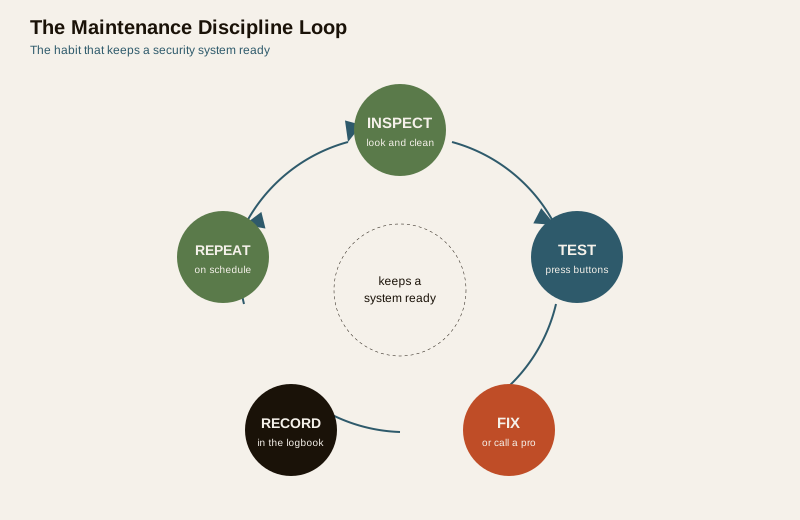
Two habits make the schedule stick. First, tie the frequent checks to something you already do — the weekly walk-round on the same evening you take out the recycling, the monthly test on the first of the month. Second, write down that you did it. A schedule you keep only in your head is a schedule you will quietly stop keeping.
The central principle: DIY-safe versus professional-only
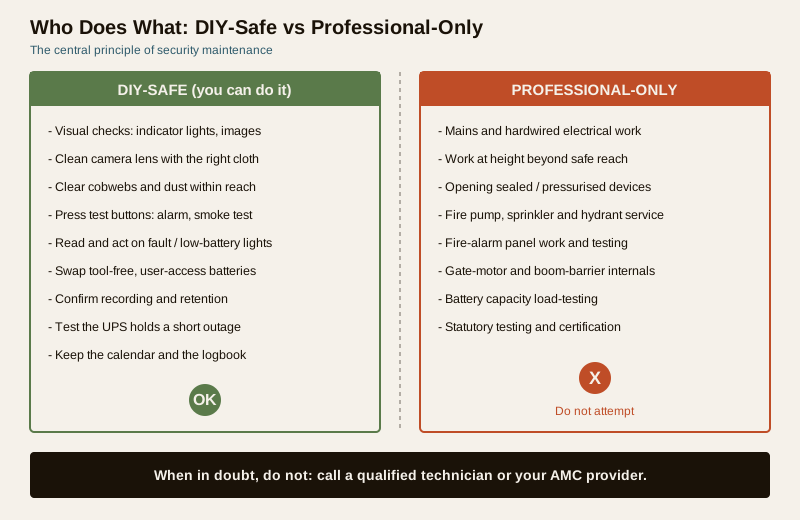
Everything in this guide turns on one distinction, and getting it right keeps you both safe and effective. Some maintenance is simple, low-risk and genuinely yours to do. Some is hazardous, skilled or statutory and belongs to a qualified professional. Confusing the two is how people either neglect their system (assuming it all needs an expensive visit) or hurt themselves (attempting work they should not).
Safe for a resident or facility person to do:
- Visual checks — indicator lights, camera images, gate and door operation, tidy cabling.
- Cleaning a camera lens and housing with the correct soft, dry or lightly dampened cloth — the detailed method is in the CCTV camera cleaning guide.
- Clearing cobwebs and dust from sensors, detectors and camera fronts within easy, safe reach.
- Pressing test buttons — the alarm test, the smoke-detector test button, the RCD test where the maker allows.
- Reading and reacting to fault and low-battery indicators.
- Swapping user-accessible, tool-free batteries — remote sensors, some smart locks, some detectors — using the maker's specified battery.
- Keeping the logbook and the calendar.
Strictly for a qualified professional (do not attempt):
- Any mains or hardwired electrical work — wiring, the consumer unit, hardwired detectors, transformers.
- Anything requiring working at height beyond a safe, low, stable reach — high-mounted cameras and lights.
- Opening sealed, pressurised or high-voltage equipment.
- Fire-pump, sprinkler and hydrant servicing, and fire-alarm panel work.
- Gate-motor and boom-barrier internals, springs and mechanisms.
- Battery capacity load-testing and any statutory testing or certification.
When in doubt, do not. If a task involves mains electricity, a ladder beyond safe reach, an opened-up device, a fire-suppression component, or a gate mechanism under tension — stop, and call a qualified technician or your AMC provider. There is no security benefit worth a fall or a shock. This is the same plan-decide-coordinate stance the whole security hub is built on: do the safe upkeep yourself, and coordinate the skilled work.
Signs a layer is failing
Between scheduled checks, learn to notice the tell-tales. A system usually warns you before it fails outright; the trick is to treat the warning as a task, not a nuisance to silence.
- Cameras: a blurred, foggy or half-dark image; a lens visibly dirty or webbed; a camera that has drifted to point at a wall; a live view that will not load.
- Recording: the recorder showing a fault or full disk; gaps in the footage timeline; wrong date and time stamps; footage that no longer goes back as many days as it should.
- Alarms and sensors: a low-battery or fault light on the panel; a sensor that no longer triggers on test; a siren that sounds weak; a zone showing permanently open.
- Fire and life-safety: a chirping smoke detector (that is the low-battery cry — replace the battery, never remove it); an expired or discharged extinguisher gauge; a fire-panel fault; an emergency light that does not come on when tested.
- Power and UPS: equipment that dies the instant the mains drops; a UPS or inverter that no longer holds even a short outage; a swollen or hot battery — treat a swollen battery as a hazard and have it handled professionally.
- Locks, gates and lighting: a smart lock warning of low battery; a gate motor straining, grinding or stopping; a motion light that no longer triggers or stays on.
- Software: an app that will not connect; firmware flagged as out of date; a default or shared password still in use.
Any one of these is a small job now and a failed system later. The discipline is simply to act on the warning while it is still cheap.
Life-safety maintenance is statutory and non-negotiable
One part of the stack sits above the rest and follows different rules. Fire and life-safety equipment — the fire-alarm system, smoke and heat detectors, extinguishers, sprinklers, the fire pump, the hydrant system and emergency lighting — protects lives, not just property, and its maintenance is frequently a legal requirement, not a choice. Under the National Building Code (NBC = SP 7:2026) and state fire rules, these systems must be inspected, tested and serviced on a defined schedule by competent, and often certified, persons, and many buildings must hold and renew a fire NOC on that basis.
What this means in practice: the resident-safe part is limited to noticing and testing — pressing the smoke-detector test button, reading a fire-panel fault, checking an extinguisher's pressure gauge and its inspection tag, and never disabling a chirping detector. Everything beyond that — servicing and refilling extinguishers, testing and certifying the fire-alarm and sprinkler systems, servicing the fire pump, and formal periodic testing — is for certified fire-safety professionals on the mandated schedule. This is the one area where "we will get to it" is genuinely dangerous, and where a lapsed contract can be both a fatal risk and a legal liability. Keep the statutory items on a separate, hard-deadlined track — the fire-safety maintenance calendar sets that rhythm out in full.
The role of an AMC — and when to have one
An Annual Maintenance Contract is the standard way to keep the professional-only work happening on schedule rather than only after a breakdown. A good AMC typically bundles a scheduled preventive visit or two a year, priority breakdown response, and a defined scope of what is covered. It earns its keep when your system is beyond the reach of safe DIY: hardwired cameras at height, a monitored alarm, gate motors, a fire system, or simply a household that will not reliably remember to service things itself.
Deciding whether — and which — AMC to take is a buying decision, and it is covered properly in the security AMC buying guide and, for the maintenance-service context, the CCTV maintenance and AMC guide. From an upkeep standpoint the principles are simple: read the scope so you know exactly what is and is not covered (batteries and consumables are a common exclusion), confirm the response time, keep every service report in your logbook, and never let it lapse silently — put the renewal date on the calendar the day you sign. An AMC does not remove your role; you still do the frequent, safe checks. It closes the gap on the skilled, scheduled and statutory work you should not do yourself. Budgeting for that annual cost is part of owning a system honestly; the numbers belong in the security costs library.
The discipline of records: a calendar and a logbook
The quiet secret of a system that keeps working for years is not diligence of memory — it is two humble records. A calendar tells you what is due and when: the weekly walk-round, the monthly tests, the quarterly clean, the annual service, the statutory fire dates, and every AMC renewal. A logbook records what was actually done, when, by whom, and what was found — every test, clean, battery change, fault and service visit.
Together they turn maintenance from a thing you hope you remembered into a thing you can prove. The logbook is what tells you a battery is now three years old and due, what shows an inspector or insurer that the fire system was serviced on schedule, and what a new resident or facility manager reads to take over the system without guessing. It is also, honestly, the single cheapest reliability upgrade available: a notebook or a shared sheet, filled in for two minutes after each check. The dedicated security maintenance calendar and security maintenance logbook give you ready formats for both. And a note on data: because your logbook and recorder handling touch CCTV footage, treat that footage as personal data under the DPDP Act 2023 — record who may view it and how long it is kept.
A starter maintenance checklist
If you do nothing else, do these — they catch the great majority of real failures.
- This week: walk round every camera and confirm a clear, correctly aimed image that is recording with the right date; check the gate and door hardware; confirm motion lights trigger.
- This month: press the alarm test and the smoke-detector test buttons; check every low-battery and fault indicator; confirm the recorder is retaining footage and the UPS holds a short outage.
- This quarter: clean camera lenses and clear cobwebs from sensors and detectors within safe reach; inspect cabling and mounts; update apps and change any weak or shared passwords.
- This year: book the professional service and battery load-test; renew the AMC before it lapses; confirm the statutory fire servicing is done and certified.
- Always: write every check and finding in the logbook, keep the renewal and statutory dates on the calendar, and when a task involves mains power, height, a sealed device, a fire component or a gate mechanism — call a qualified technician.
Key takeaways
- A security system is only as good as its upkeep — the commonest real failure is a neglected system (a flat battery, a dirty lens, a lapsed AMC) discovered the night it mattered.
- Maintain the whole stack — cameras and recording, entry and access, alarms and sensors, fire and life-safety, lighting, perimeter and gates, power and UPS, software, and records.
- Keep a rhythm — a little often (daily glance, weekly walk-round, monthly tests), more occasionally (quarterly clean), and a professional service once a year.
- Split DIY from professional honestly — do the visual checks, cleaning, test-buttons and tool-free batteries yourself; leave mains work, height, sealed equipment, gate internals, fire-suppression and statutory testing to qualified people.
- Life-safety maintenance is statutory and non-negotiable — fire systems must be serviced and tested on schedule by competent persons under NBC (SP 7:2026); never disable a chirping detector.
- An AMC keeps the skilled, scheduled work happening — read its scope, never let it lapse, and keep it on the calendar.
- Records are the cheapest reliability upgrade — a calendar of what is due and a logbook of what was done turn maintenance from a hope into a certainty.
Where to go next
- Security maintenance calendar and security maintenance logbook — the two records that make everything above reliable.
- CCTV camera cleaning and CCTV maintenance and AMC — the camera layer, the one most often neglected.
- Fire-safety maintenance calendar — the statutory life-safety track that cannot be skipped.
- Security AMC buying guide — choosing and scoping the contract that keeps the professional work happening.
- The maintenance sub-hub, the security costs library, and the main security hub.
References
- National Building Code of India (SP 7), Bureau of Indian Standards — fire and life-safety provisions, means of egress and the basis for periodic inspection, testing and servicing of fire-protection systems. Verify the current edition (SP 7:2026) via the BIS catalogue: https://www.services.bis.gov.in/
- Digital Personal Data Protection Act, 2023 — CCTV footage handled during maintenance, and any log that identifies people, is personal data; agree who may view it, why, and for how long it is retained.
- Relevant state fire-service rules and the fire NOC regime — many buildings must maintain and periodically re-certify fire-safety systems through competent persons; confirm the requirements applicable to your building with the local fire authority.
This is an educational upkeep and framework overview for homeowners, residents and facility managers — not an installation manual, a repair manual, a price guide or a buying guide. Never attempt mains electrical work, work at height, servicing of sealed or fire-suppression equipment, gate-motor internals or statutory testing yourself — engage a qualified technician or your AMC provider. Life-safety maintenance is statutory and takes priority over everything; verify any standard's current status via the BIS catalogue and your local fire authority before relying on it.
Export this guide
Related Guides — Deep-dive reading
CCTV Maintenance and AMC in India (2026): Keeping the System Alive
How to keep a CCTV system actually working after install: clean lenses and housings, check every camera still records, watch drive health and retention, update firmware, and decide whether an Annual Maintenance Contract (AMC) is worth it.
SecuritySecurity for People Living Alone in India (2026): Calm, Practical Habits When There Is No Second Person to Notice
Living alone is an ordinary and growing part of Indian life - the student in a new city, the working single, the elder whose children are abroad, the person after a separation. It does not call for fear. It calls for a few deliberate habits, because there is no second person in the home to notice trouble, raise the alarm, or catch an accident. This is calm self-reliance, layer by layer.
SecurityCCTV Recording Failure in India (2026): Live View Works but Nothing Was Saved
You open the recorder to pull footage of an incident and there is nothing there, even though every camera shows a crisp live picture. A calm, ordered guide to why an Indian CCTV system records live but saves nothing, and how to fix it before the next incident.
SecurityRelated Tools — Try Free
Security Backup Power Calculator
Size a UPS/inverter and battery to keep CCTV, NVR, router and alarm running through a power cut — load, Ah, VA and cost.
Backup PowerElectrical Safety & Load Audit
Home electrical audit — 10 categories, 65+ checkpoints across earthing, RCCB, MCB, wiring, switchboards, appliance circuits, DG/inverter backup.
Safety AuditSecurity System Cost Estimator
Estimate the all-in capex with GST, annual running cost and 5-year total cost of ownership of a home or building security system.
Cost Estimator