
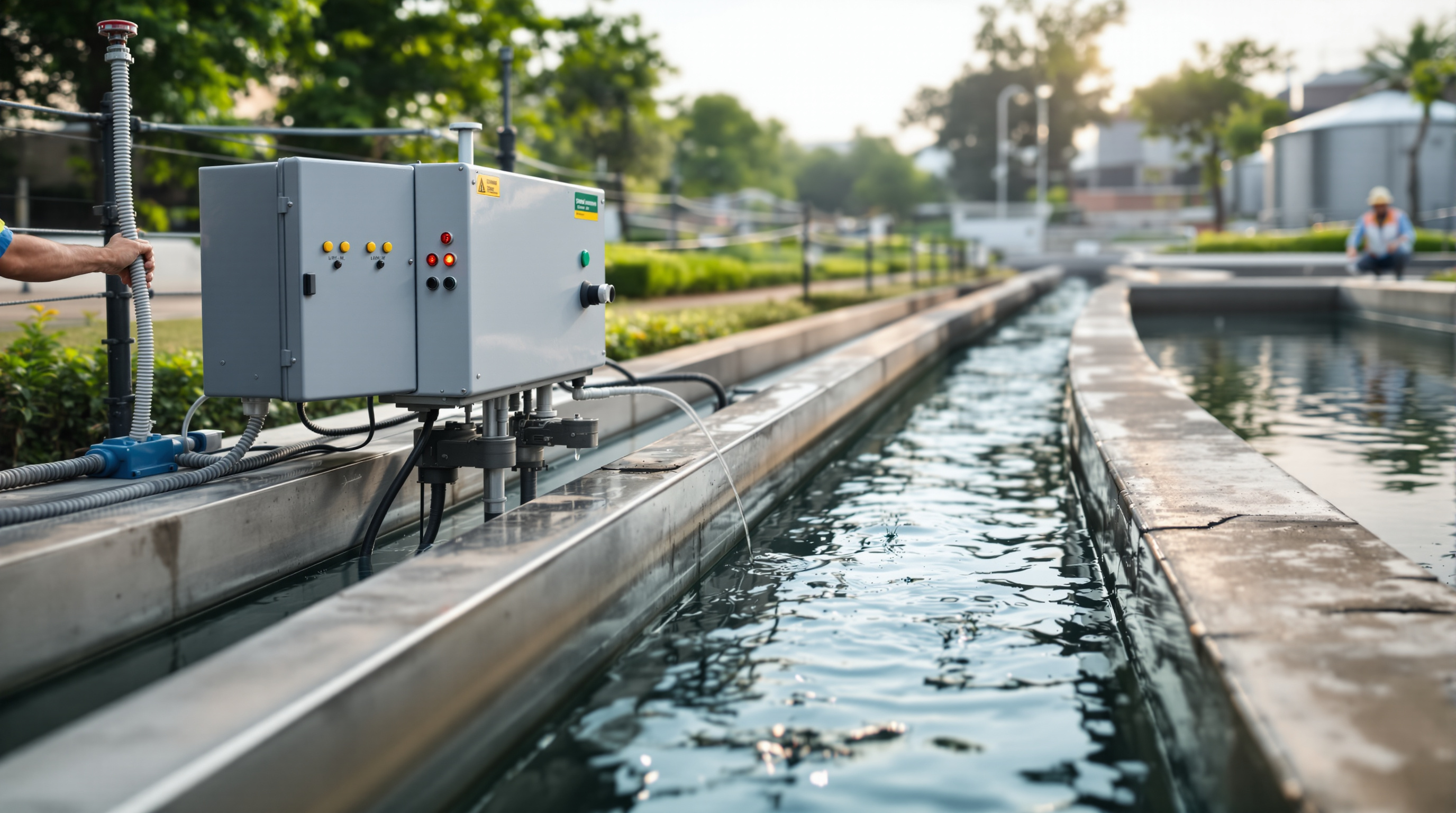
STP Environmental Monitoring & Online Sensors: Sampling, Lab Testing & OCEMS in India
What a well-run STP is actually required to measure — the parameters, the sampling frequency, NABL lab testing, and the fast-moving shift to online continuous effluent monitoring (OCEMS) that streams your outlet data straight to CPCB and SPCB servers.
Building an STP is only half the obligation. Keeping it provably clean — day after day, in a form a regulator will accept — is the other half, and it is the half that trips up most apartment associations, facility teams and consultants. A plant that looks like it is running can still be quietly failing its discharge norms, and without monitoring nobody knows until a lake turns green or an inspector arrives.
STP environmental monitoring is the discipline of measuring what leaves your plant, how often, to what accuracy, and reporting it to the people who regulate you. In India that increasingly means two parallel systems: the traditional route of periodic grab samples sent to an accredited laboratory, and the newer, faster route of online continuous effluent monitoring systems (OCEMS) that stream live sensor data straight to state and central pollution-control servers.
Monitoring is not paperwork bolted onto a working plant — it is the evidence that the plant works. If you cannot show the data, in the eyes of the regulator the treatment did not happen.
This guide walks through what to measure, how often, who is allowed to test it, and where the regulatory push toward always-on sensors is heading. A caution before we start: Indian effluent norms have a genuinely contested history, and the numbers vary by state and by where you discharge. Treat the figures below as orientation, not gospel, and always confirm the current values with your State Pollution Control Board (SPCB) before you design or certify anything.
What you are actually measuring

The pollutants an STP has to prove it removed are the same handful of parameters that define sewage strength in the first place. If the terms below are new, the companion guide on wastewater characteristics — BOD, COD, TSS, pH explains each one.
- BOD (Biochemical Oxygen Demand) — the headline number; how much oxygen microbes need to eat the remaining organic load.
- COD (Chemical Oxygen Demand) — total oxidisable matter; always higher than BOD and quicker to test.
- TSS (Total Suspended Solids) — the fine particles still floating in the treated water.
- pH — the acidity/alkalinity band.
- Faecal / total coliform — the pathogen indicator, critical if the water is reused.
- Ammoniacal nitrogen, total nitrogen and phosphorus — the nutrients that trigger algae blooms downstream.
- Oil & grease, and residual chlorine — depending on the source and disinfection method.
The standards you are being measured against
Here the honesty is important. The 2017 MoEFCC notification proposed relaxed, tiered norms; the National Green Tribunal (NGT) quashed that relaxation in its April 2019 order and directed stringent, largely uniform standards nationwide. The Ministry appealed to the Supreme Court, and the broader dispute over uniform-versus-graded norms has never fully settled. In practice, most SPCBs today enforce the stringent NGT-aligned set — especially for discharge into lakes, drains or sensitive water bodies — while some retain graded limits for larger municipal plants.
The values commonly applied for treated sewage today look like this:
| Parameter | Commonly applied limit | Notes |
|---|---|---|
| pH | 6.5 – 9.0 | Fairly stable across states |
| BOD | ≤ 10 mg/L (up to 20–30 in some graded norms) | The most contested figure — confirm locally |
| COD | ≤ 50 mg/L | Not always separately capped in older norms |
| TSS | ≤ 10–50 mg/L | Tighter for reuse/sensitive discharge |
| Total Nitrogen | ≤ 10 mg/L | Added under the stringent norms |
| Faecal Coliform | ≤ 100–230 MPN/100 mL | Critical for any reuse application |
Because the number that matters to you depends on your state and your discharge point, cross-check against the CPCB general standards, our note on CPCB guidelines for STPs, and the detailed treated-water quality standards guide — then get written confirmation from your SPCB. If the water is being reused for flushing or irrigation, the treated-water reuse standards may add further limits on top.
Sampling frequency: how often is "enough"

There is no single national number that fits every plant; frequency is set by the conditions in your Consent to Operate (CTO) and scales with plant size and risk. As a working pattern:
- Daily in-house checks — pH, and a visual/settleability check on the aeration and clarifier, logged by the operator. These are for process control, not compliance reporting.
- Weekly to fortnightly — a fuller in-house BOD/COD/TSS panel where the plant has the capability. CPCB's OCEMS protocol references operator validation of sensors once every 15 days.
- Monthly (minimum) third-party testing — grab or composite samples sent to an accredited laboratory. Many CTOs specify monthly; larger or sensitive-location plants may be required to test more often.
The frequency your plant must hit is a condition of your consent, so read the CTO carefully — the Consent to Operate guide explains where these conditions come from and how renewal depends on demonstrated compliance.
Who is allowed to test: the NABL requirement
A number is only worth as much as the lab that produced it. For compliance purposes, SPCBs require testing by a NABL-accredited or CPCB-recognised laboratory — an in-house reading or an unaccredited report will not satisfy an inspector or a CTO renewal. Two practical points that catch people out:
- Turnaround matters. For time-sensitive parameters, samples must reach the lab and be analysed quickly — CPCB protocols expect results within about seven days of sampling, and BOD in particular degrades if a sample sits around.
- Keep the paper trail. A CTO application or renewal typically requires the last 12 months of NABL analysis reports (plus an OCEMS data summary where applicable). Missing months are treated as non-compliance, not as an absence of evidence.
For a structured view of how these reports feed a compliance file, see the STP performance testing and STP audit requirements guides, and the practical STP compliance checklist.
The shift to online continuous monitoring (OCEMS)
The direction of travel is unmistakable: away from occasional grab samples and toward sensors that never blink. An OCEMS installs multi-parameter probes at the STP outlet that measure continuously and transmit the readings 24×7 to the servers of the SPCB and CPCB, so regulators can watch compliance in real time without setting foot on site.
Key features of the OCEMS regime as it stands:
- Parameters monitored online typically include pH, flow, TSS, COD and BOD, with ammoniacal nitrogen and TDS on some installations. (Note that online BOD is a sensor-inferred value, which is one reason lab testing has not disappeared.)
- Certified hardware only. CSIR-National Physical Laboratory is the national verification agency; only OCEMS models it has certified may be connected to the CPCB server.
- Portal registration at the CPCB CEMS portal — each analyser, its location and coordinates are recorded.
- Automatic exceedance alerts. When a parameter breaches the norm, the system generates an SMS alert to the operator, the SPCB and CPCB simultaneously — there is no quiet failure.
- PTZ cameras are increasingly bundled into the mandate (for example, CPCB's directions for NCR-Delhi industries), to visually confirm the outlet and bypass points.
- Periodic calibration and validation — operators validate against reference readings roughly every 15 days, with instrument calibration typically every six months.
Who has to install one is still being defined and is moving fast. Historically OCEMS targeted highly polluting industrial categories, but the net is widening to STPs. Karnataka's SPCB, for instance, has moved to mandate OCEMS at STPs above 100 KLD in the Bangalore metropolitan area — a strong signal of where other states are heading. The national background to this real-time push is set out in the government's own note on online pollution monitoring, and CPCB's technical expectations live in its common OCEMS protocol. Whether your specific plant is in scope today depends entirely on your SPCB's current directions — confirm before assuming you are exempt.
Why the regulator cares about live data
The logic is simple and, for operators, uncomfortable. A monthly grab sample can be timed for a good day; a continuous feed cannot. Real-time data lets authorities:
- spot chronic under-treatment that periodic samples miss,
- act on exceedances within minutes rather than months, and
- levy Environmental Compensation — financial penalties — for non-installation, tampering or sustained breaches.
For a facility team this changes the job. Monitoring stops being a quarterly errand and becomes an operational discipline: the plant has to run right continuously, because it is now watched continuously. That, in turn, raises the value of good biological culture management and of designs — up to zero liquid discharge where reuse demands it — that hold their numbers on a bad day, not just a good one.
Building a monitoring routine that survives an audit
Pulling it together, a defensible monitoring programme has five moving parts:
1. Know your exact limits — the parameter values written into your CTO, confirmed with your SPCB, not a number from a blog.
2. Sample at the required frequency — daily process checks, plus accredited third-party testing at the cadence your consent specifies.
3. Use only NABL/CPCB-recognised labs and keep a complete, unbroken 12-month report file.
4. Install and maintain OCEMS where mandated — certified hardware, portal-registered, calibrated on schedule, alerts live.
5. Log everything — operator readings, lab reports, calibration records and complaint responses — because at audit, the record is the compliance.
Monitoring is where an STP's engineering meets its accountability. Get it right and the plant more or less defends itself; get it wrong and even a well-built plant becomes a liability. For the wider regulatory picture, continue through the Sewage Treatment Plants guide library and the guide on smart-city wastewater guidelines — and if you are still at the design stage, size the plant correctly first with the STP Capacity Calculator, because an undersized plant is one you will never keep in compliance.
A note on currency: Indian effluent norms and OCEMS mandates are changing quickly and vary by state. Every figure here is orientation only — verify the current requirements with CPCB and your State Pollution Control Board before acting on them.
Export this guide
Related Guides — Deep-dive reading
CPCB Guidelines for STPs Explained: Discharge Standards & the 2017/2019 History
What the Central Pollution Control Board actually prescribes for sewage treatment plants — the effluent parameters, the contested 2015–2017–2019 notification history, the NGT interventions, and which numbers your plant is really held to today.
Sewage Treatment PlantsApartment Association STP Compliance Guide: CTO, Monitoring, Records & Penalties
A practical, honest compliance playbook for RWAs and facility managers running a sewage treatment plant — how to keep your Consent to Operate valid, what to monitor and record, the notices that catch associations out, and how to stay on the right side of the CPCB, your SPCB and the NGT.
Sewage Treatment PlantsWastewater Characteristics Explained: BOD, COD, TSS and pH
The four numbers that tell you how dirty sewage is and how well your STP is cleaning it — BOD, COD, TSS and pH — explained in plain language, with typical raw-sewage values, treated-water targets, and why each one matters.
Sewage Treatment PlantsRelated Tools — Try Free
CPCB Compliance Checklist for STPs
Tick off CPCB/SPCB outlet standards, monitoring duties and record-keeping to score your sewage treatment plant's compliance readiness.
ChecklistSTP Compliance Checklist Tool
Interactive self-audit that ticks off STP consents, discharge norms, reuse metering, online monitoring and O&M records to give a live compliance readiness score.
ChecklistApartment STP Planner
Plan an apartment complex sewage treatment plant from flats and occupancy — get population load, sewage flow, recommended STP capacity in KLD, treatment technology and approximate space.
Planner