
Sensory Gardens Explained
A garden for all five senses — sight, smell, sound, touch and taste with an Indian plant palette, inclusive and accessible design for children, the elderly and neurodiverse users, plus a five-sense balcony version
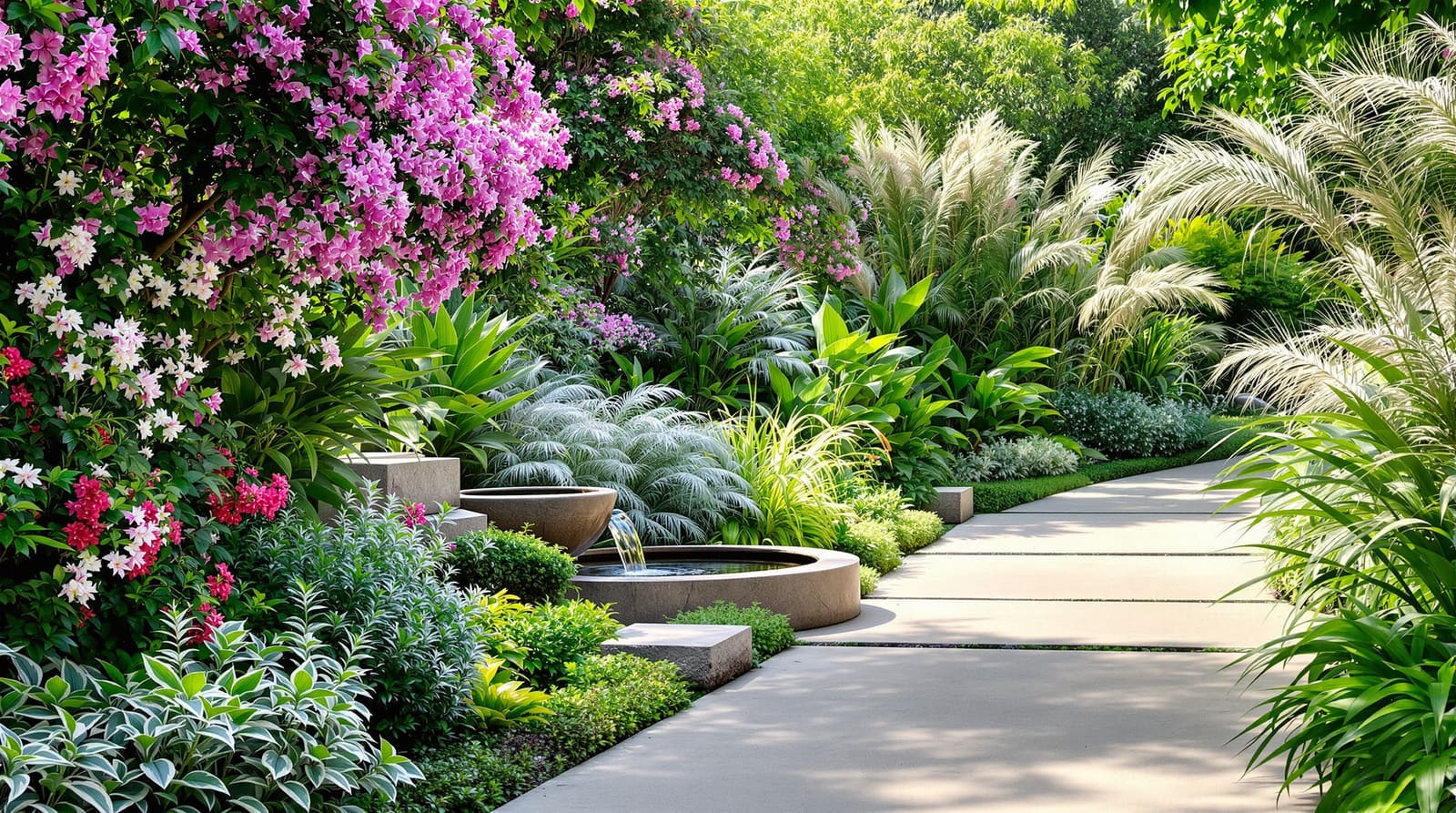
A child who finds eye contact unbearable stands very still in the corner of a school garden in Pune, eyes half-closed, running her fingertips back and forth across a patch of lamb's ear leaves. Around her the place is quietly alive: a bed of mogra throwing its sweetness into the warm air, a clump of ornamental grass hissing softly each time the breeze moves through it, a shallow stone bowl of water she will later dip her hand into. Nothing here demands that she perform. Everything here offers itself to be noticed, one sense at a time, at whatever pace she chooses.
That garden was not an accident of pretty planting. Every fragrance, every texture, every rustle and ripe berry was placed there on purpose, to give a person a way back into their own body and senses. This is what separates a sensory garden from an ordinary one — and from its calmer cousins.
A sensory garden is a space deliberately designed and organised to engage all five senses — sight, smell, sound, touch and taste, often with movement too — as a rich, layered, and above all accessible experience that anyone can read with whatever sense works best for them.
The idea, and where it comes from
Sensory gardens grew up in places where the usual way of experiencing a garden — strolling and looking — could not be assumed. They began in special-education schools, in therapy units, in care homes and in gardens built for visually impaired visitors, where designers asked a simple question: if sight is limited, or attention is fragile, or the body moves differently, how do we still let someone have a full, joyful encounter with nature?
The answer was to stop privileging the eyes and instead build redundancy across all the senses, so that whichever doors a person can open, the garden is waiting on the other side. Today the same thinking has spread far beyond clinical settings — to mainstream schools, to dementia care, to gardens for autistic and otherwise neurodiverse people for whom sensory input is not background but the main event, and increasingly to ordinary homes that simply want a garden you feel rather than merely see.
There is real science underneath the warmth. E. O. Wilson's biophilia hypothesis argues that we carry an inherited affiliation with living things, which is why contact with nature so reliably soothes us. Roger Ulrich's Stress Recovery Theory — anchored by his much-cited 1984 study in which surgical patients with a window onto trees recovered faster and needed less pain medication than those facing a brick wall — suggests natural scenes can trigger swift physiological relief from stress. Rachel and Stephen Kaplan's Attention Restoration Theory adds that nature offers "soft fascination" — gentle, effortless interest that lets our exhausted directed attention rest and recover. For a fuller account of that evidence, our landscape design for mental wellbeing pillar is the place to start; sensory gardens are simply one of the most hands-on tools in the therapeutic landscapes toolkit.
It is worth being honest about what these studies do and do not show. Research consistently associates contact with nature with lower self-reported stress and improved mood; the specific multi-sensory, accessibility-focused claims rest more on practitioner experience and design guidelines than on large trials. So treat a sensory garden as a well-supported, low-risk intervention — not a prescription with guaranteed numbers attached.
Designing for each sense
The discipline of a good sensory garden is that you design sense by sense, then weave the layers together. Here is how each one behaves in an Indian garden.
Sight
Sight is where most gardens stop, but here it is one instrument among five. Work with bold colour and high contrast — deep crotons against pale walls, the red of hibiscus or ixora, the silver of a dusty-miller edge — so that even low-vision visitors can read the shapes. Build in movement: ornamental grasses and fine-leaved bamboo that sway and catch the light, and a planting that invites butterflies and sunbirds (lantana, pentas, marigold, firebush). And plan for seasonal change so the picture is never static — gulmohar and amaltas flaring in summer, the fresh flush after the first monsoon rain.
Smell
Scent is the sense most tied to memory and emotion, and India's plant palette is extraordinarily generous here. Mogra (Arabian jasmine) and other jasmines perfume the daytime; raat ki rani (night jasmine) and parijat release their scent after dark, turning the garden into a different place at night. Champa or frangipani gives a creamy, heady note; lemongrass, curry leaf, tulsi (holy basil), mint and scented geranium reward a casual brush of the hand with a burst of fragrance. Cluster the strongest perfumes near seats and path edges where people pause, and keep clashing scents apart so each can be savoured on its own.
Sound
A sensory garden should be heard with eyes shut. Ornamental grasses and bamboo are the workhorses — they rustle, click and whisper in even a light breeze. A water feature, however small, adds the most reliably calming sound of all; a simple trickling bowl or a low spout does more than a grand fountain. Choose plants that bring in birdsong and the hum of bees, and a few well-placed wind chimes can anchor the soundscape, though use them sparingly so the garden's own voice is not drowned out. (Our guide to water features in landscape design goes deeper on getting that sound right.)
Touch
Touch invites a person to slow down and make contact. Offer a vocabulary of textures: the velvety nap of lamb's ear, the feathery softness of ferns, the leathery gloss of a rubber plant, the rough honesty of tree bark, smooth river pebbles and cool stone. A shallow water bowl people can dip their hands into is one of the most loved features in any sensory garden. Place these touchable plants and surfaces along the path edge, at a height that hands naturally fall to.
Taste
Taste is where the sensory garden quietly becomes a kitchen garden. Fold in herbs you can pinch and eat — mint, tulsi, curry leaf, coriander, lemongrass — alongside edible flowers, a few berry bushes, and at least one fruit tree to anchor the space (guava, lime, custard apple, or mulberry are forgiving choices for Indian gardens). Picking and tasting closes the loop of engagement and gives the garden a reason to be visited daily. For choosing that anchor tree, our guide to the best trees for Indian homes is a good companion.
Accessibility is the point, not an extra
What truly distinguishes a sensory garden from a merely fragrant one is that it is built to be used by everyone — and that ambition shapes every dimension. Raised beds bring planting up to where seated, wheelchair-using or simply elderly visitors can reach, smell and touch it without bending; aim for beds reachable from a chair, with a clear knee recess where someone needs to roll right up to the edge.
Paths should be wide, firm and smooth — generous enough for a wheelchair to pass another comfortably and to turn — with gentle gradients rather than steps wherever possible. Use changes in path surface and strong colour contrast at edges as tactile and visual cues, so a low-vision visitor can navigate by the texture under their feet and the line where dark meets light. Label plants clearly, large and ideally in Braille or with a tactile marker, and resist over-planting: the point is to organise stimulation, not to overwhelm. Clare Cooper Marcus and Marni Barnes's work on healing-garden guidelines is the standard reference for getting these human dimensions right.

The balance: stimulate, then let rest
Here is the most important design principle, and the one most often missed: a good sensory garden offers both stimulation zones and a quiet retreat. This matters intensely for neurodiverse users. For an autistic child or an adult with sensory processing differences, a garden that only ever ratchets up the input — louder, brighter, more fragrant — can tip from delightful into distressing very quickly. The garden must always offer a way down as well as a way up.
So design a clear withdrawal: a shaded, enclosed, low-stimulation corner with soft planting, muted colour, no strong scent and no water sound — a place to decompress when the senses have had enough. Drawing on Jay Appleton's prospect–refuge idea, this retreat should feel sheltered and safe, with a view back out over the active garden so the person never feels trapped. The rhythm of a sensory garden is breathe in, breathe out: rich engagement, then calm recovery, then engagement again at one's own pace.
This is exactly where a sensory garden parts company with its siblings, and naming the difference keeps each in its lane. A meditation garden does the opposite of a sensory garden — it deliberately reduces and quietens sensory input down to a single point of focus, stripping away stimulation rather than layering it. A healing garden is about restorative calm for general stress recovery, a place to feel better after a hard day. A sensory garden overlaps with both but has its own distinct purpose: maximised, organised, all-five-senses engagement with inclusion and accessibility at its heart. The quiet retreat inside a sensory garden borrows the meditation garden's logic; the rest of the space does something quite different.
The five senses, mapped to Indian plants
| Sense | What it does | Indian plants & elements to use |
|---|---|---|
| Sight | Colour, contrast, movement & seasonal change | Crotons, hibiscus, ixora, marigold; ornamental grasses & bamboo for movement; lantana & pentas for butterflies |
| Smell | Day & night fragrance tied to memory | Mogra/jasmine, raat ki rani, champa/frangipani, lemongrass, curry leaf, tulsi, scented geranium, mint |
| Sound | Rustle, water & birdsong | Bamboo & ornamental grasses, a trickling water bowl, bee- & bird-friendly flowers, a few wind chimes |
| Touch | Texture & temperature underhand | Lamb's ear, ferns, rubber plant, tree bark, smooth pebbles, cool stone, a dip-able water bowl |
| Taste | Pick-and-eat engagement | Mint, tulsi, curry leaf, coriander, lemongrass, edible flowers, berries, a guava or lime tree |
A sensory garden on a balcony or in a courtyard
You do not need a school's grounds to build one. The whole idea miniaturises beautifully into an Indian balcony or a small courtyard, because a sensory garden is defined by its range across the senses, not by its size. The trick is to choose one strong representative of each sense and arrange them within arm's reach.
A fragrant climber — mogra or raat ki rani trained up a railing or a corner trellis — covers smell. A pot of soft ferns or a textural succulent covers touch, set where you pass it daily. A clump of dwarf bamboo or a tall grass in a planter handles sound, rustling in the breeze that funnels between buildings. A trough of mint, tulsi and curry leaf covers taste and doubles as your kitchen supply. And a small tabletop water bowl or a simple recirculating spout adds both sound and the cool of touch, while reflecting the sky for sight. Add a single comfortable seat in the calmest corner and you have, in two or three square metres, the same breathe-in, breathe-out rhythm as the full-sized garden. A shaded courtyard is an especially natural home for this kind of compact, all-senses planting.
Building one need not be expensive — a starter balcony version can come together for a few thousand rupees of pots, a sack of good potting mix and a clutch of nursery plants, perhaps Rs 5,000 to begin and growing from there as cuttings root and herbs spread. The work is in the thinking, not the budget: choosing deliberately for each sense, keeping the paths and reach generous, and always leaving one quiet corner to retreat to.
References
- Ulrich, R. S. (1984). "View through a window may influence recovery from surgery." Science, 224(4647).
- Kaplan, R. & Kaplan, S. (1989). The Experience of Nature: A Psychological Perspective. Cambridge University Press.
- Wilson, E. O. (1984). Biophilia. Harvard University Press.
- Cooper Marcus, C. & Barnes, M. (1999). Healing Gardens: Therapeutic Benefits and Design Recommendations. John Wiley & Sons.
- Gesler, W. M. (1992). "Therapeutic landscapes: medical issues in light of the new cultural geography." Social Science & Medicine, 34(7).
- Li, Q. (2018). Shinrin-Yoku: The Art and Science of Forest Bathing. Penguin Life.
- Sensory Trust (UK) — design guidance on sensory and inclusive gardens.
To go further, read our therapeutic landscapes guide and, for the contrast in intent, meditation garden design — and when you are ready to plan and visualise your own sensory garden, DesignAI can help you lay it out, sense by sense.
Export this guide
Related Guides — Deep-dive reading
Homes That Improve Mental Wellbeing
The whole-home, indoor-biophilia approach to calm — how plants, light, air, quiet and the right balance of togetherness and retreat make an Indian home restorative.
Healthy HomesLandscape Design for Mental Wellbeing
The evidence for how outdoor space shapes the mind — Attention Restoration Theory, Stress Recovery Theory, biophilia and prospect-refuge — and a practical framework for a wellbeing garden at any size in India
LandscapeThe Best Trees for Indian Homes
A research-grade guide to choosing and placing trees around an Indian home — the real cooling and clean-air numbers, the right species for shade, flowers, fragrance and fruit, and the placement science that keeps roots out of your walls and drains.
LandscapeRelated Tools — Try Free
Healing View Impact Calculator
Evidence-Based Design dashboard quantifying the recovery impact of nature view + daylight factor on analgesic use, length of stay, and HCAHPS patient-experience uplift. Calibrated against Ulrich 1984 (Science), Park & Mattson 2008, and the CHD EBD evidence base.
EBD CalculatorGarden Planning Toolkit
Get a tailored garden plan — planting layers, Indian species, features and a checklist — from your climate, space, sun and goals.
PlannerCross-Ventilation Analyzer
Estimate airflow and air changes per hour (ACH) from room size, window areas, layout, and local wind — with NBC 2016 Part 8 compliance check.
Ventilation Calculator