
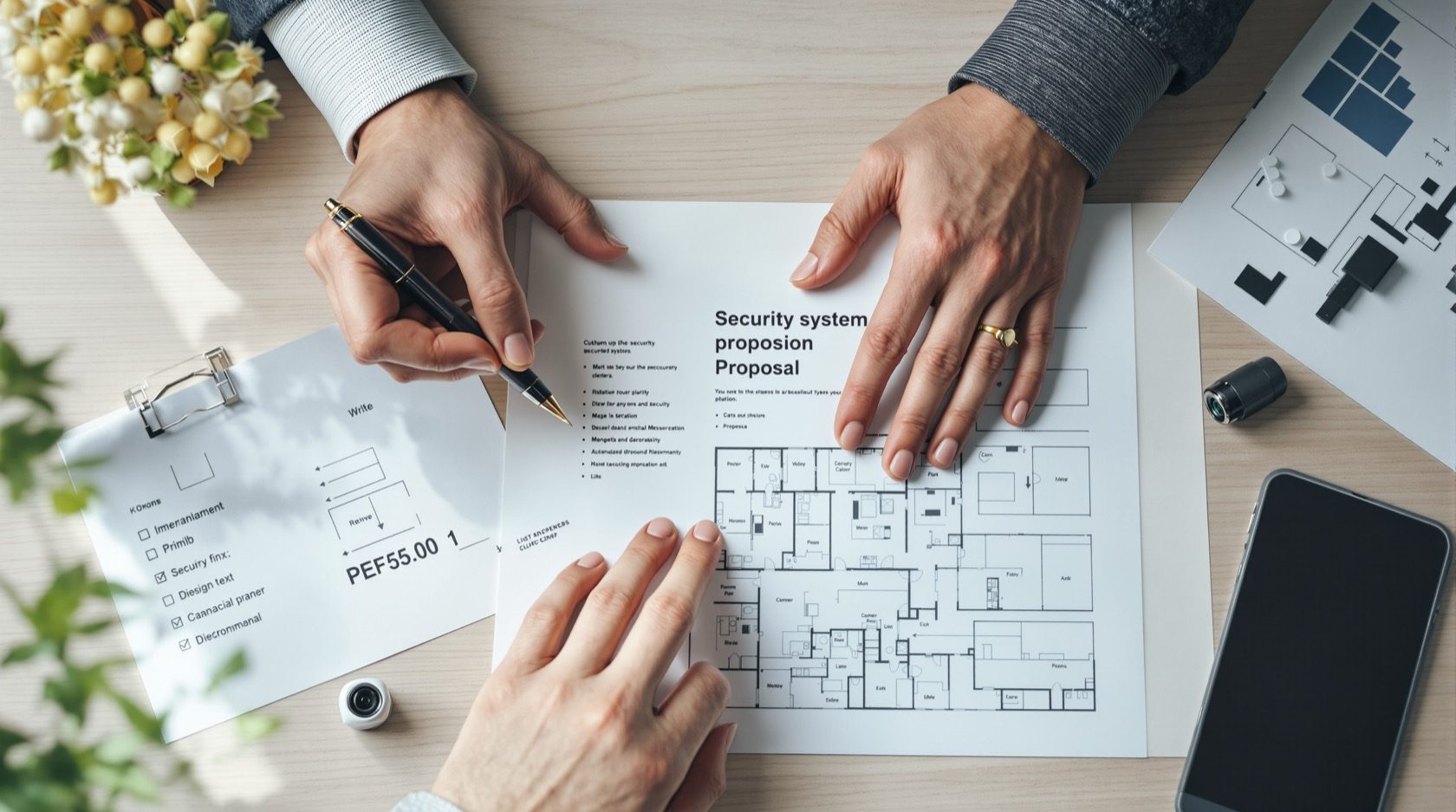
Security Vendor Evaluation: Choosing a Security Installer in India
How to judge and choose the vendor, installer or guarding agency who will build your home security — the procurement decision that makes or breaks everything. Credentials, references, a clear itemised quote, AMC terms, data-handling clauses, and the red flags that tell you to walk away.
You can do a flawless risk assessment, set a sensible budget, and specify exactly the right cameras, sensors and locks — and still end up with a system that fails, because the person who installs and maintains it is the weakest link. In Indian homes, the vendor decision is the one that quietly makes or breaks everything. The same box of hardware, fitted well by a licensed, accountable installer, protects you for a decade; fitted badly by a cash-only fly-by-night, it fails on the first monsoon night and no one answers the phone.
This guide is about the procurement decision: how to evaluate and choose a security vendor, installer or guarding agency in India. It complements the technical guides in the Security Hub — here we judge the people and the paperwork, not the products. When you are ready to score real vendors side by side, the Vendor Evaluation Scorecard turns everything below into a weighted, printable comparison.
Scope & safety. This is a defensive planning and procurement guide. Manned guarding must run through a PSARA-licensed agency; any mains-electrical or fixed-wiring work must be done by a licensed electrician; life-safety systems (fire, alarms, electric locks) must never obstruct fire escape and must be certified. Specify what you want, then hire qualified, accountable people to deliver it.
Why the vendor is the decision that matters most
Hardware is now a commodity — most reputable camera and lock brands are broadly similar at a given grade. What varies enormously is who installs it, how honestly they quote it, and whether they are still around to service it in year three. A great vendor gives you a system you understand and can maintain; a poor one leaves you with orphaned gear, no warranty, and a login only they control.
So evaluate vendors the way you would evaluate a contractor for any important home job: on credentials, track record, the clarity of what they put in writing, and how they behave. Price matters, but it is one input among several — never the only one.
The evaluation criteria: what good looks like, and the red flag
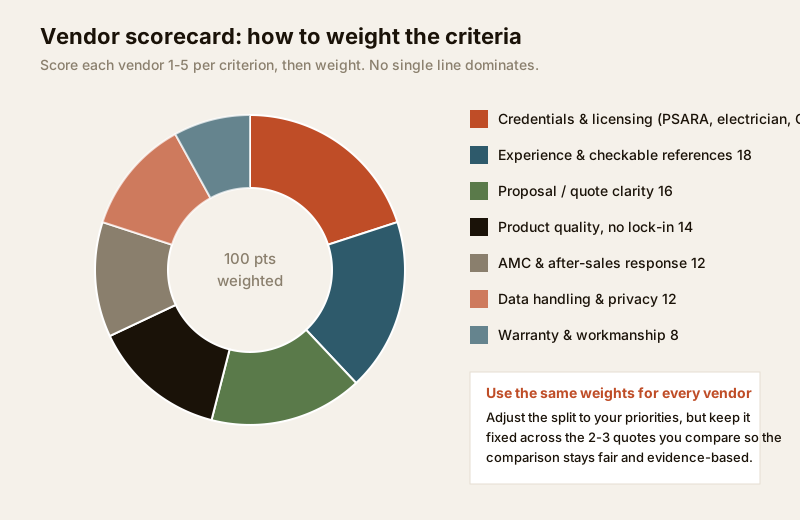
Judge every vendor against the same set of criteria. This is the heart of the decision, so give it real weight. The table below is the checklist; the scorecard tool lets you score each vendor 1-5 on exactly these lines.
| Criterion | What good looks like | Red flag |
|---|---|---|
| Licensing & credentials | PSARA licence for any manned guarding; a licensed electrician for mains work; valid GST registration; company registered with a real office | No licence, no GST, works only in cash, no verifiable address |
| Track record | Years in business, a portfolio of similar homes/societies, an online presence you can check | Brand-new, no history, evasive about past jobs |
| References you can check | Names and numbers of recent clients who will speak to you; agrees to a site visit to an existing install | Refuses references, or gives numbers that never answer |
| Product quality & brands | Fits reputable, serviceable brands; explains grade and options; open standards you can service later | Pushes one proprietary system with total lock-in; unbranded or grey-market gear |
| Proposal clarity | Itemised scope, make/model/quantity, labour, warranty, exclusions, GST shown line-wise | One vague lump sum, no makes named, no exclusions listed |
| AMC & after-sales | Written AMC with defined visits, a response-time SLA, a local service team | No AMC offered, or vague verbal promise of support |
| Data handling & privacy | A written clause on who can access footage, where it is stored, and that access is handed to you | No answer on data access; keeps sole control of your recordings |
| Warranty & workmanship | Product warranty plus a workmanship warranty in writing | Verbal-only warranty, or none on the labour |
| Conduct | Answers questions patiently, gives you time to compare | Pressure selling, today-only pricing, discourages second opinions |
1. Credentials and licensing come first
Two forms of licensing are non-negotiable in India. If manned guards are part of the plan, the agency must hold a valid licence under the Private Security Agencies (Regulation) Act — PSARA — issued by the state; this is what makes guard vetting, training and accountability real rather than notional. If the job touches mains electrical supply or fixed wiring, that portion must be done by a licensed electrician. Add to that a valid GST registration and a registered company with a real office you can visit. A vendor who cannot show these is not cheaper — they are uninsured risk.
2. Experience and checkable references
Ask how long they have been trading and to see a portfolio of homes or societies like yours. Then actually check references: ask for two or three recent clients, call them, and — for a larger job — visit a live installation. A confident, honest vendor will happily arrange this; reluctance here is the loudest signal you will get.
3. Product quality and the lock-in trap
A good installer fits reputable, serviceable brands and can explain why — the difference between grades, what each option costs, and what it buys you. Be alert to proprietary lock-in: a closed ecosystem that only that one vendor can expand or service, with an app and admin login they keep. If they vanish or you fall out, you are stranded. Favour open, standards-based kit (for example, standard PoE cameras and mainstream NVRs) so any competent installer can take over later. This directly shapes your maintenance access plan and your system redundancy.
Reading the proposal: itemised scope beats a lump sum
The single most useful document in this whole process is a clear, itemised quote. It is both a specification and a contract, and its quality tells you almost everything about the vendor. Insist on it in writing.
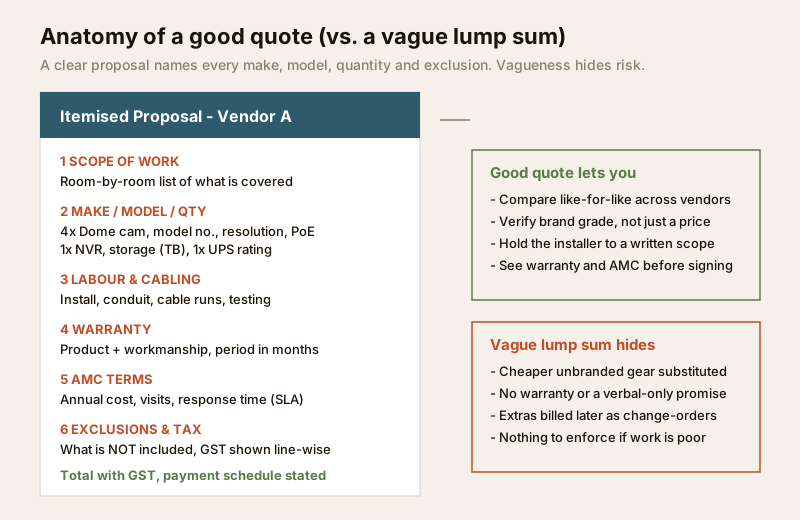
A proposal you can trust names, line by line: the scope of work room by room; every make, model and quantity (four dome cameras of a stated model and resolution, the NVR and its storage in TB, the UPS rating); labour and cabling including conduit and testing; the warranty on both product and workmanship with a period in months; the AMC terms; the exclusions — what is deliberately not covered — and GST shown line-wise with a clear total and payment schedule.
Beware the vague lump sum. "Full CCTV setup — Rs 45,000, all inclusive" hides which brand you actually get, lets cheaper gear be substituted, offers nothing to enforce if the work is poor, and invites "extras" billed later. If two quotes are itemised the same way, you can compare them honestly; if one is a lump sum, you cannot, and that opacity is itself the answer.
Running a fair comparison of 2-3 vendors
Never buy from the first vendor, and never compare more than three seriously — beyond that you drown. The discipline is to make the comparison like-for-like.
1. Write one brief. Give every vendor the same scope and the same list of what you want quoted, so they price the same thing. Base it on your risk assessment and budget.
2. Demand itemised quotes in the same structure from all of them (use the quote anatomy above as your template).
3. Score against fixed weights. Use the same weighting for every vendor — do not let a shiny demo pull one criterion out of proportion. The scorecard tool fixes the weights for you.
4. Normalise the price. Compare total cost of ownership over, say, five years — hardware plus install plus five years of AMC — not just the day-one sticker. A cheaper install with an expensive or absent AMC often loses. Cross-check figures against the security cost planning guide.
5. Weight references and conduct, not just price. The cheapest quote with no references and a lump sum is usually the most expensive choice in disguise.
Use this quote-comparison checklist to line the vendors up:
| Item to compare | Vendor A | Vendor B | Vendor C |
|---|---|---|---|
| PSARA / electrician licence shown | |||
| GST bill provided | |||
| Itemised scope (not lump sum) | |||
| Makes & models named | |||
| Product + workmanship warranty (months) | |||
| AMC cost / visits / response-time SLA | |||
| Data-handling clause in writing | |||
| Checkable references given | |||
| 5-year total cost of ownership | |||
| Overall weighted score (from scorecard) |
AMC, after-sales and response times
A security system is not a one-time purchase; it needs upkeep. Before you sign, pin down the Annual Maintenance Contract: how many preventive visits a year, what a response-time SLA looks like when something fails (same-day, 24 hours, 48 hours?), whether spares are stocked locally, and what a call-out costs outside the AMC. A vendor with a real local service team and a written SLA is worth paying a little more for. Tie this into your maintenance access planning so future service does not depend on one irreplaceable person.
Data handling and privacy: put it in the contract
Your cameras record your family, and increasingly that footage lives on the installer's app or cloud. Who can see it matters as much as who can breach your gate. Before signing, get written answers: Who holds the admin login — you, or the vendor? Where is footage stored, and for how long? Can the vendor or its technicians view your recordings remotely, and under what controls? Is your data handled in line with India's data-protection expectations under the DPDP Act 2023?
Insist that you receive full admin control and that any vendor access is limited, logged and revocable. A short data-handling clause in the contract — covering access, storage, retention and deletion on exit — is the mark of a serious vendor and a non-negotiable for a serious buyer. Work through the specifics with the security privacy assessment guide and bring its conclusions to the negotiating table.
The red flags: when to walk away
Some signals should stop you regardless of an attractive price. Any one serious flag, or two minor ones together, is reason to pause and re-check — or walk.
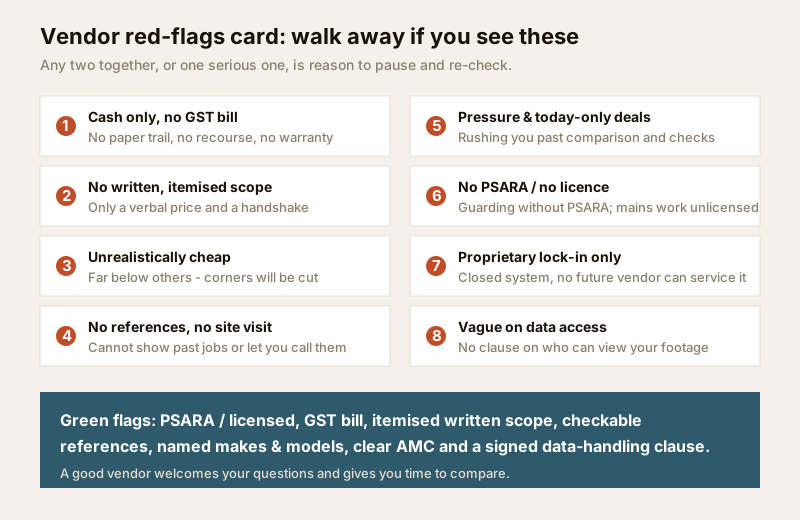
- Cash only, no GST bill. No paper trail means no warranty and no recourse.
- No written, itemised scope — only a verbal price and a handshake.
- Unrealistically cheap — far below every other quote. Corners are being cut somewhere you will only discover later.
- No references and no willingness to show past work or arrange a site visit.
- Pressure selling — today-only discounts, urgency, discouraging you from comparing.
- No PSARA licence for guarding, or unlicensed hands on mains wiring.
- Total proprietary lock-in with an admin login they refuse to hand over.
- Evasive on data access — no clause on who can view your footage.
The green flags are the mirror image: a licensed, GST-registered vendor with an itemised written scope, named makes and models, checkable references, a clear AMC, and a signed data-handling clause — who welcomes your questions and gives you time to decide.
When to bring in a professional
You can run this evaluation yourself; it is mostly diligence and good questions. But route the delivery to qualified people. Manned guarding must go through a PSARA-licensed agency. Any mains-electrical or fixed-wiring work must be executed and certified by a licensed electrician. Life-safety systems — fire detection, alarms and electric locks — must be installed so they never obstruct fire escape, and certified accordingly. For a large home, a housing society, or a complex integrated system, consider paying a small fee for an independent security consultant to review the shortlisted quotes — someone with no stake in the sale — before you commit. And for any structural or perimeter work, use a licensed contractor, not the camera installer moonlighting.
Key takeaways
- The vendor is the decision that makes or breaks your system — evaluate the people and paperwork as carefully as the products.
- Credentials first: PSARA for guarding, a licensed electrician for mains work, GST registration, and a real track record with checkable references.
- Demand an itemised quote — scope, make/model, warranty, AMC and exclusions — and refuse vague lump sums you cannot compare.
- Nail down AMC, response-time SLAs, and a written data-handling clause on who can access your footage before you sign.
- Compare 2-3 vendors on fixed weights and 5-year total cost, walk away from the red flags, and score them with the Vendor Evaluation Scorecard.
Start by scoring your shortlist in the Vendor Evaluation Scorecard, revisit your numbers against the security cost planning guide, and return to the Security Hub or the wider guides collection to plan each part of the build.
This is an educational planning and procurement guide. It is strictly defensive and does not describe how to defeat any security measure. Manned guarding, mains-electrical, fire, alarm, electronic-lock and structural work is qualified professional work — engage PSARA-licensed agencies and licensed installers, verify any applicable National Building Code or municipal bye-law requirement, and handle personal data in line with the DPDP Act 2023.
Export this guide
Related Guides — Deep-dive reading
Security AMC Buying Guide (2026): How to Buy a Maintenance Contract That Keeps the System Working
A decision guide to buying an Annual Maintenance Contract for a home or building security system in India — the types of AMC and how to choose, what a good scope must include, the clauses that decide whether you are covered, how to compare quotes like-for-like, and the red flags that hide a dead camera you only discover the night you need it.
SecurityQuestions to Ask a Security Contractor in India (2026): The Interview That Separates a Professional from a Fly-by-Night
Before you sign, interview the contractor. Seven themes of questions — credentials, design, scope, installation, handover, support and privacy — each with why it matters and what a good answer sounds like versus a red-flag answer. A homeowner's script for hiring judgment, not just hands.
SecurityVendor Cybersecurity Assessment in India (2026): Judging a Brand, a Cloud and an Installer Before You Buy
The cheapest quote often ships the biggest cyber liability. This professional guide shows how to judge the cyber-trustworthiness of a security-device brand, its cloud service and the installer or AMC before you commit — on track record, security features, update commitment, data practices and the installer's own hygiene — with a scorecard, the questions to ask, and the red flags that should stop a purchase.
SecurityRelated Tools — Try Free
Security Vendor Evaluation Scorecard
Rate a CCTV/security installer or guarding agency across eight weighted criteria for a hire / negotiate / walk-away verdict.
Vendor ScorecardCCTV Cloud vs Local Cost Calculator
Compare cloud CCTV subscription against a local NVR + HDD — upfront, 5-year total, monthly fee and break-even.
Cloud vs LocalInterior Contract Clause Checklist
16 sections and 98 checkboxes covering scope, BOQ, milestones, penalties, warranty, and disputes.
Contract Checklist